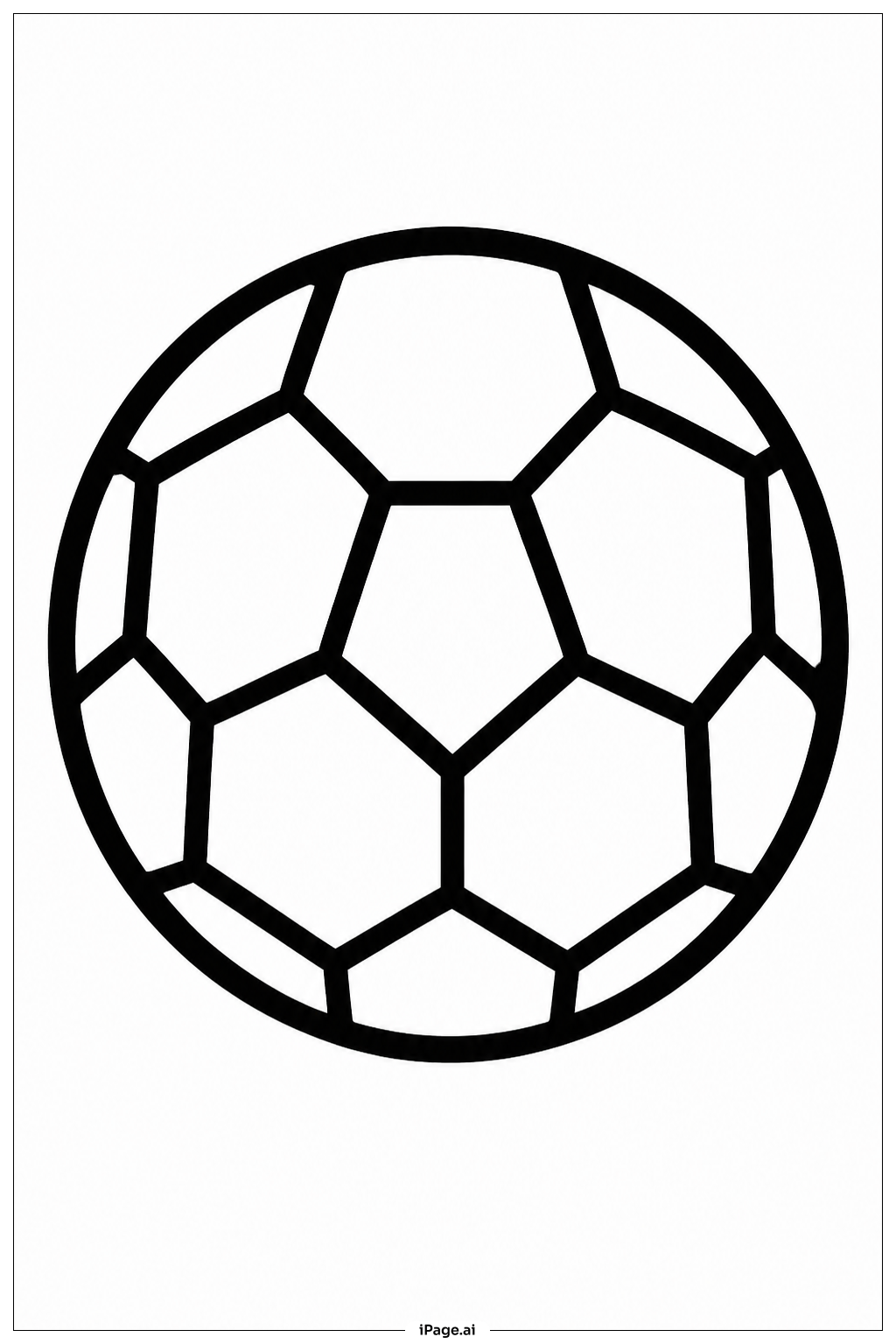
Coloring tips: How to color World Cup Ball coloring page well?
Start by choosing two or three main colors for the ball panels. Classic black and white works great, but you can also go bold with your favorite team's colors. Use a darker shade along the edges of each panel to create depth and make the ball look round. Leave a small white highlight spot near the top of the ball to show where light hits it. Fill the background with a solid color like sky blue or stadium green to make the ball pop. Take your time with each panel — coloring one section at a time helps keep colors neat and separate. This image is fun for Boys and Girls of all ages who love soccer and the World Cup.
Coloring challenges: Which parts are difficult to color and need attention for World Cup Ball coloring page?
• Panel Boundary Precision: The ball is made up of many curved pentagonal and hexagonal panels, each separated by thin outlines. Staying within the lines of each individual panel requires a steady hand and careful control, especially where several panels meet at a single point. Young colorists may find it tricky to switch colors cleanly at these tight intersections without smudging or overlapping.
• Achieving a Rounded, 3D Effect: A flat coloring approach will make the ball look two-dimensional. To give it a realistic spherical appearance, you need to apply lighter tones toward the center of each panel and gradually darken toward the edges. This shading technique can be challenging for beginners who are not yet familiar with blending or layering colors.
• Consistent Color Scheme Across Panels: The ball has many panels spread across its surface. Keeping a consistent color pattern — for example, alternating between two colors in a logical, repeating arrangement — requires planning ahead. Jumping between colors without a plan can result in a messy or confusing final look.
• Small Panel Details: Some panels near the sides of the ball appear compressed or smaller due to the perspective. These tight, narrow areas are harder to color neatly and may require a fine-tipped marker or sharpened colored pencil to fill in without going outside the lines.
• Background and Ball Contrast: Choosing a background color that complements but does not clash with the ball's panel colors is a subtle but real challenge. Getting the contrast right ensures the ball remains the visual focus of the finished piece.
Benefits of coloring books: Advantages of drawing World Cup Ball coloring page
Coloring this World Cup Ball image offers a wide range of benefits for kids and young soccer fans. First, tracing carefully within each curved panel builds fine motor skills and hand-eye coordination — skills that help with writing and other everyday tasks. The repetitive, focused nature of staying within the lines also trains concentration and patience. Choosing colors for each panel encourages creative thinking and decision-making, helping children develop their own sense of style and artistic confidence. For fans of the World Cup, this activity creates a personal connection to the sport they love, making the coloring experience more meaningful and enjoyable. Trying to shade the ball to look round introduces basic concepts of light and shadow, giving young Artists an early foundation in visual thinking. The activity is also calming and relaxing — a great way for Boys and Girls to unwind after school. Completing the page gives a real sense of accomplishment, which boosts self-esteem. Overall, it is a simple, screen-free activity that blends creativity, skill-building, and fun all in one.