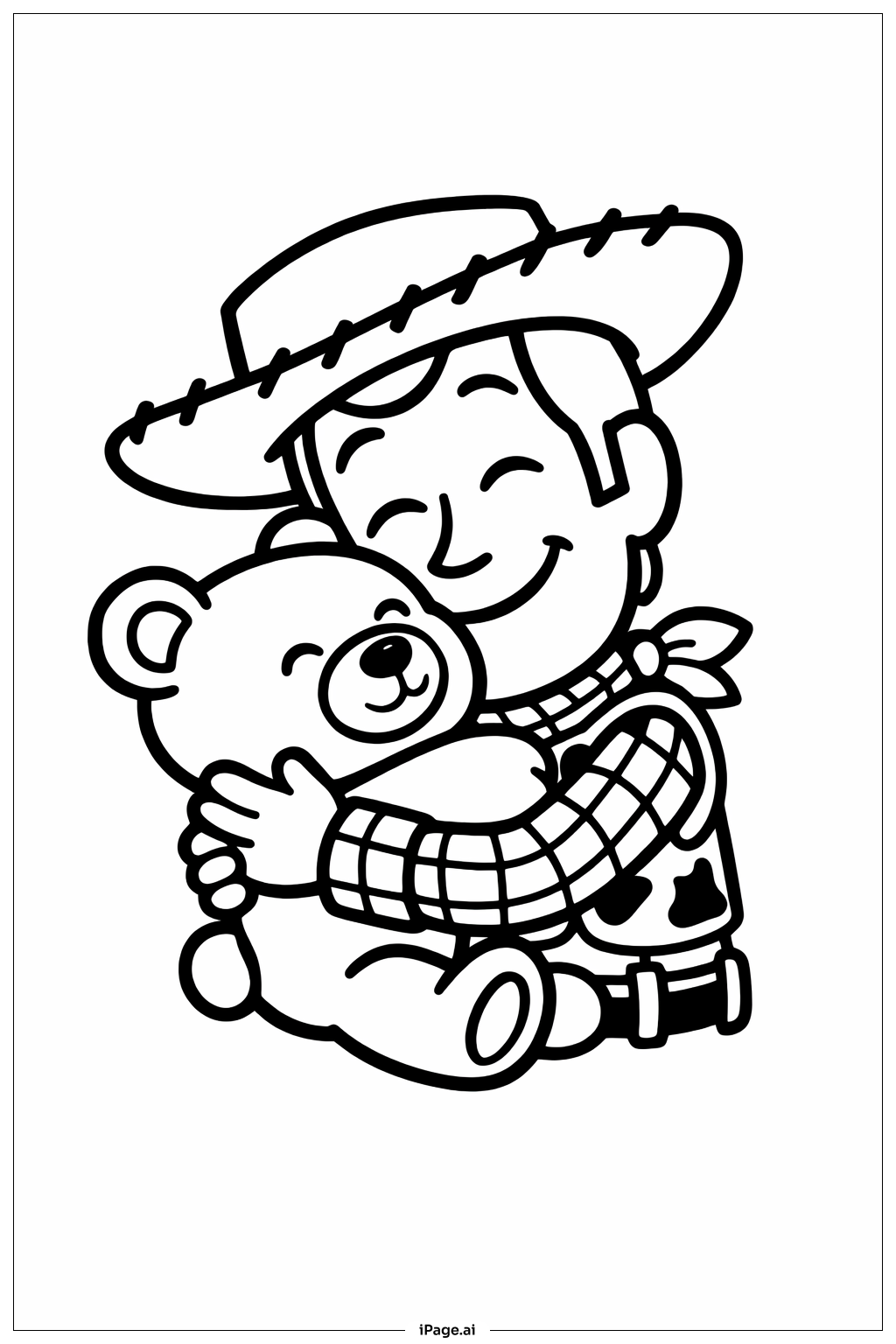
Coloring tips: How to color Woody Hugging Teddy coloring page well?
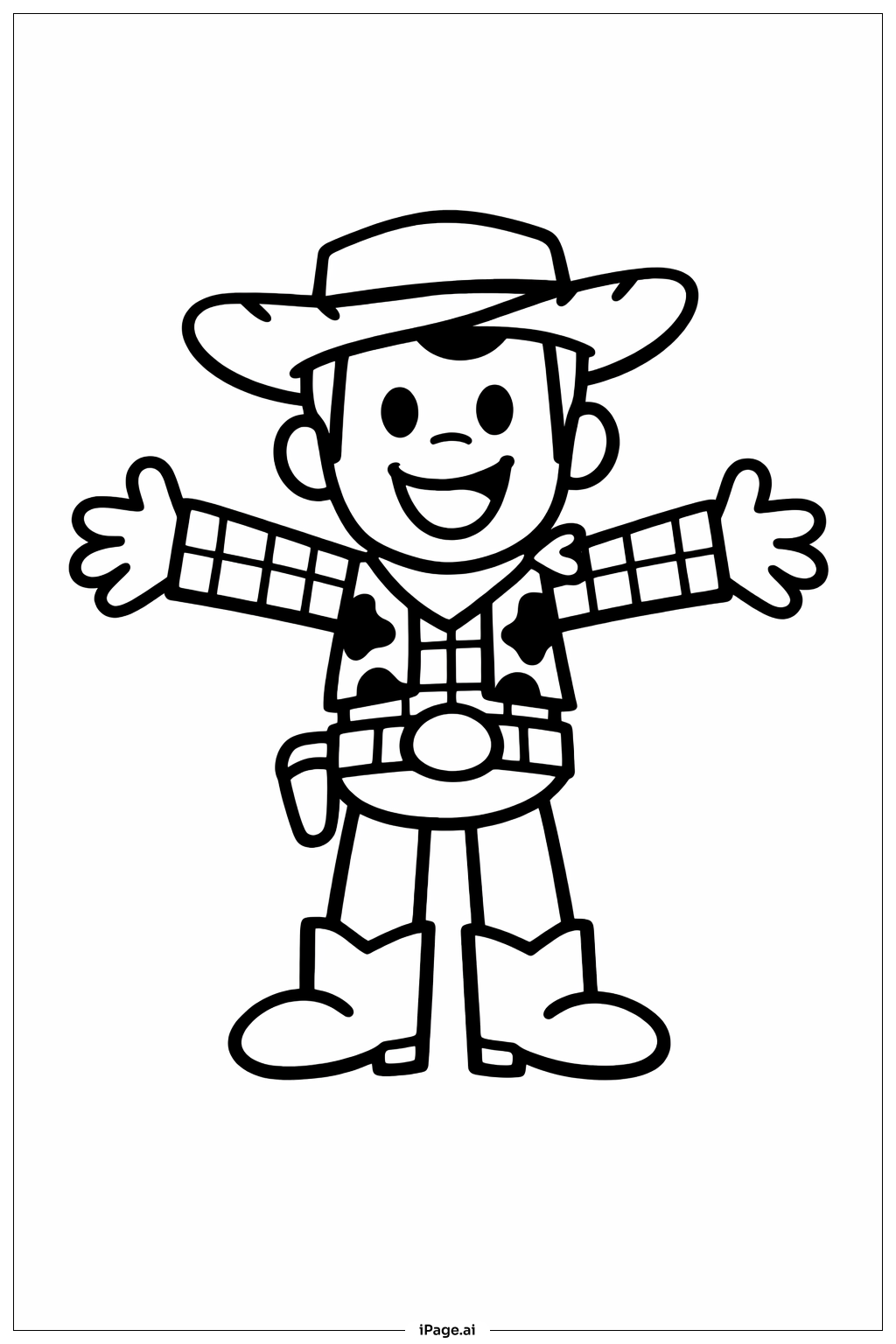
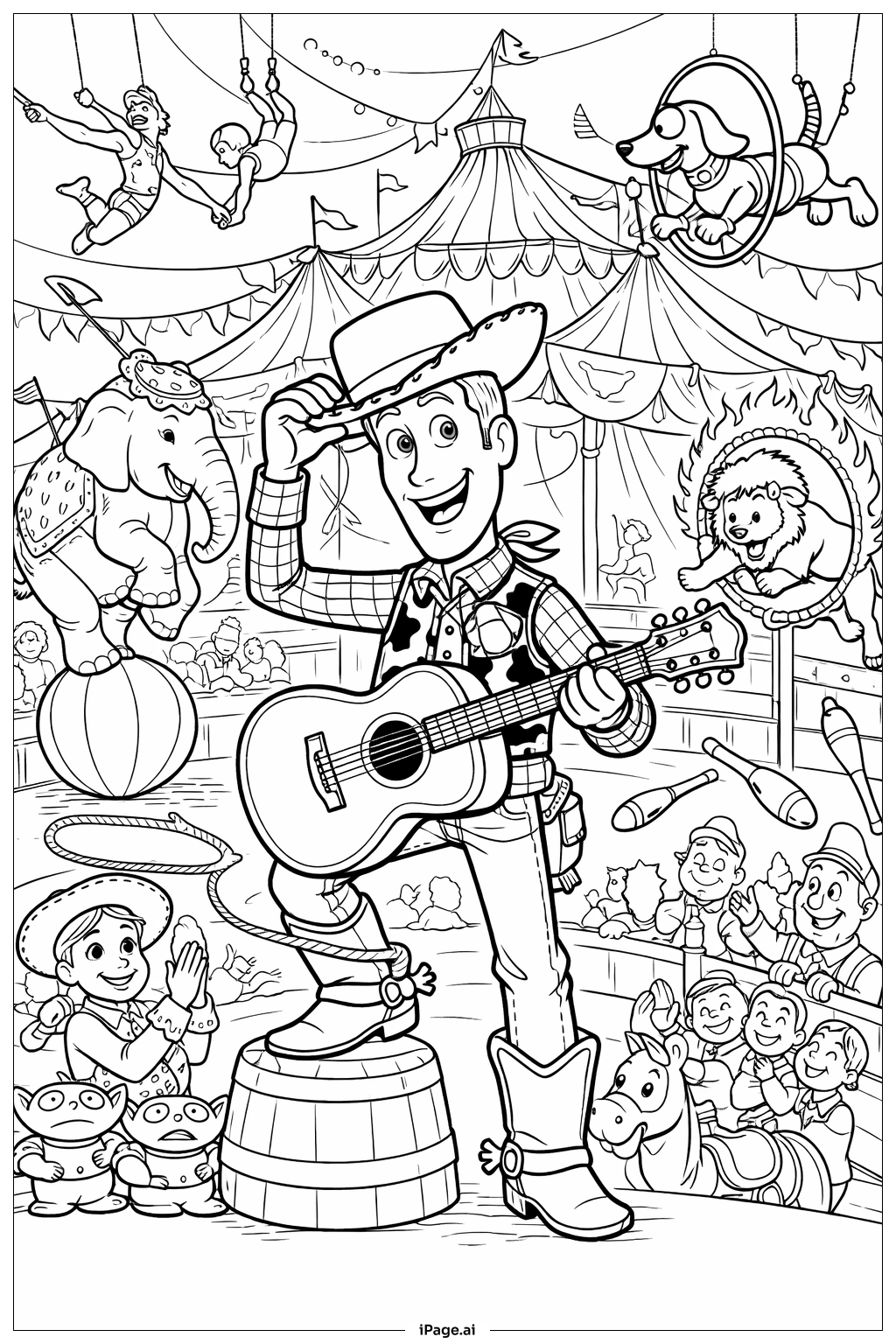
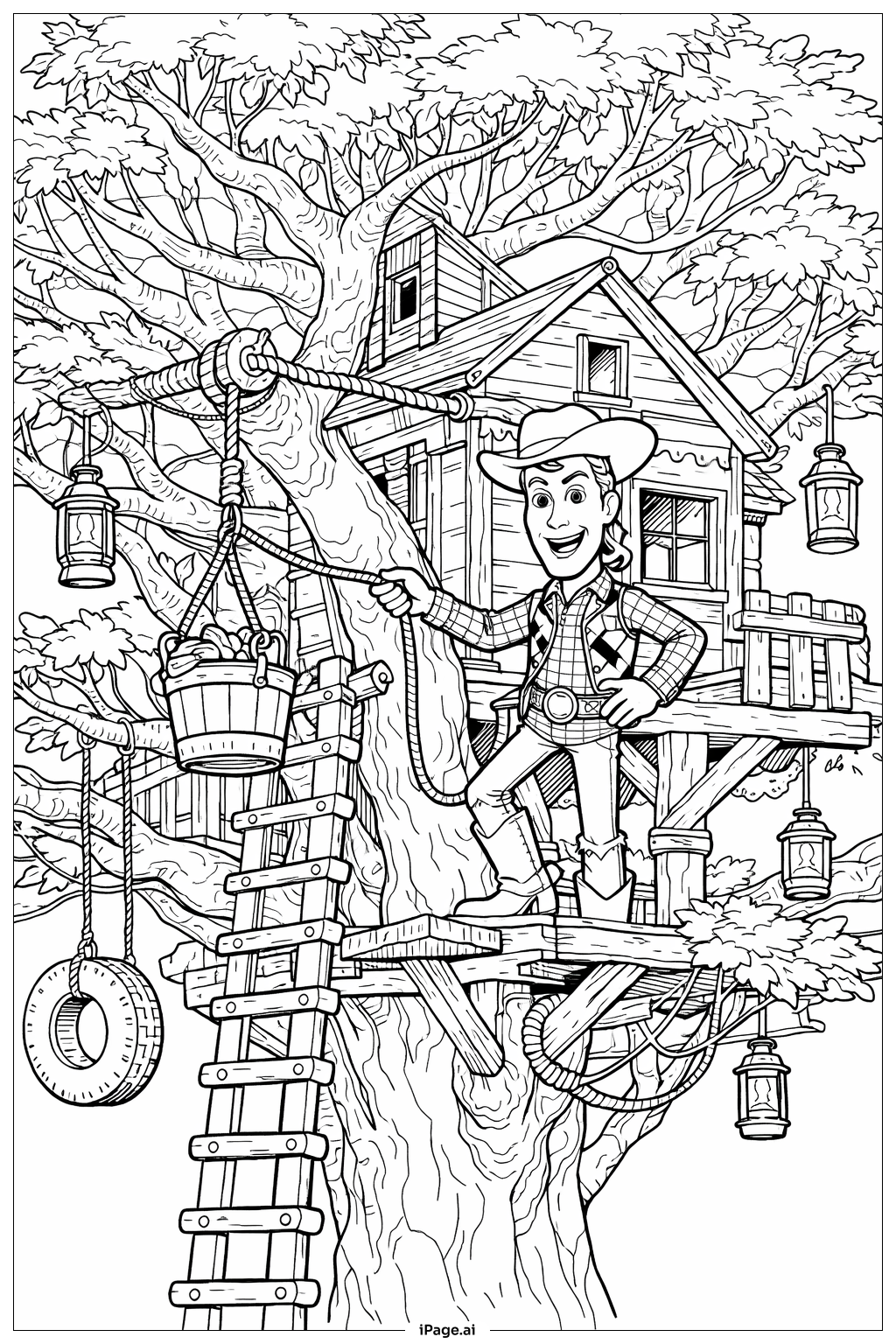
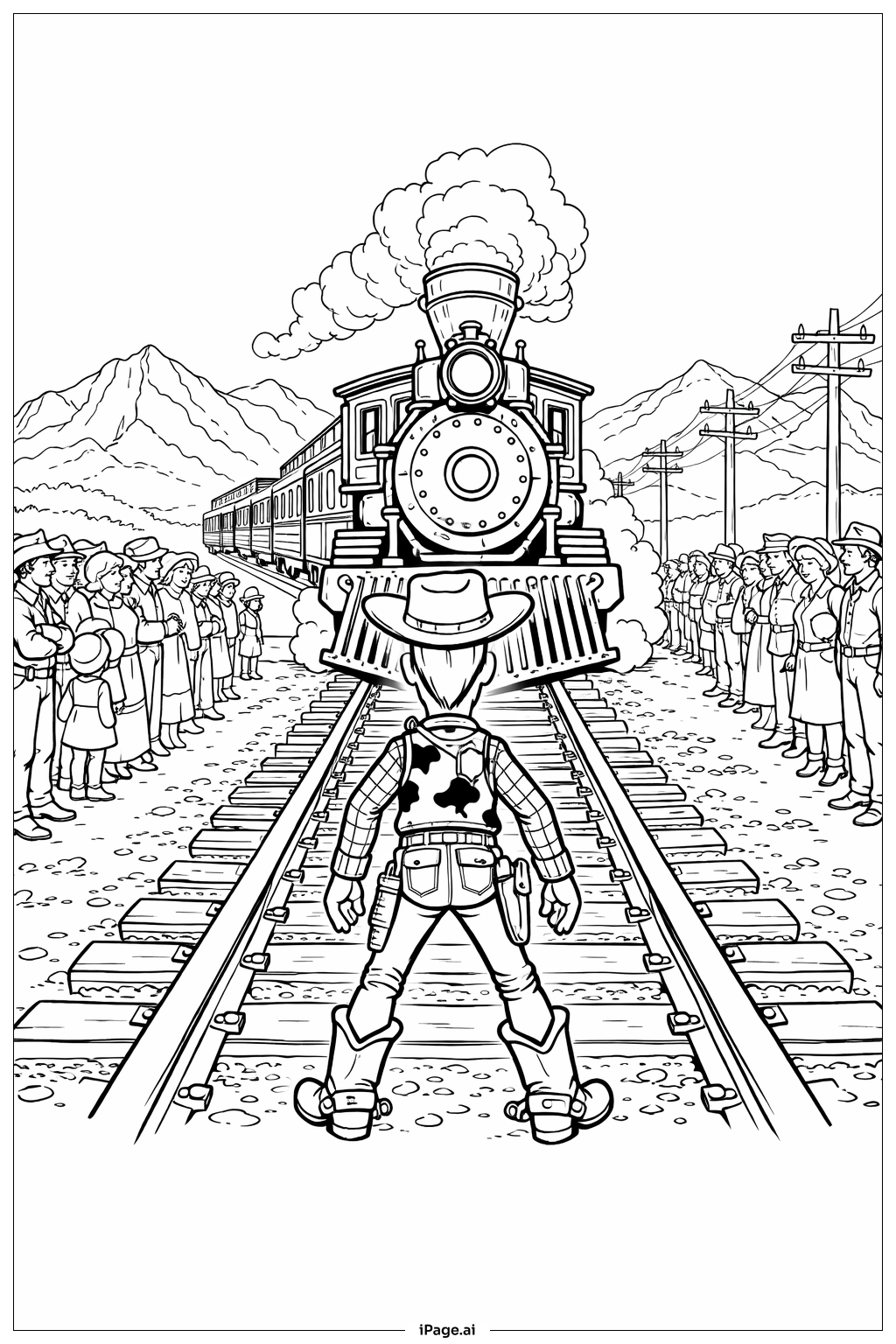
Start with Woody's signature colors to keep him recognizable. Use bright yellow for his shirt, brown for his vest and boots, and blue for his jeans. His cowboy hat looks great in a warm tan or light brown shade. Add red and white details to his shirt for that classic plaid look. For the teddy bear, try a soft golden brown or honey color to give it a cozy, well-loved feel. You can use a slightly darker brown for the ears and paws to add depth. Use light pink or rosy tones for the teddy's inner ears and nose. Keep Woody's face warm with a peach skin tone, and add rosy cheeks to make his smile pop. Light blue or soft white works well for the background to keep the mood cheerful and gentle. Don't forget small details like the sheriff badge — use bright yellow or gold to make it shine!
Coloring challenges: Which parts are difficult to color and need attention for Woody Hugging Teddy coloring page?
• Woody's Plaid Shirt Pattern: Woody's shirt features a classic plaid design with intersecting lines and checks. Coloring this neatly requires a steady hand and careful attention. Try using two shades of the same color — one lighter and one darker — and layer them in thin stripes to create a convincing plaid effect without going outside the lines.
• Small Facial Details: Both Woody and the teddy bear have small, expressive facial features including eyes, eyebrows, a nose, and a mouth. These tiny areas can be tricky to fill in cleanly, especially for younger colorists. Using fine-tipped colored pencils or thin markers will help you stay precise and keep the expressions looking lively and clear.
• Overlapping Hands and Arms: Woody's arms are wrapped around the teddy bear, creating areas where his hands and the bear's body overlap. It can be challenging to figure out where one ends and the other begins. Take your time to identify each shape before coloring, and use contrasting colors for Woody's skin and the bear's fur to help separate them visually.
• Texture Differences: Woody's clothing is smooth and flat, while the teddy bear is meant to look soft and fluffy. Showing these two different textures through color alone is a fun challenge. Try using short, soft strokes for the bear's fur areas and flat, even fills for Woody's fabric to create a natural contrast between the two characters.
• Tiny Accessories and Badge: Woody's sheriff badge and boot details are small but important parts of his iconic look. Filling these in with accuracy requires patience and a light touch. Gold, yellow, or metallic-style colored pencils work well for the badge to make it stand out against his darker vest.
Benefits of coloring books: Advantages of drawing Woody Hugging Teddy coloring page
Coloring this sweet scene of Woody hugging a teddy bear offers a wonderful range of benefits for kids of all ages. It helps build fine motor skills as children practice staying within the lines and handling coloring tools with care and control. The detailed elements — like Woody's plaid shirt, tiny badge, and the bear's fluffy texture — encourage focus and patience, which are valuable skills both in and out of the classroom. Choosing colors for each part of the image sparks creative thinking and lets kids express their own style. There are no strict rules, so every child's version can look completely unique. The warm, comforting theme of friendship and hugging also makes this a calming, feel-good activity that can help reduce stress and anxiety. Sitting down to color encourages kids to slow down, breathe, and enjoy a quiet moment of fun. Recognizing a favorite character like Woody adds an extra layer of excitement and motivation, making children more eager to engage and complete the page. Whether colored solo or shared with a friend or family member, this page is a simple and joyful way to spark creativity and build confidence.