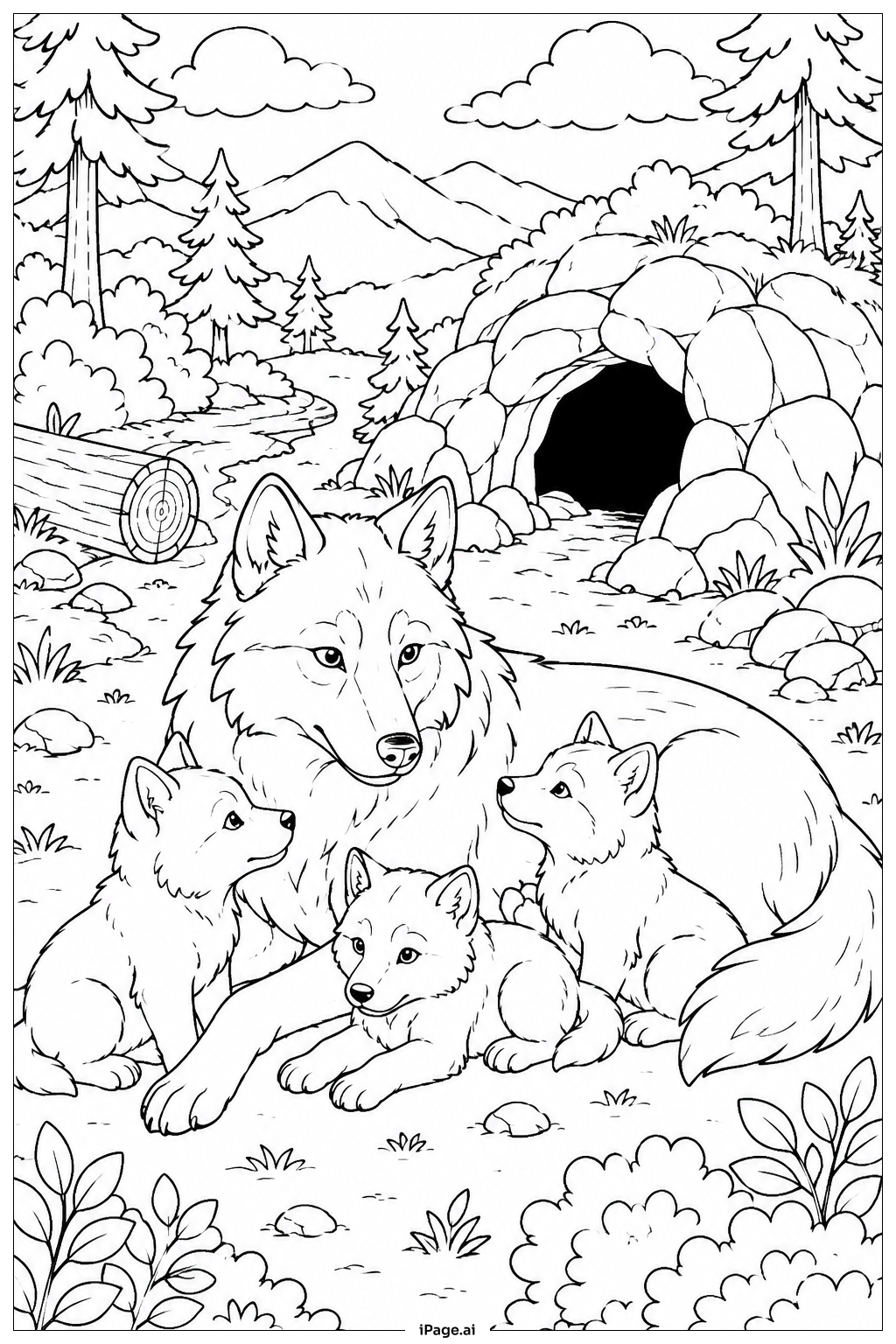
Coloring tips: How to color Mother Wolf And Pups coloring page well?
Start by coloring the mother wolf with shades of gray, brown, or tan for her fur. Use darker tones along her back and lighter shades on her belly and chest. Add white or cream to the tips of her fur for a natural look. For the pups, use lighter, softer versions of the same colors to show their younger, fluffier coats. You can make each pup a slightly different shade to tell them apart. Use warm browns and greens for the forest floor, and soft greens for the leaves and grass around the family. A light blue or pale yellow sky peeking through the trees adds a peaceful touch. Use a darker brown or black to outline the eyes and nose of each wolf, and add a small white dot to the eyes to make them look bright and alive. Take your time with the fur by using short, light strokes in the direction the fur grows. This will make the wolves look soft and realistic.
Coloring challenges: Which parts are difficult to color and need attention for Mother Wolf And Pups coloring page?
• Fur Texture Details: The mother wolf and her pups have thick, layered fur that can be tricky to color well. To make the fur look realistic, you need to use short, gentle strokes that follow the direction the fur grows. Blending two or three colors together — like light gray, medium brown, and white — helps create depth and softness. Rushing through this step can make the fur look flat and one-dimensional.
• Size Differences Between Characters: The mother wolf is much larger than her pups, so keeping the colors consistent while showing the difference in age and size takes careful attention. The pups should look softer and lighter, while the mother needs slightly deeper, richer tones to appear more mature and strong.
• Overlapping Bodies and Paws: In several areas of the image, the pups are tucked close to or partially under the mother wolf. Where bodies overlap, you need to use slightly different shades to separate each wolf clearly. Without this contrast, the shapes can blend together and become hard to read.
• Forest Background Details: The trees, leaves, and grasses behind the wolf family contain many small shapes packed closely together. Choosing colors that are different enough from the wolves but still feel natural takes planning. Too similar a color and the wolves may disappear into the background; too bright and the background will overpower the main scene.
• Eyes and Facial Expressions: The face of each wolf, especially the mother, carries the emotional heart of the image. Getting the eyes right — small, precise, and expressive — requires a steady hand and fine-tipped tools. The nose and muzzle area also need careful shading to look three-dimensional.
Benefits of coloring books: Advantages of drawing Mother Wolf And Pups coloring page
Coloring this image of a mother wolf and her pups offers a wide range of wonderful benefits for children and adults alike. For younger kids, tracing the shapes of the wolves and the forest background helps build fine motor skills and hand-eye coordination. Choosing which colors to use encourages creative thinking and decision-making in a fun, low-pressure way. For older children and teens, working on the detailed fur textures and shading challenges them to develop patience and focus. Blending colors to create realistic fur teaches basic art techniques that can be used in other projects too. The image also sparks curiosity about wolves and wildlife, making it a great starting point for learning about animals and nature. For adults, coloring this peaceful family scene is a calming, meditative activity that helps reduce stress and quiet a busy mind. The gentle theme of a mother caring for her young brings a sense of warmth and comfort. Overall, this coloring page is a meaningful and enjoyable activity that supports creativity, learning, emotional well-being, and a deeper appreciation for the natural world — no matter your age.



