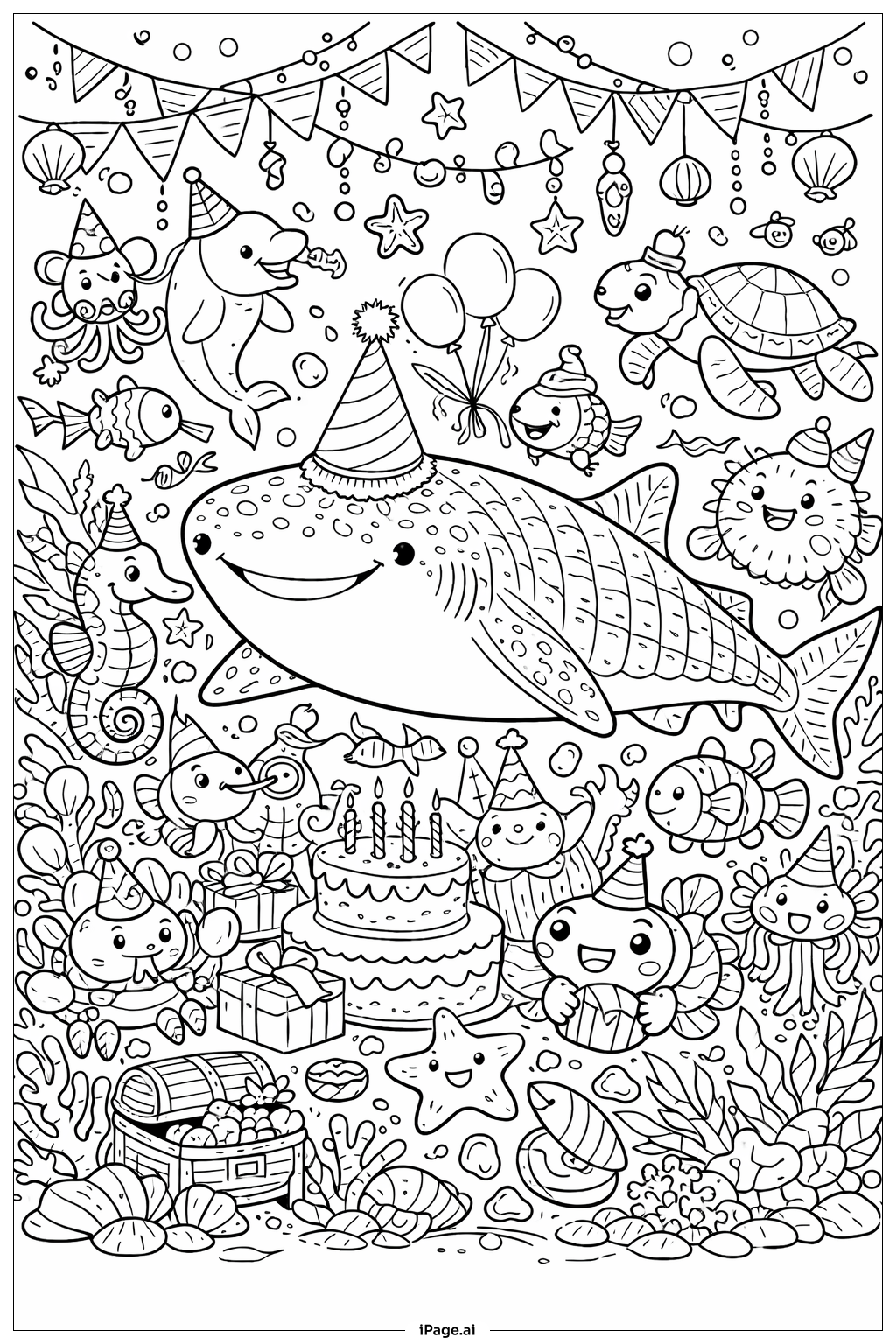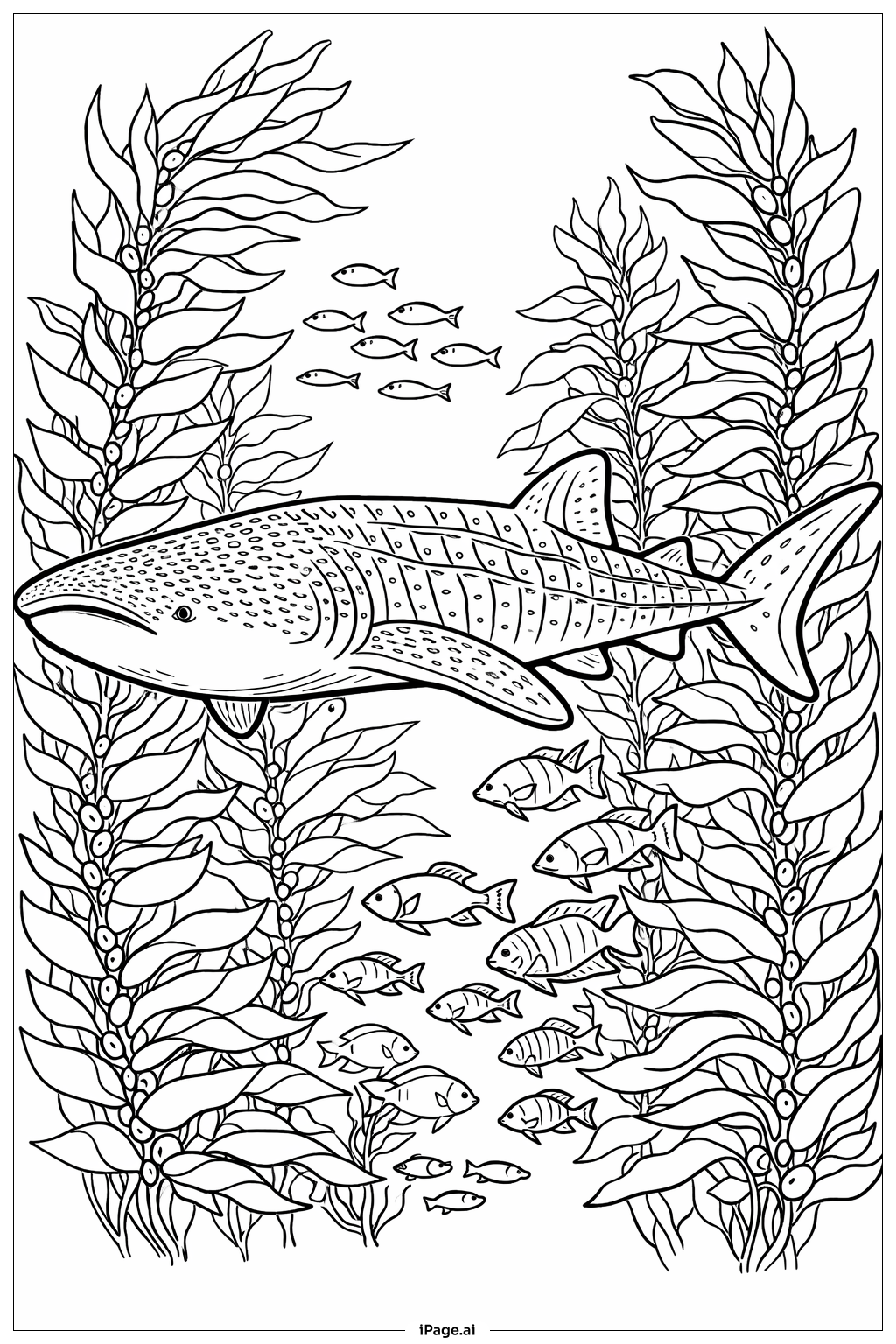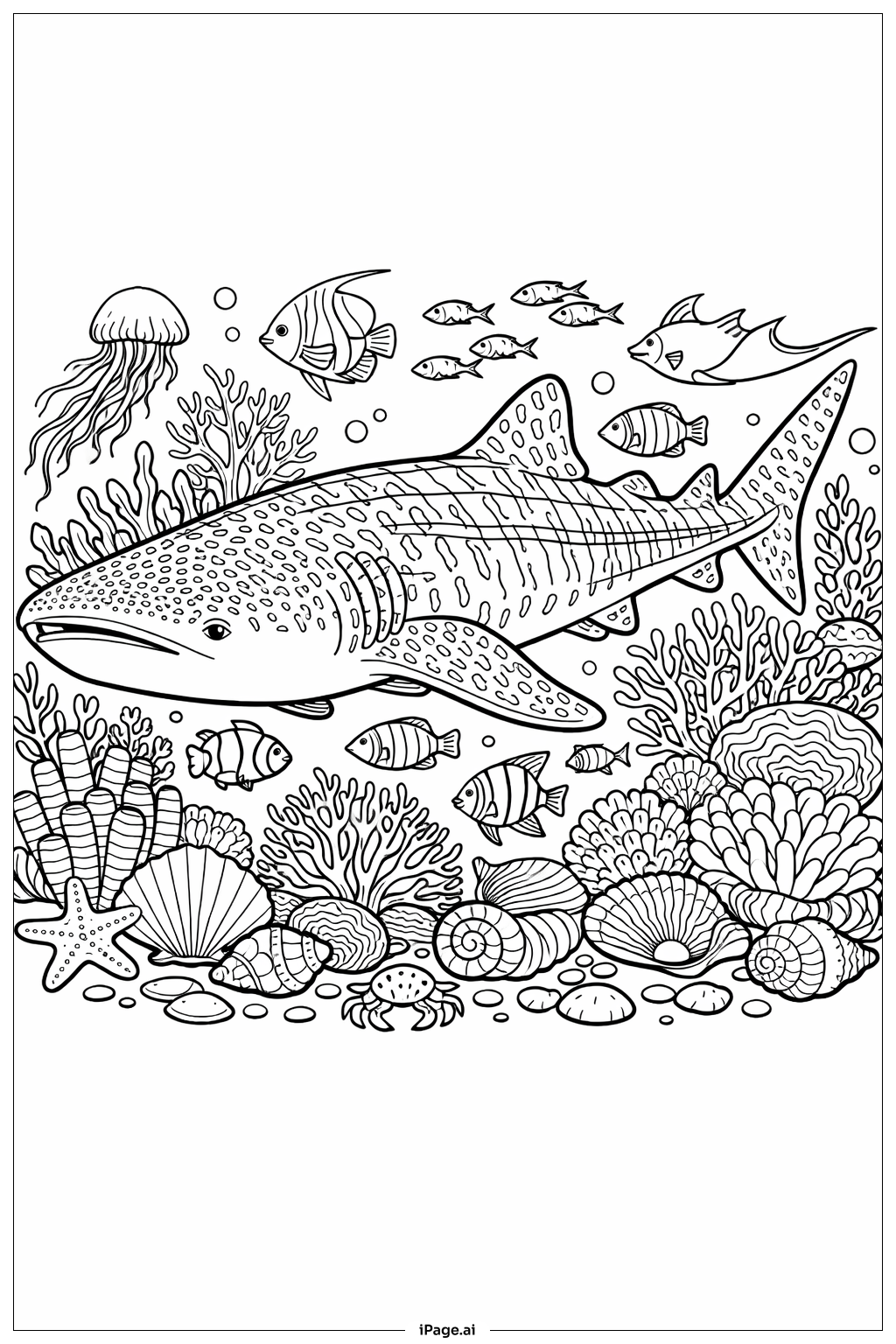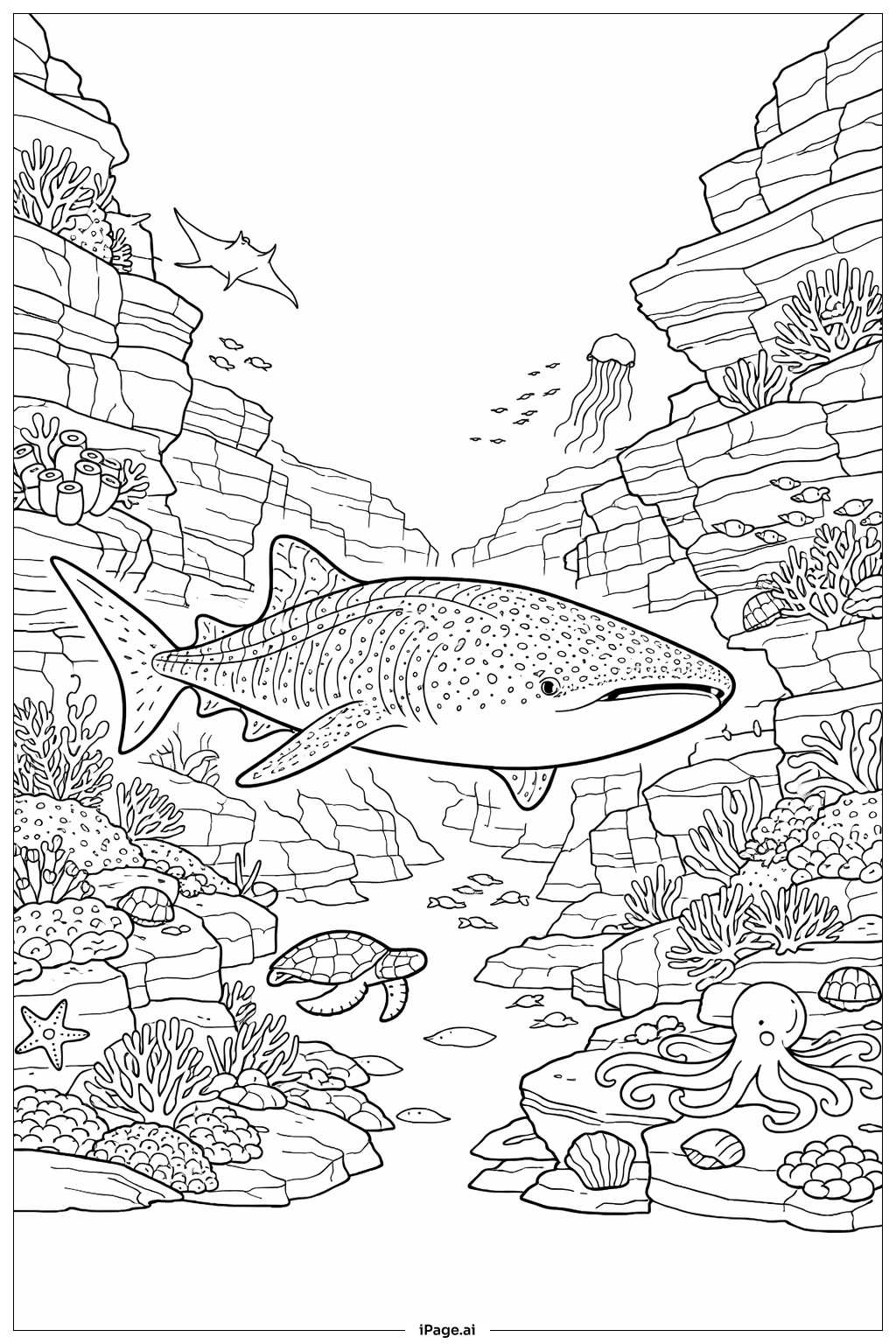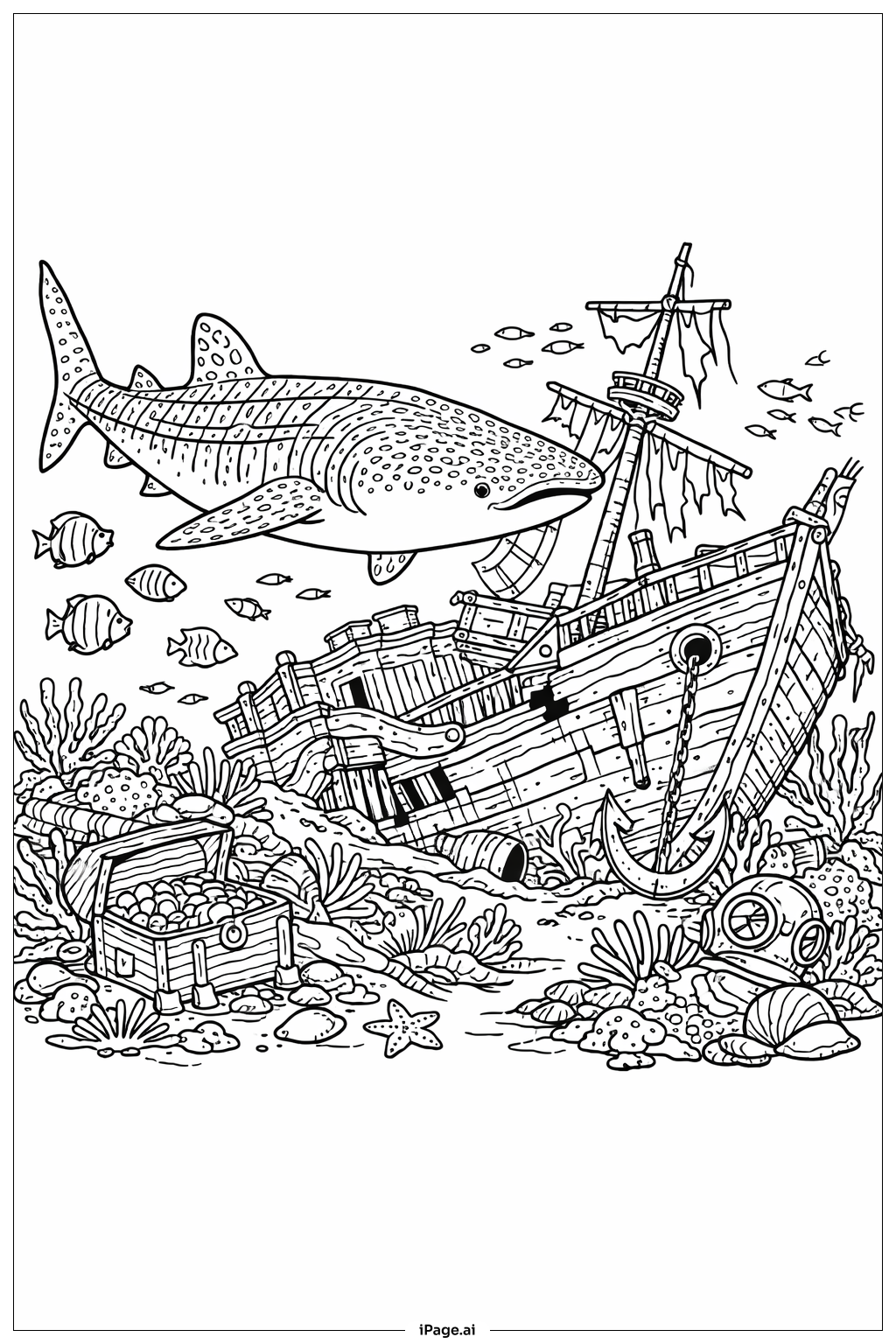
Coloring tips: How to color Whale Shark With Shipwreck coloring page well?
Start with the whale shark's body using a soft blue-gray as your base color. Add darker blue or navy spots and stripes along its back to match its real-life pattern. Use a lighter shade on the belly to show depth. For the shipwreck, try warm browns, rusty oranges, and dark grays to give it an old, weathered look. Add green and teal tones to the coral and sea plants growing on the wreck. Color the water in shades of deep blue and turquoise, getting lighter near the surface. Use pale yellow or white for light rays filtering down through the water. Small fish can be colored in bright colors like orange, yellow, or red to make them pop against the darker background. Bubbles can stay white or light blue. Take your time with the whale shark's spots — they are the star of the scene!
Coloring challenges: Which parts are difficult to color and need attention for Whale Shark With Shipwreck coloring page?
• Whale Shark Spot Pattern: The whale shark's body is covered in a complex pattern of pale spots and narrow stripes. Coloring each spot consistently while keeping the overall body shading smooth is tricky. You need to balance the base body color with the spot details without the two blending together and losing definition.
• Shipwreck Textures: The sunken ship has many different surfaces — rotting wood, rusted metal, barnacles, and sand-covered planks. Each material needs a slightly different color and shading technique to look realistic. Mixing warm rusts, cool grays, and earthy browns in small detailed areas can be challenging, especially for younger colorists.
• Underwater Lighting Effects: Light behaves differently underwater. It filters down in soft, shifting rays and fades as it goes deeper. Recreating this effect with colored pencils or markers requires careful blending from lighter tones near the top to deeper, darker shades at the bottom of the image. Getting a smooth gradient across the water background takes patience and practice.
• Overlapping Elements: The whale shark, the shipwreck, small fish, coral, and bubbles all overlap in this scene. Keeping each element visually separate while staying inside the lines requires focus and a steady hand. Using different color families for each element can help them stand out from one another.
• Scale and Proportion Awareness: The whale shark is enormous compared to the fish and the wreck. Coloring larger areas evenly without streaks or gaps — especially across the shark's wide body — demands consistent pressure and smooth strokes, which can be difficult for beginners.
Benefits of coloring books: Advantages of drawing Whale Shark With Shipwreck coloring page
Coloring this Whale Shark With Shipwreck scene offers a wonderful mix of fun and learning. Kids get to explore the mysteries of the deep ocean while practicing important artistic skills. Working on the whale shark's detailed spot pattern helps build focus and hand-eye coordination. Choosing colors for the water, the wreck, and the sea life encourages creative thinking and color awareness. The large, flowing shape of the whale shark is satisfying to fill in, making it a great confidence builder for younger children. Older kids and teens can challenge themselves with realistic shading and texture work on the shipwreck and coral. This scene also sparks curiosity about marine life and ocean history — kids may want to learn more about whale sharks or real-life shipwrecks after coloring. The calming nature of coloring an underwater scene can also help reduce stress and improve mood. Whether coloring casually or carefully, this page gives children a chance to slow down, be creative, and feel proud of a beautiful finished piece.