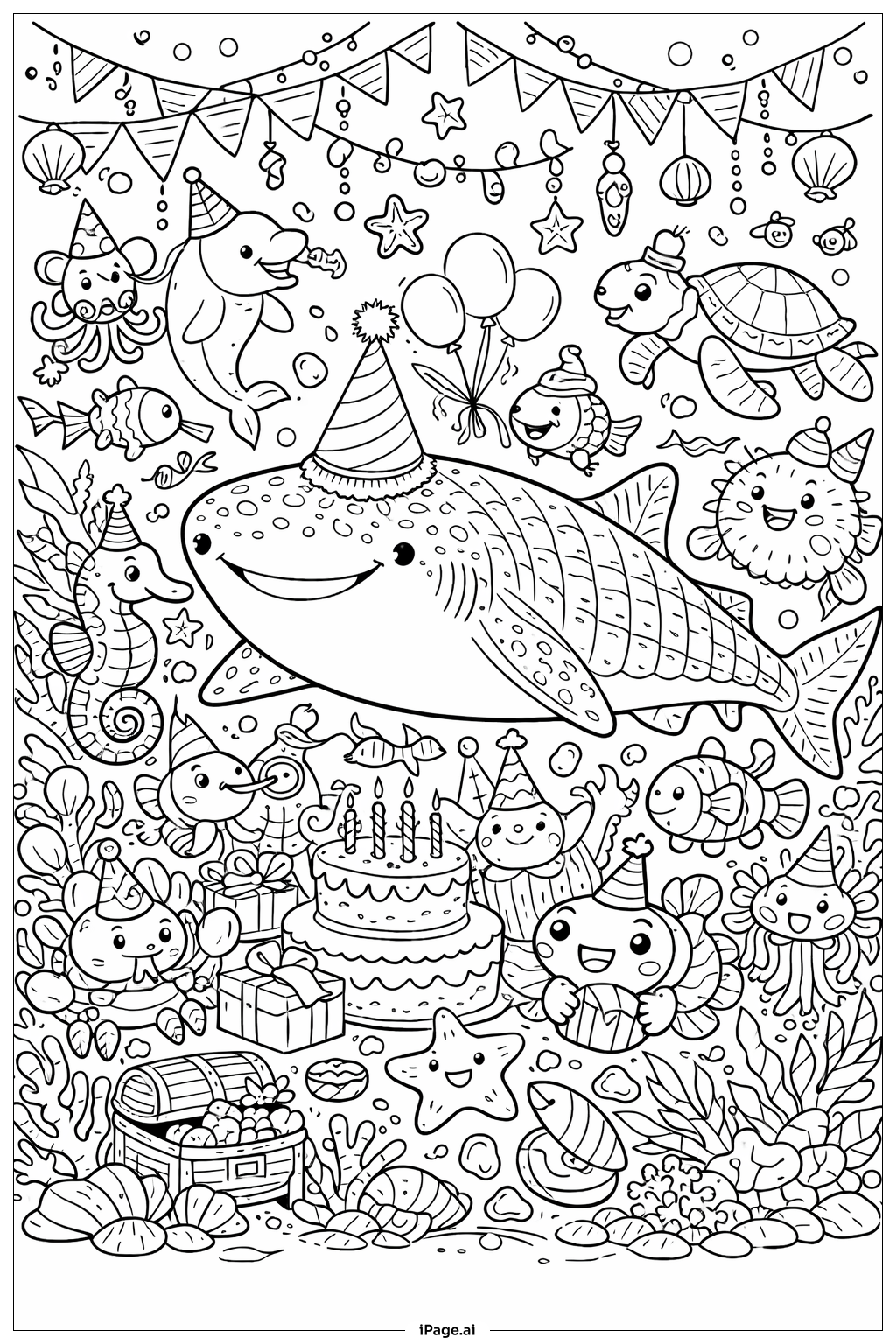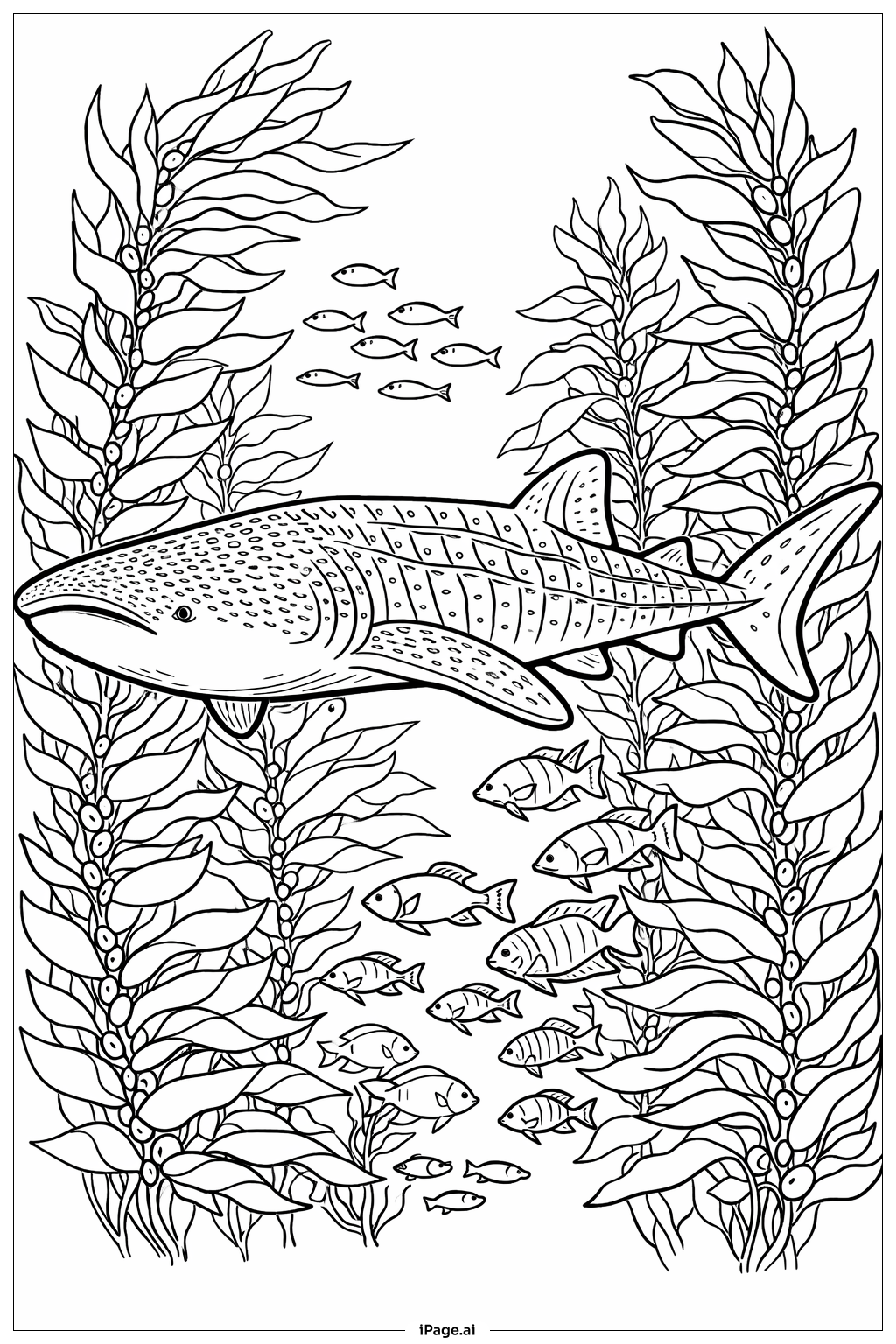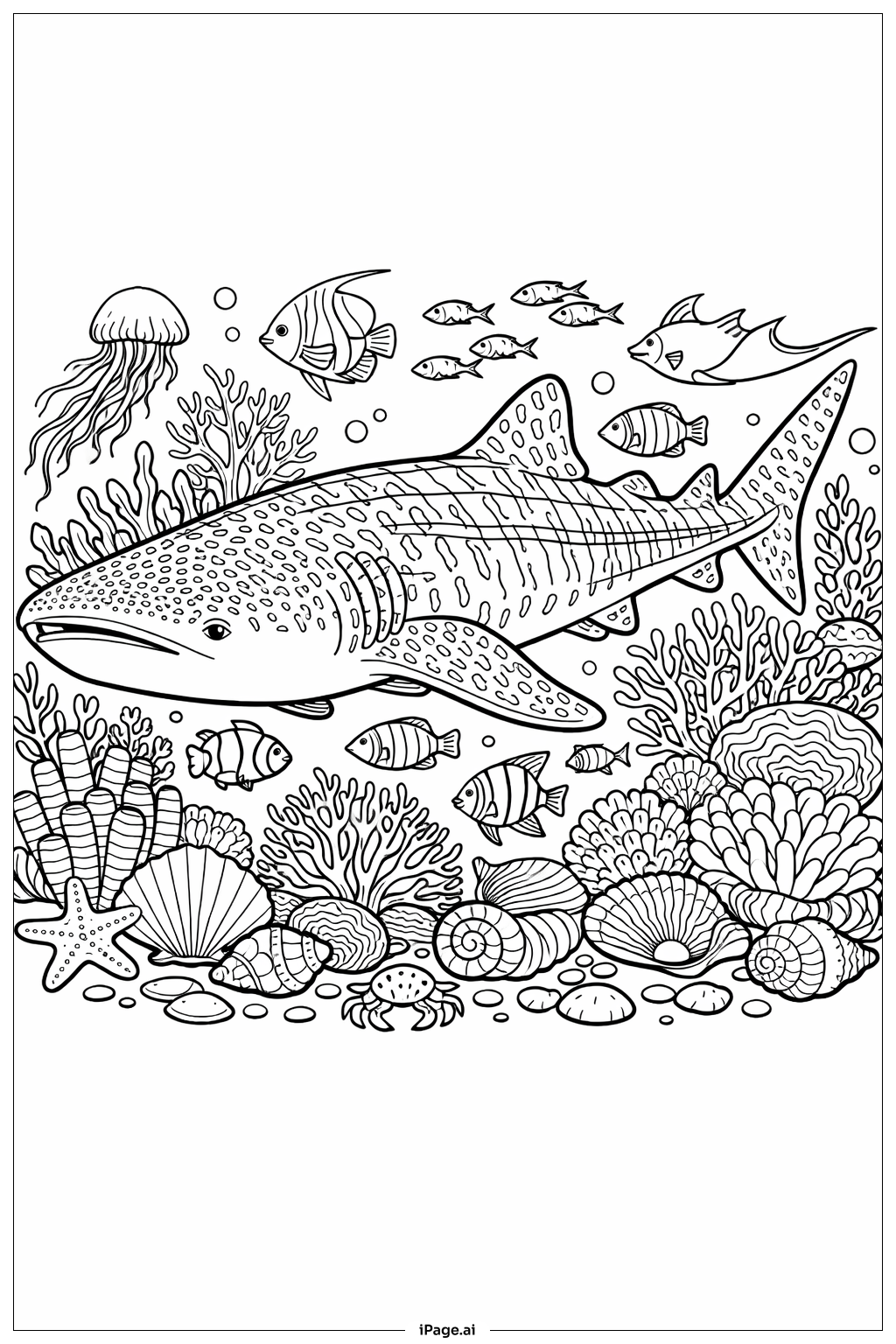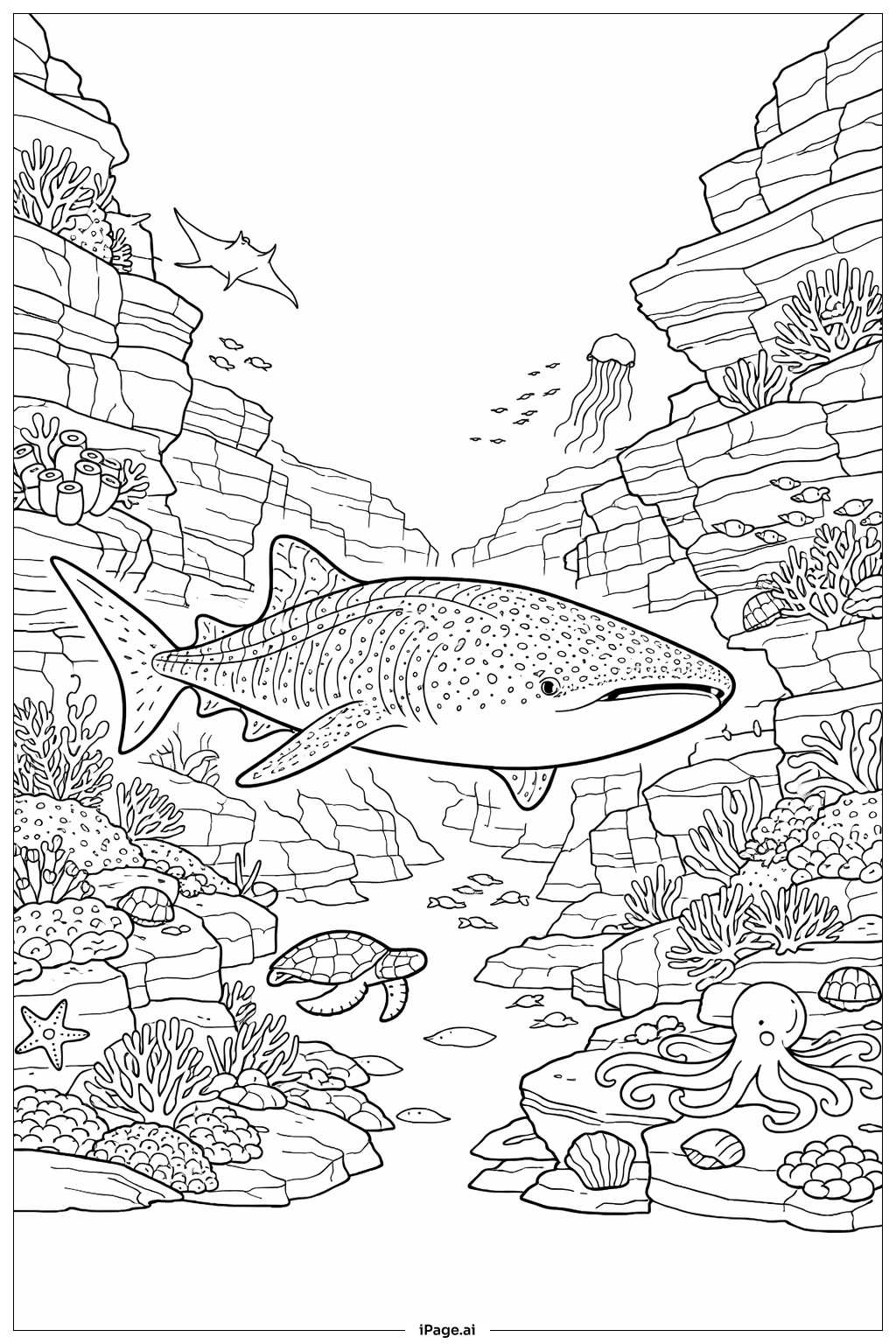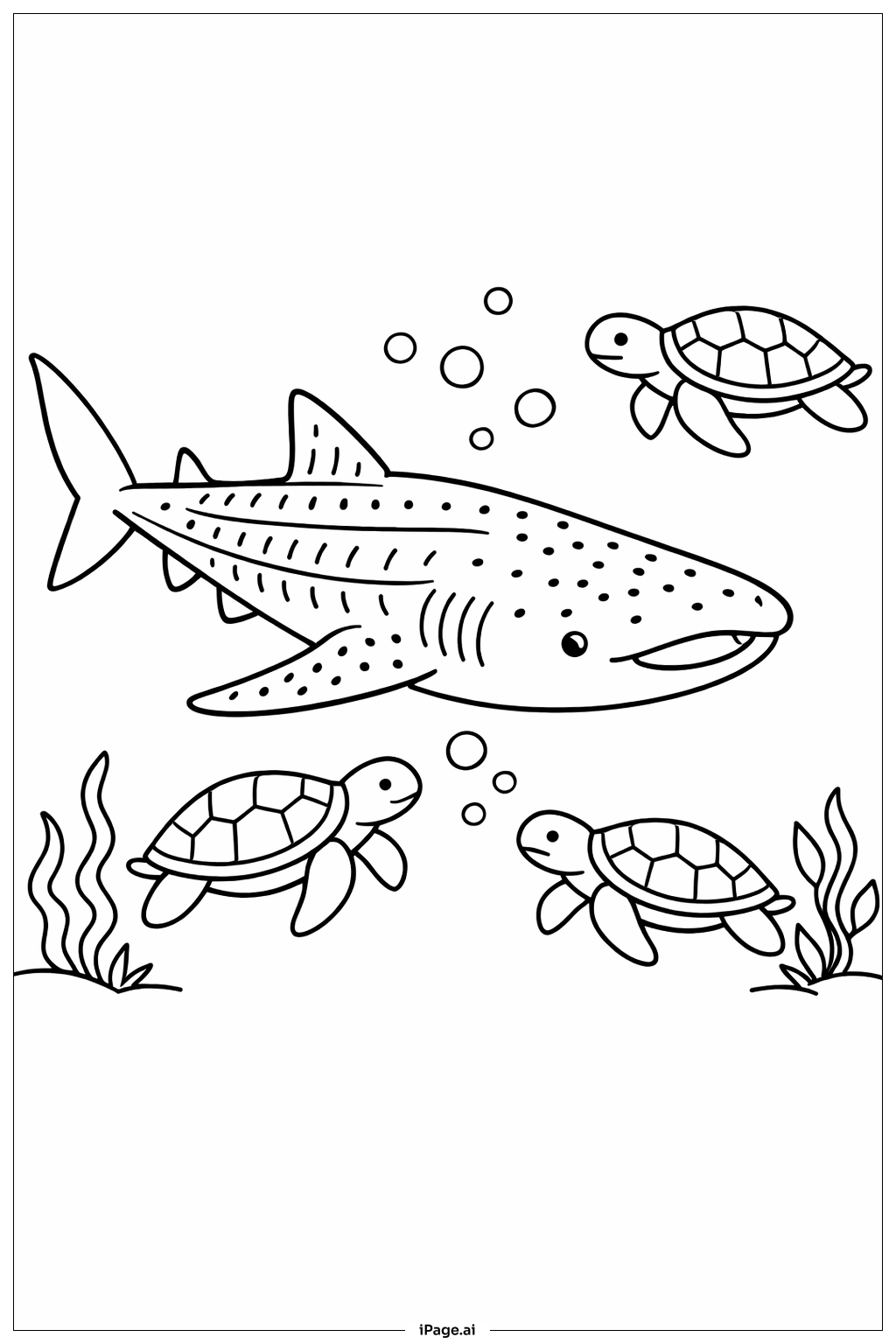
Coloring tips: How to color Whale Shark With Sea Turtles coloring page well?
Start with the whale shark's body using a soft blue-gray as the base color. Then carefully add dark blue or navy spots and stripes across its back and sides to create the signature pattern. Use a pale cream or white for the belly area. For the sea turtles, try warm olive green or teal for their shells, with darker green tones to define each shell segment. Use a lighter yellow-green for their skin and flippers. Color the ocean background in shades of deep blue and aqua to give a sense of depth. Add light streaks of pale blue or white to suggest sunlight filtering through the water. The seaweed and coral can be colored in shades of green, orange, and pink to bring the scene to life. Feel free to mix colors and add your own creative touch to make this underwater world uniquely yours!
Coloring challenges: Which parts are difficult to color and need attention for Whale Shark With Sea Turtles coloring page?
• Whale Shark Spot Pattern: The whale shark's body is covered in a complex pattern of spots and stripes. Staying consistent across such a large surface area takes patience and focus. Try working in small sections at a time so the pattern stays even and does not feel overwhelming.
• Shell Segmentation on Sea Turtles: Each sea turtle has a shell made up of many individual segments called scutes. Coloring each section neatly without going over the dividing lines requires a steady hand and a fine-tipped coloring tool. Using darker shading along the edges of each segment can help them stand out clearly.
• Overlapping Figures and Depth: The whale shark and sea turtles overlap in several places, which means you need to decide which animal appears closer to the viewer. Using slightly deeper tones on figures that are farther away helps create a natural sense of depth and distance in the scene.
• Background Ocean Details: The background includes seaweed, coral, and small fish scattered throughout the water. These small elements are close together and require careful coloring to avoid colors bleeding into one another. Using different shades of blue for the water in different areas also helps separate the background from the main figures.
• Blending Water Tones: Achieving a smooth, realistic ocean look means blending multiple shades of blue and green seamlessly. Abrupt color changes can make the water look flat or patchy. Colored pencils or watercolor paints work especially well for creating soft, gradient-style blending in the water areas.
Benefits of coloring books: Advantages of drawing Whale Shark With Sea Turtles coloring page
Coloring this Whale Shark With Sea Turtles page offers a wide range of wonderful benefits for children and beginners alike. First, it builds focus and concentration. Filling in the intricate spots on the whale shark and the segmented shells of the sea turtles requires careful attention, which naturally trains the mind to stay present and focused. Second, it develops fine motor skills. Holding coloring tools and staying within detailed lines strengthens hand muscles and improves hand-eye coordination, skills that support writing and other daily tasks. Third, it sparks curiosity about the natural world. As children color these magnificent ocean creatures, they become more interested in marine life, encouraging them to ask questions and learn about real whale sharks and sea turtles. Fourth, it provides a calming and stress-relieving activity. The gentle, flowing shapes of underwater life create a soothing atmosphere that helps children relax and unwind. Finally, it nurtures creativity and self-expression. Choosing colors, experimenting with shading, and making the scene their own gives children a sense of pride and accomplishment. This page is a perfect blend of fun, learning, and artistic growth.