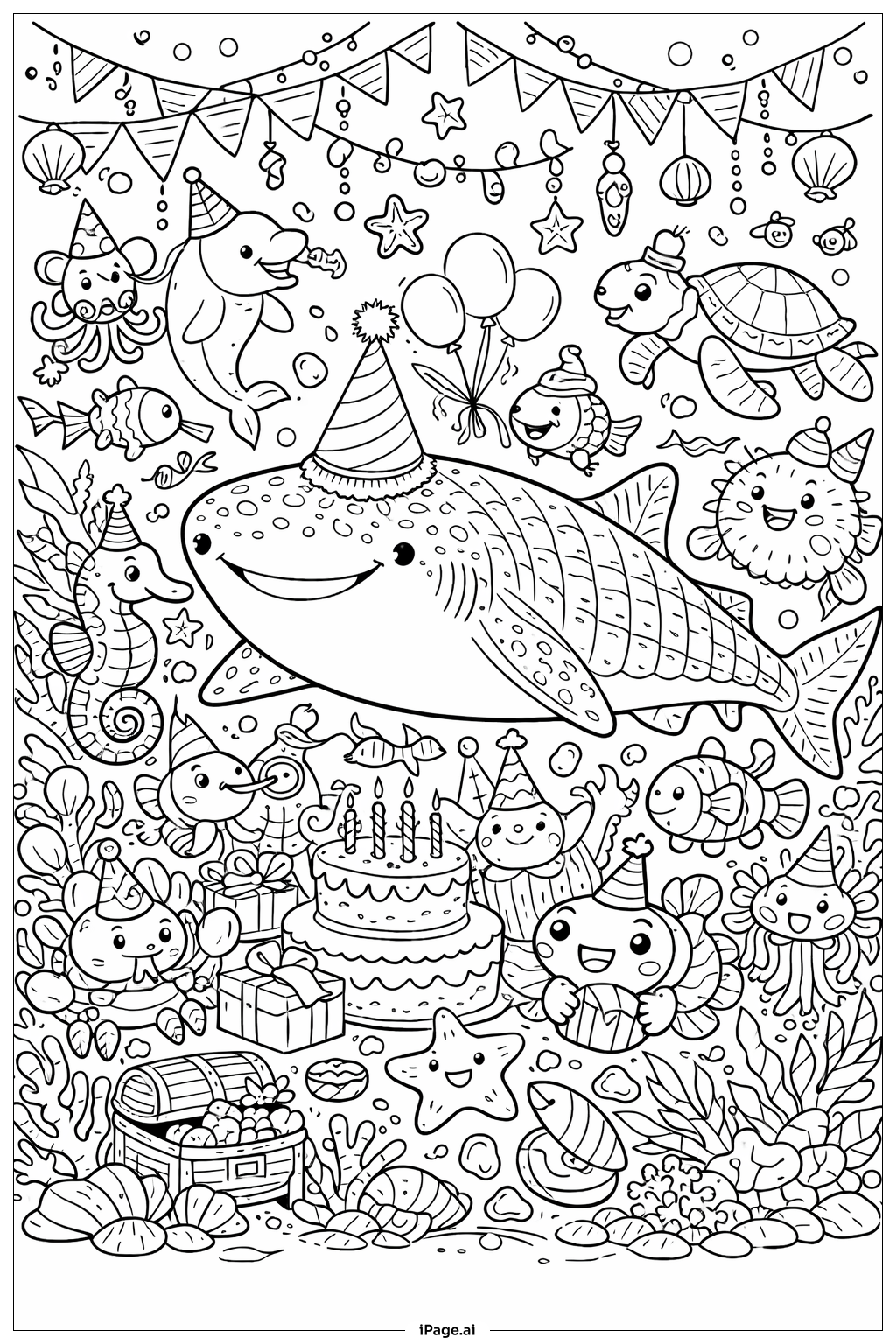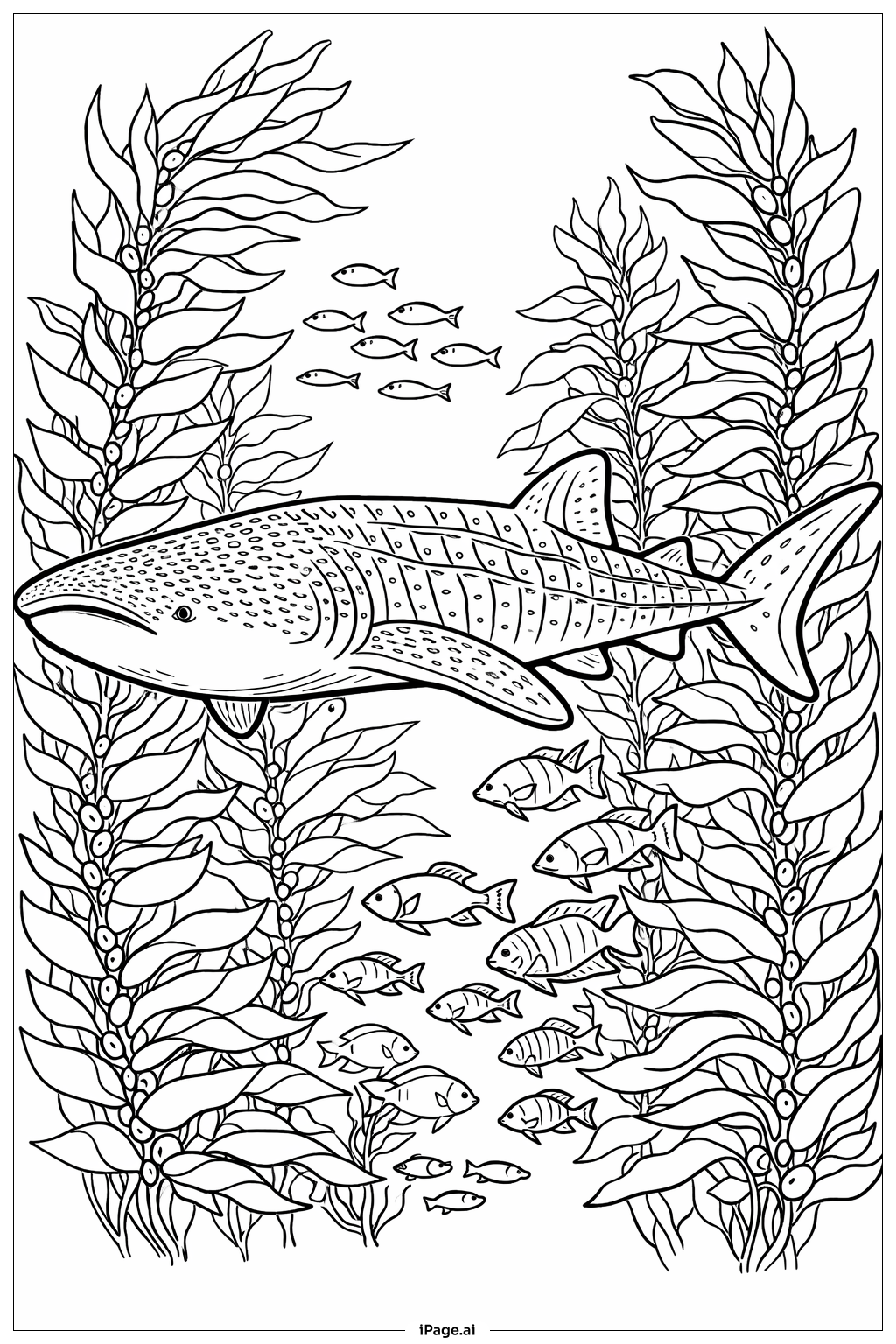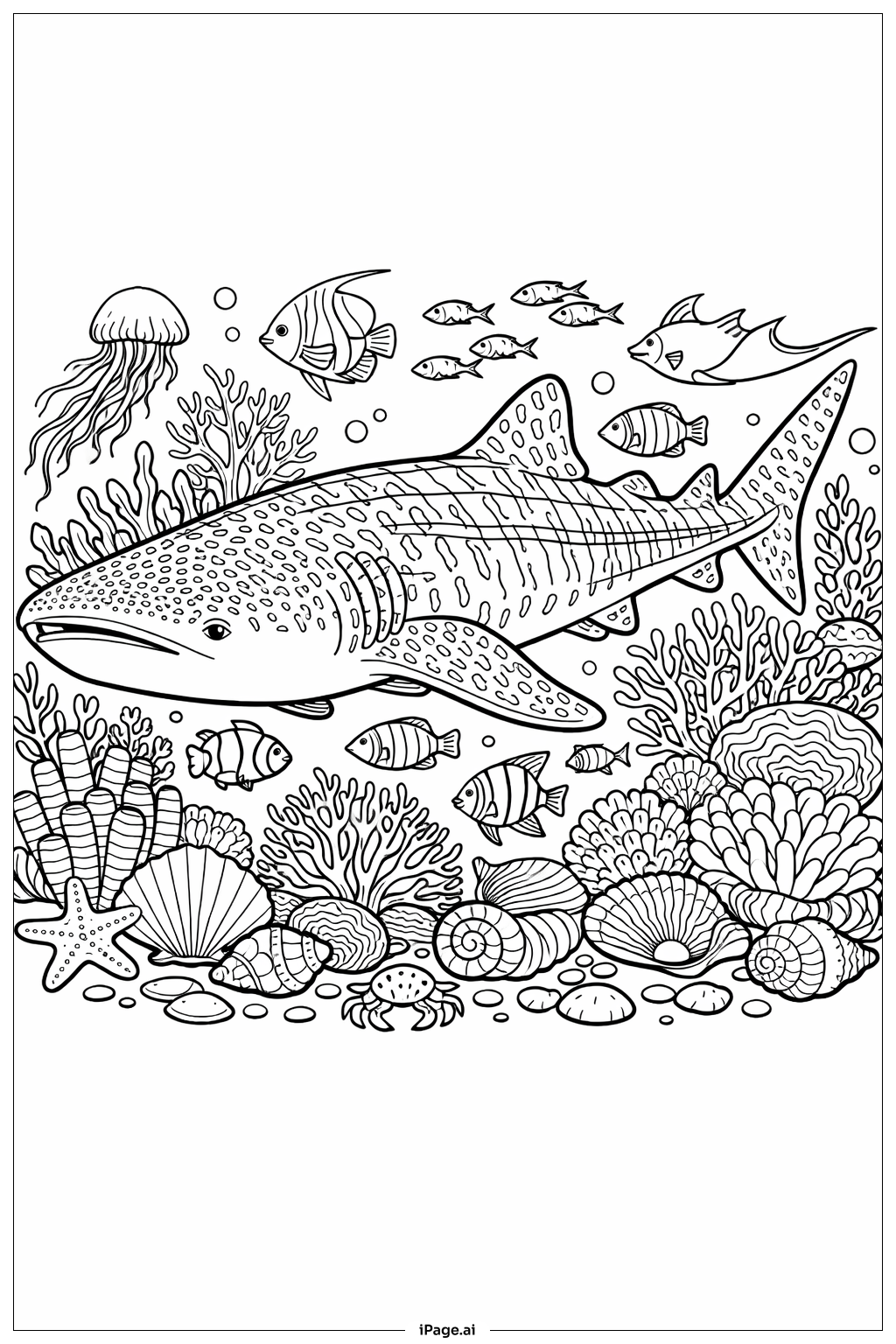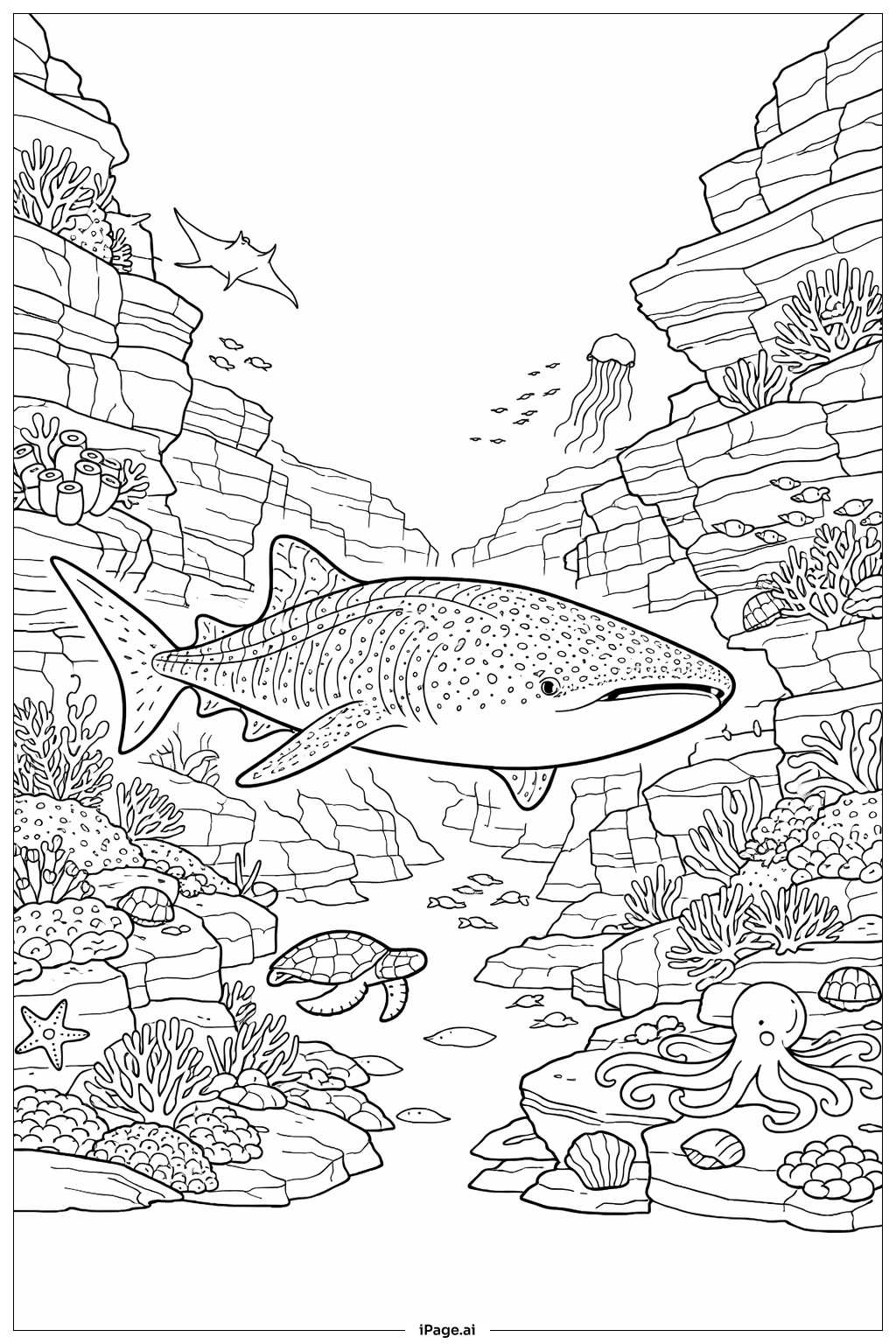
Coloring tips: How to color Whale Shark With Reef Panorama coloring page well?
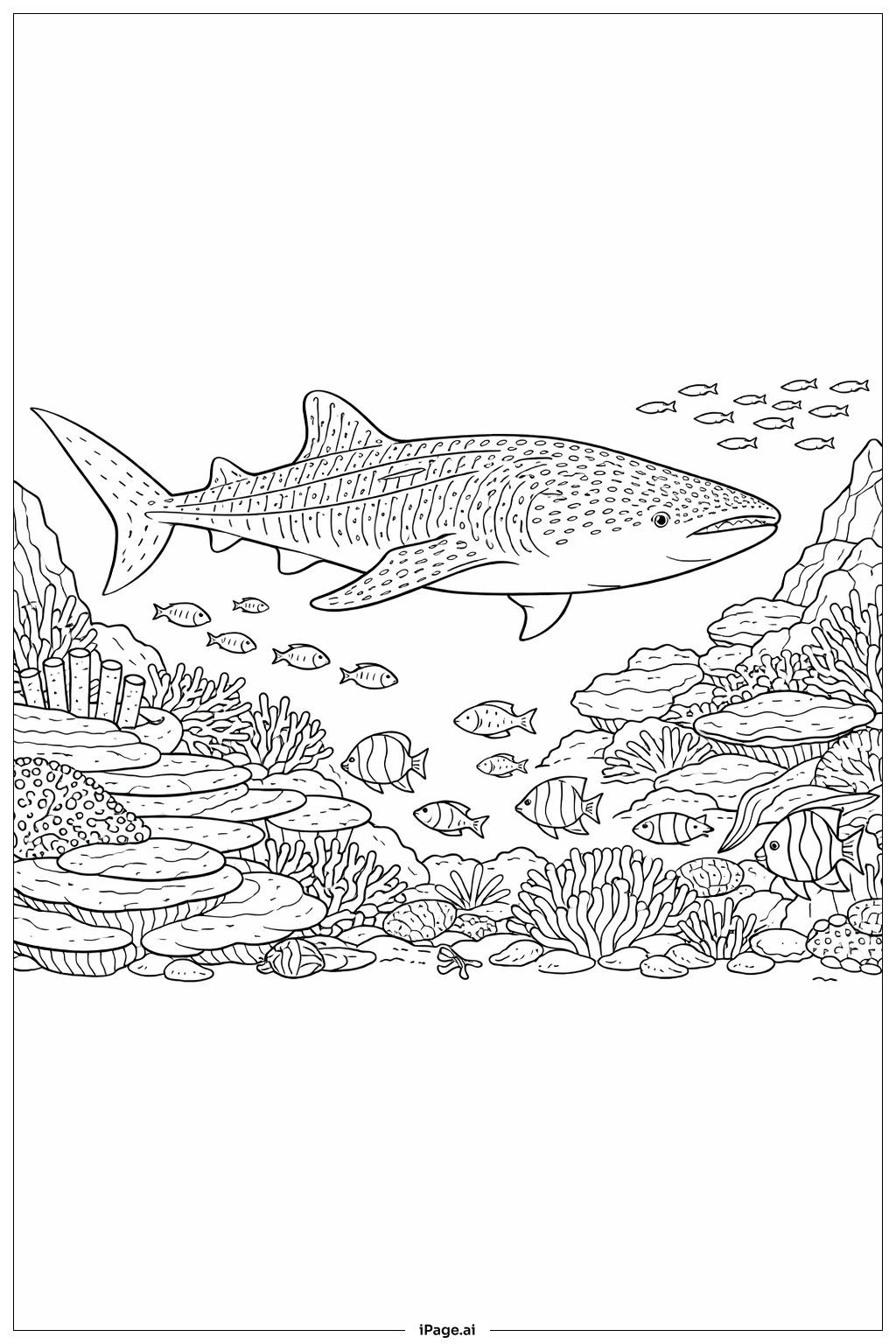
For the whale shark, use shades of blue-gray or slate blue for the body, with white or cream for the belly. Add small white or yellow spots across the back and sides to show its signature pattern. The coral reef offers endless possibilities: use bright oranges, pinks, purples, and yellows for different coral types. Try blending blues and greens for the water background, making it darker at the top and lighter near the bottom to create depth. Color the small fish in tropical shades like yellow, blue, orange, and striped patterns. Use green and brown tones for seaweed and sea fans. Consider using colored pencils to layer colors for a more realistic ocean effect, or markers for bold, vibrant tropical hues.
Coloring challenges: Which parts are difficult to color and need attention for Whale Shark With Reef Panorama coloring page?
• Whale Shark Spot Pattern: The most challenging aspect is coloring the hundreds of small spots that cover the whale shark's body. Each spot needs to be filled carefully while maintaining the overall pattern consistency. Young children may find this repetitive task tiring, while older colorists must ensure the spots remain evenly distributed and appropriately sized throughout the body.
• Coral Reef Details: The intricate coral formations present numerous small spaces and complex shapes that require precision. The various coral types have different textures, from smooth rounded surfaces to delicate branching structures with tiny gaps. Staying within these fine lines demands patience and steady hand control, especially when working with markers or crayons that have broader tips.
• Layering and Depth: Creating a realistic underwater scene requires understanding how to use color to show depth and dimension. The background water needs gradual color transitions, while the foreground elements should appear brighter and more detailed. This concept of spatial relationships and color intensity variation can be difficult for younger artists to grasp and execute effectively.
• Small Fish and Background Elements: Numerous tiny fish and background details scattered throughout the scene require careful attention. These small areas can be easily overlooked or accidentally colored outside the lines. Switching between different colors for multiple small objects also tests organizational skills and color planning abilities.
Benefits of coloring books: Advantages of drawing Whale Shark With Reef Panorama coloring page
Coloring this whale shark reef scene offers wonderful educational and developmental benefits. Children learn about marine biology and ocean ecosystems while exploring the peaceful nature of whale sharks, the largest fish in the sea. The repetitive task of coloring the spots helps develop patience, focus, and fine motor skills. The complex coral reef details improve hand-eye coordination and precision control. This image encourages creativity in color selection, as children can experiment with tropical color combinations and learn about how different colors work together. The calming underwater theme promotes relaxation and stress relief, making it perfect for mindfulness activities. Completing this detailed scene builds confidence and provides a sense of accomplishment, especially for older children and adults who enjoy intricate coloring challenges.