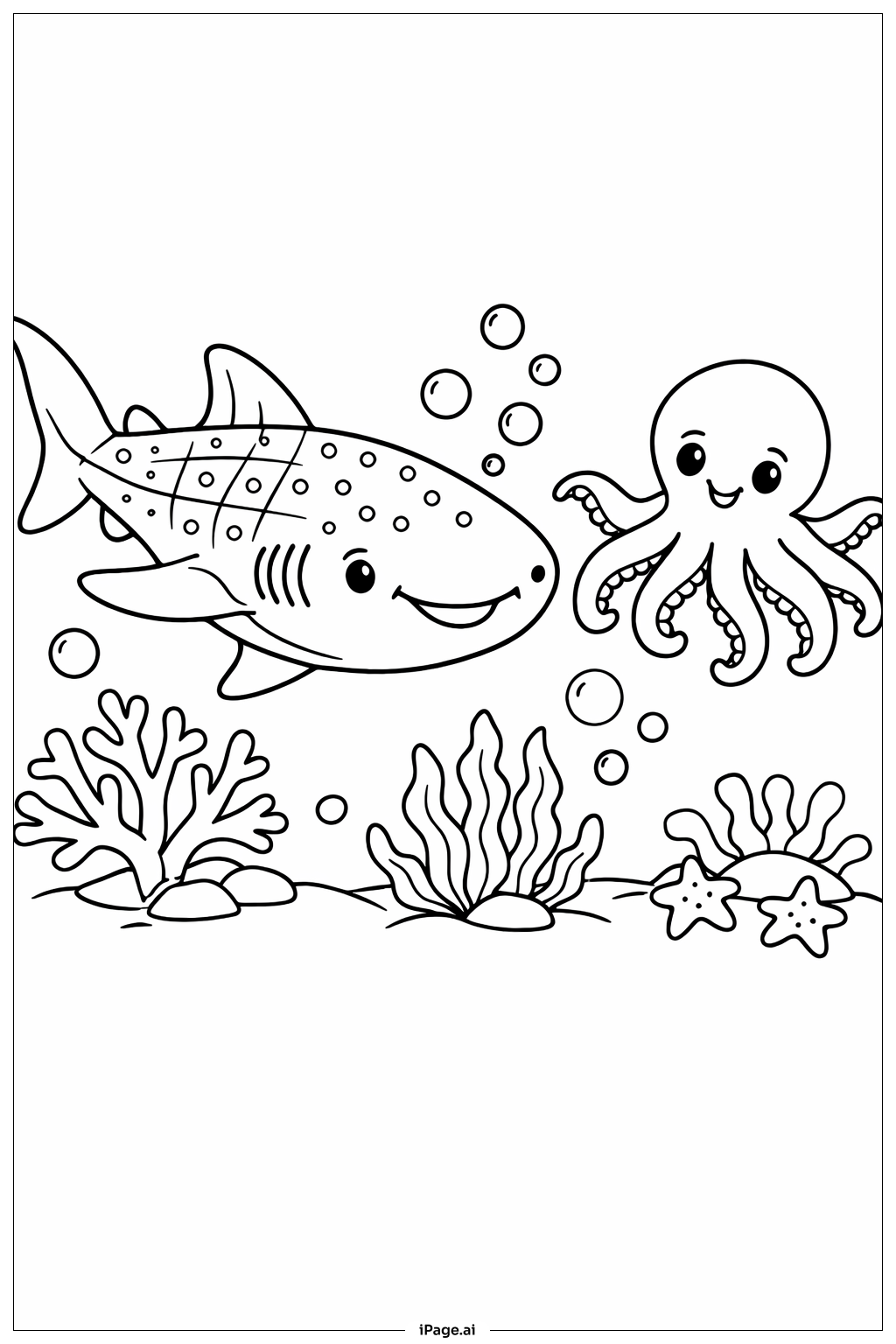
Coloring tips: How to color Whale Shark With Octopus coloring page well?
Start with the whale shark using shades of blue-gray or purple-gray for the body, leaving the belly area white or cream. Color the signature spots in darker tones like navy, black, or deep purple to create the iconic whale shark pattern. For the octopus, consider using warm colors like orange, red, or pink to create contrast against the cooler whale shark. You could also choose purple, brown, or even bright yellow. Color the suckers on the tentacles in lighter or darker shades of your chosen octopus color. Use various shades of blue for the water background, perhaps adding turquoise or teal around the creatures. Make the bubbles light blue or leave them white with just a hint of color around the edges for a translucent effect.
Coloring challenges: Which parts are difficult to color and need attention for Whale Shark With Octopus coloring page?
• Spot Pattern Consistency: The whale shark's body is covered with numerous spots that need consistent coloring. Keeping each spot neatly colored within its boundaries requires patience and steady hand control. Young children may find it challenging to color many small circles without going outside the lines or missing spots entirely.
• Tentacle Sucker Details: The octopus tentacles feature many small circular suckers that create intricate patterns. Each sucker needs individual attention, and the curved arrangement along the winding tentacles makes it difficult to maintain consistent coloring direction. The overlapping tentacles add complexity as colorists must track which tentacle is in front.
• Shading and Dimension: Creating realistic depth on the whale shark's large, rounded body requires understanding of light and shadow. Beginners may struggle with gradual color transitions to show the curved surface. The octopus's soft body also needs subtle shading to appear three-dimensional rather than flat.
• Fine Line Spaces: The detailed line work throughout the image creates many narrow spaces between elements, particularly where the octopus tentacles curl near the whale shark's body. Coloring these tight spaces without bleeding colors together requires precision and the right tool selection, such as fine-tipped markers or sharp colored pencils.
Benefits of coloring books: Advantages of drawing Whale Shark With Octopus coloring page
Coloring this whale shark and octopus page offers wonderful developmental benefits for children. The repetitive task of filling in the many spots helps improve focus and concentration while building patience. The different-sized areas challenge kids to practice fine motor control, from the large whale shark body to the tiny suckers on the octopus tentacles. This marine scene also provides educational value, encouraging curiosity about ocean life and these fascinating creatures. Children learn about whale shark patterns and octopus anatomy while being creative. The combination of structured elements like spots and flowing shapes like tentacles allows kids to practice both precision and fluid coloring techniques. Completing this detailed page builds confidence and provides a strong sense of accomplishment, especially for older children tackling the intricate details.



