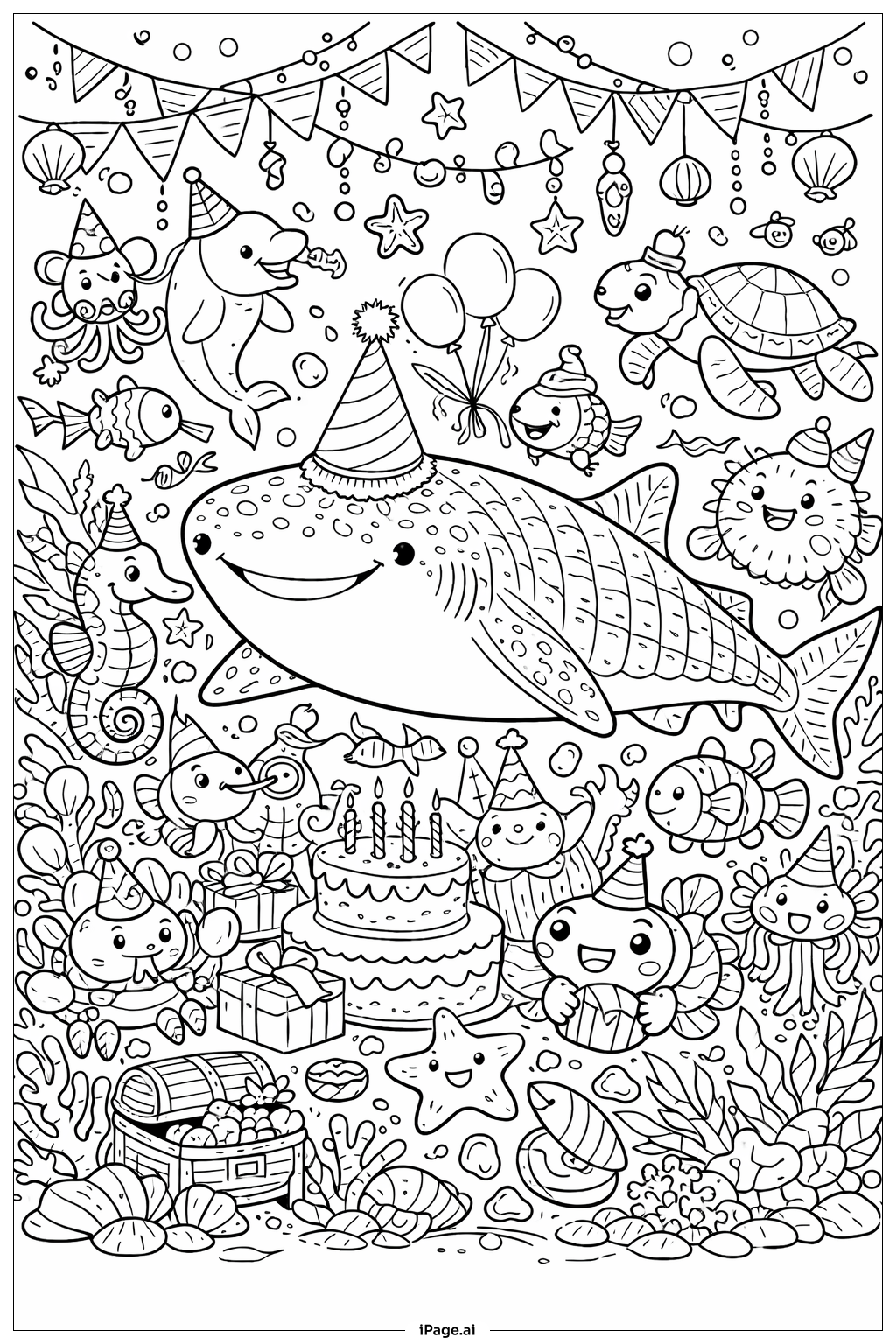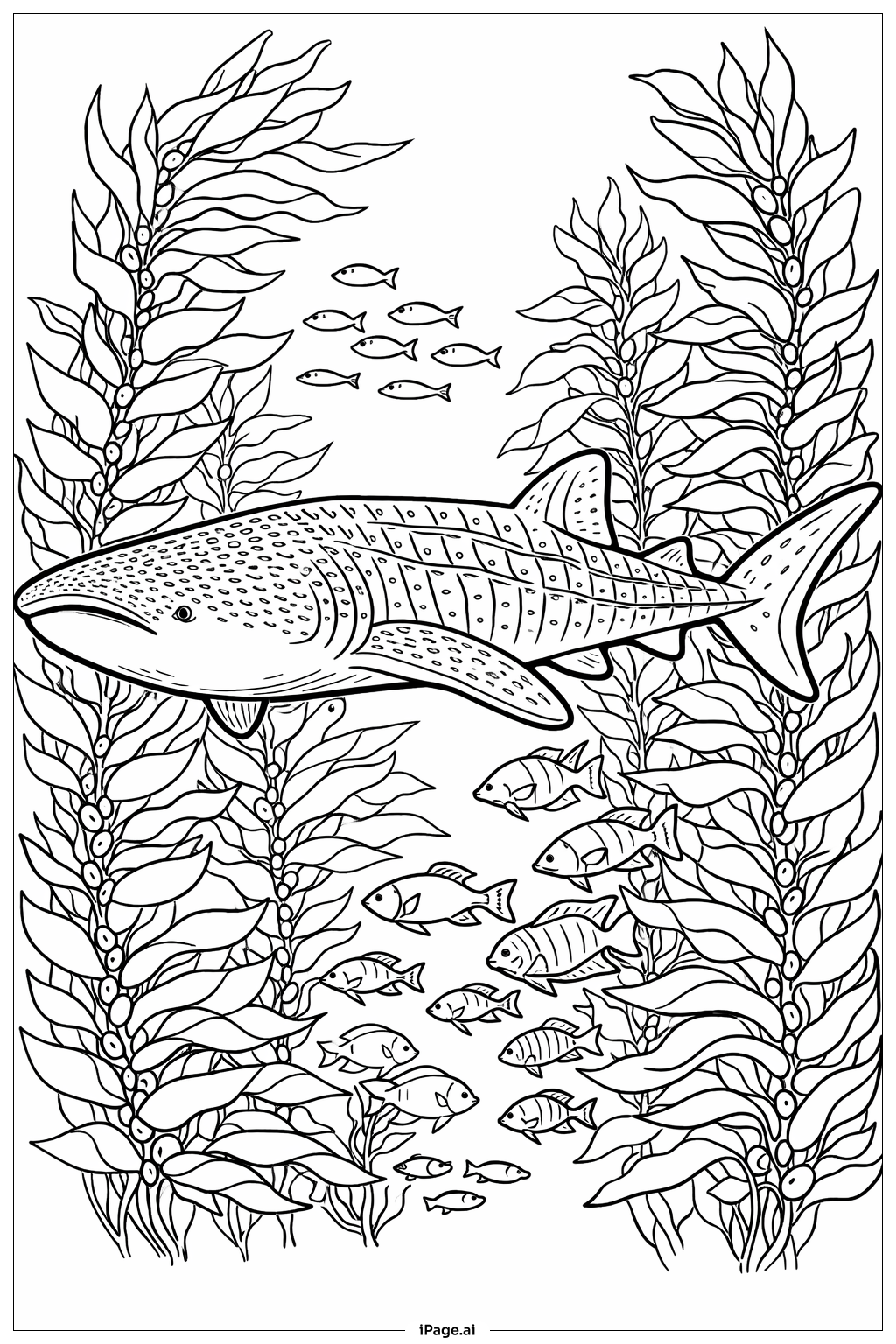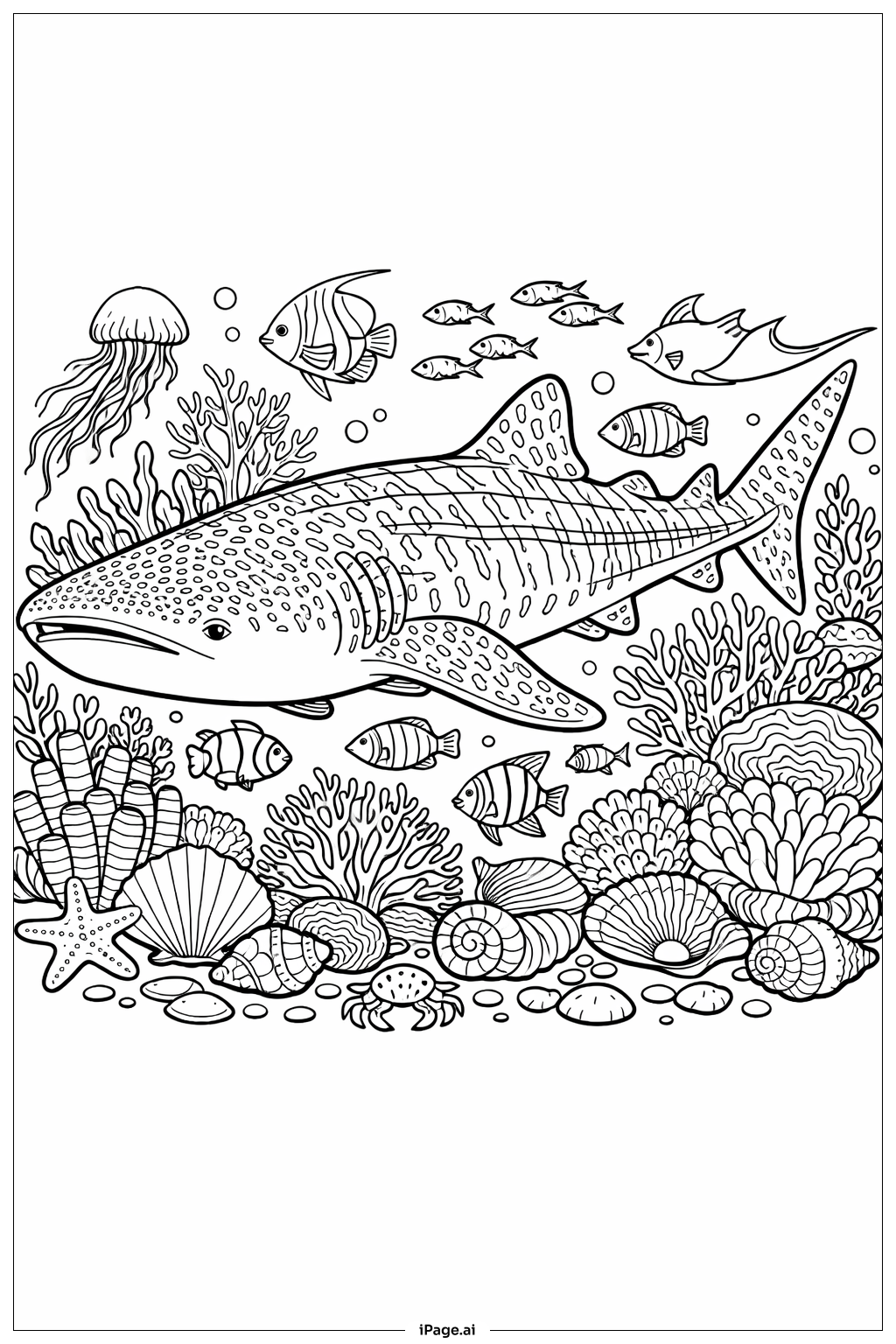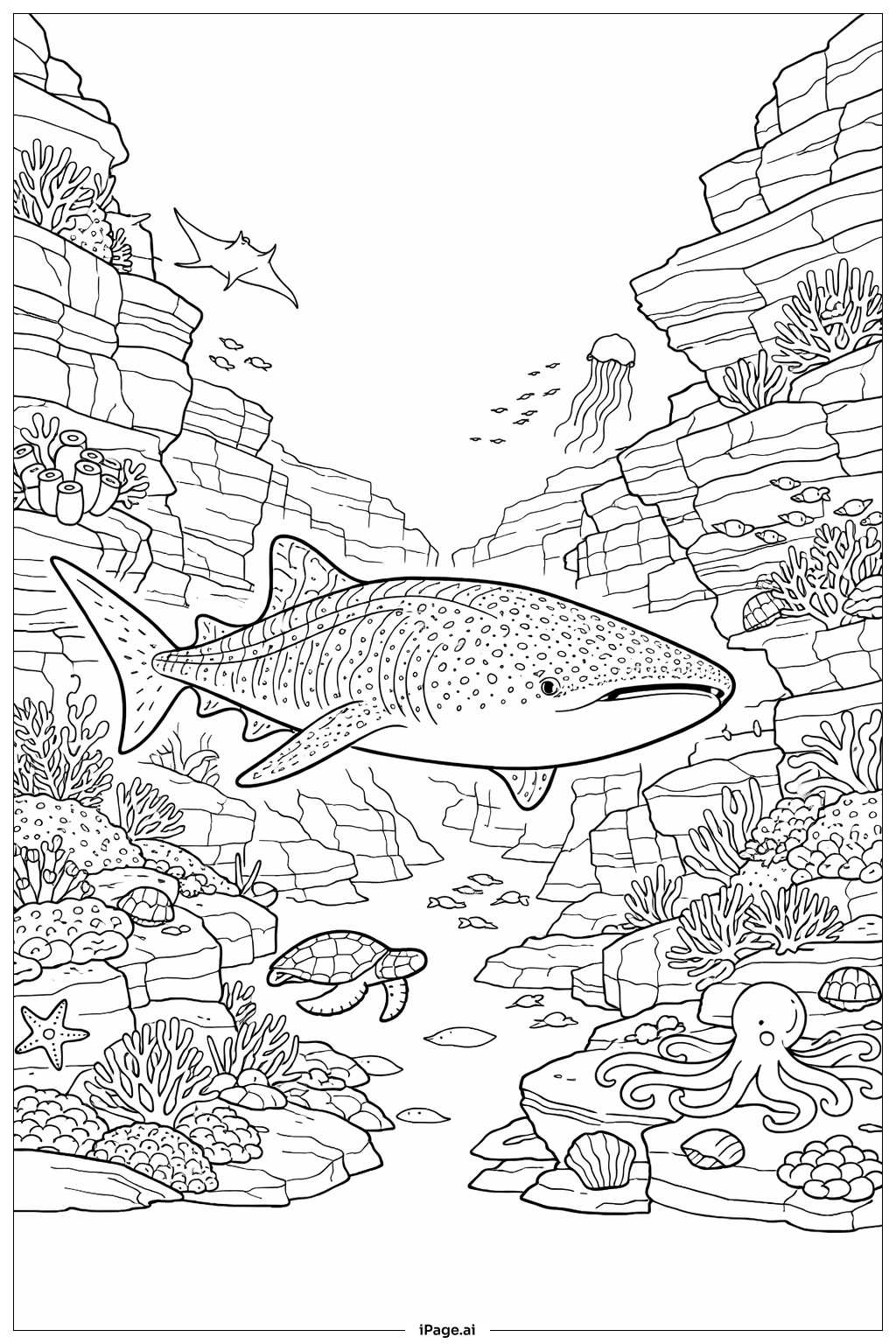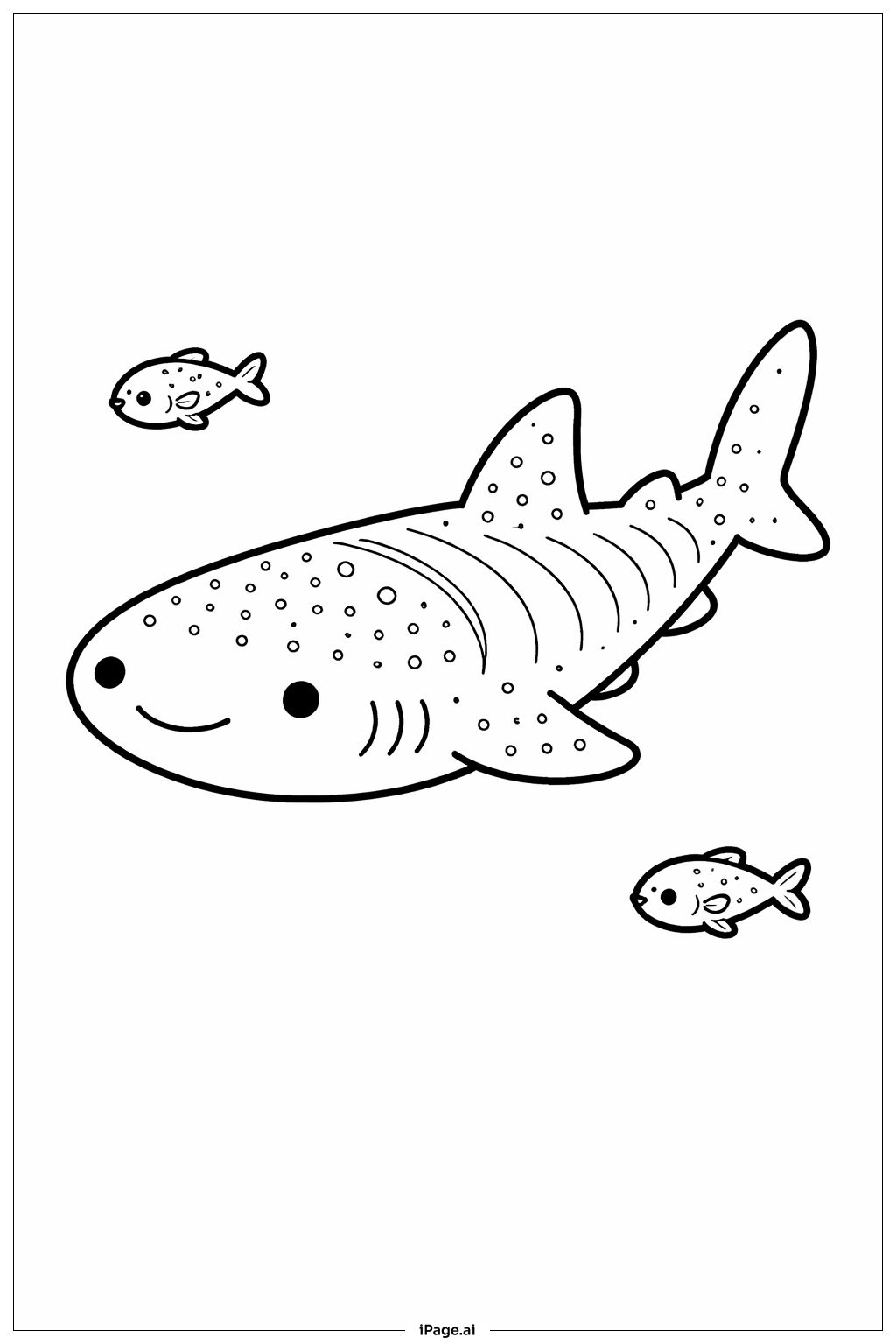
Coloring tips: How to color Whale Shark With Fish Friends coloring page well?
Start with the whale shark's body using shades of blue-gray or deep ocean blue. Add lighter tones on the belly to show its natural pale underside. Use white or pale yellow for the iconic spots and stripes on its back — take your time placing them evenly across the body.
For the small fish friends, have fun with bright colors! Try orange, yellow, red, and green to make each fish look unique. You can mix patterns like stripes and spots on the smaller fish too.
Use different shades of blue and teal for the water background. Add touches of darker blue in the deeper areas and lighter blue near the surface to show depth. Color the seaweed in shades of green, and make the bubbles light blue or white. Keep the overall palette cool and oceanic to bring the underwater world to life.
Coloring challenges: Which parts are difficult to color and need attention for Whale Shark With Fish Friends coloring page?
• Whale Shark Spot Pattern: The whale shark's signature pattern of spots and stripes covers a very large body area. Keeping the spots evenly sized and consistently spaced takes patience. Young colorists may find it tricky to stay inside each small dot while also maintaining a smooth base color underneath. Take it one section at a time to avoid feeling overwhelmed.
• Body Shading and Volume: The whale shark is enormous, and showing its rounded, three-dimensional shape using flat coloring tools can be a real challenge. Creating a gradient from darker tones on the back to lighter tones on the belly requires careful blending. Beginners may struggle to transition colors smoothly without creating harsh lines.
• Small Fish Details: The little fish companions have small, intricate bodies with fins, eyes, and patterns of their own. Coloring these tiny figures without accidentally going outside the lines or muddying the colors requires a fine-tipped tool and steady hands. Keeping each fish looking distinct from its neighbors adds another layer of difficulty.
• Water Background Depth: Filling the background with a convincing sense of underwater depth means layering multiple shades of blue and teal. Getting the water to feel like it recedes into the distance without looking flat or patchy is harder than it looks, especially for colorists who are new to blending background tones.
• Bubble and Seaweed Accents: The bubbles and seaweed are small accent elements that require careful attention. Leaving bubbles uncolored or using just a light outline can look great, but it demands restraint and control — coloring over them by accident is easy to do.
Benefits of coloring books: Advantages of drawing Whale Shark With Fish Friends coloring page
Coloring this Whale Shark With Fish Friends page offers a wonderful mix of creativity, learning, and relaxation for kids of all ages.
Working on the whale shark's large body helps children practice filling broad areas steadily and confidently, building brush or pencil control over time. Placing the tiny spots and stripes across its body trains focus and fine motor precision in a fun, low-pressure way.
The small fish companions encourage color experimentation. Kids can freely choose bold, bright hues and explore how different color combinations look side by side. This sparks creativity and builds an early sense of color theory.
The ocean setting also gently introduces children to marine biology. As they color, kids become more curious about whale sharks, tropical fish, and ocean ecosystems — making this page a natural doorway into learning about the natural world.
On an emotional level, the calm underwater scene has a naturally soothing quality. The flowing lines, gentle bubbles, and friendly characters help children slow down, concentrate, and find a peaceful rhythm — which is great for stress relief and emotional regulation.
Overall, this page is a joyful and enriching activity that builds skills, sparks curiosity, and brings the beauty of the ocean right to the coloring table.