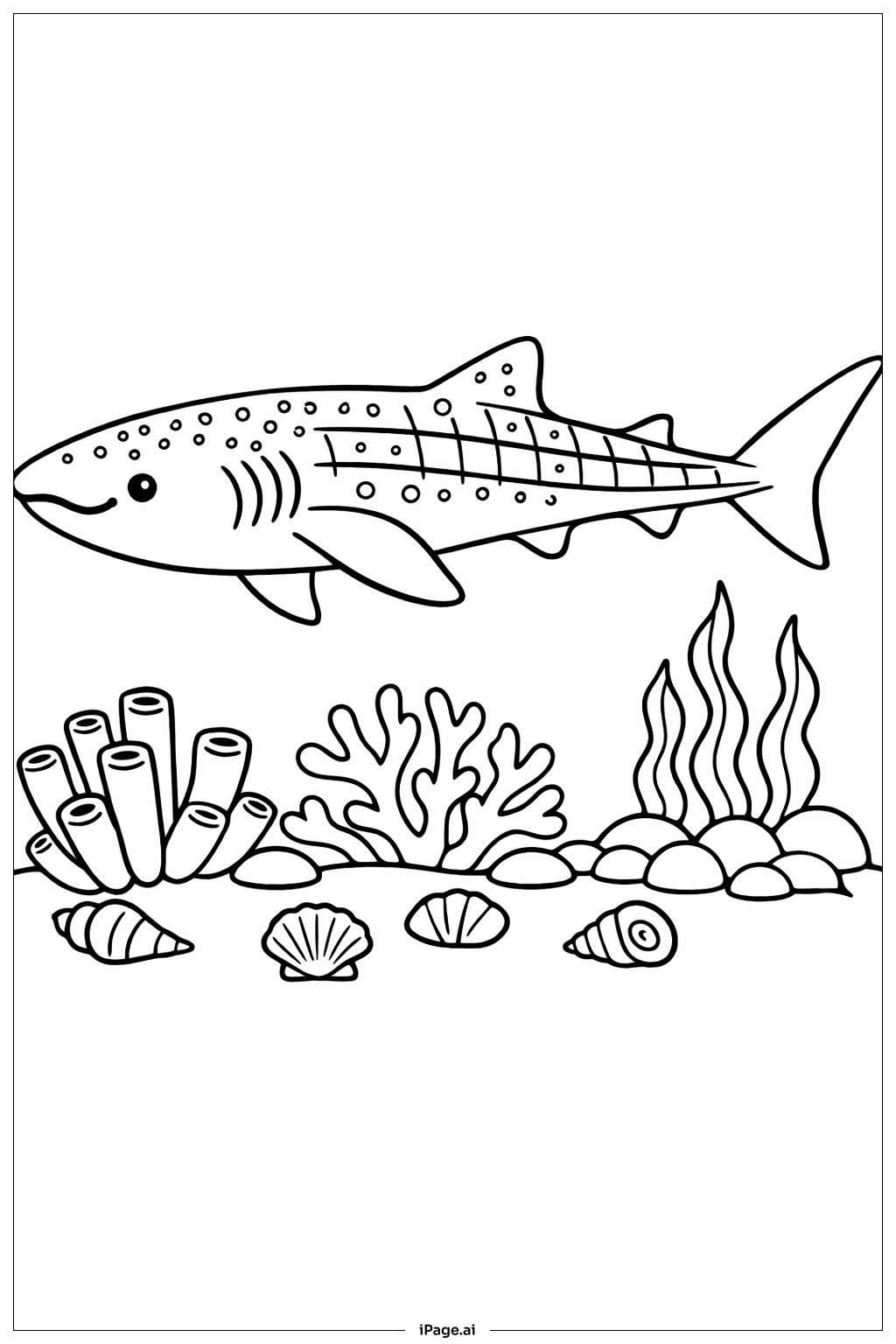
Coloring tips: How to color Whale Shark With Coral coloring page well?
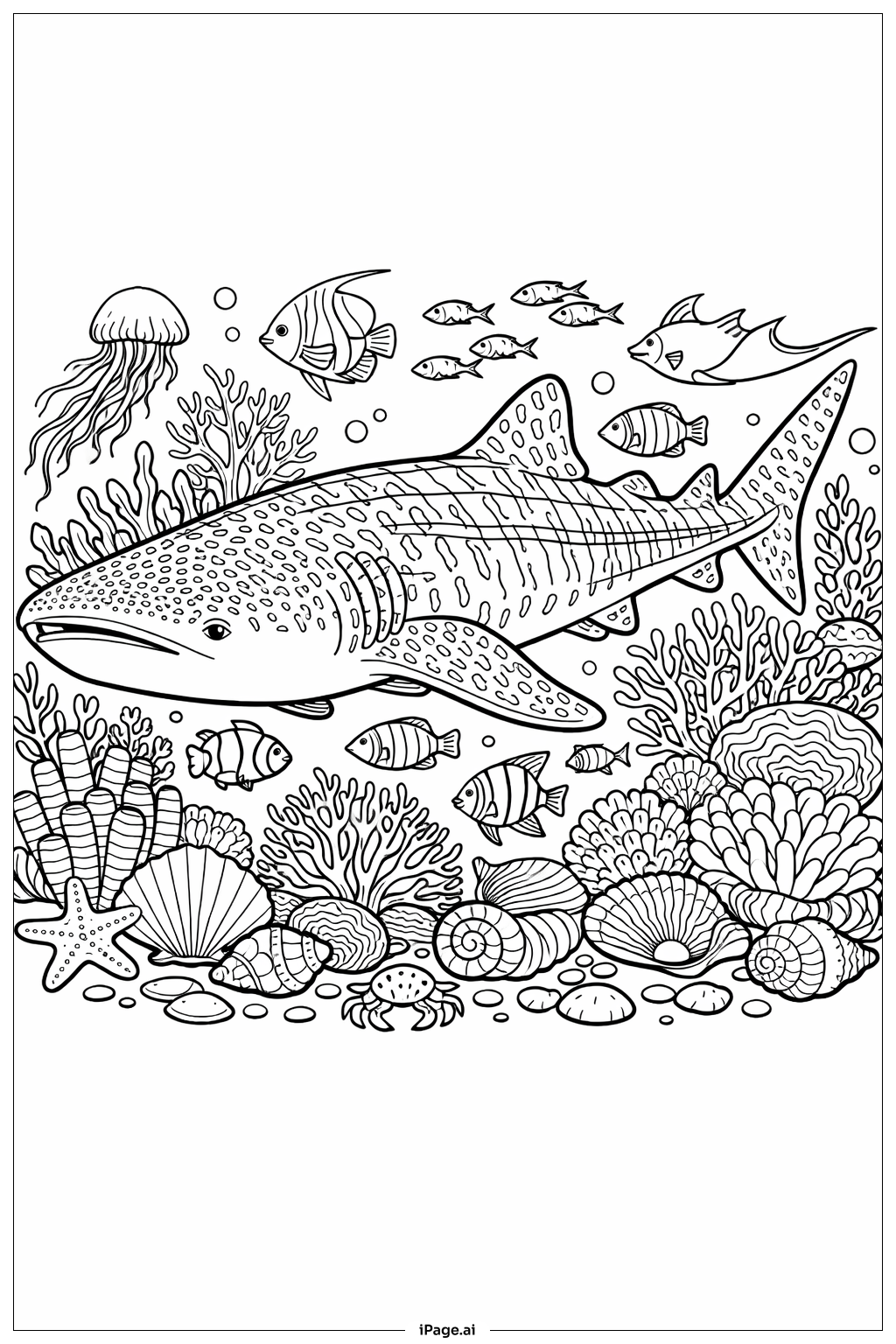
For the whale shark, use shades of blue-gray or slate blue for the body, with white or cream for the belly. Add white or light yellow spots across the back and sides to create the signature pattern. The coral offers wonderful opportunities for creativity—try bright oranges, pinks, purples, and yellows to make the reef come alive. Use different shades of the same color family to add depth to each coral piece. Color the water background in light blue or turquoise, perhaps adding darker blue in shadowed areas. The small fish can be colored in vibrant tropical colors like yellow, orange, or striped patterns. Consider using colored pencils to layer colors and create texture on the whale shark's skin and coral surfaces.
Coloring challenges: Which parts are difficult to color and need attention for Whale Shark With Coral coloring page?
• Spot Pattern Consistency: The whale shark's distinctive spotted pattern requires careful attention to keep the spots evenly sized and naturally distributed across the body. Children may find it challenging to color each spot neatly without overlapping into the surrounding body color, especially in smaller detailed areas near the fins and tail.
• Coral Texture and Detail: The various coral formations feature intricate branching structures and rounded surfaces that require patience to color. Maintaining consistent color within the narrow branches while avoiding coloring outside the lines can be difficult, particularly for younger children. Creating depth and dimension in the coral through shading adds another layer of complexity.
• Water Background Blending: Achieving a smooth, natural-looking water background requires blending techniques that may be advanced for beginners. Creating the illusion of depth with lighter colors near the surface and darker tones in deeper areas takes practice and careful color selection.
• Small Elements and Fish: The tiny fish and detailed elements scattered throughout the scene require fine motor control and precision. Coloring these small areas without smudging or crossing lines challenges hand-eye coordination, especially when using markers or crayons with broader tips.
Benefits of coloring books: Advantages of drawing Whale Shark With Coral coloring page
Coloring this whale shark scene helps children develop fine motor skills and hand-eye coordination through the detailed patterns and varied elements. The spotted texture of the whale shark encourages focus and attention to detail, building concentration skills. Learning about ocean life while coloring promotes environmental awareness and curiosity about marine ecosystems. The combination of large areas like the whale shark's body and smaller details like coral branches allows children of different skill levels to feel successful. This page encourages color experimentation with the vibrant coral reef, helping develop artistic confidence and understanding of color relationships. The peaceful underwater theme can have a calming effect, making it a relaxing activity that reduces stress while engaging creativity and imagination.