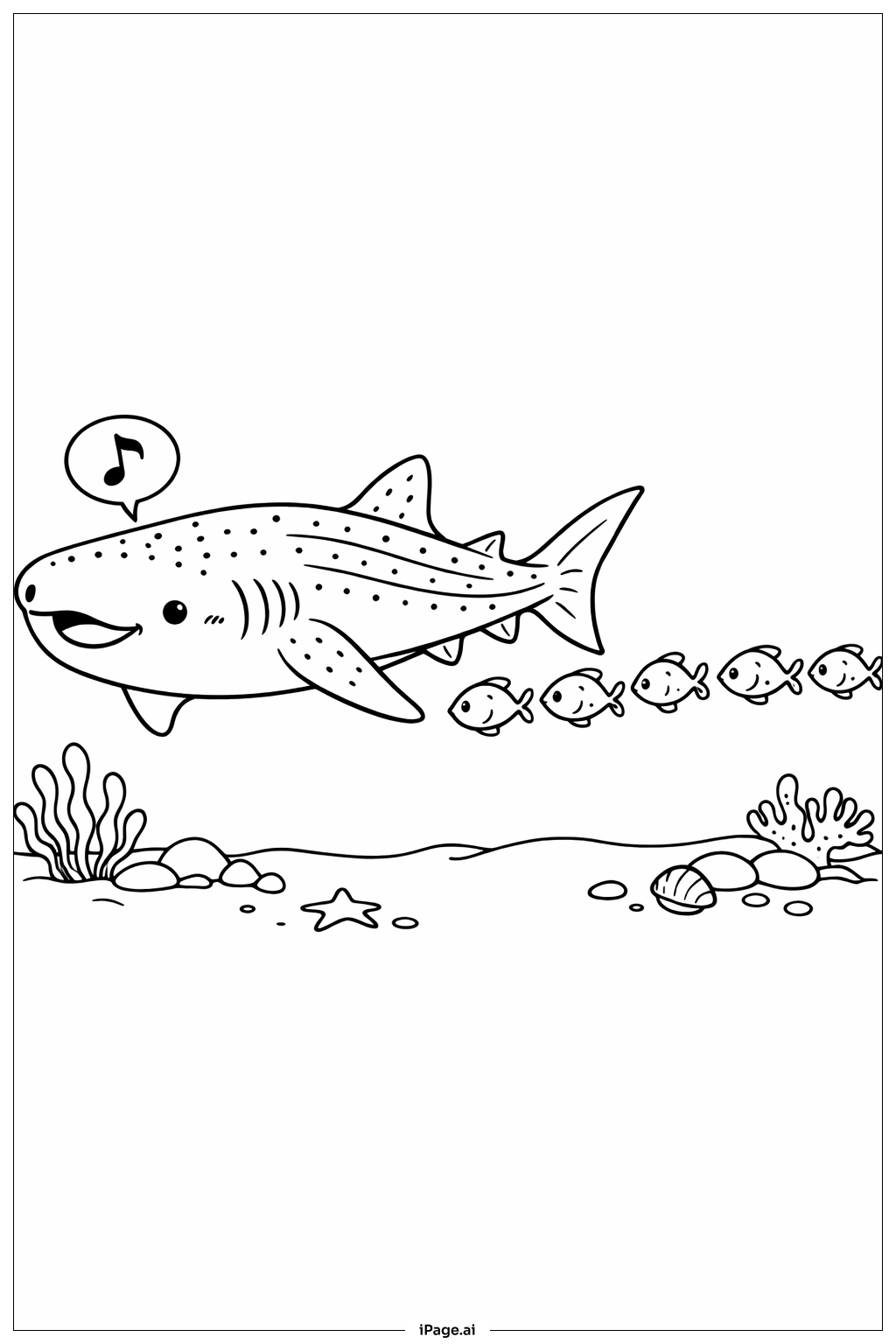
Coloring tips: How to color Whale Shark School Tour coloring page well?
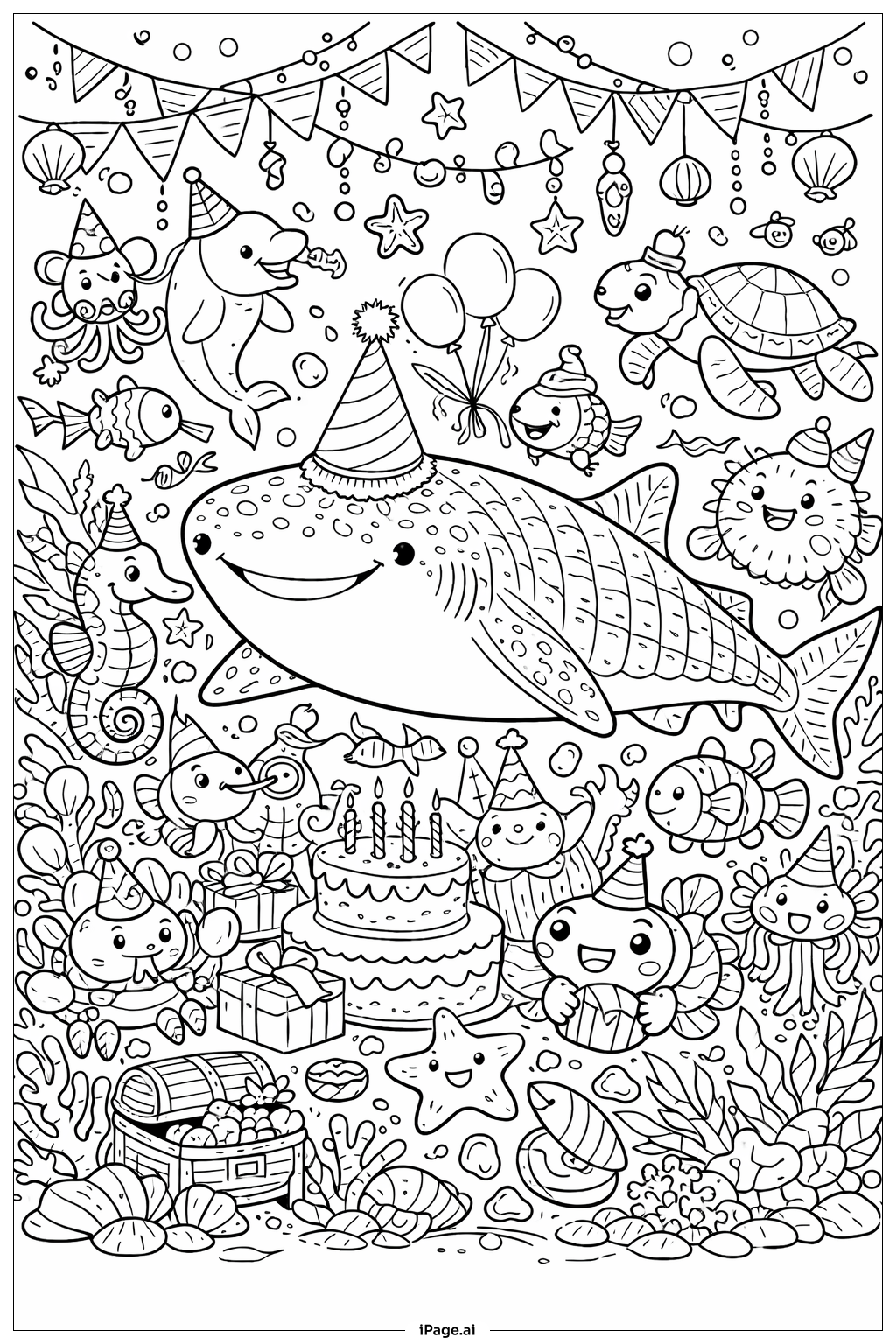
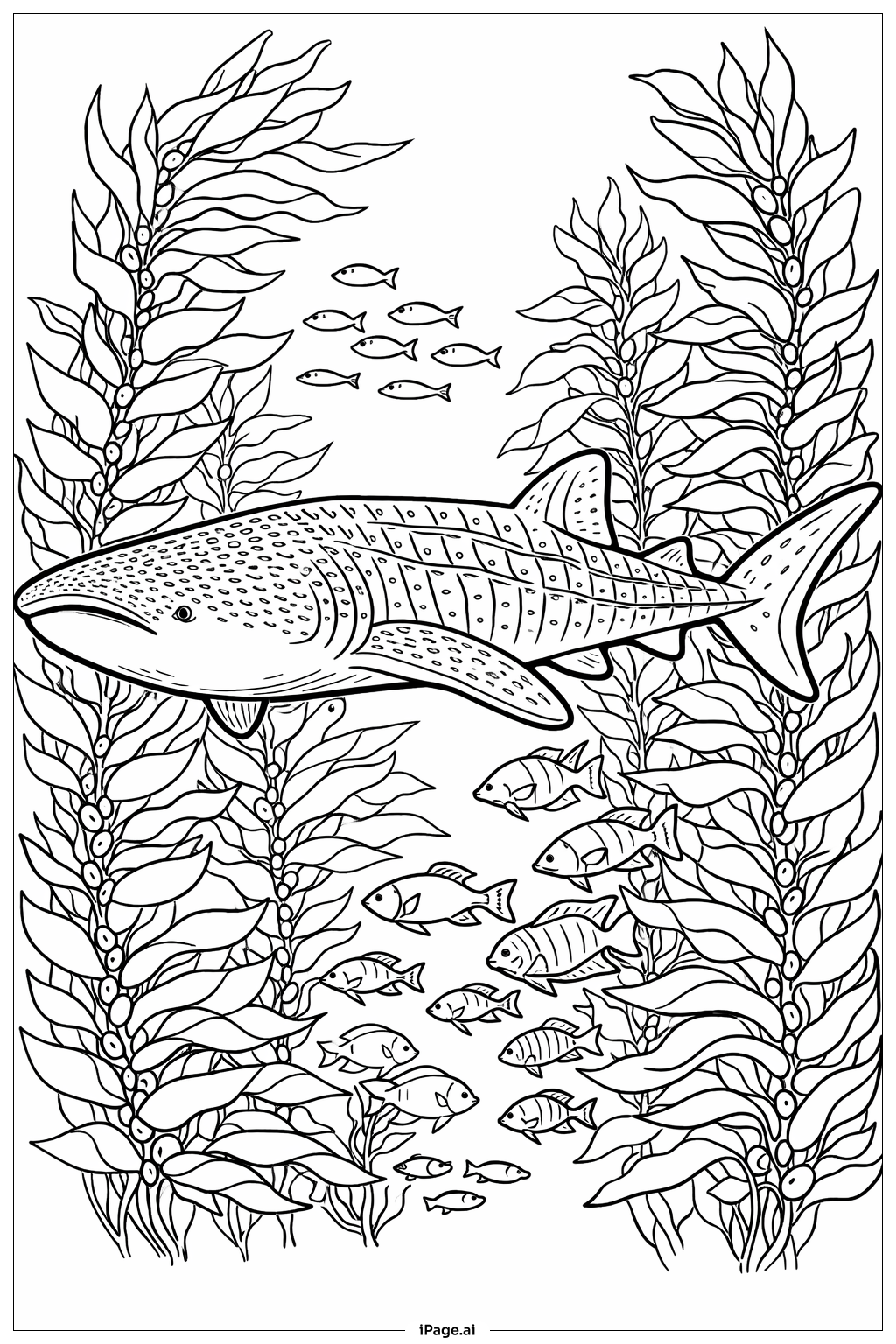
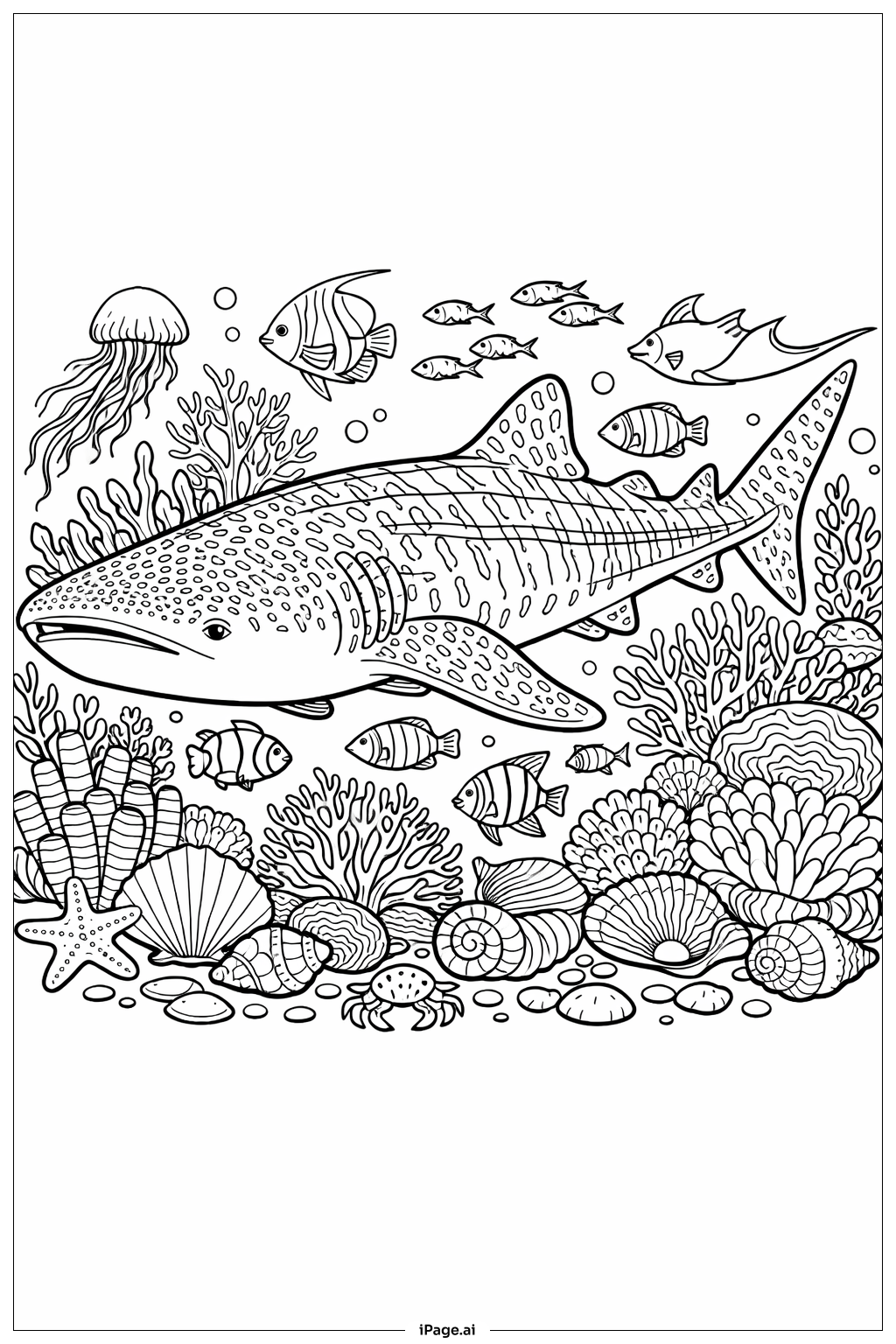
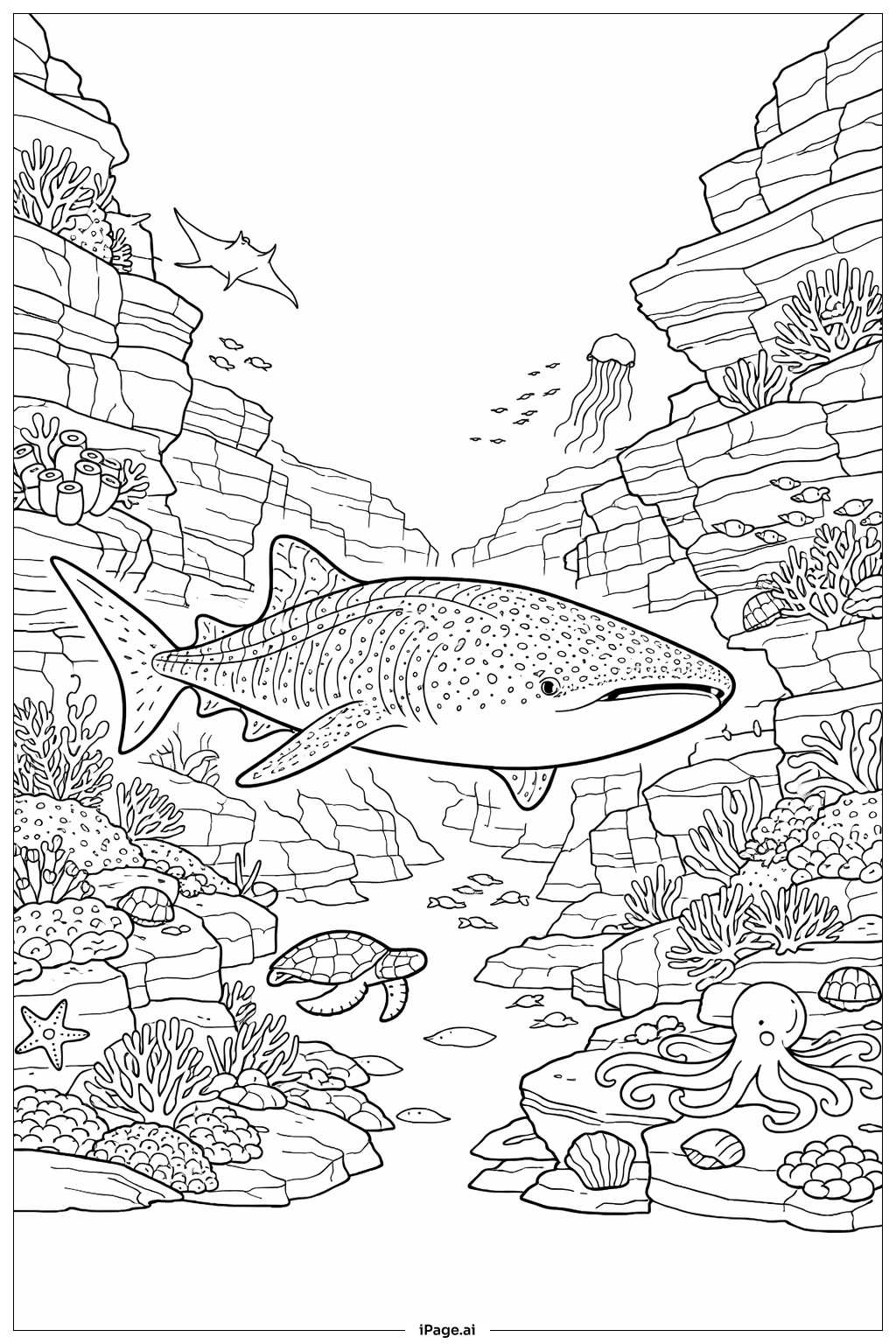
For the whale shark, use shades of blue-gray or slate gray for the main body, with white or cream for the belly area. The distinctive spots can be colored in white or light yellow against the darker body. Consider using various shades of blue for depth and dimension. The smaller fish can be colored in bright tropical colors like orange, yellow, blue, or purple to create contrast against the larger whale shark. Use different shades of blue for the water background, starting with lighter blues near the surface and deeper blues toward the bottom. Add touches of turquoise or aqua to show water movement and light filtering through the ocean.
Coloring challenges: Which parts are difficult to color and need attention for Whale Shark School Tour coloring page?
• Spot Pattern Complexity: The whale shark's body features hundreds of small circular spots that need to be colored consistently while maintaining the pattern's natural randomness. This requires patience and steady hand control, especially when working with the smaller spots near the tail and fins.
• Shading and Dimension: Creating realistic depth on the whale shark's curved body presents a challenge, as colorists need to blend darker and lighter tones smoothly to show the rounded form. The transition from the dark top to the light belly requires careful gradient work.
• Multiple Fish Coordination: Managing color schemes for the school of smaller fish while keeping them visually distinct from each other and the whale shark requires planning. Each fish should be identifiable but still harmonious within the overall composition.
• Water Background Effects: Depicting water convincingly involves layering multiple blue shades and creating the illusion of depth, light penetration, and movement. This requires understanding how to blend colors and leave strategic white spaces for light effects.
• Fine Line Details: The image contains thin lines for fins, gill slits, and fish scales that require precision coloring without crossing boundaries, testing fine motor control and concentration skills.
Benefits of coloring books: Advantages of drawing Whale Shark School Tour coloring page
Coloring this whale shark scene offers wonderful educational value as children learn about marine biology and ocean conservation while developing artistic skills. The repetitive pattern of spots provides excellent practice for fine motor control and hand-eye coordination. Working with the large whale shark body helps children understand shading techniques and color gradients, building their artistic confidence. The variety of elements from the large whale shark to tiny fish allows colorists to practice different coloring techniques in one page. This activity promotes patience and focus as children work through the detailed patterns. It also encourages creativity in choosing color combinations and interpreting underwater environments, while fostering appreciation for marine life and ocean ecosystems.