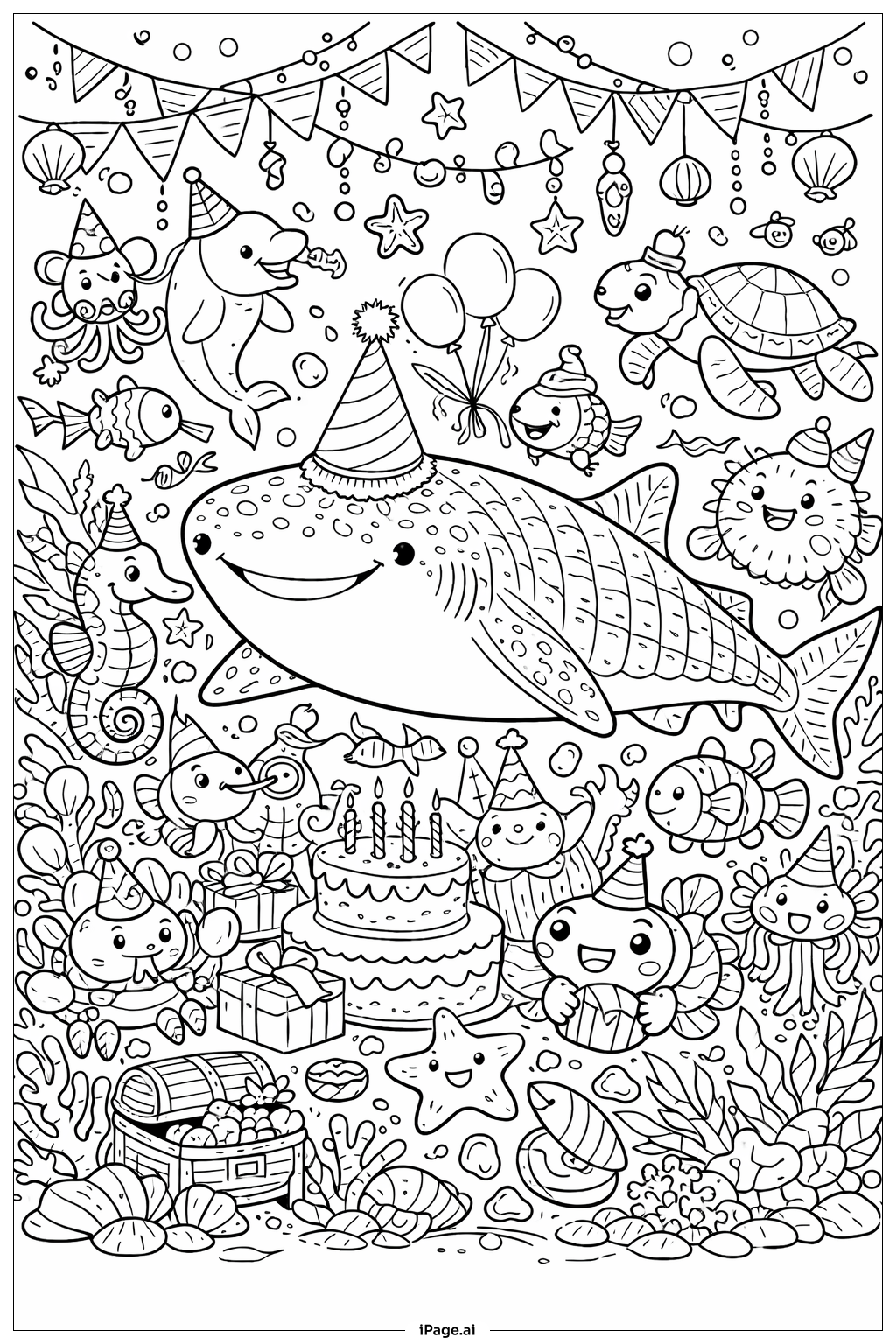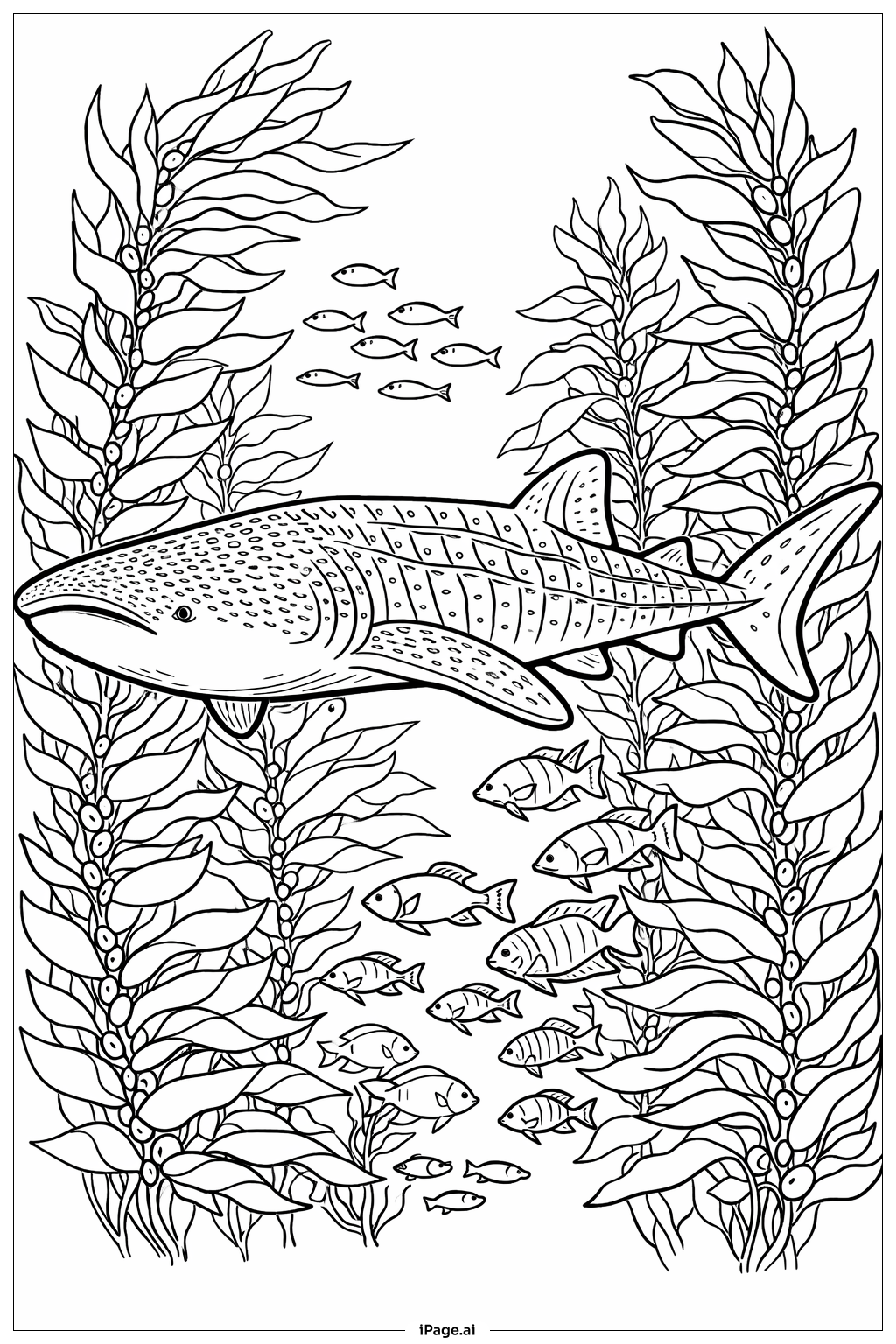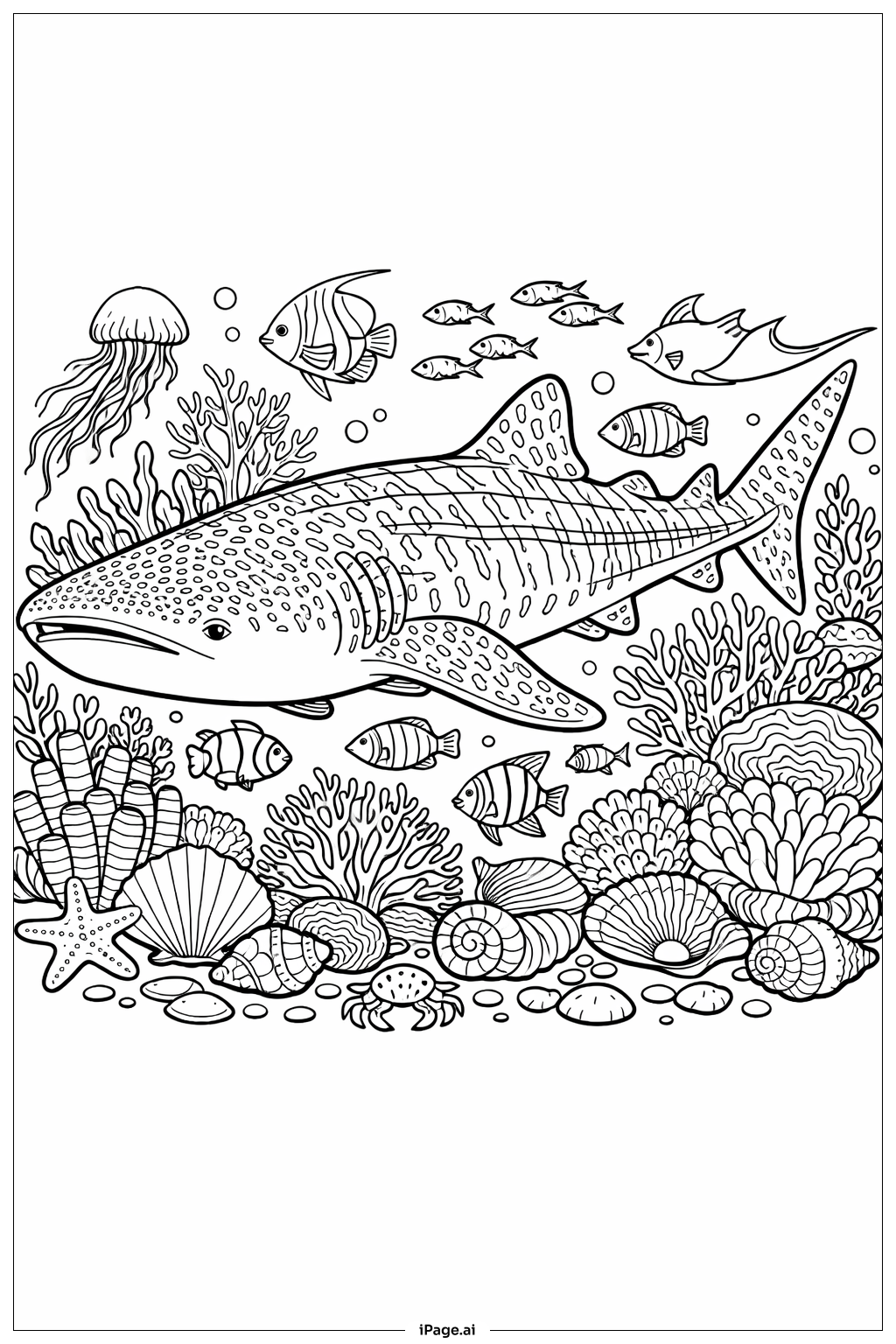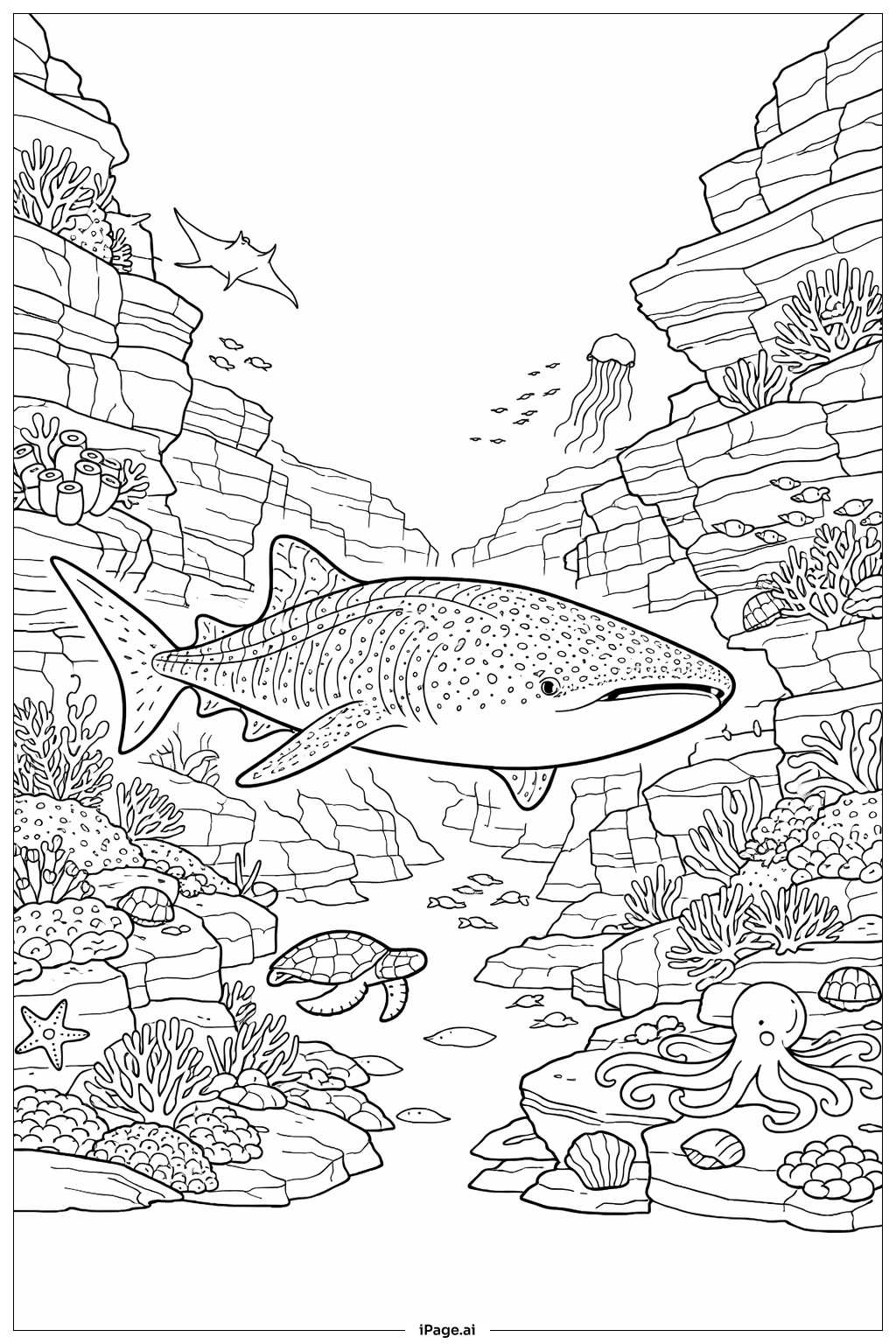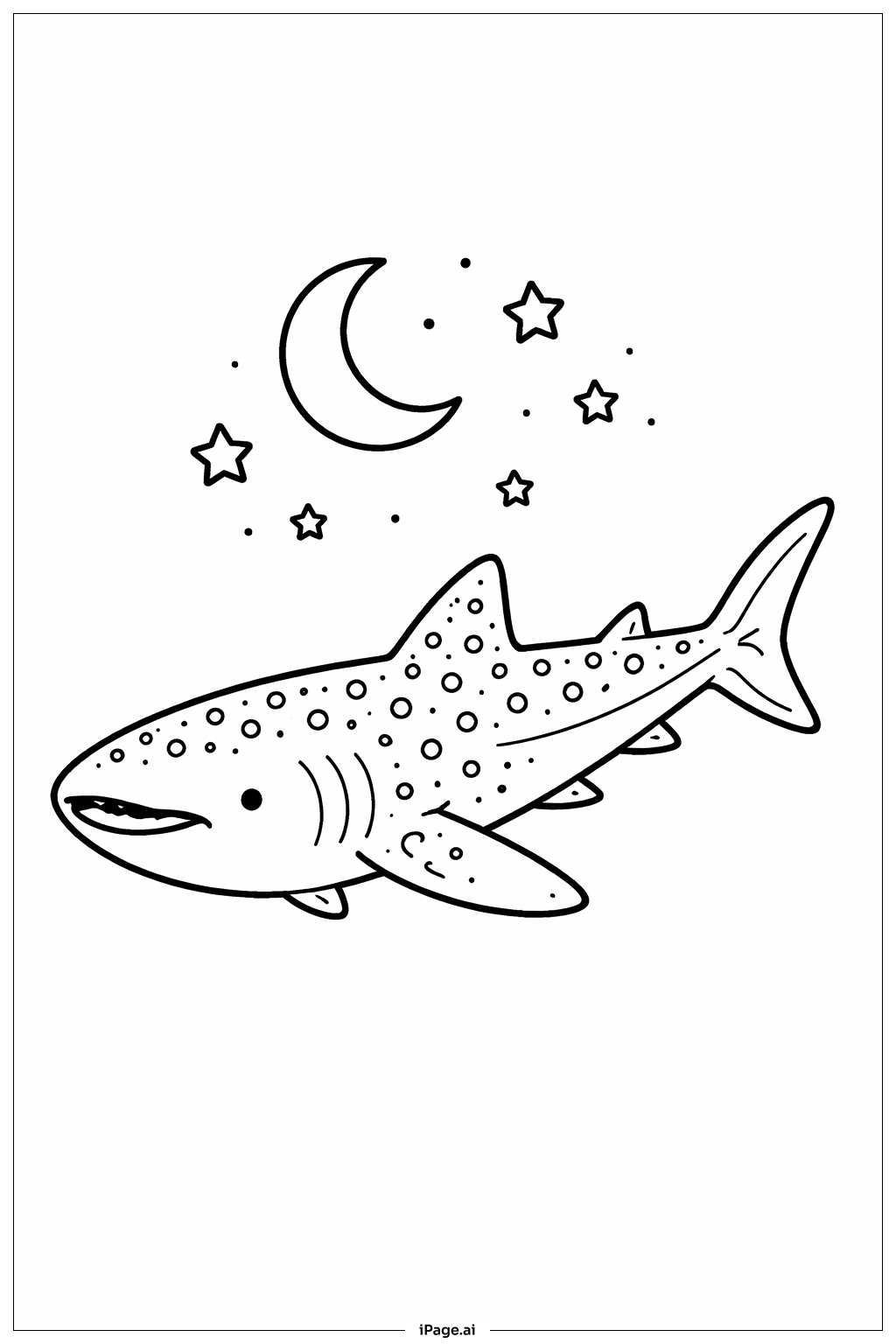
Coloring tips: How to color Whale Shark Night Sky coloring page well?
For the whale shark, use deep blues or grays for the body with white or cream spots to recreate its natural pattern. The belly can be lighter, using pale gray or white. For the night sky background, blend dark purples, midnight blues, and black to create depth. Make the stars bright yellow or white, and consider adding subtle color gradients around them to show their glow. The crescent moons can be pale yellow or silver. Use lighter shades of blue or lavender for the clouds to distinguish them from the darker sky. You might add hints of teal or turquoise around the whale shark to suggest a magical aura. Consider using metallic or glitter pens for stars to add sparkle. Experiment with color pencil blending techniques for smooth transitions in the sky.
Coloring challenges: Which parts are difficult to color and need attention for Whale Shark Night Sky coloring page?
• Spotted Pattern Precision: The whale shark's distinctive spots require careful attention to maintain consistency in size and spacing. Each spot needs to be colored individually while keeping them uniform across the body, which demands patience and a steady hand, especially in curved areas where perspective changes.
• Night Sky Gradient Creation: Achieving a realistic night sky effect requires skillful blending of multiple dark colors. Creating smooth transitions between deep purples, blues, and blacks without visible lines or patches is challenging, particularly when working around the whale shark and celestial objects.
• Maintaining Contrast: With predominantly dark colors in both the whale shark and night sky, keeping the main subject visually distinct from the background requires careful planning. Balancing dark tones while ensuring the whale shark does not disappear into the sky demands strategic use of highlights and shadows.
• Small Detail Work: The numerous stars, tiny decorative elements, and intricate fin details require precision coloring in small spaces. Keeping colors inside these tiny areas without smudging or overlapping into adjacent sections tests fine motor control and concentration.
• Creating Luminosity Effects: Making stars and moons appear to glow against the dark background is technically challenging. This requires layering techniques, leaving strategic white spaces, or adding lighter halos around bright objects to simulate light emission in a way that looks natural and magical.
Benefits of coloring books: Advantages of drawing Whale Shark Night Sky coloring page
Coloring this whale shark night sky image helps children develop fine motor skills through the detailed spotted pattern work and small star elements. The combination of large areas and tiny details provides varied practice for hand-eye coordination. Kids learn about marine life, specifically the gentle whale shark, while exploring creative fantasy concepts that blend ocean and space themes. The night sky gradient work teaches color blending and shading techniques, building artistic confidence. This imaginative scene encourages creative thinking by presenting an impossible scenario that sparks wonder and curiosity. The meditative process of filling spots and stars promotes focus, patience, and mindfulness. Children practice planning skills by deciding color schemes that maintain contrast and visual interest. The combination of structured patterns and free-form sky coloring balances rule-following with creative expression, supporting both cognitive development and artistic growth.