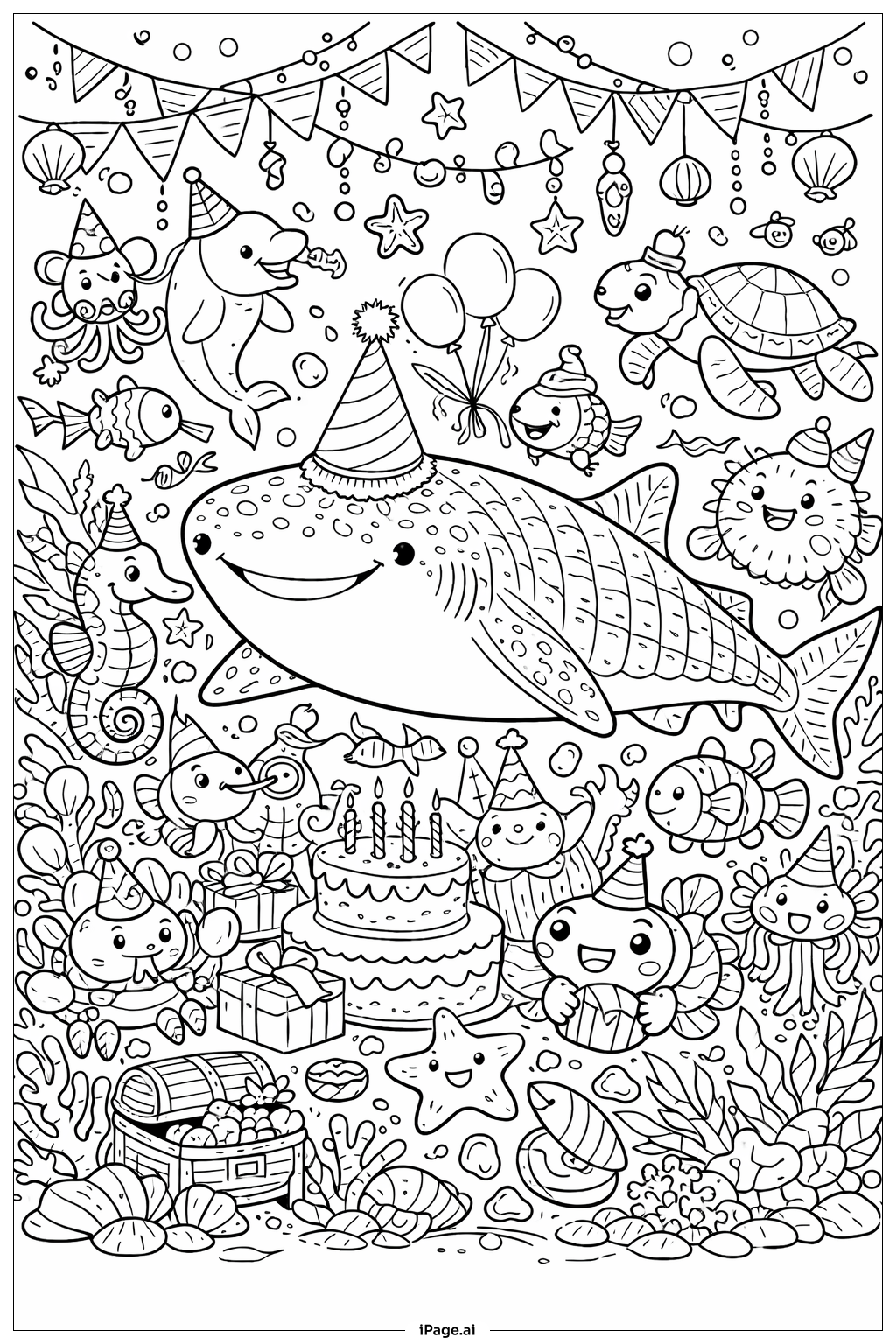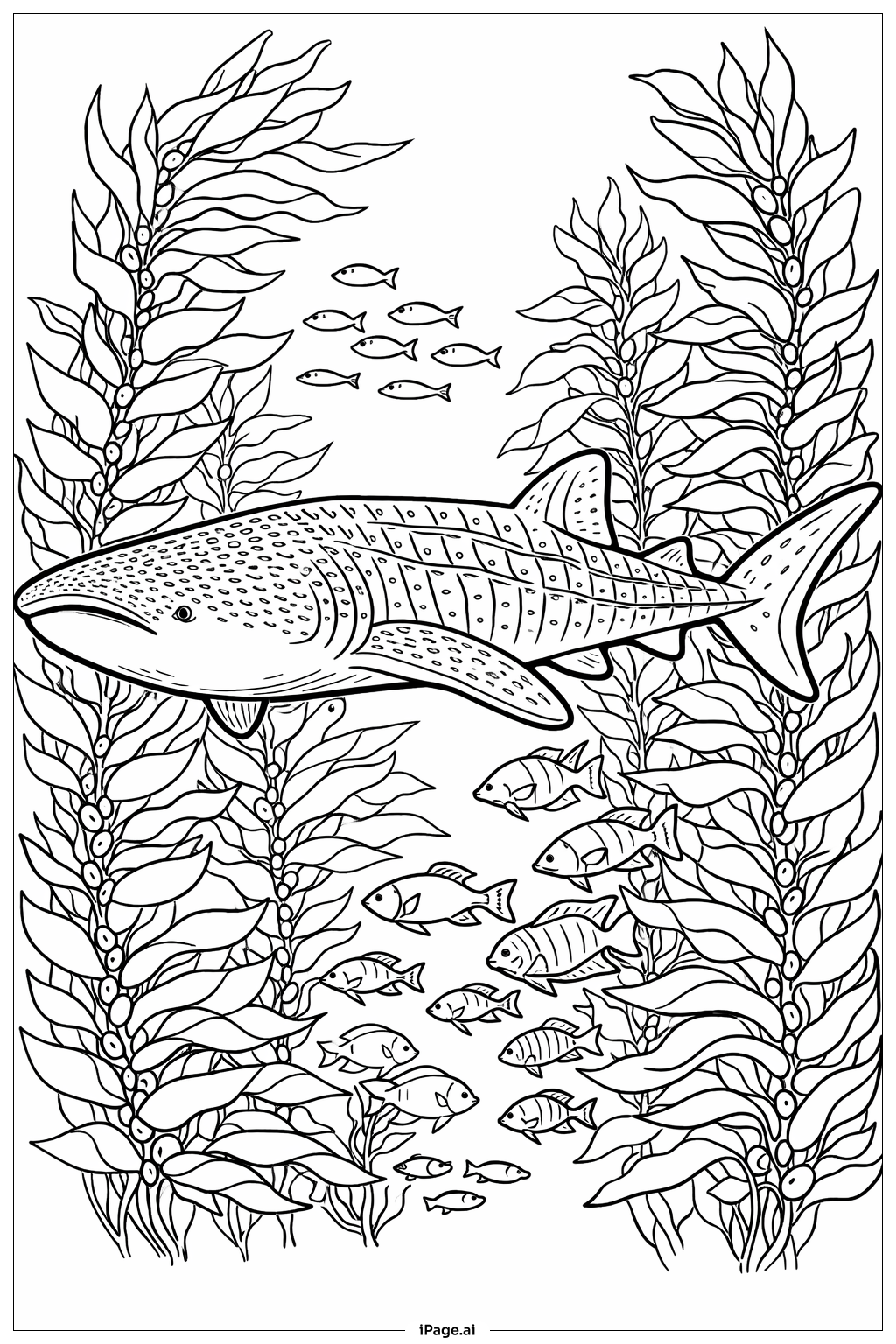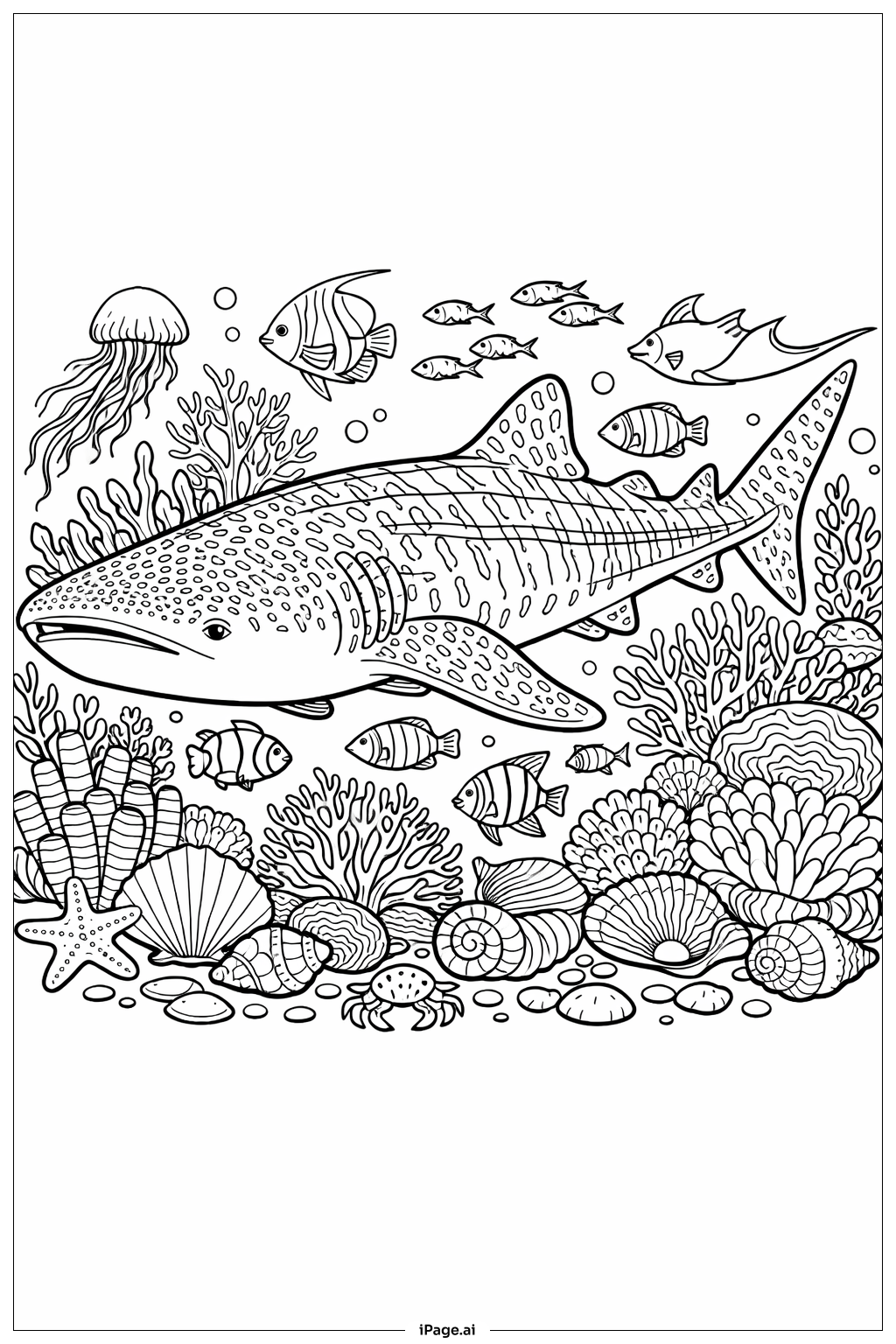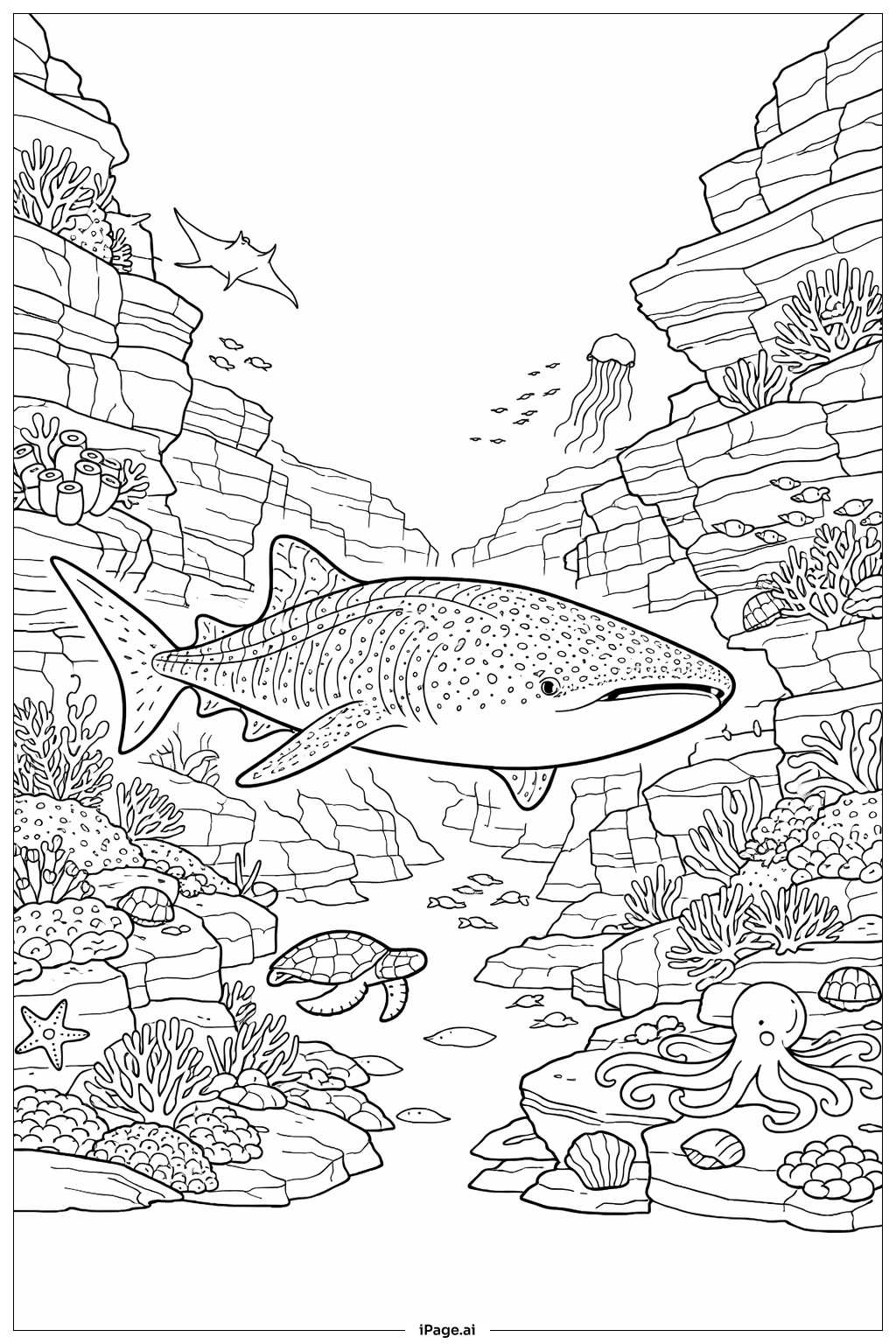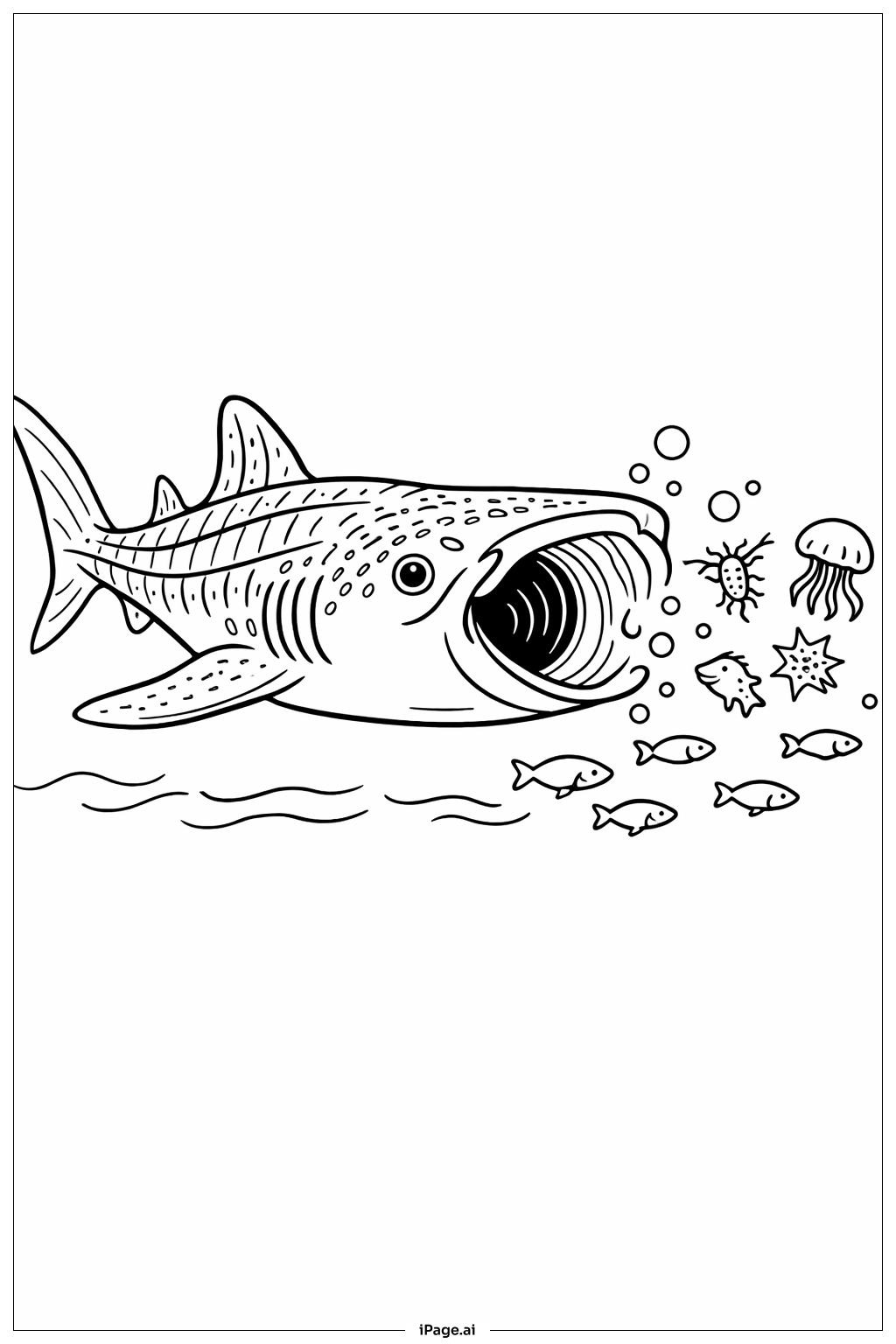
Coloring tips: How to color Whale Shark Feeding coloring page well?
Start with the whale shark's body using a deep blue-gray or dark teal as the base color. Use a slightly lighter shade to fill in the belly area, giving the shark a realistic two-tone look. Add white or pale yellow dots and dashes across the back and sides to recreate the whale shark's iconic spotted pattern. For the open mouth, use a soft pink or pale coral on the inner walls, with a darker rim around the edges. Color the surrounding water in shades of blue and aqua, blending lighter tones near the surface where sunlight streams in. Paint the small fish in bright colors like orange, yellow, and silver to make them pop against the blue background. Use tiny white dots or light swirls to suggest plankton and bubbles floating in the water. Try blending two shades of blue together for a smooth, flowing ocean effect. Kids can use crayons, colored pencils, or watercolor paints — all work great for this image!
Coloring challenges: Which parts are difficult to color and need attention for Whale Shark Feeding coloring page?
• Spotted Body Pattern: The whale shark is covered in hundreds of small dots and pale stripe markings spread across its entire body. Carefully placing each dot without smudging neighboring areas takes patience and a steady hand. Using a fine-tipped colored pencil or marker will help keep the spots neat and evenly spaced.
• Wide Open Mouth Shading: The inside of the whale shark's open mouth is a large curved space that needs smooth color gradation. Going from a darker tone at the edges to a lighter shade in the center helps create a sense of depth. Blending colors evenly in this curved area can be tricky, especially for younger artists.
• Water and Light Effects: Recreating the feel of sunlight filtering through ocean water requires layering multiple shades of blue and green. The transition between light and shadow zones should be gradual and smooth. Rushing through this area or using a single flat color can make the scene look less realistic and less dynamic.
• Small Fish Details: Several tiny fish appear around the whale shark, each with their own body shape and fin details. Coloring these small figures neatly without accidentally coloring outside their outlines calls for careful control. A sharp pencil tip or a fine marker works best for these miniature details.
• Scale and Proportion Awareness: The whale shark is massive compared to the tiny fish surrounding it. Keeping the color contrast balanced — making the shark feel large and dominant without making the small fish disappear — requires thoughtful color choices and careful attention to how light and dark values interact across the whole page.
Benefits of coloring books: Advantages of drawing Whale Shark Feeding coloring page
Coloring this Whale Shark Feeding page offers a wonderful mix of fun and learning for children and adults alike. As kids carefully fill in the whale shark's spotted pattern, they strengthen their fine motor skills and hand-eye coordination. Staying within the lines and placing small dots trains focus and attention to detail in a relaxed, enjoyable way.
The ocean setting sparks natural curiosity about marine life. Children may find themselves asking questions about whale sharks — how big they are, what they eat, and where they live. This makes coloring a doorway into science and nature discovery.
Choosing colors for the ocean, the shark's body, and the surrounding fish also encourages creative thinking. There is no single right answer, so kids feel free to experiment and express themselves. This builds confidence and a healthy sense of artistic ownership.
For older children and adults, the complexity of blending water tones and recreating the shark's detailed markings provides a satisfying challenge that promotes mindfulness and stress relief. Focusing on the image for an extended period creates a calming, meditative experience.
Overall, this coloring page turns a quiet activity into an enriching journey through the ocean, nurturing creativity, curiosity, and calm all at once.