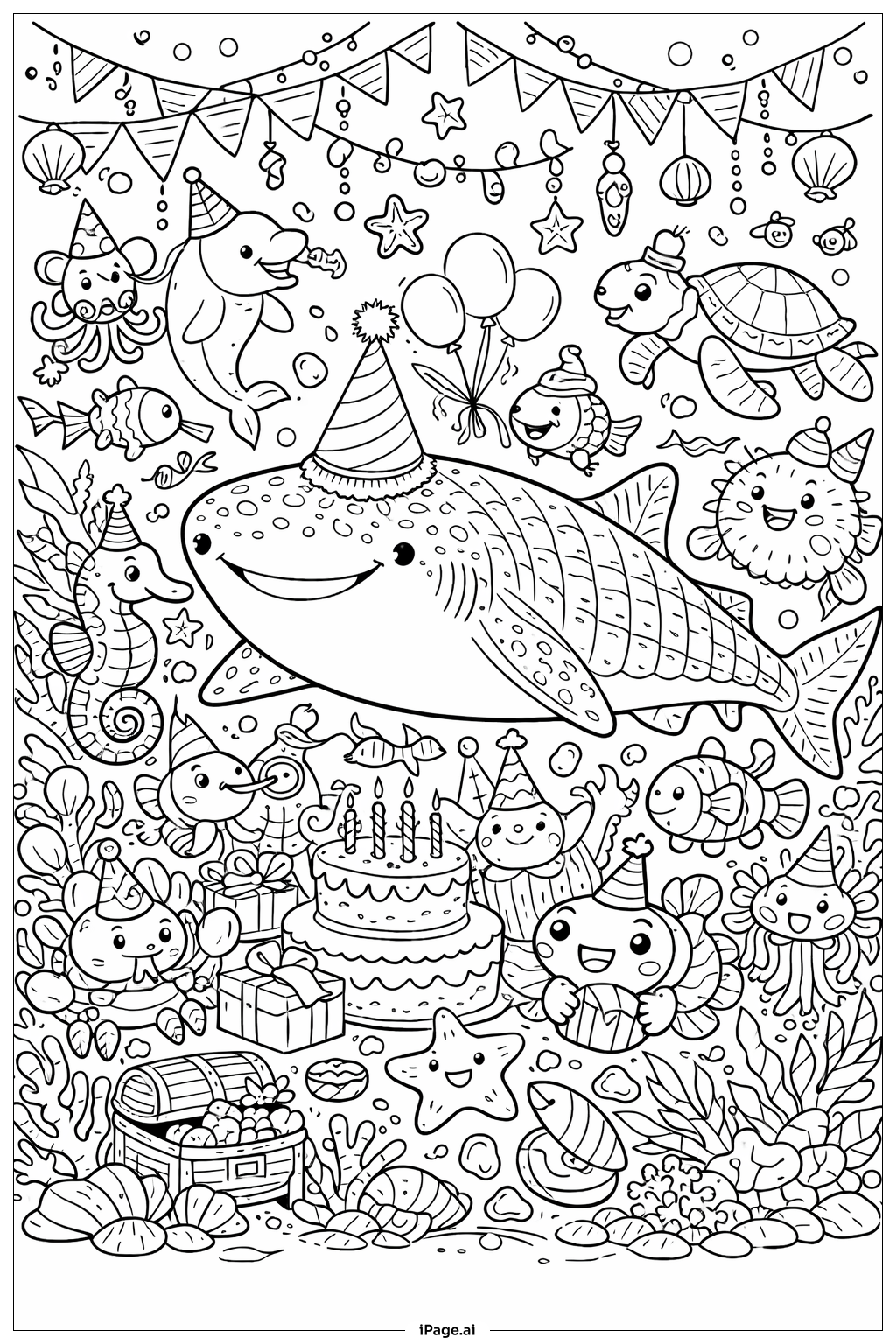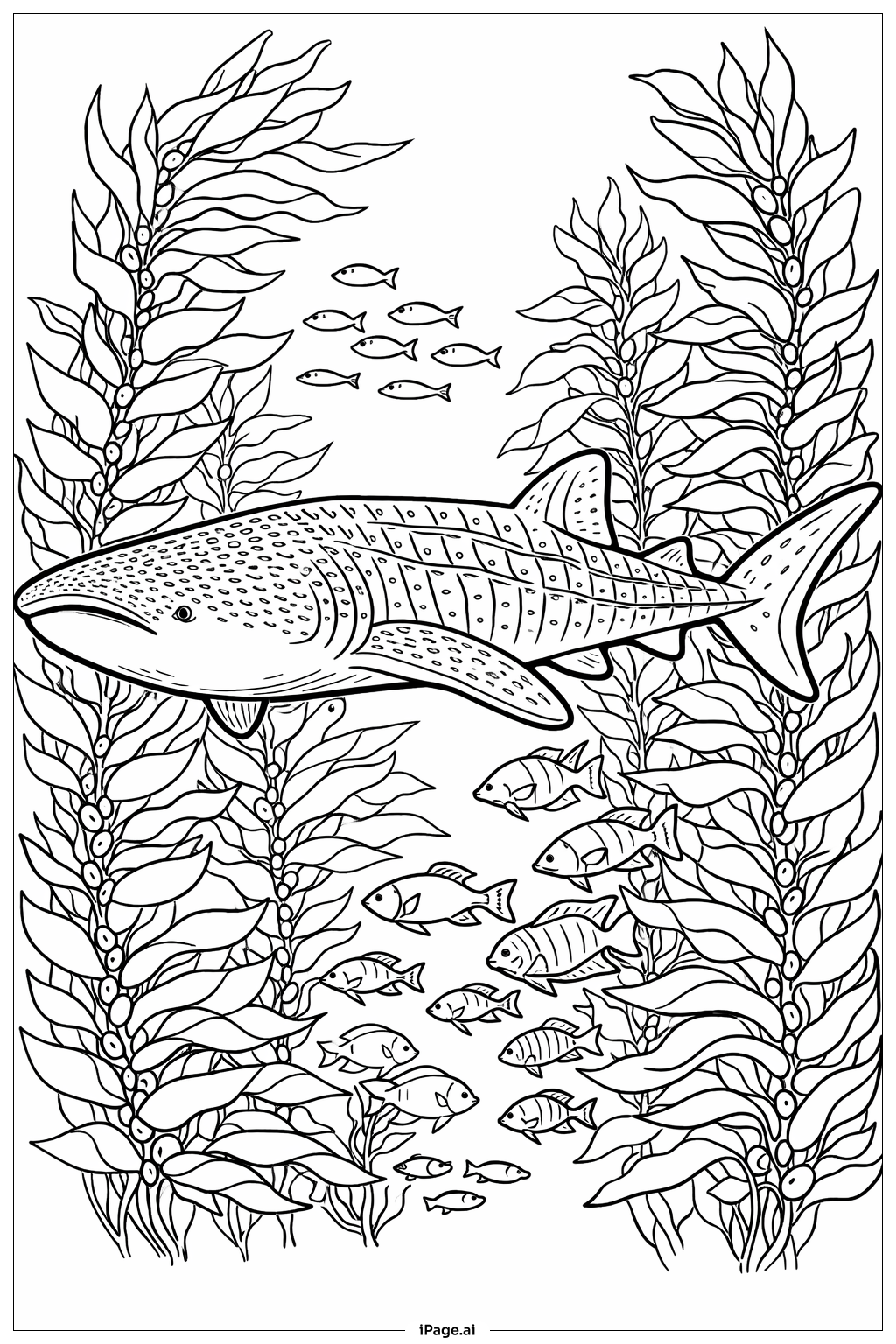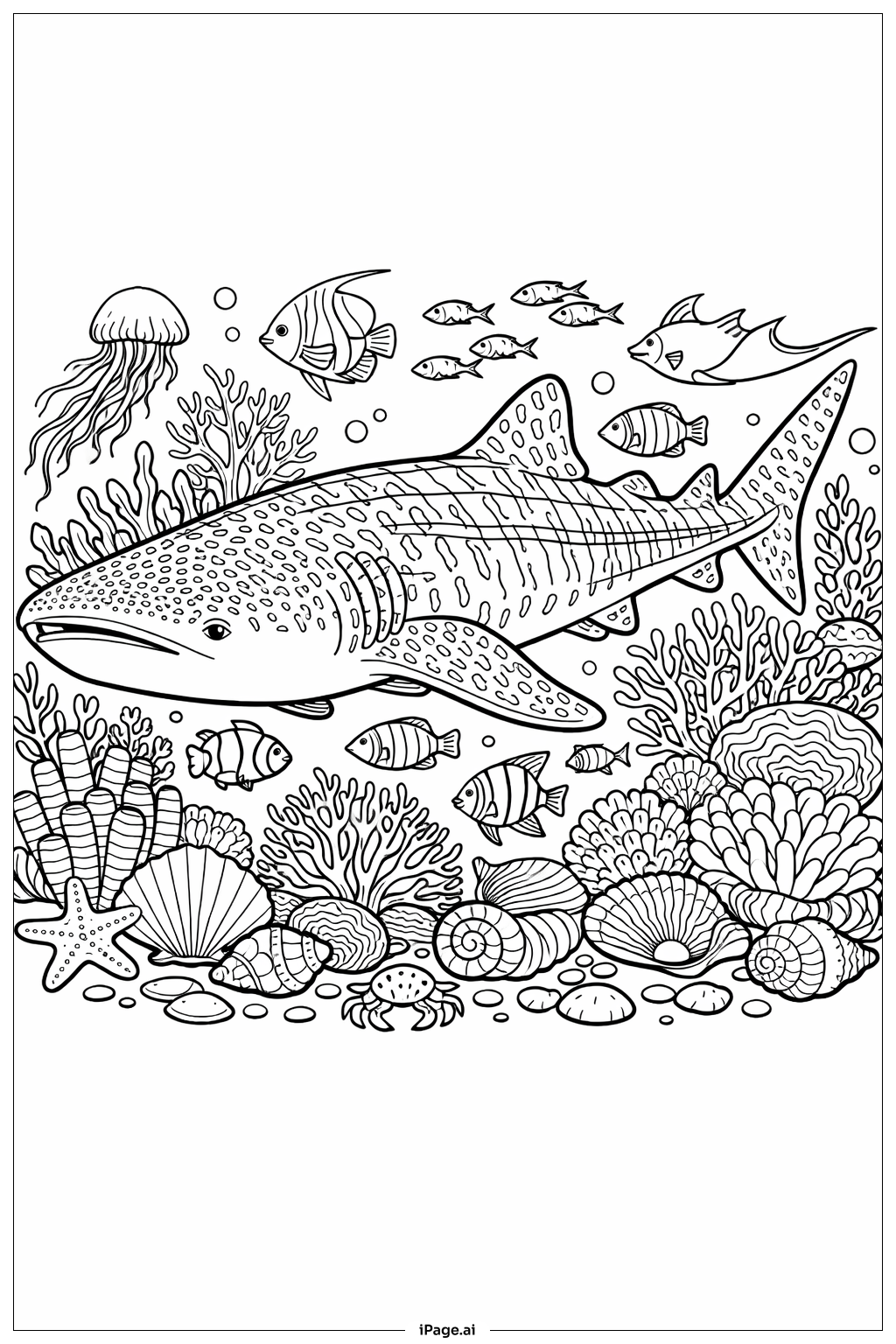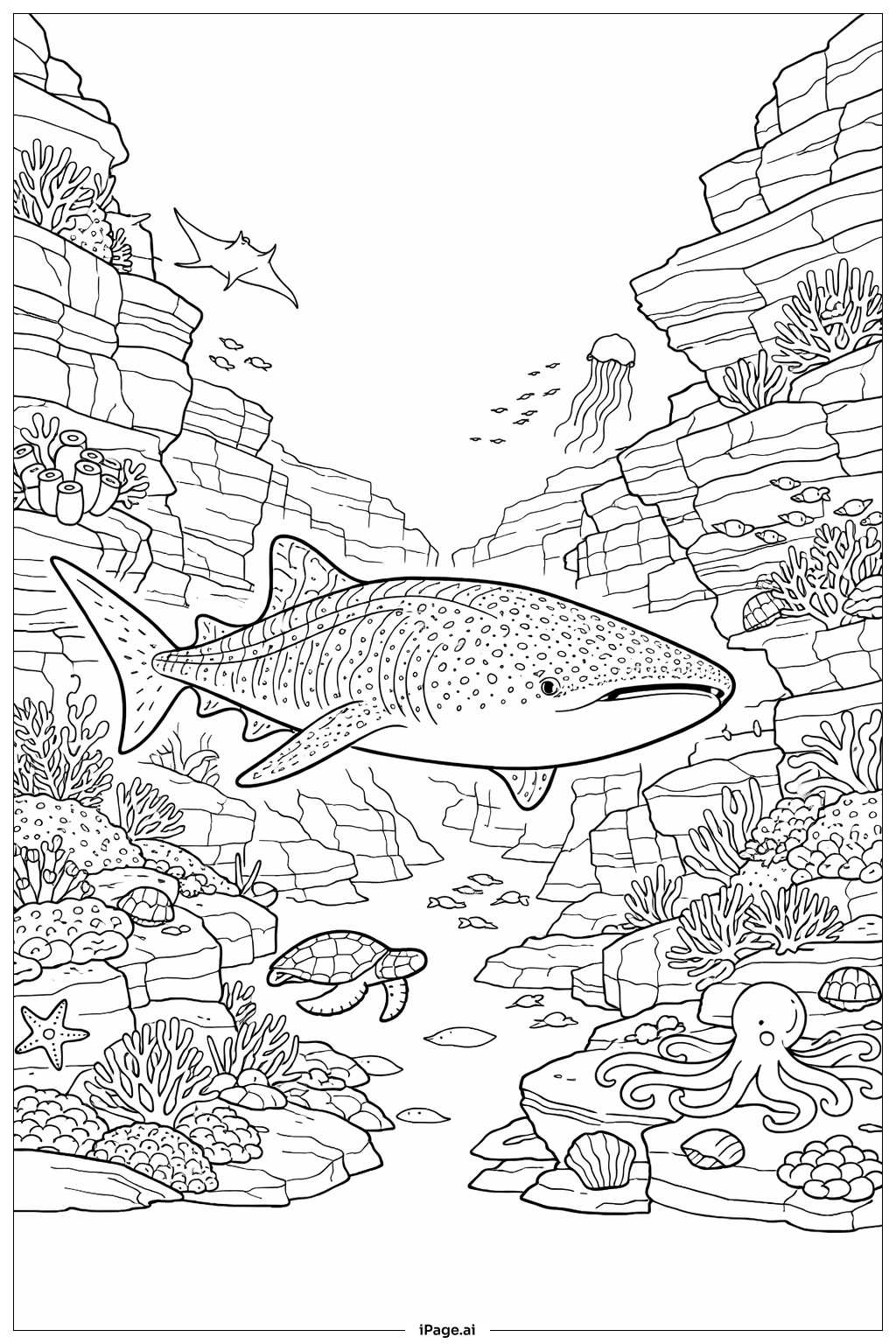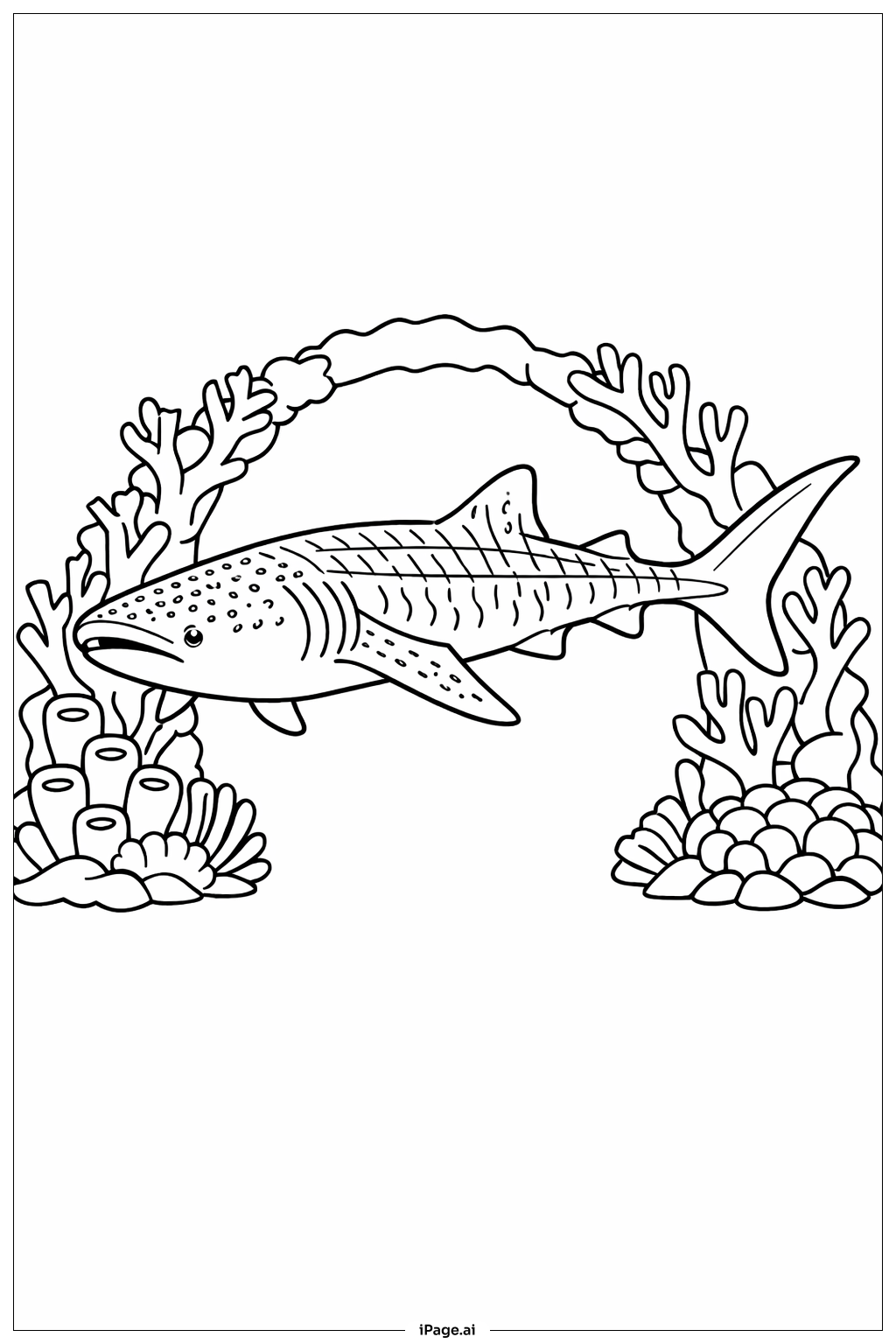
Coloring tips: How to color Whale Shark And Coral Tunnel coloring page well?
Start with the whale shark using shades of blue-gray or slate blue for its body, adding white or cream for its characteristic spots. The spots can vary in size and should cover the back and sides. Use darker blues or purples for shading underneath to create depth. For the coral tunnel, experiment with warm colors like oranges, pinks, reds, and yellows to create vibrant reef life. Different coral types can have different colors to add variety. The small fish can be colored in bright tropical hues like yellow, blue, or orange. Use light blues and aqua tones for the water, making it darker in shadowed areas within the tunnel and lighter where sunlight might filter through. Add green or brown tones to some corals for a realistic reef appearance.
Coloring challenges: Which parts are difficult to color and need attention for Whale Shark And Coral Tunnel coloring page?
• Whale Shark Spot Pattern: The whale shark's body is covered with numerous spots of varying sizes that need to be colored consistently. Keeping each spot neat and ensuring they stand out against the body color requires patience and precision. Young colorists may find it challenging to color inside each small circular spot without going outside the lines.
• Coral Tunnel Complexity: The coral formations create an intricate archway with many overlapping elements, branches, and textures. Distinguishing between different coral structures and deciding which pieces are in the foreground versus background can be confusing. Each coral section needs its own color choice to create visual separation and depth.
• Shading and Depth Creation: Creating a three-dimensional underwater effect requires thoughtful shading techniques. The tunnel should appear darker on the inside and lighter toward the opening. The whale shark needs shading underneath and where the body curves to look realistic and rounded rather than flat.
• Small Details and Marine Life: The image includes small fish and tiny coral details that require careful coloring with fine motor control. These small elements can be difficult for younger children to color accurately without crossing lines or leaving white gaps.
• Color Coordination: Choosing colors that work well together across the entire scene while maintaining contrast between the whale shark and its coral surroundings takes planning. Balancing warm coral colors with cool ocean tones requires thoughtful color selection to make the whale shark stand out as the focal point.
Benefits of coloring books: Advantages of drawing Whale Shark And Coral Tunnel coloring page
Coloring this whale shark scene offers wonderful benefits for children and adults alike. It helps develop fine motor skills and hand-eye coordination through detailed work on the spotted pattern and intricate coral structures. The image encourages learning about marine biology, introducing colorists to whale sharks as gentle filter-feeders and the importance of coral reef ecosystems. It promotes creativity as colorists choose from realistic or imaginative color schemes for the underwater environment. The meditative quality of coloring the repetitive spots and coral details provides stress relief and promotes mindfulness. This page also teaches about color theory as artists blend warm coral tones with cool ocean blues. Completing this detailed scene builds patience, focus, and a sense of accomplishment while fostering appreciation for ocean conservation and marine life protection.