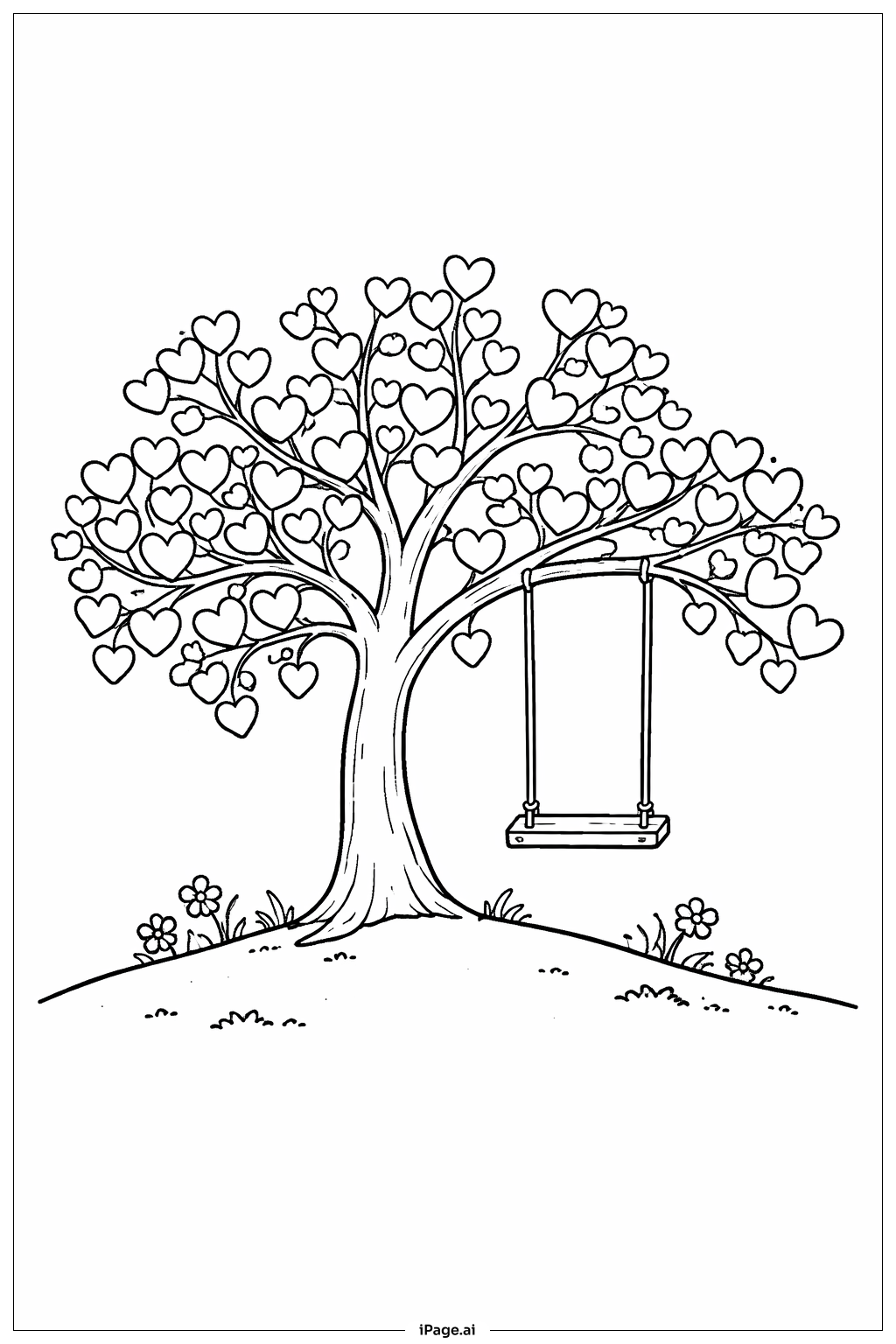
Coloring tips: How to color Valentines Tree With Hearts coloring page well?
For this Valentine's tree, consider using classic Valentine's colors as your foundation. Color the trunk and branches in rich browns or grays to create a natural, sturdy appearance. The hearts offer wonderful opportunities for creativity—try shades of red, pink, magenta, and rose to create depth and variety. You might alternate colors to create patterns, or use ombre techniques to blend from light pink to deep red. Consider adding purple or lavender hearts for extra visual interest. The grass at the base can be colored in fresh greens, while the background could feature a soft blue sky or a romantic sunset with oranges, pinks, and purples. For added dimension, use darker shades around the edges of each heart and lighter tones in the centers. You could even create a rainbow effect by using the full spectrum of colors across different hearts.
Coloring challenges: Which parts are difficult to color and need attention for Valentines Tree With Hearts coloring page?
• Multiple Heart Shapes: This image contains dozens of individual hearts throughout the tree canopy, which requires patience and attention to maintain consistency. Each heart has defined edges that need careful coloring to avoid crossing lines, and deciding on a color scheme that creates visual harmony across so many elements can be challenging for younger children.
• Branch and Trunk Texture: The tree trunk and branches feature bark texture lines and natural wood details that require precision coloring. Staying within these narrow lines while creating realistic wood grain effects demands fine motor control and steady hand movements, which can be difficult for children still developing these skills.
• Overlapping Elements: Many hearts overlap with branches and with each other, creating layers that need differentiation through color choices. Distinguishing between foreground and background elements requires planning and understanding of depth, which involves more advanced coloring strategies to make the image look three-dimensional rather than flat.
• Small Detail Areas: The spaces between hearts, small grass tufts, and narrow branch sections present tiny areas that are difficult to color without accidentally going outside the lines. These confined spaces require thin coloring tools like fine-tipped markers or sharp colored pencils and careful precision work that can test the patience of younger colorists.
Benefits of coloring books: Advantages of drawing Valentines Tree With Hearts coloring page
Coloring this Valentine's tree offers numerous developmental benefits for children. The many hearts help practice pattern recognition and color coordination skills as children decide how to create visual harmony across multiple similar shapes. The fine details in the trunk texture and small spaces between elements enhance fine motor skills and hand-eye coordination, which are essential for writing and other precise tasks. The Valentine's theme provides an opportunity to discuss emotions, love, and kindness, supporting social-emotional learning. The repetitive nature of coloring multiple hearts can have a calming, meditative effect that reduces stress and promotes relaxation. Children also practice decision-making skills by choosing color combinations and planning their approach to complete the image. The finished artwork provides a sense of accomplishment and can be gifted to loved ones, teaching children about expressing affection through creative effort.