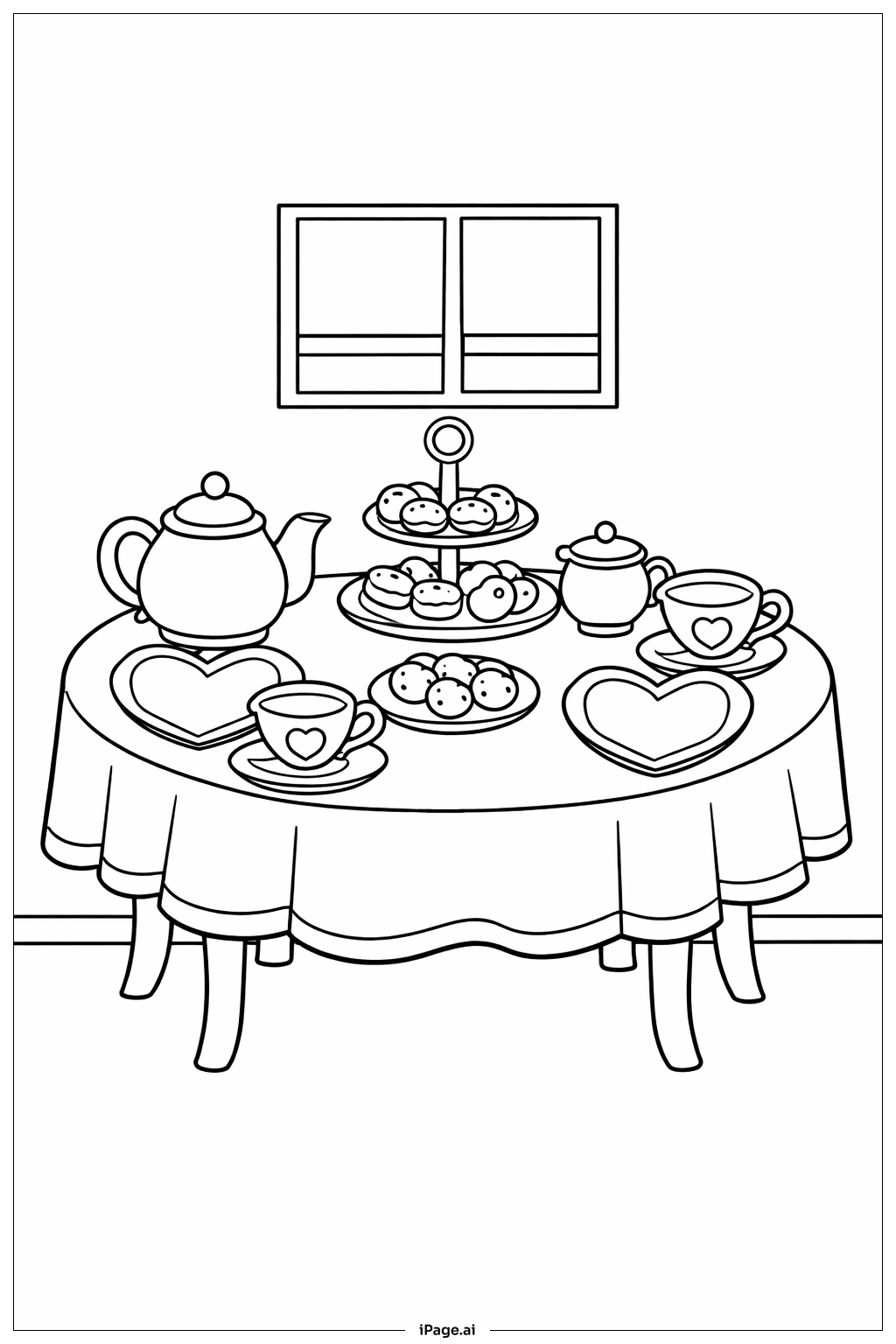
Coloring tips: How to color Valentines Tea Party Scene coloring page well?
Start with the heart balloons using shades of pink, red, and purple to create a romantic Valentine theme. Color the teapot and teacups in soft pastels like mint green, baby pink, or lavender, adding heart details in contrasting red or hot pink. The tablecloth offers wonderful opportunities for pattern work - try alternating pink and white stripes or polka dots with red hearts scattered throughout. For the delicious treats, use warm browns and tans for cake layers, bright pinks and reds for frosting swirls, and don't forget to add colorful sprinkles in rainbow shades. The tiered cake stand can be metallic silver or gold to add elegance. Use deep reds and soft pinks for ribbons and bows to tie the whole scene together with Valentine charm.
Coloring challenges: Which parts are difficult to color and need attention for Valentines Tea Party Scene coloring page?
• Intricate Pattern Details: The tablecloth features multiple decorative patterns including hearts, florals, and geometric designs that require careful attention to keep colors within the lines. Young colorists may find it challenging to alternate colors consistently across repeating patterns while maintaining neatness in the smaller spaces between design elements.
• Layered Cake Stand Elements: The tiered dessert stand presents a three-dimensional challenge with overlapping plates, treats, and decorative elements at different levels. Distinguishing between the front and back layers requires careful observation, and choosing appropriate color values to create depth can be tricky for beginners who may struggle with lighter and darker shade selection.
• Heart-Shaped Balloon Strings: The thin, curving ribbon strings attached to the balloons demand steady hand control and precision. These delicate lines are easy to color outside of accidentally, and maintaining consistent color along their winding paths tests fine motor skills and patience, especially where strings overlap or curve behind other objects.
• Small Decorative Accents: Tiny details like sprinkles on cupcakes, lace trim on the tablecloth, bows on presents, and heart embellishments on the teapot require precision coloring with fine-tipped tools. These miniature elements can be frustrating for younger children or those still developing fine motor control, as staying within very small boundaries demands concentration and careful hand movements.
• Creating Visual Harmony: With so many different elements in one scene, choosing a cohesive color palette that makes the entire picture feel balanced and unified presents a planning challenge. Colorists must decide how to distribute their Valentine colors throughout the image while ensuring no single area overwhelms the others and the overall composition remains pleasing to the eye.
Benefits of coloring books: Advantages of drawing Valentines Tea Party Scene coloring page
Coloring this Valentine tea party scene offers wonderful benefits for developing fine motor skills through the variety of shapes and sizes present in the image. The repetitive patterns on the tablecloth and the detailed decorations help improve hand-eye coordination and concentration. Children can practice color recognition and matching while selecting festive Valentine hues for hearts, balloons, and treats. This activity encourages creative decision-making as young artists choose their own color combinations and patterns, building confidence in their artistic choices. The cheerful theme promotes positive emotions and can be used to discuss friendship, kindness, and celebration. Completing this detailed scene provides a sense of accomplishment and pride. The tea party setting also offers opportunities for storytelling and imagination, as children can envision who might attend this special celebration and what treats they would enjoy.