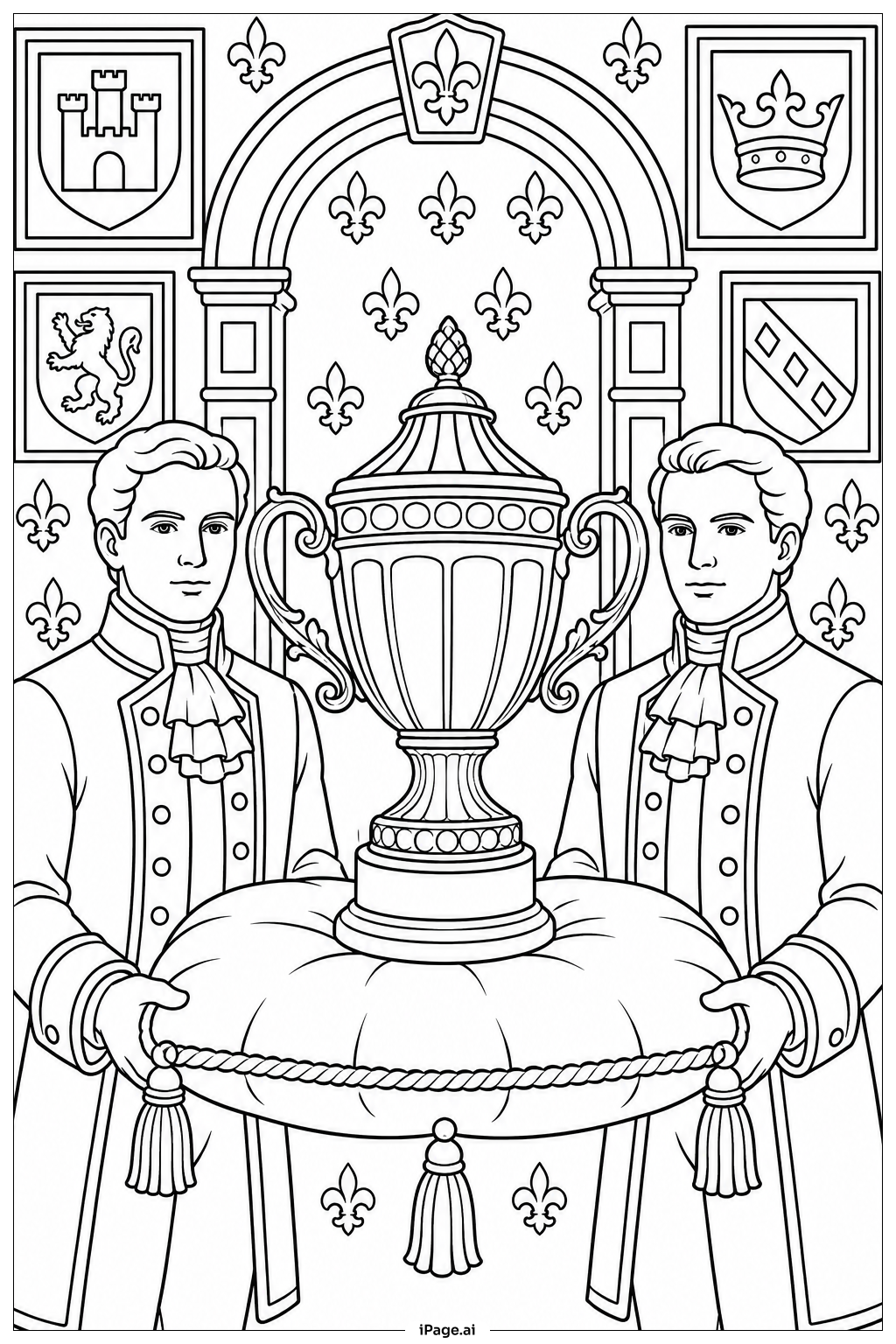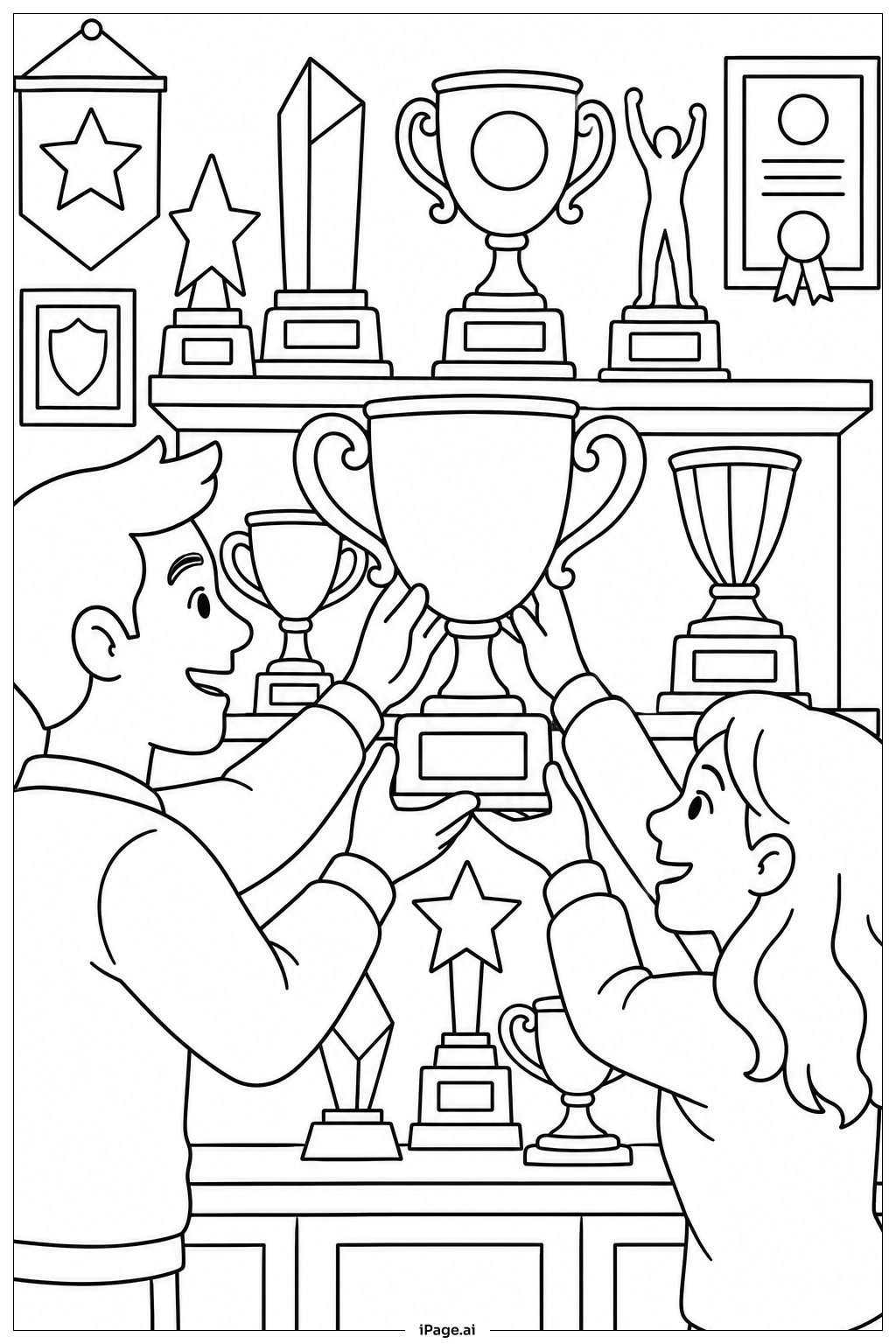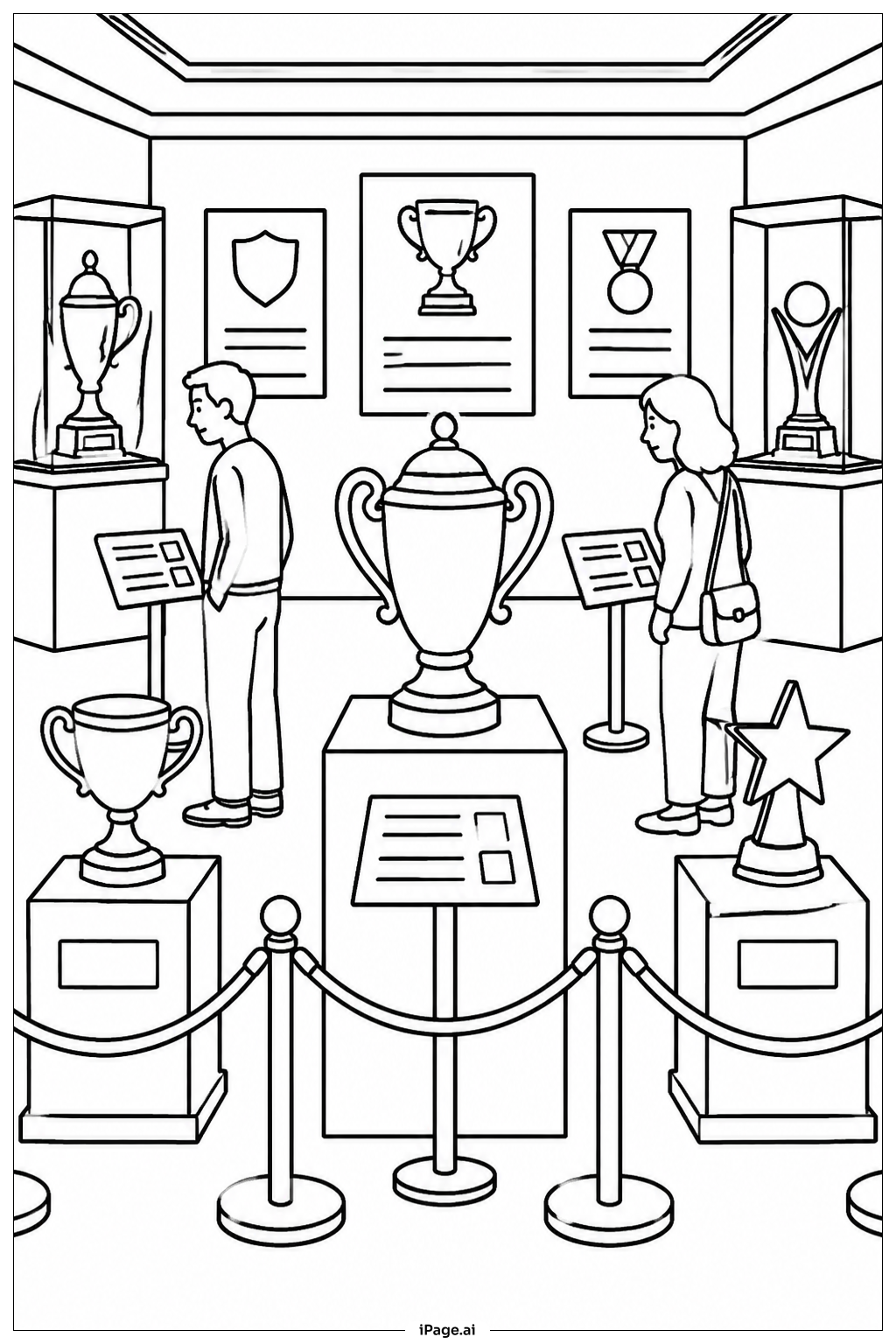
Coloring tips: How to color Trophy In Museum Exhibit coloring page well?
Try using shiny gold, silver, or bronze colors for the Trophy itself to make it look real and important. You could color the handles and decorations with a bright metallic look. For the base, use darker shades like brown or black to show the wood or stone texture. The glass case can be colored with soft blue or light gray to look transparent. The background walls can be light beige or cream to keep the focus on the Trophy. Feel free to add shadows with darker tones to create depth around the Trophy. You can also experiment with bright colors for the floor or the museum pillars to make the whole picture lively. Have fun mixing colors to make this museum scene come alive!
Coloring challenges: Which parts are difficult to color and need attention for Trophy In Museum Exhibit coloring page?
• Small Details on Trophy: The Trophy has many tiny decorative patterns that require careful coloring to stay neat and show their beauty. Coloring inside the small shapes can be tricky for young artists.
• Reflective Surfaces: To make the Trophy look metallic, you need to color with smooth gradients and highlights, which can be hard for beginners to achieve.
• Glass Case: The glass display needs light and transparent coloring that shows the Trophy behind it. This requires subtle shading and avoiding heavy colors.
• Background Complexity: The museum exhibit includes walls, pillars, and the floor with different textures. Coloring them consistently while keeping the Trophy highlighted demands good color balance.
• Contrast and Shadows: Adding depth with shadows around the Trophy and stand can be difficult. You have to choose darker shades carefully without losing details in the image.
Benefits of coloring books: Advantages of drawing Trophy In Museum Exhibit coloring page
Coloring this image will help improve focus and fine motor skills by working on small detailed patterns. It encourages creativity in choosing colors to represent metal, glass, and wood textures. Learning to color reflective surfaces and transparent objects can develop artistic shading techniques. This picture also inspires appreciation for history and achievements shown by trophies in museums. Coloring can be relaxing and satisfying as you bring a special museum exhibit to life with your own colors. It teaches patience and attention to detail while having fun imagining different materials and lighting effects in the scene.