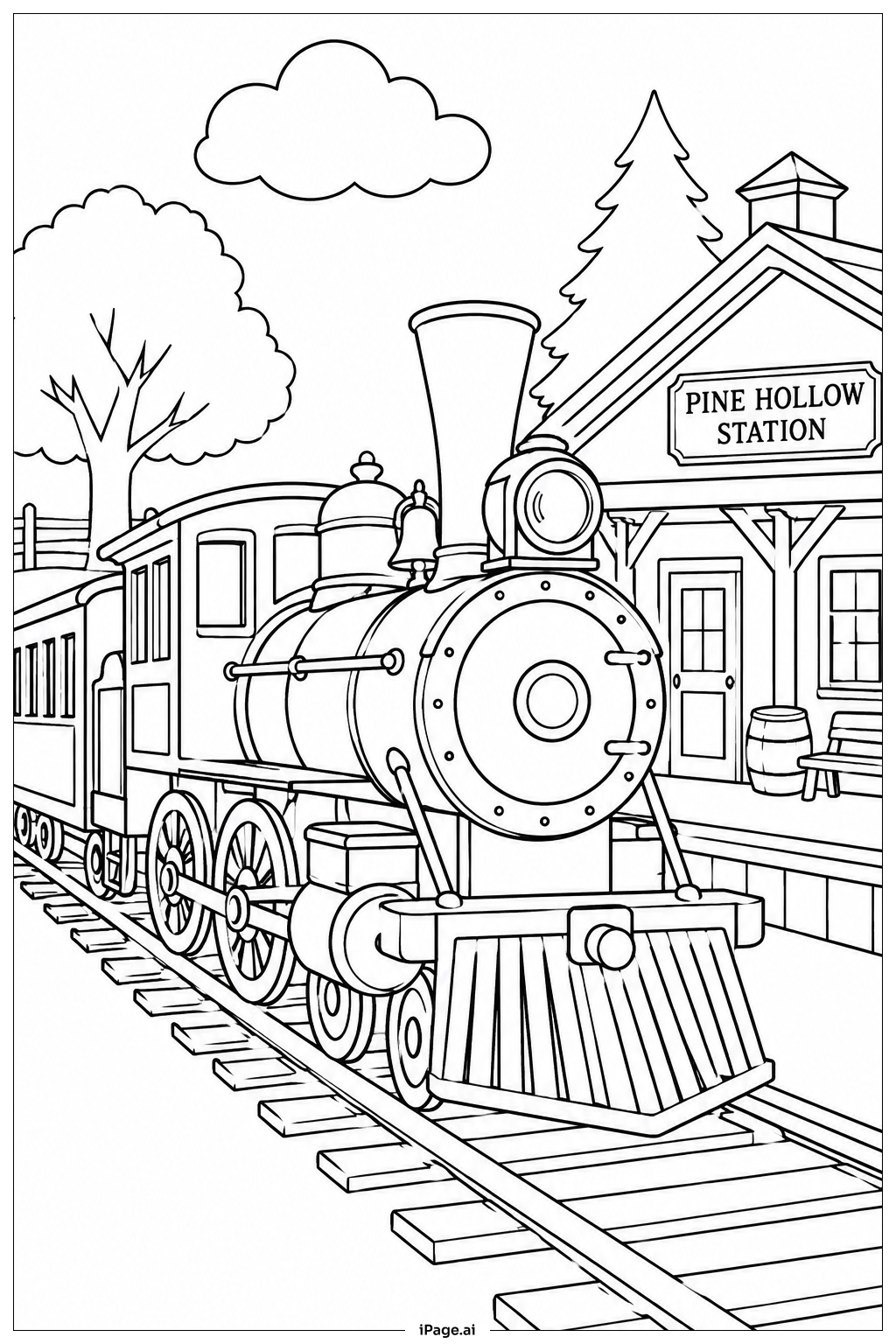
Coloring tips: How to color Vintage Train Engine coloring page well?
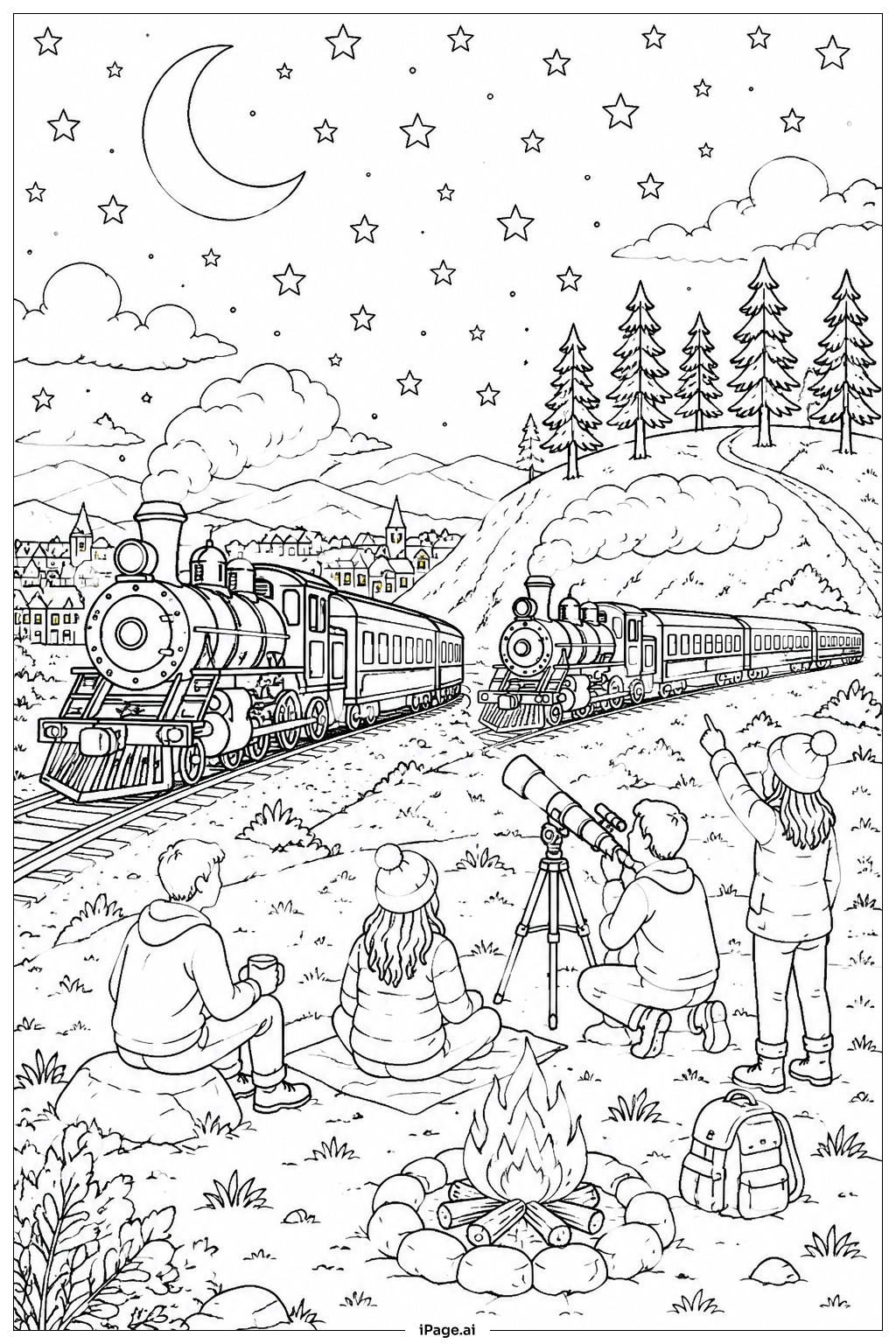
Start with the boiler and use a deep iron gray or dark charcoal to give it a strong metallic feel. Paint the smokestack black or dark brown to suggest soot and age. For the large drive wheels and spokes, try a rusty orange-red or classic black with silver highlights on the rims. The cab can be colored in a warm burgundy, forest green, or navy blue to match classic railway styles. Use gold or brass yellow for the headlamp, fittings, and decorative trim. The cowcatcher looks great in silver or steel gray. Add a touch of orange or rust to areas that show wear. Light brown or tan works well for wooden accents. For Boys and Girls alike, bold, contrasting colors make the engine look powerful and exciting. Have fun mixing shades to bring this historic machine to life.
Coloring challenges: Which parts are difficult to color and need attention for Vintage Train Engine coloring page?
• Spoked Drive Wheels: The large wheels have many thin, evenly spaced spokes radiating from the center hub. Staying inside each narrow spoke without overlapping requires a fine-tipped tool and a steady hand. Rushing this section can make the wheel look muddy or uneven, so take it one spoke at a time.
• Boiler Rivets and Panel Lines: The boiler surface is covered with small circular rivets and subtle panel divisions. Each rivet is tiny, making it tricky to color individually. Deciding whether to color them the same tone as the body or use a contrasting metallic shade adds another layer of difficulty for younger colorists.
• Mechanical Parts and Side Rods: The connecting rods, pistons, and valve gear between the wheels form a complex overlapping cluster of shapes. Keeping each separate part visually distinct means choosing slightly different shades of the same color family, which requires planning ahead before putting color to paper.
• Smokestack and Steam Details: The smokestack has a flared bell top and subtle cylindrical texture. Capturing the look of metal while suggesting heat or soot means blending dark tones at the top and lighter tones below, which can be challenging without smudging neighboring areas.
• Cab Windows and Interior Glimpse: The cab windows open a small view into the engine interior. Deciding how to treat the shadowed interior versus the bright exterior frame requires understanding light and contrast, which is a more advanced skill that challenges older or more experienced colorists.
Benefits of coloring books: Advantages of drawing Vintage Train Engine coloring page
Coloring this Vintage Train Engine page offers a wonderful mix of fun and learning for kids and Adults alike. Working through all the mechanical details helps build fine motor skills as colorists carefully navigate spokes, rivets, and rods. Choosing the right shades for metal, wood, and glass encourages creative thinking and color awareness. For Boys and Girls who love vehicles, this page sparks curiosity about how steam engines work and connects coloring to real history. The focused, step-by-step nature of filling in complex shapes improves concentration and patience. Completing a detailed image like this also builds a strong sense of accomplishment, boosting confidence and self-esteem. For Adults, the intricate linework provides a calming, meditative activity that helps reduce stress after a long day. Overall, this Printable coloring page turns a simple creative task into a rewarding experience that sharpens the mind, soothes the mood, and celebrates the beauty of vintage engineering.