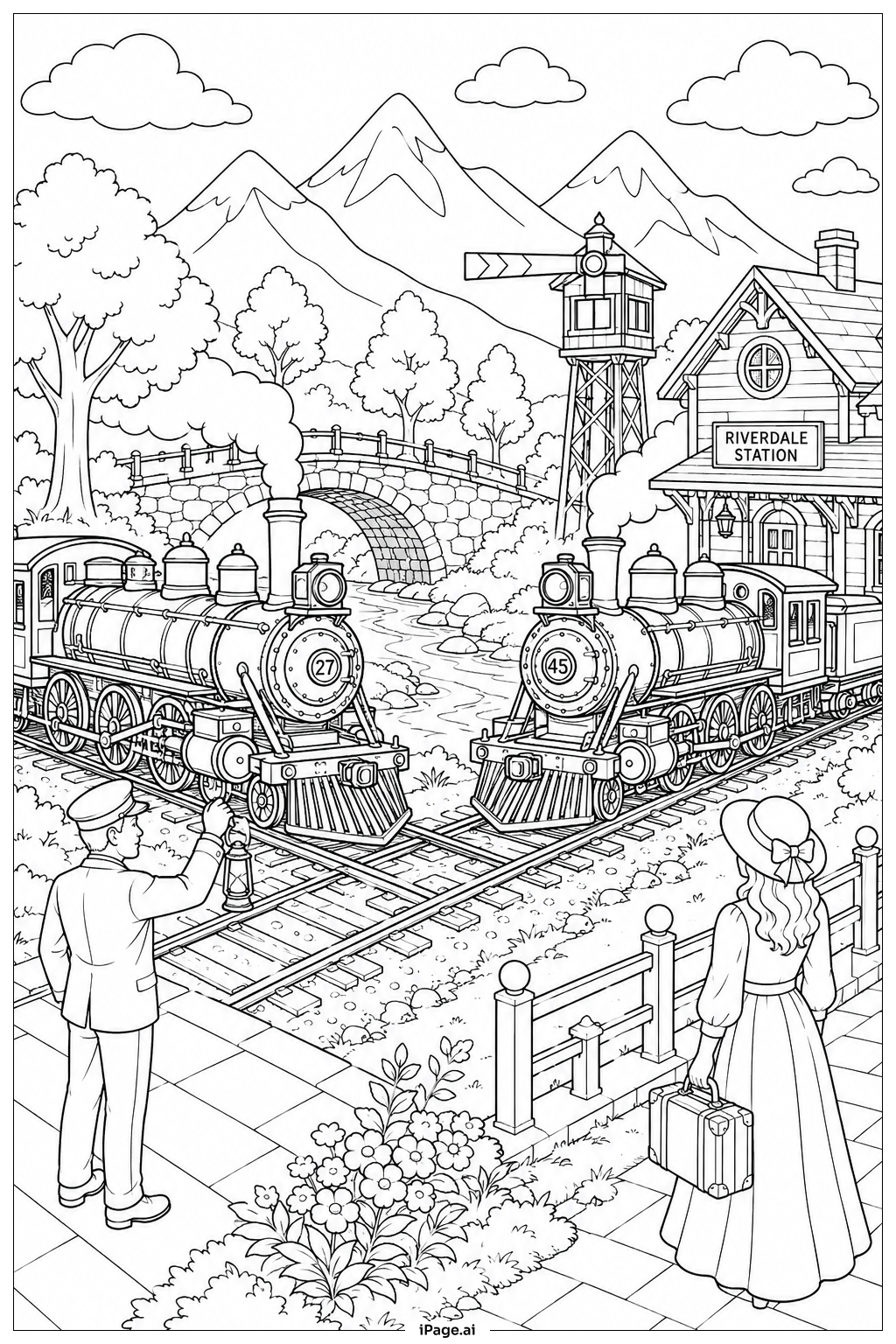
Coloring tips: How to color Two Steam Trains Passing coloring page well?
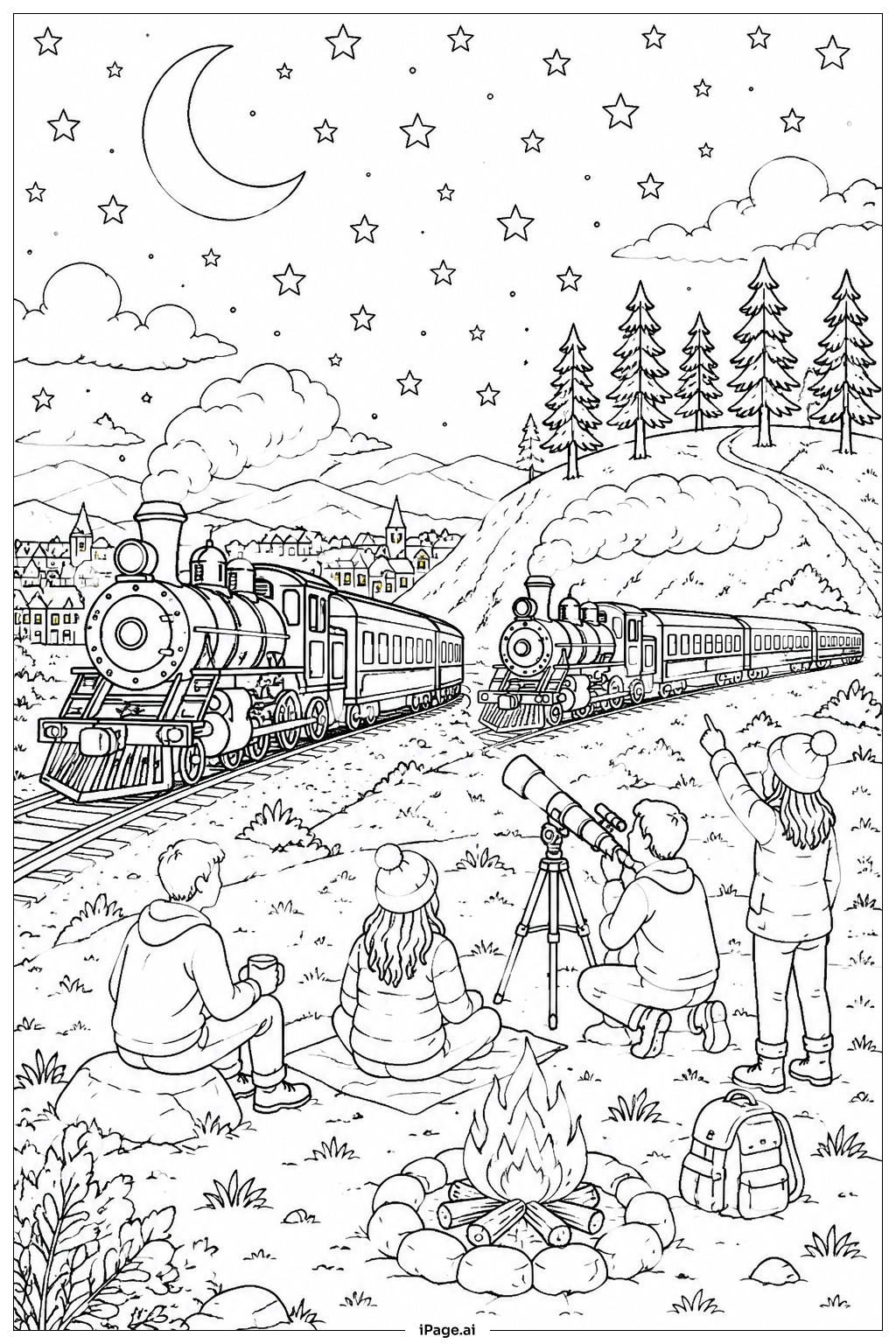
Start with the engines themselves. Use deep black or dark charcoal for the boilers and body panels to give the trains a classic, powerful look. Add rich red or royal blue for accent trim, cab doors, and side panels — these pops of color make each train feel unique. Color the large driving wheels in dark gray or metallic silver, and use brown or tan for the wooden parts of any cargo cars. For the steam clouds, try soft white, pale gray, or even light lavender to show movement. The smokestacks can be black or dark brown. Use warm greens and golden yellows for trees and grasses in the background. Make the sky bright blue or a warm sunset orange to set an exciting mood. Use brown or tan for the wooden railway ties and silver-gray for the steel rails. Feel free to give each train its own color scheme so they look like two different railroad lines passing each other on the tracks.
Coloring challenges: Which parts are difficult to color and need attention for Two Steam Trains Passing coloring page?
• Steam Cloud Shading: The billowing steam puffs coming from both smokestacks are tricky to color. Steam has no single flat color, so you need to blend soft whites, light grays, and pale blues smoothly to create a fluffy, airy look. Keeping the edges soft while staying inside the curved lines takes careful, light strokes.
• Parallel Track Details: The two sets of railway tracks run side by side with closely spaced wooden ties and metal rails. These thin, repeating lines are small and closely packed, which makes it hard to fill each piece neatly without accidentally coloring over the lines. Thin markers or sharp colored pencils work best here.
• Wheel Complexity: Each locomotive has multiple large driving wheels and smaller guide wheels, connected by side rods and valve gear. These circular and mechanical shapes overlap each other, and keeping each part a different shade without muddying the overall look requires patience and careful color planning before you begin.
• Dual Engine Coordination: Because two full trains appear in the same scene, you need to decide on two separate color schemes that look good together without clashing. Balancing the visual weight of both engines so neither one looks too plain or too busy compared to the other is a real design challenge.
• Background Depth: Trees, sky, and distant landscape sit behind the active foreground trains. Coloring the background too dark or too bright can flatten the scene. Using lighter, softer tones for distant elements and stronger colors up front creates a convincing sense of depth and distance.
Benefits of coloring books: Advantages of drawing Two Steam Trains Passing coloring page
Coloring this steam train scene offers a wonderful mix of fun and learning for kids and adults alike. Working through the many details of the locomotives helps build fine motor skills and hand-eye coordination, especially when coloring small wheels, rails, and mechanical parts. Choosing colors for two separate trains encourages creative decision-making and early design thinking. Kids learn about contrast and balance as they figure out how to make both engines look great side by side. The scene also sparks curiosity about trains, history, and how steam engines work, making it a natural conversation starter. For older children and adults, the complex shapes and layered details offer a satisfying challenge that builds focus and patience. Blending colors for steam clouds and shading metal surfaces introduces basic artistic concepts like tone and texture in a relaxed, pressure-free way. Overall, this page turns a simple coloring activity into a creative journey that is both calming and mentally engaging for all ages.