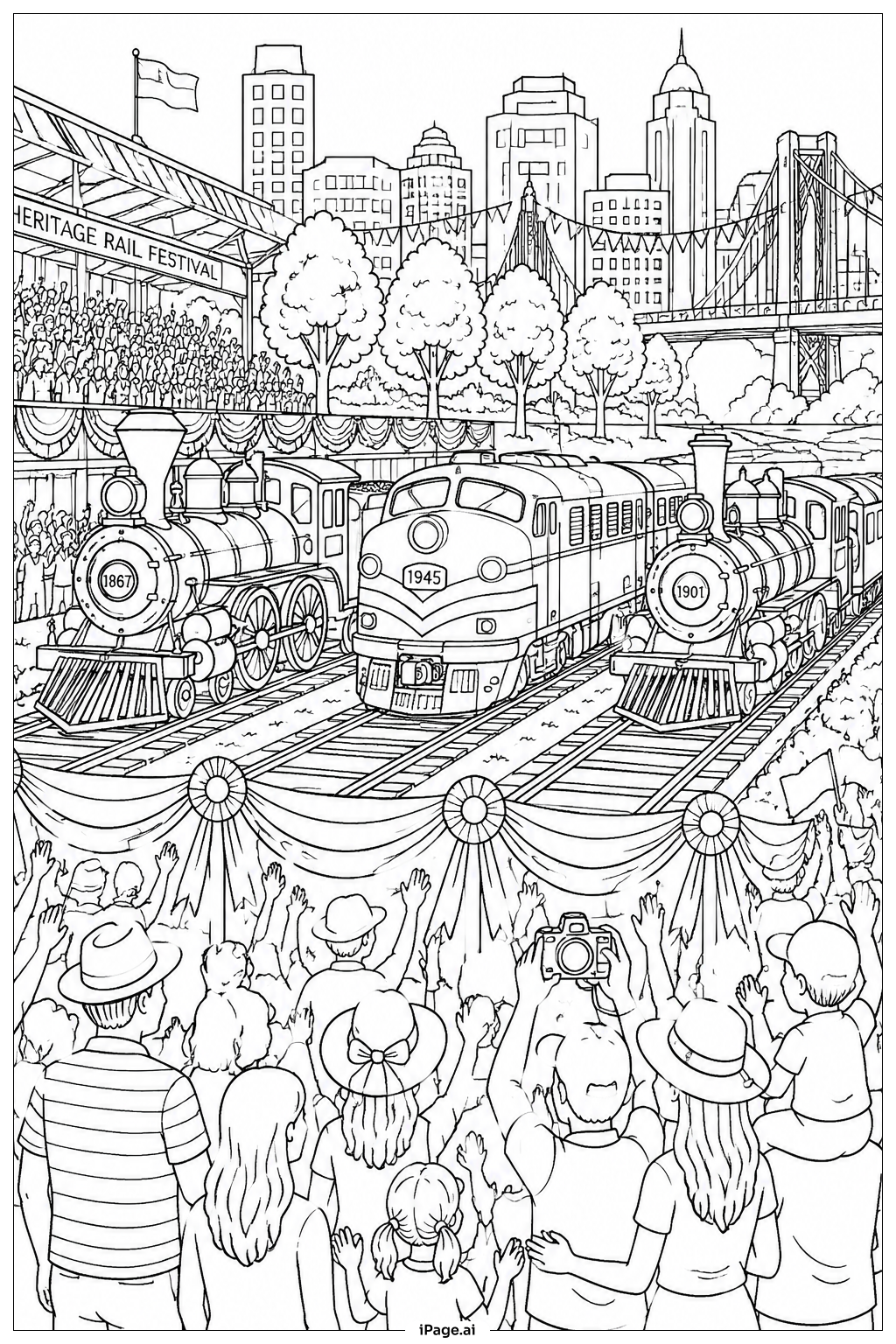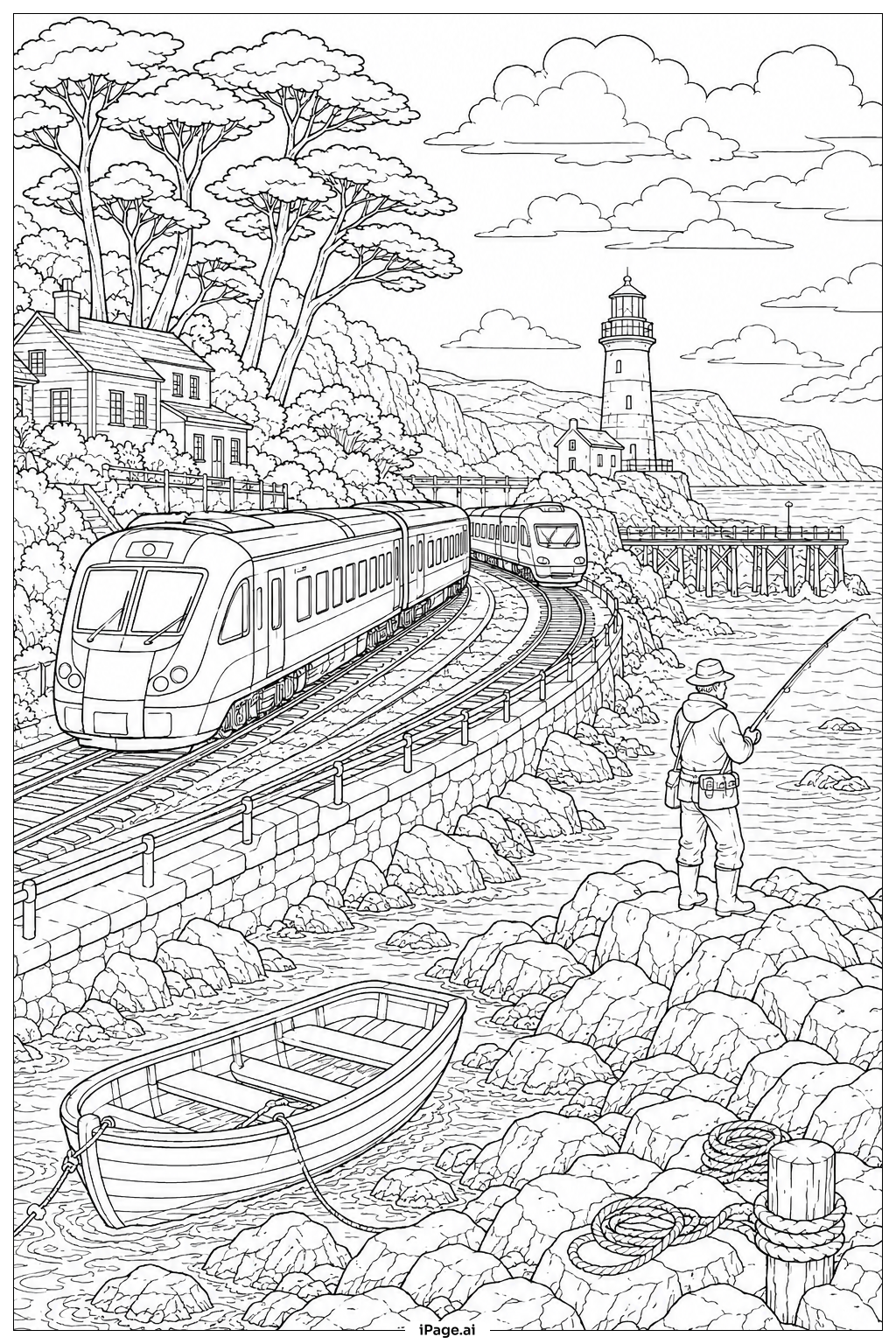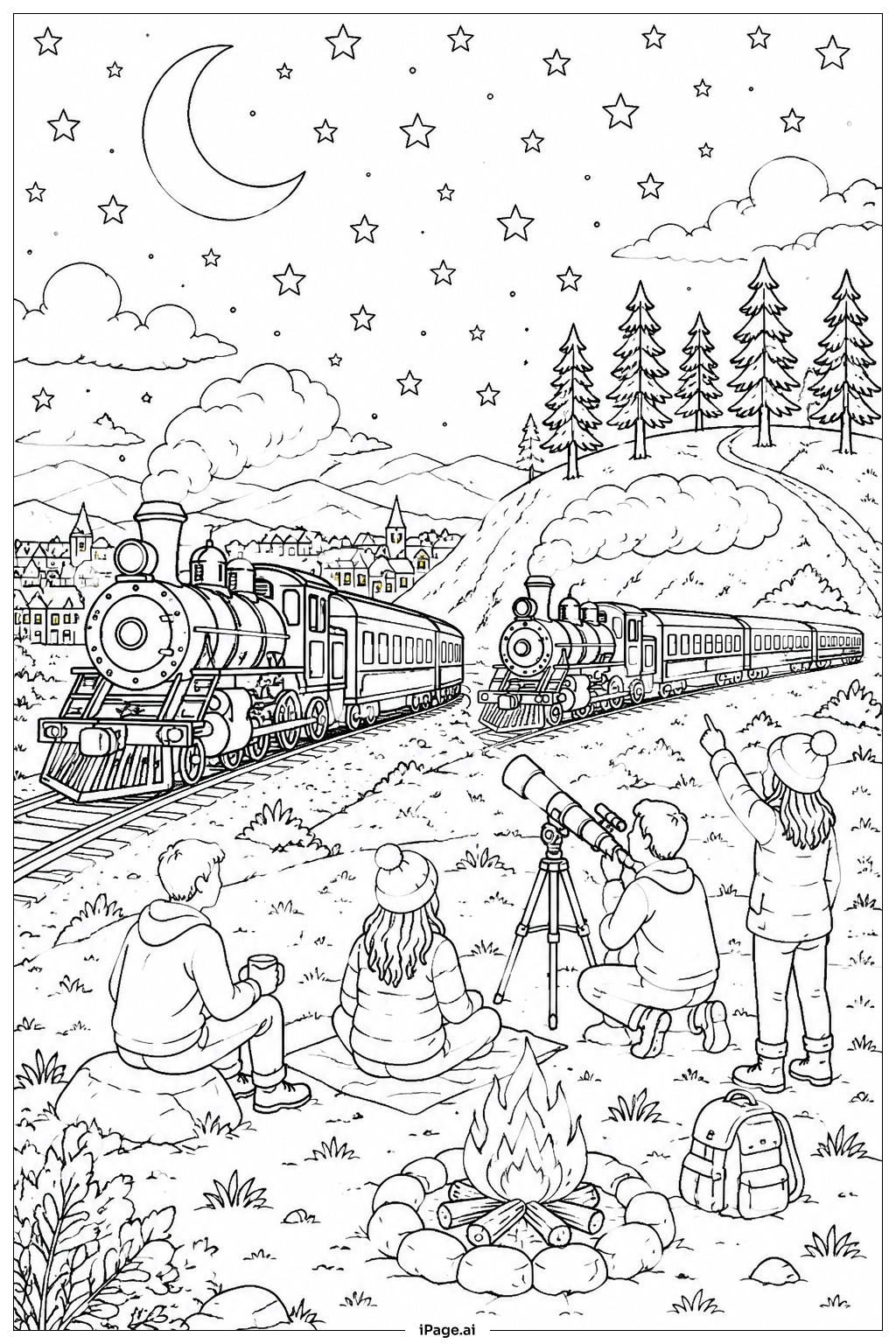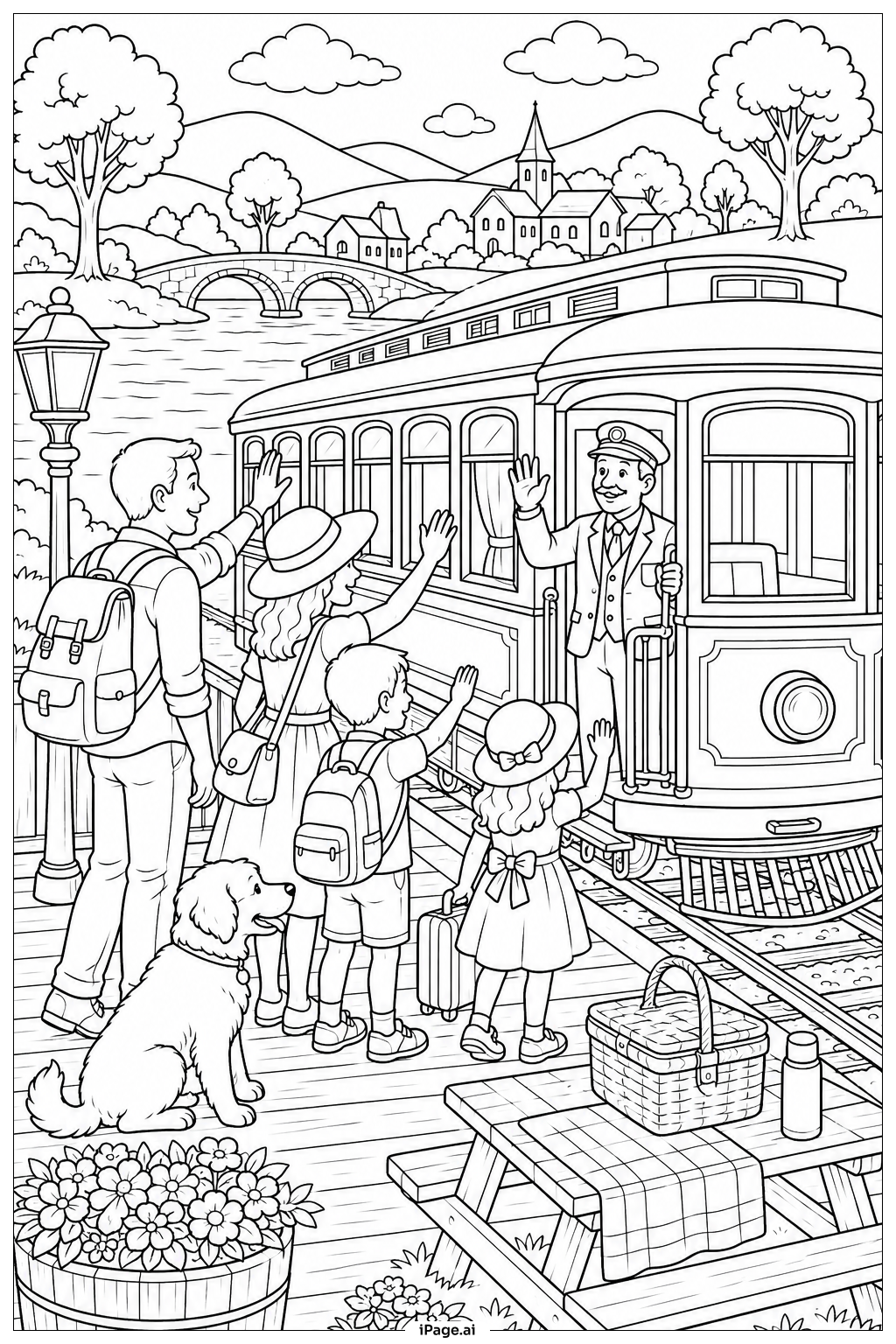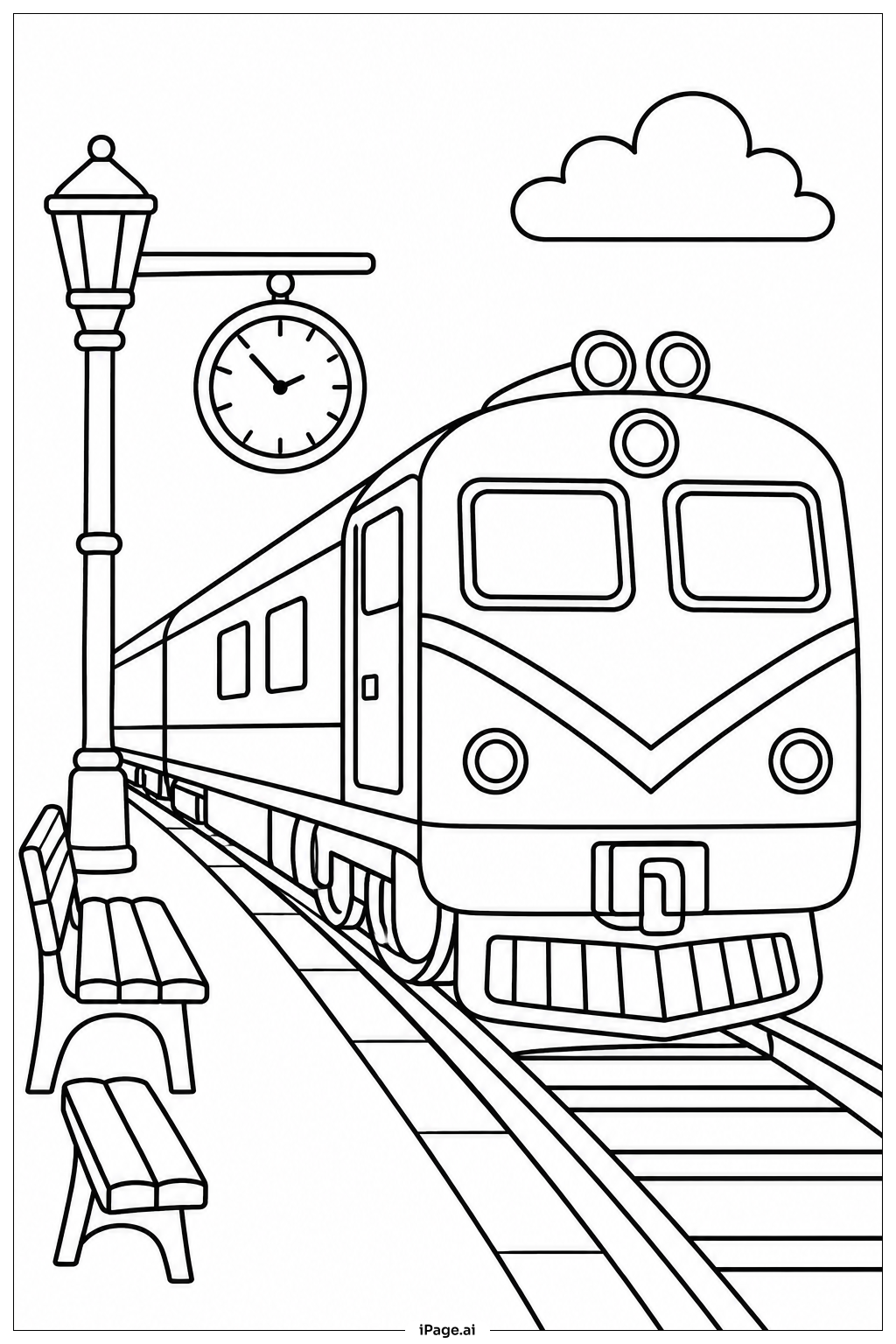
Coloring tips: How to color Train Station Platform coloring page well?
Start with the train itself. Use dark shades like charcoal gray or deep navy for the locomotive body. Add rust orange or red accents on the trim and wheels to make them pop. For the platform canopy, try warm tan or cream tones with green or black iron details on the columns. Color the passengers in bright, varied outfits — mix and match blues, reds, yellows, and greens to make the crowd feel lively. Use light gray or beige for the platform floor with subtle darker streaks to suggest stone or concrete. The tracks can be silver or steel gray. Add a warm golden yellow to the station clock face. For the sky visible beyond the platform, try a soft light blue or a warm sunset gradient with orange and pink. Keep the background slightly lighter than the foreground so the train and passengers stand out as the main focus. Feel free to experiment — there are no rules, only fun!
Coloring challenges: Which parts are difficult to color and need attention for Train Station Platform coloring page?
• Complex Train Details: The locomotive has many small mechanical parts, including wheels, pistons, bolts, and panel lines. Staying inside these tiny areas requires a steady hand and fine-tipped colored pencils or markers. Take your time with each section to avoid colors bleeding into neighboring parts.
• Architectural Canopy and Columns: The station canopy features repeating structural elements like arched supports, decorative ironwork, and beam patterns. Each repeated shape should be colored consistently to create a unified look. Using a ruler or tracing the outlines lightly before coloring can help maintain neatness.
• Crowd of Passengers: Multiple figures on the platform each wear different clothing and carry various items. Choosing a different color scheme for each person without the scene looking too busy is a real challenge. Planning your color choices in advance — perhaps sketching out a rough palette — helps keep things balanced and visually appealing.
• Perspective and Depth: The platform and tracks extend into the distance, meaning objects get smaller toward the background. To reflect this depth, use lighter and less saturated colors for distant elements. Keeping foreground figures bold and background details softer helps the scene feel three-dimensional.
• Small Foreground Accents: Benches, luggage, clocks, and potted plants are small but important details. These require careful control with fine tools. Using colored pencils for tiny areas and switching to broader markers for large flat sections will help you handle the variety of sizes without frustration.
Benefits of coloring books: Advantages of drawing Train Station Platform coloring page
Coloring this Train Station Platform page offers a wide range of benefits for kids and adults alike. For younger children, it builds fine motor skills as they practice staying within detailed lines around the train, columns, and small passenger figures. It also encourages focus and patience, especially when working through the many small mechanical parts of the locomotive. Choosing colors for the crowd, the sky, and the train helps develop color recognition and creative decision-making in a fun, low-pressure way. For older kids and teens, this scene is a great opportunity to explore shading, perspective, and color harmony. Experimenting with gradients on the sky or adding depth to the tracks stretches artistic thinking. Adults benefit too — the repetitive, structured nature of coloring architectural details like the canopy and columns is proven to reduce stress and promote mindfulness. The richly detailed scene also sparks curiosity about trains, history, and travel, making it both an artistic and educational activity. Whether coloring solo or together as a family, this page brings calm, creativity, and a sense of accomplishment when the finished scene comes to life.