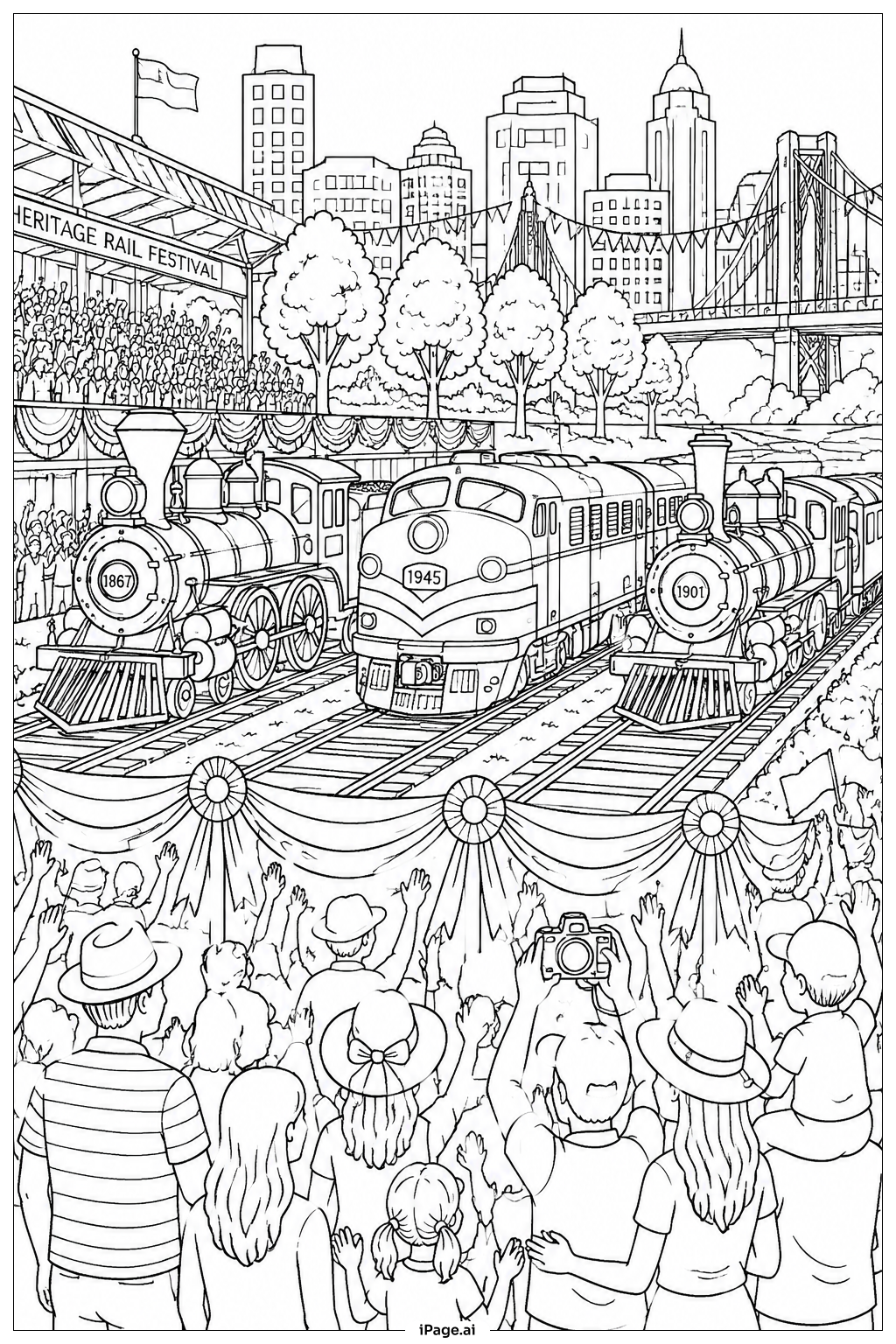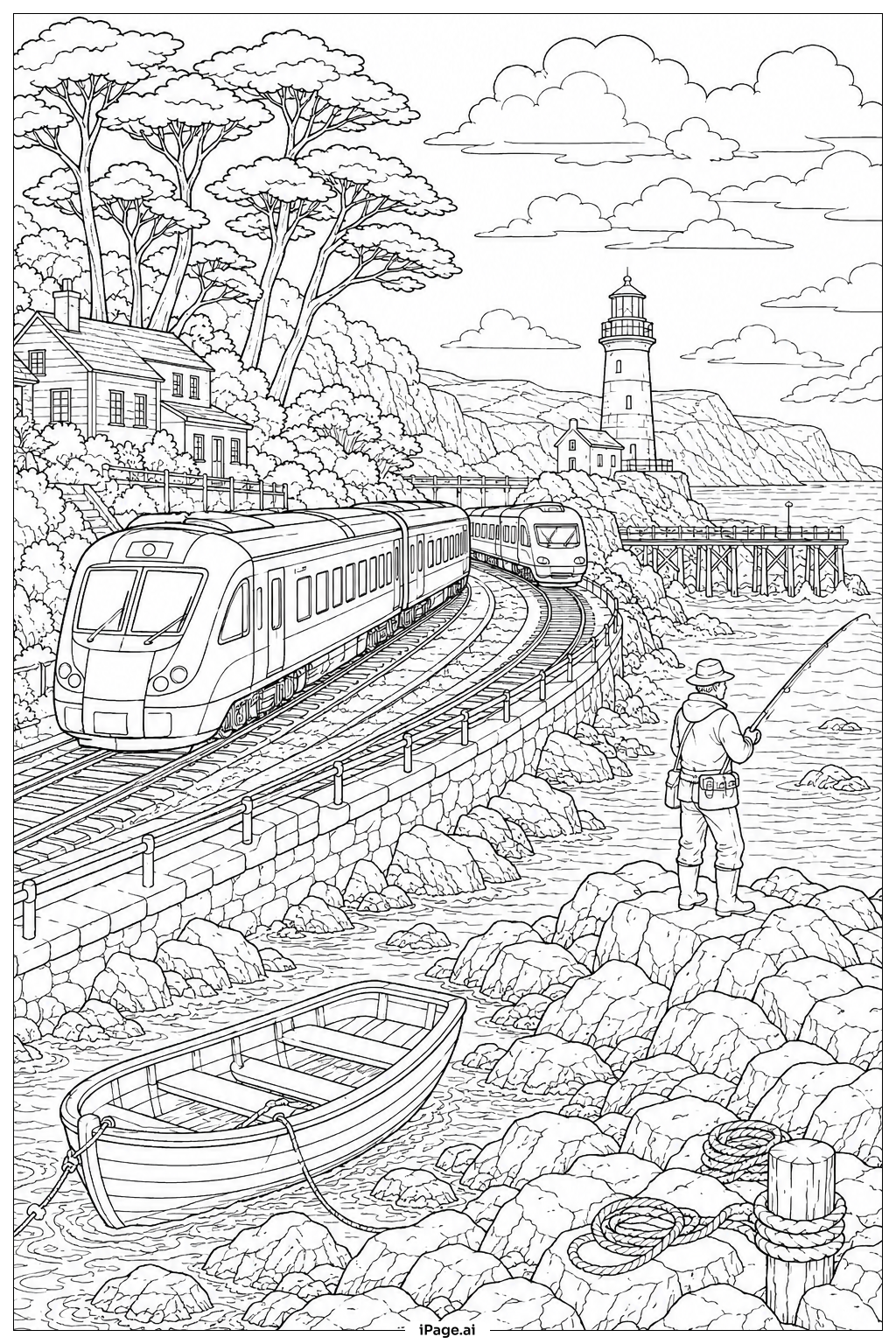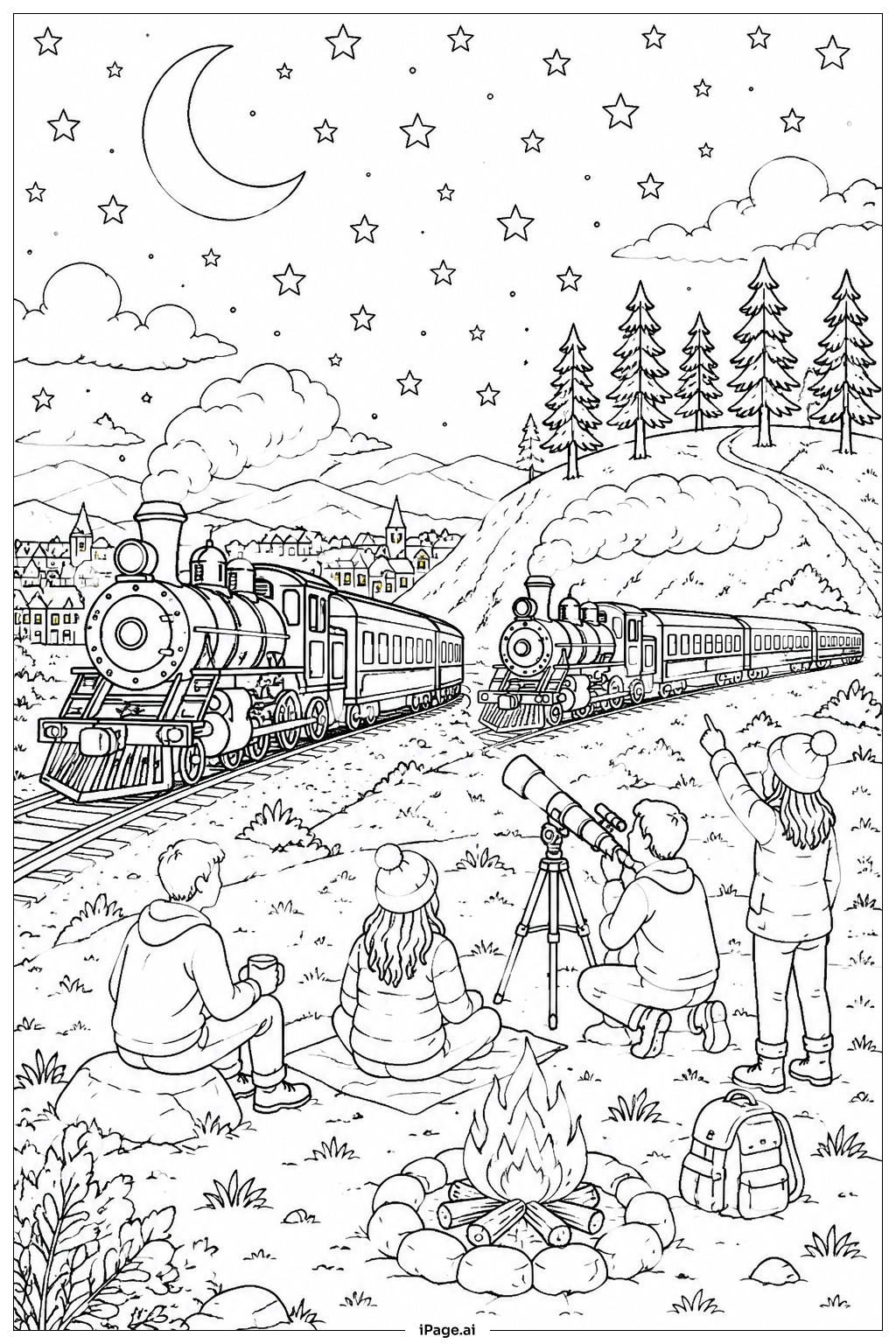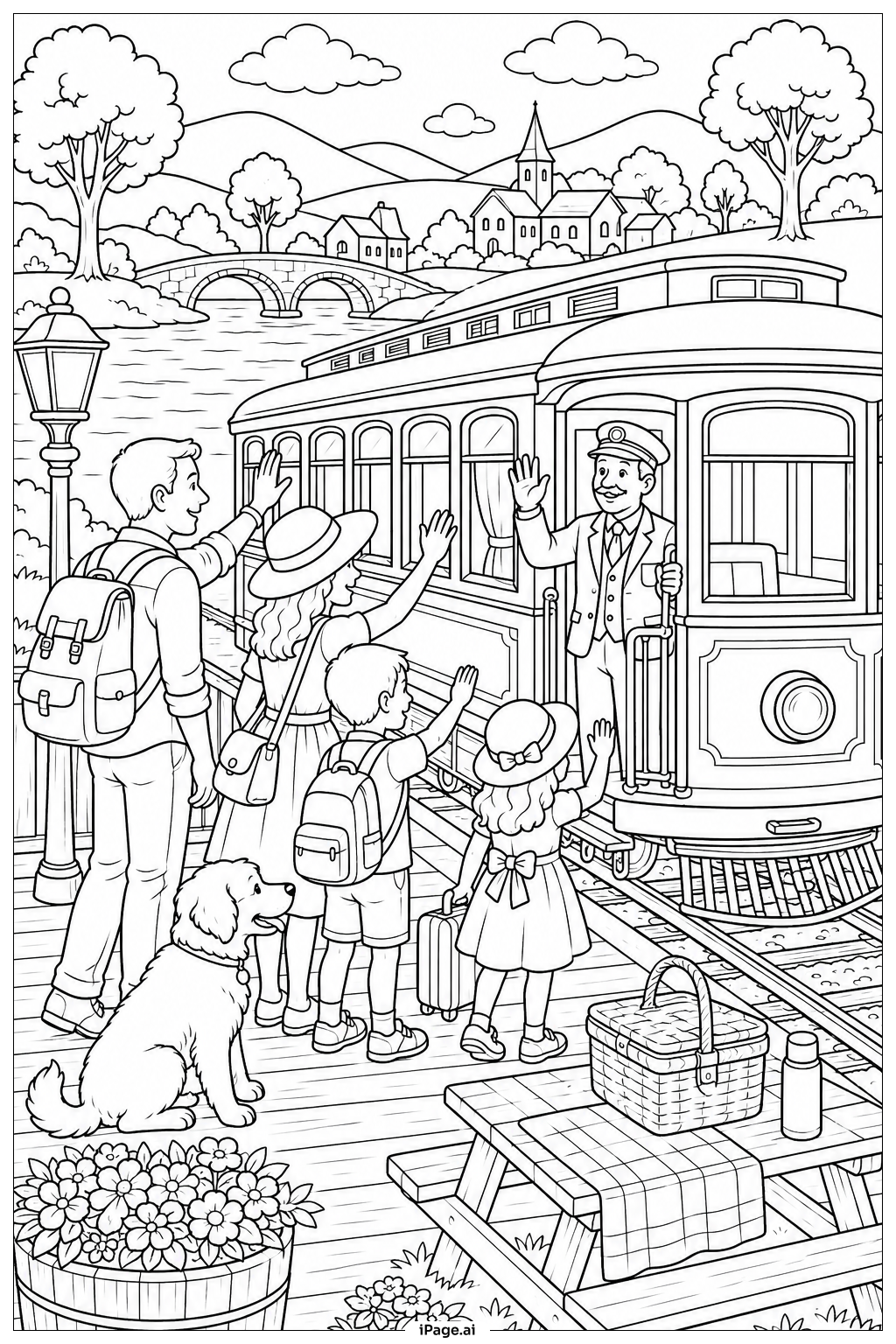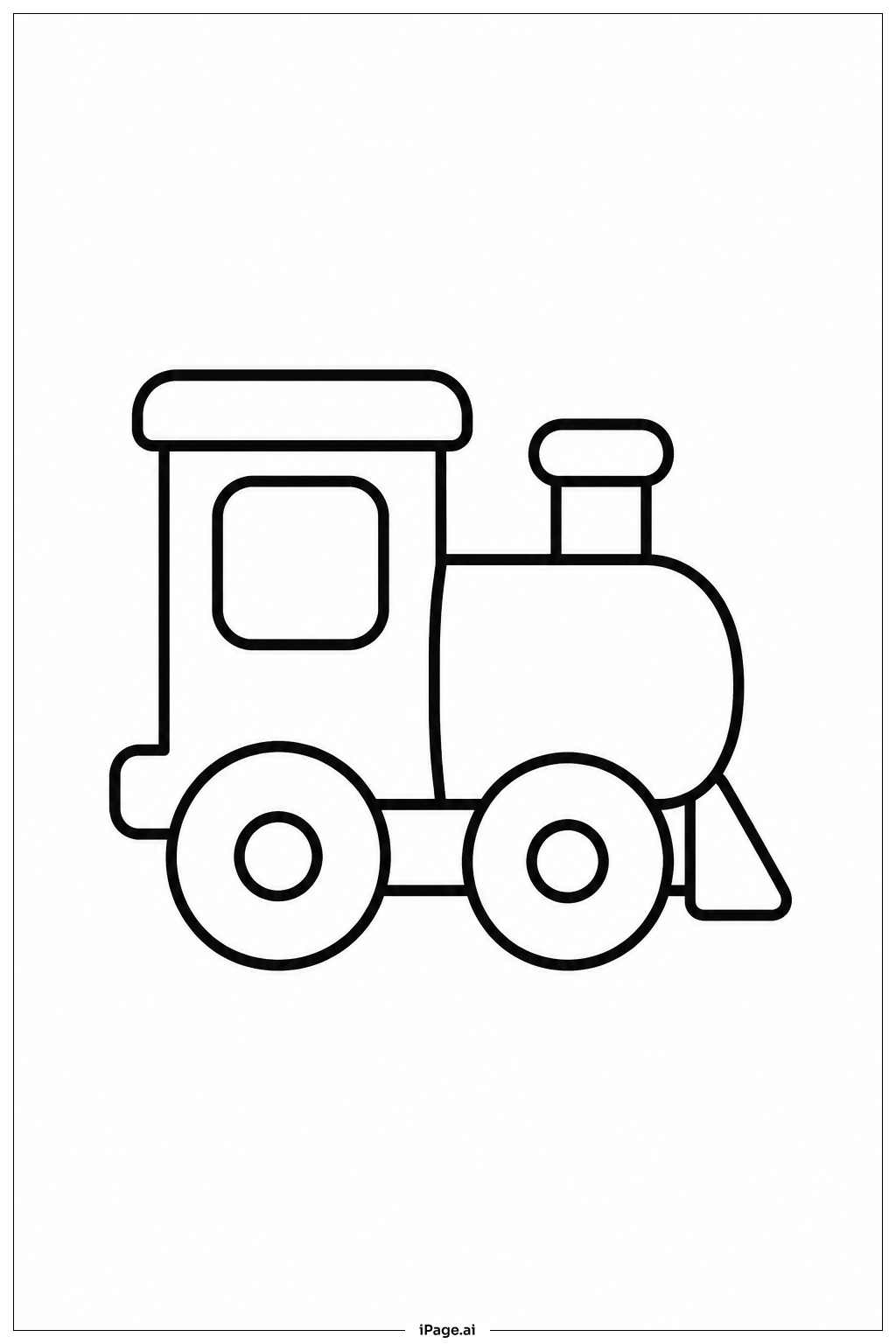
Coloring tips: How to color Tiny Train Engine coloring page well?
Start with the main body of the engine. Red or bright blue are classic train colors and look great on the boiler and cab. Use black or dark gray for the wheels and connecting rods to make them look sturdy and metallic. The smokestack looks good in dark gray or black too. Try yellow or gold for small details like rivets, trim lines, and window frames — these little touches make the engine pop. The cab windows can be colored light blue or yellow to suggest glass or warm interior light. If you want a fun twist, try a green body with gold accents for a vintage storybook train look. Use brown or tan for any wooden-looking parts. Keep your colors bold and bright to give this tiny engine lots of energy and charm.
Coloring challenges: Which parts are difficult to color and need attention for Tiny Train Engine coloring page?
• Wheel and Rod Details: The large wheels and the connecting rods between them have curved and straight edges that sit close together. Staying inside the lines here takes patience, especially where the rods overlap the wheels. Using a fine-tipped marker or a sharpened colored pencil will help you keep each part separate and clean.
• Smokestack Shading: The smokestack is a narrow, cylindrical shape. To make it look three-dimensional and rounded, you need to apply darker color on one side and lighter color on the other. This kind of shading can be tricky for younger colorists who are still learning how light and shadow work.
• Rivet and Panel Details: The body of the engine is covered in small rivets and panel lines. These tiny details are very close together, making it easy to accidentally color over them or fill them in the wrong shade. Taking your time and using a very fine tool will help preserve these details and give the engine a realistic, textured appearance.
• Cab Window Accuracy: The cab windows are small rectangular shapes surrounded by a frame. Filling them with one color while keeping the frame a different color requires steady hands and careful control. Rushing through this area often leads to colors bleeding into the wrong sections.
• Overall Size Constraints: Because this is a tiny train engine, the entire image is compact and the individual sections are small. Working in a small space means less room for error. Younger children may find it helpful to use chunky crayons, while older kids can challenge themselves with fine-tipped tools for more precise results.
Benefits of coloring books: Advantages of drawing Tiny Train Engine coloring page
Coloring this Tiny Train Engine page offers a wonderful mix of fun and learning for children of all ages. For younger kids aged 4 to 7, filling in the big bold wheels and rounded body helps build hand strength and basic motor control, which are key skills for writing and drawing. The simple, friendly shapes keep things approachable and encouraging.
For older children aged 8 to 16, the small details like rivets, connecting rods, and panel lines provide a real challenge. Working carefully through these sections sharpens focus, builds patience, and improves precision — skills that carry over into school and everyday tasks.
Choosing colors for the engine also sparks creativity. Kids get to decide whether their train looks classic and realistic or bright and fantastical. This kind of creative decision-making builds confidence and self-expression.
The train theme itself is naturally engaging. It connects kids to ideas about transportation, engineering, and adventure. Coloring a train engine can inspire curiosity about how real trains work and lead to great conversations between children and parents or teachers.
Overall, this page is a simple but powerful tool for combining artistic fun with meaningful skill-building, all while celebrating the timeless charm of Train culture.