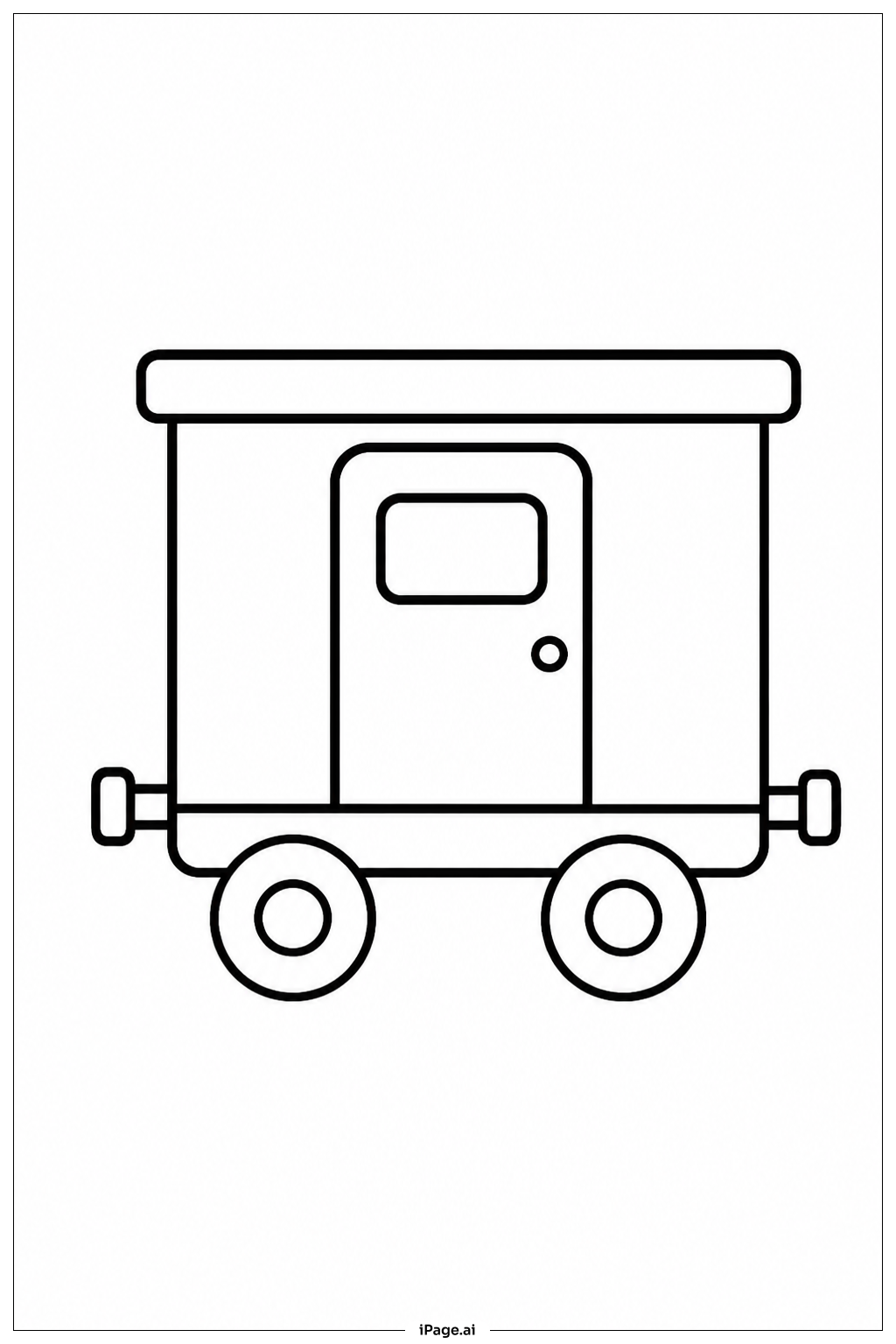
Coloring tips: How to color Short Train Carriage coloring page well?
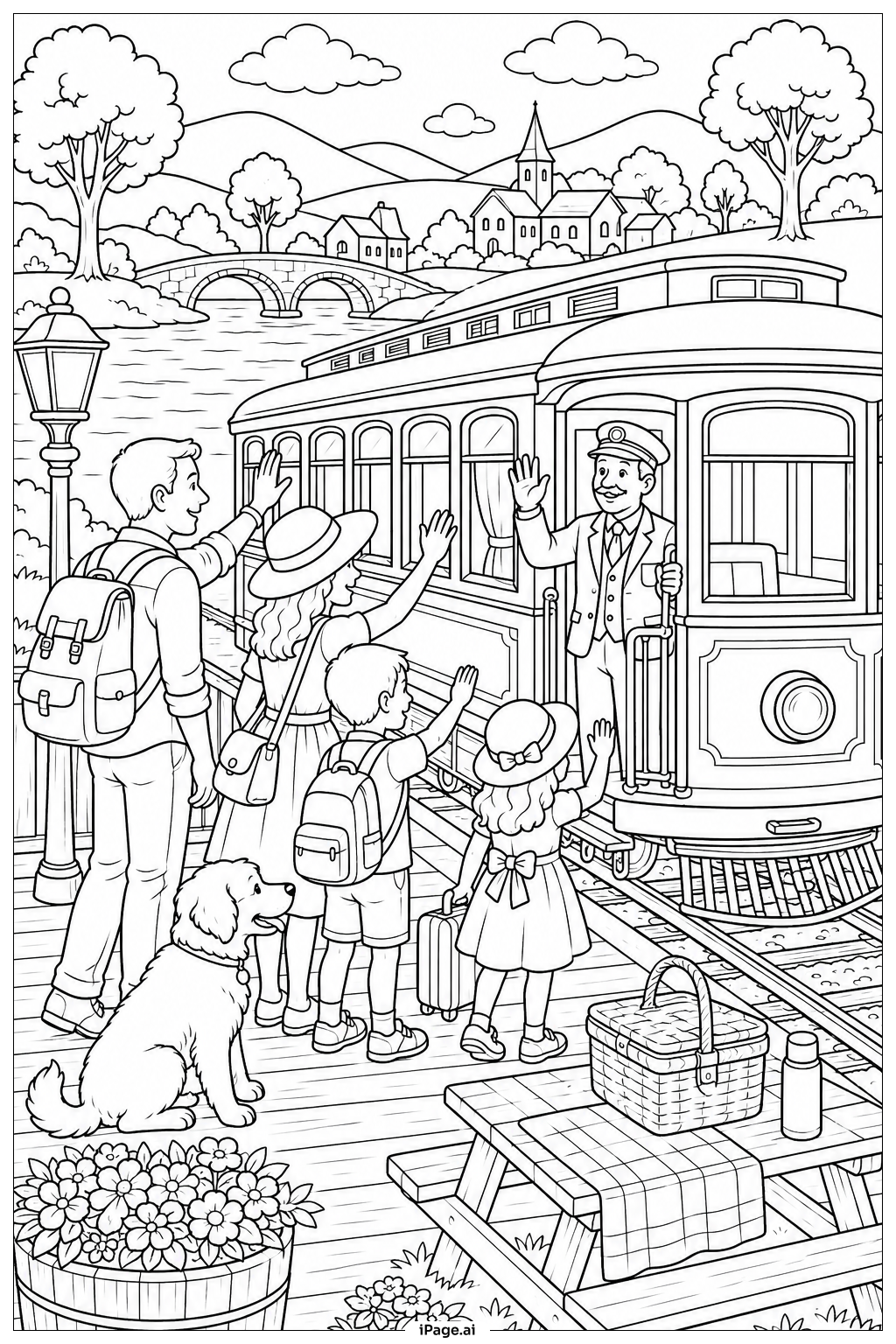
Start with the body of the carriage. Bright colors like red, blue, green, or yellow work great and give the train a fun, lively look. Use a darker shade of the same color along the panel edges to add depth. Color the wheels dark gray or black, and use silver or light gray for the metal spokes and axles. The windows can be light blue or sky blue to look like glass. Leave small white highlights on the windows to make them shine. Use brown or dark red for the wooden door and steps. For the bolts and rivets, try a metallic silver or gold. If you want a classic steam-era feel, go with deep burgundy or forest green for the body. Younger kids can stick to a few bold colors to keep things simple and fun.
Coloring challenges: Which parts are difficult to color and need attention for Short Train Carriage coloring page?
• Wheel Spokes and Axles: The wheels contain thin, closely spaced spokes that radiate from the center hub. Staying inside these narrow lines requires a fine-tipped colored pencil or a thin marker. Rushing through this area can cause colors to bleed into each other, so take your time and work one spoke at a time.
• Panel Lines and Body Sections: The carriage body is divided into several rectangular panels separated by thin borders. Keeping each panel neatly colored without crossing into the border lines can be tricky, especially near the corners where lines meet at sharp angles. Using a sharp pencil tip helps maintain clean edges.
• Rivets and Small Details: Tiny circular rivets and bolts are scattered across the frame and panels. These small shapes are hard to fill cleanly without smudging surrounding areas. It helps to color the rivets first before filling in the larger sections around them.
• Window Frames: The windows sit inside layered frames — an outer border, an inner frame, and the glass area itself. Each layer may need a different color or shade, so careful color selection and a steady hand are needed to avoid mixing them up.
• Roof Railing and Coupling Details: The thin railing on the roof and the small coupling pieces at each end have very fine outlines. These narrow elements are easy to over-color. Using a light touch and a well-sharpened pencil gives the best results in these tight areas.
Benefits of coloring books: Advantages of drawing Short Train Carriage coloring page
Coloring this short train carriage page offers a wonderful mix of fun and learning. For younger children, filling in the large body sections builds basic color recognition and improves hand control. It encourages them to make creative choices, like picking their favorite color for the carriage, which boosts confidence and self-expression.
For older kids, the smaller details like spokes, rivets, and window frames challenge fine motor skills and train the hand to move with precision. Working carefully through these sections builds patience and focus — skills that carry over into schoolwork and everyday tasks.
The structured design of the carriage, with its clear sections and repeating shapes, also helps children develop a sense of order and visual organization. Deciding which parts to color first teaches basic planning and sequencing.
Coloring is also a calming activity. It gives kids a quiet space to slow down, breathe, and enjoy a creative task without pressure. Finishing the page gives a real sense of accomplishment, which is great for building a positive mindset. Whether done alone or with friends and family, this train carriage page is a simple, rewarding way to spend creative time.