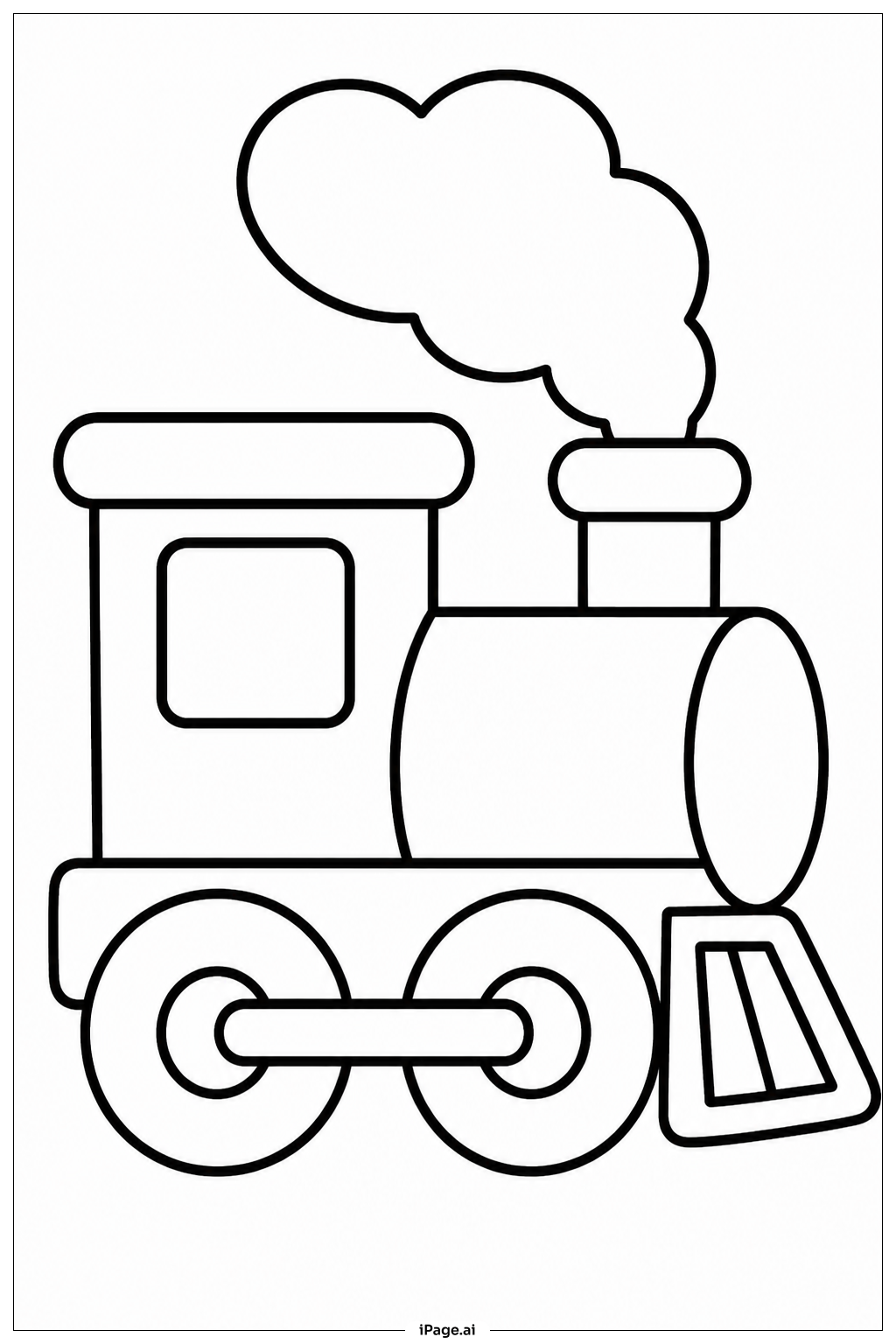
Coloring tips: How to color Puffing Steam Train coloring page well?
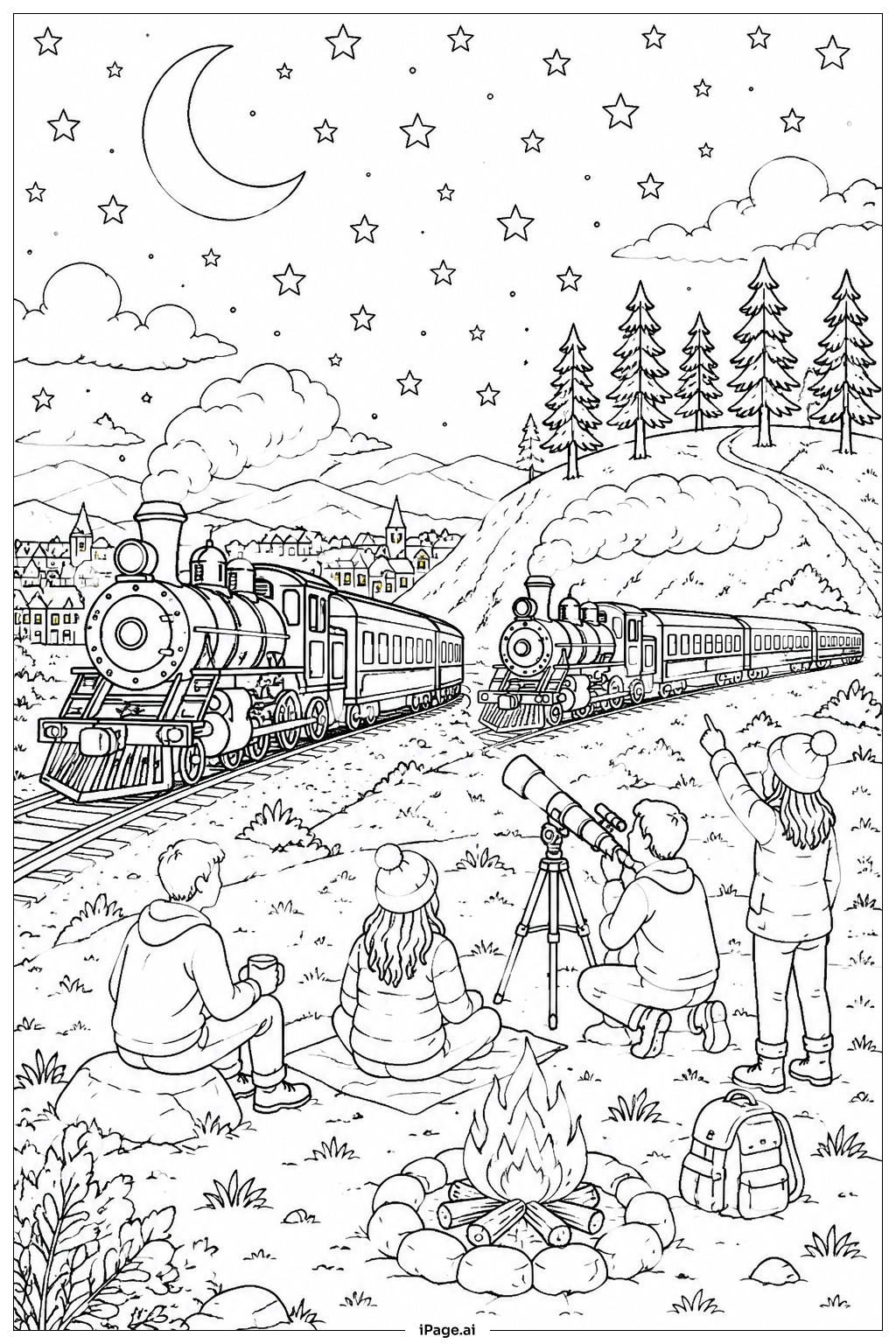
Start with the locomotive body and use a deep red, navy blue, or classic black for a traditional steam train look. The boiler and cab can be one bold color to keep things unified. Use silver or gray for the metal wheels, connecting rods, and rivets to give them a realistic metallic feel. The chimney stack looks great in dark charcoal or black. For the steam puffs, try soft white, light gray, or even pale blue to make them look airy and fluffy. The cow-catcher at the front can be painted silver or yellow for contrast. The lantern pops nicely in warm yellow or orange. For the background, use greens and light blues for the hills and sky to give the scene a fresh outdoor feel. Do not be afraid to mix shades of the same color to add depth to the large flat surfaces like the boiler and cab panels.
Coloring challenges: Which parts are difficult to color and need attention for Puffing Steam Train coloring page?
• Steam Cloud Shapes: The billowy steam puffs coming from the chimney have soft, rounded edges that can be tricky to fill. Because they overlap and curl into each other, it is hard to show depth using just one flat color. Try using two or three shades of gray or white, applying the darker tone at the base of the puff where it meets the chimney and gradually lightening toward the edges. This layering technique creates a convincing fluffy look without complex blending tools.
• Small Mechanical Details: The connecting rods, rivets, and wheel spokes are tiny and closely spaced. Coloring these areas neatly requires a fine-tipped colored pencil or a thin marker. Rushing through these sections can result in colors bleeding into neighboring areas, so take your time and use light pressure to stay within the lines.
• Circular Drive Wheels: Large round wheels with spokes radiating from a central hub are a classic challenge. Each spoke section is a narrow wedge shape, and keeping consistent color and pressure across all of them takes patience. Color each section in the same direction to maintain an even finish.
• Body Panel Shading: The boiler is a large cylindrical surface. On a flat coloring page, showing that rounded three-dimensional form requires subtle shading. Adding a slightly darker strip along one side and a lighter strip along the other can make the boiler look like a real tube rather than a flat shape.
• Background and Foreground Contrast: The countryside background needs to stay lighter and less detailed than the train so the locomotive remains the visual focus. Choosing colors that are too bright or saturated for the hills and sky can flatten the scene and make the train harder to read.
Benefits of coloring books: Advantages of drawing Puffing Steam Train coloring page
Coloring this steam train page offers a wonderful mix of fun and learning for children and adults alike. For younger kids, tracing along the curved lines of the boiler, wheels, and steam puffs builds fine motor skills and improves hand-eye coordination. Choosing colors and deciding how to fill each section encourages creative thinking and builds confidence in making independent decisions. For older children and teens, the mechanical details like the connecting rods, rivets, and spoke wheels introduce concepts of shading and depth, helping develop early artistic techniques. Adults can use this page as a relaxing mindfulness activity, since focusing on small repetitive details like rivets and spokes is a great way to quiet a busy mind and reduce stress. The historical theme of the steam train also sparks curiosity about transportation history, making the activity educational as well as creative. Whether colored quickly with bold, bright shades or slowly with careful blending, this page offers a satisfying sense of accomplishment when finished. It is a great activity for solo quiet time or a shared project between parents and children.