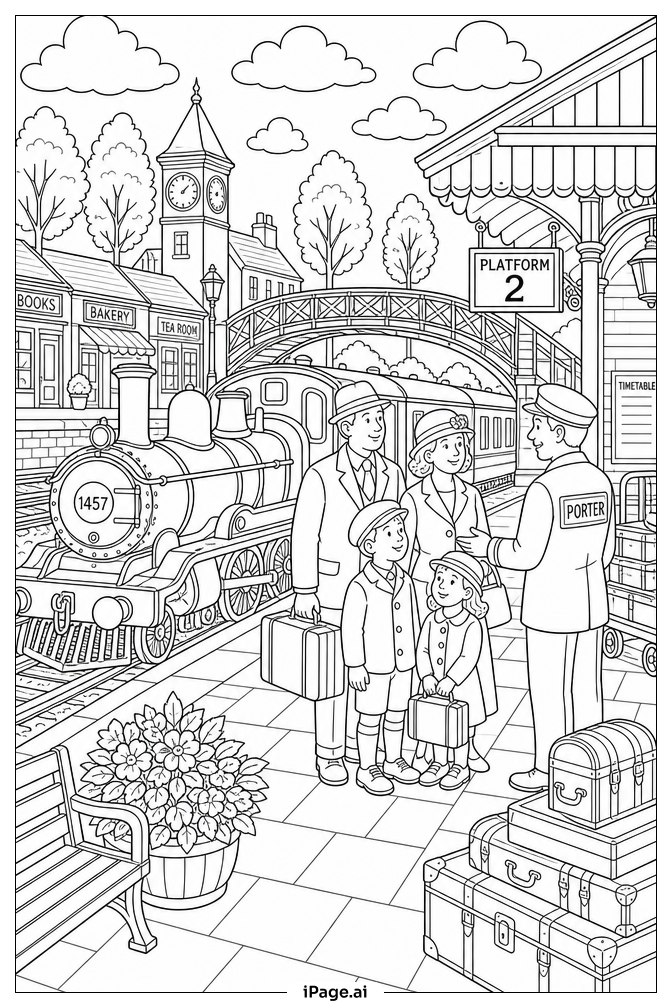
Coloring tips: How to color Old Fashioned Train Station coloring page well?
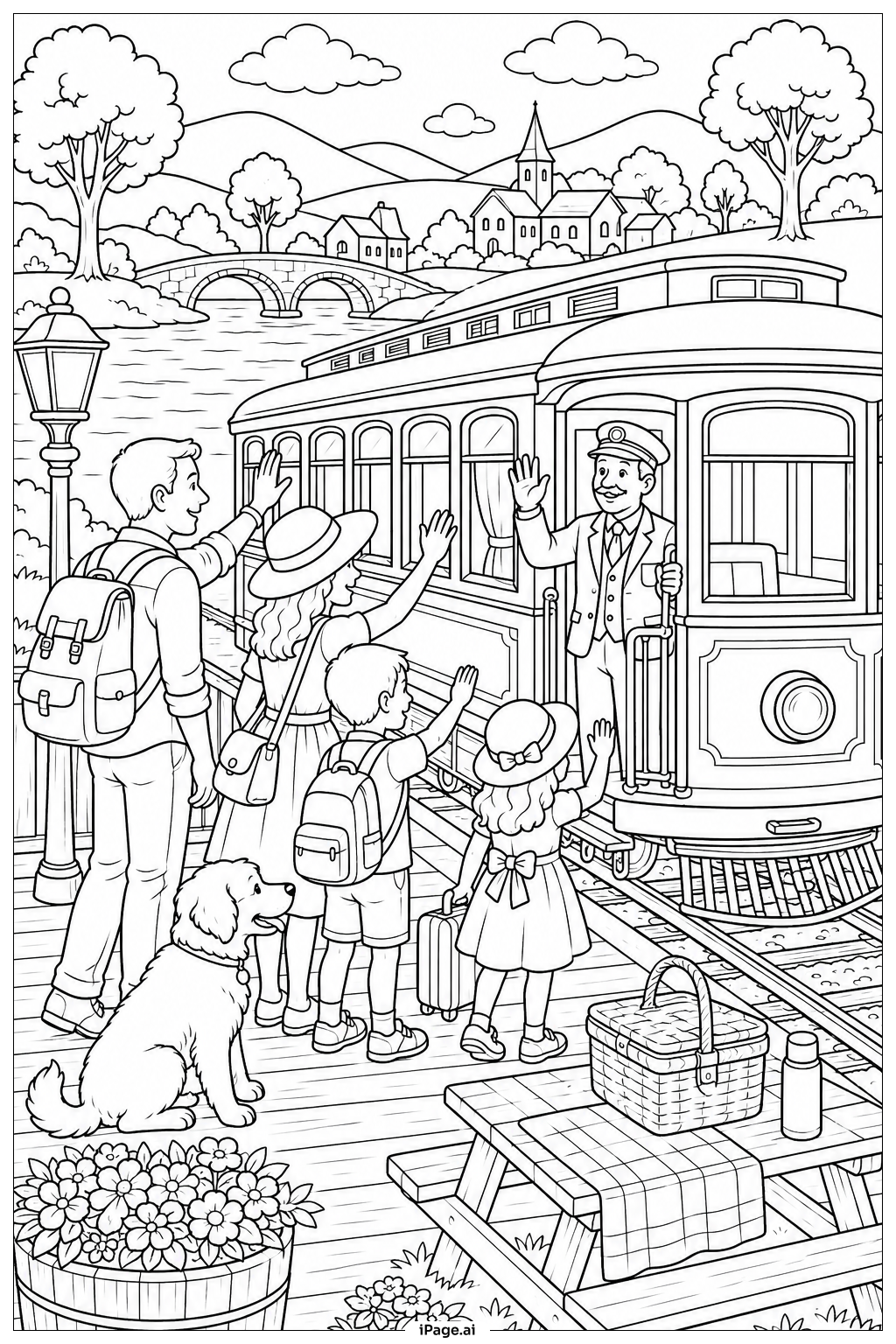
Start with the large areas first. Use warm brick reds and sandy browns for the station walls to give them an old, sturdy feel. Color the steam locomotive in dark gray or deep black, with touches of metallic silver for the iron parts and wheels. Use rich wood browns for the platform planks and benches. Paint the clock tower face in cream or ivory, with golden accents on the clock hands. Add soft yellow-orange tones to the lampposts. For the sky peeking through the scene, a soft blue or warm sunset orange works beautifully. Use light greens for any plants or bushes along the platform. Keep the passenger clothing colorful and varied to bring life and energy to the scene. Younger colorists can stick to simple flat colors, while older kids and Adults can try adding shading and highlights to the brickwork and metal surfaces to make the image feel more realistic and three-dimensional.
Coloring challenges: Which parts are difficult to color and need attention for Old Fashioned Train Station coloring page?
• Brick Wall Texture: The station walls are covered in detailed brick patterns, which means coloring each individual brick can take a long time and requires a steady hand. Staying inside the small lines without going over into the mortar gaps between bricks is tricky, especially for younger colorists. Using a thin colored pencil or fine-tip marker works best here.
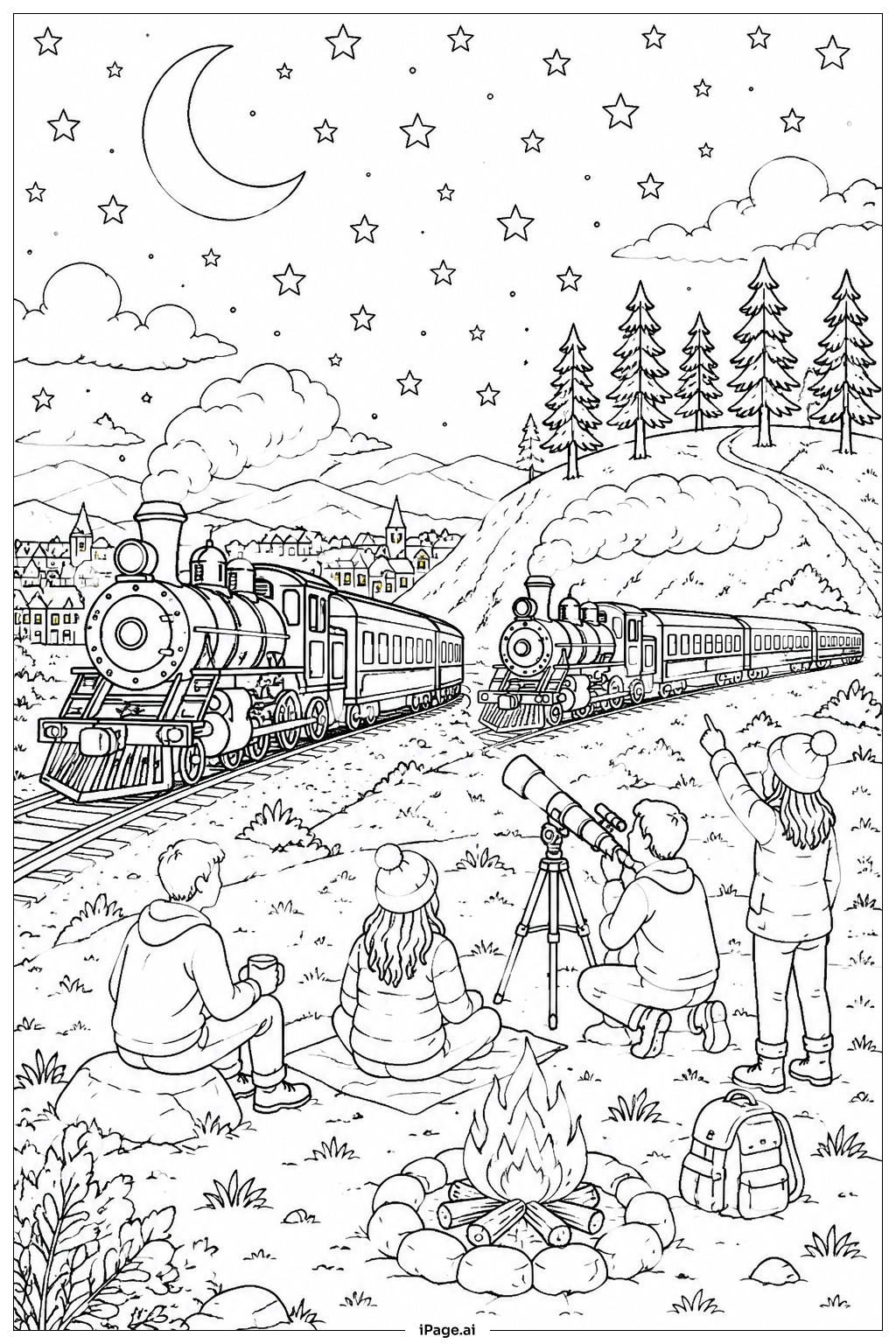
• Steam Locomotive Details: The locomotive has many overlapping mechanical parts such as the boiler, pistons, wheels, and smokestack. Each section has a different shape and size, making it hard to decide where one part ends and another begins. Coloring each component a slightly different shade of gray or brown can help separate them visually without making the engine look too busy.
• Intricate Roof and Beam Structure: The overhead platform roof features crossing beams and decorative woodwork. The narrow spaces between the beams are small and close together, which makes it easy to accidentally color the wrong section. Taking your time and using a fine-tip tool is strongly recommended for this area.
• Clock Tower Ornaments: The clock tower includes small decorative elements such as carved moldings, the clock face, and framing details. These tiny shapes require careful, precise coloring. Metallic gold or bronze tones can make these details pop, but applying them neatly within such small spaces is a genuine challenge.
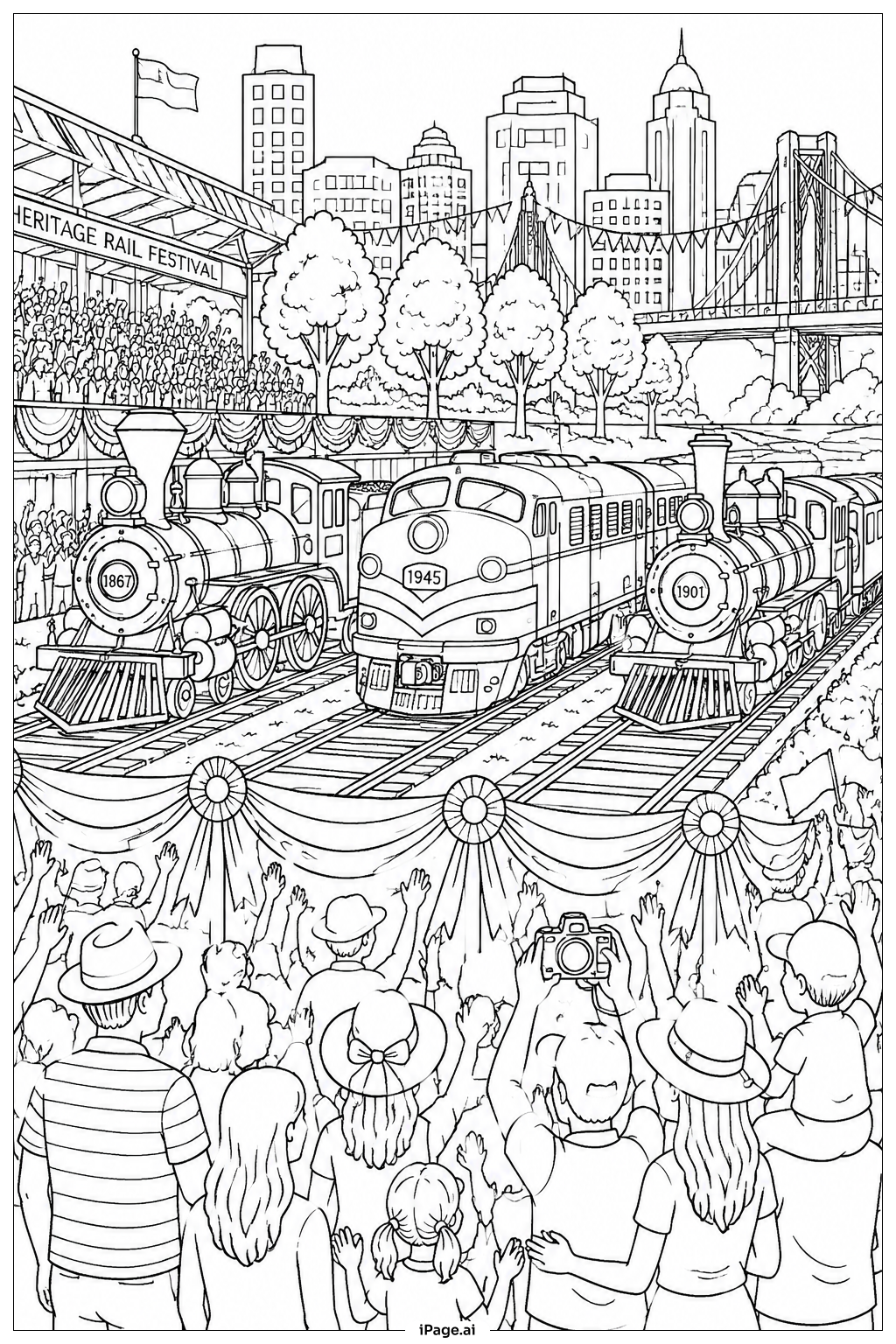
• Crowd of Passengers and Luggage: The platform scene includes multiple figures and stacked bags. Coloring many small human figures with different outfits while keeping each person visually distinct takes patience and good color variety planning.
Benefits of coloring books: Advantages of drawing Old Fashioned Train Station coloring page
Coloring this Old Fashioned Train Station page offers wonderful benefits for kids and Adults alike. The rich detail in the scene helps strengthen fine motor skills and hand-eye coordination as colorists carefully navigate brick patterns, tiny windows, and mechanical train parts. Focusing on such an intricate image also builds patience and the ability to concentrate for longer stretches of time, which is a valuable skill both in and out of the classroom. Choosing colors for the locomotive, station walls, and passenger clothing encourages creative thinking and personal expression. There are no strict rules, so every colorist gets to make their own artistic choices. The historical setting also sparks curiosity about the past, making the activity educational as well as fun. Kids may find themselves asking questions about steam trains, old architecture, and travel in earlier times. For Adults, the repetitive, focused nature of coloring detailed sections like brickwork and beams can be deeply relaxing, helping to reduce stress and quiet a busy mind. Overall, this coloring page is a satisfying and enriching activity that blends creativity, history, and mindfulness into one engaging experience.