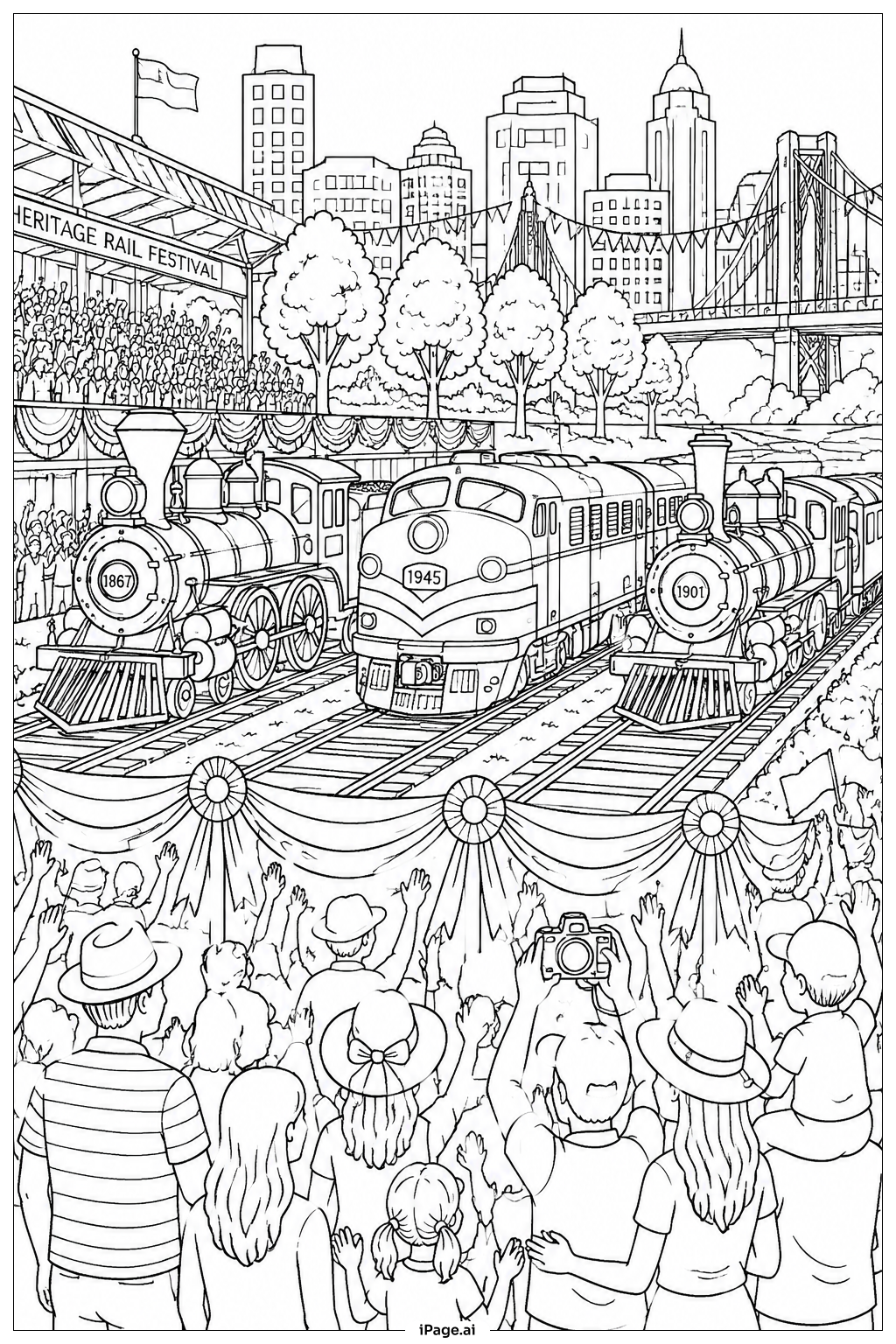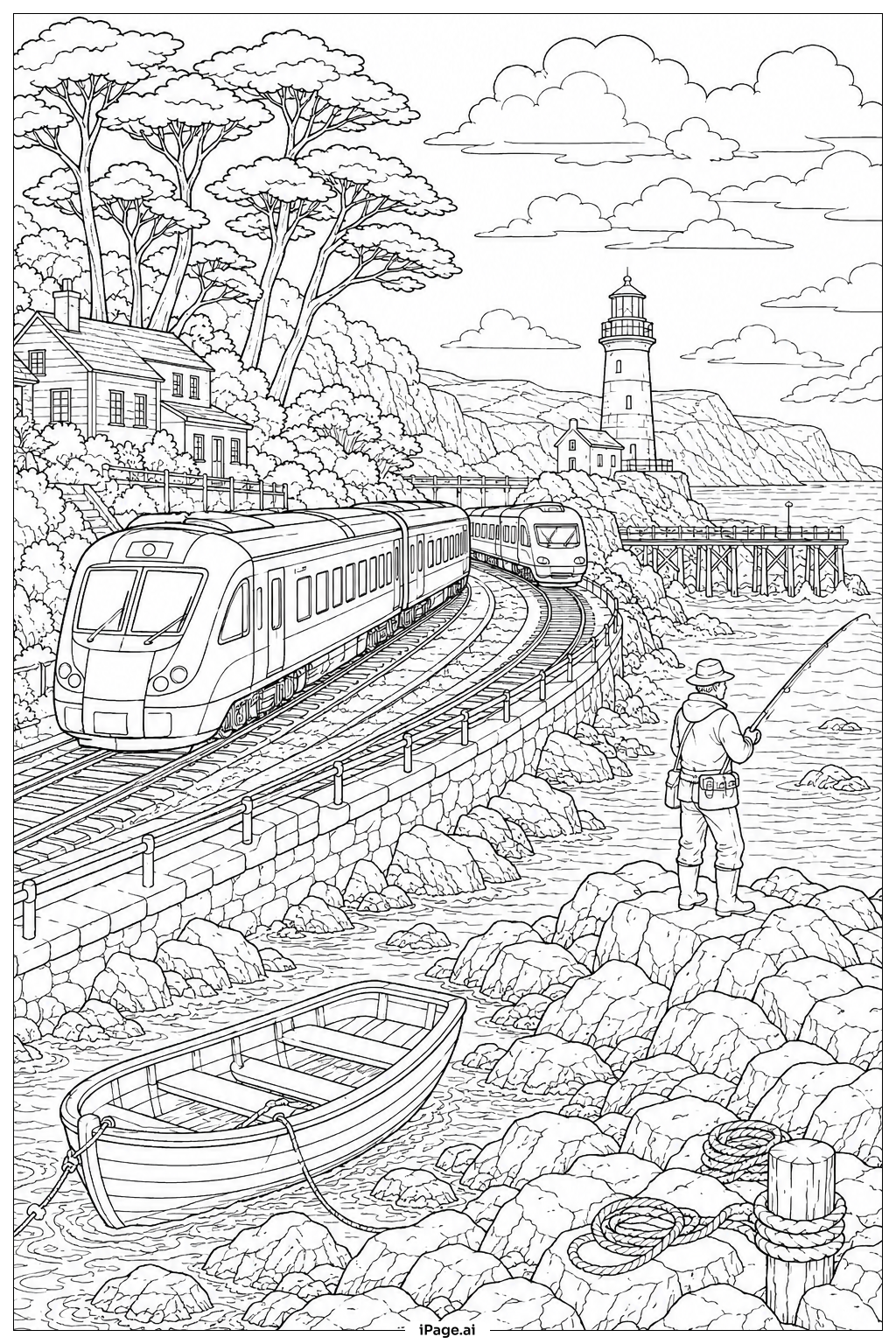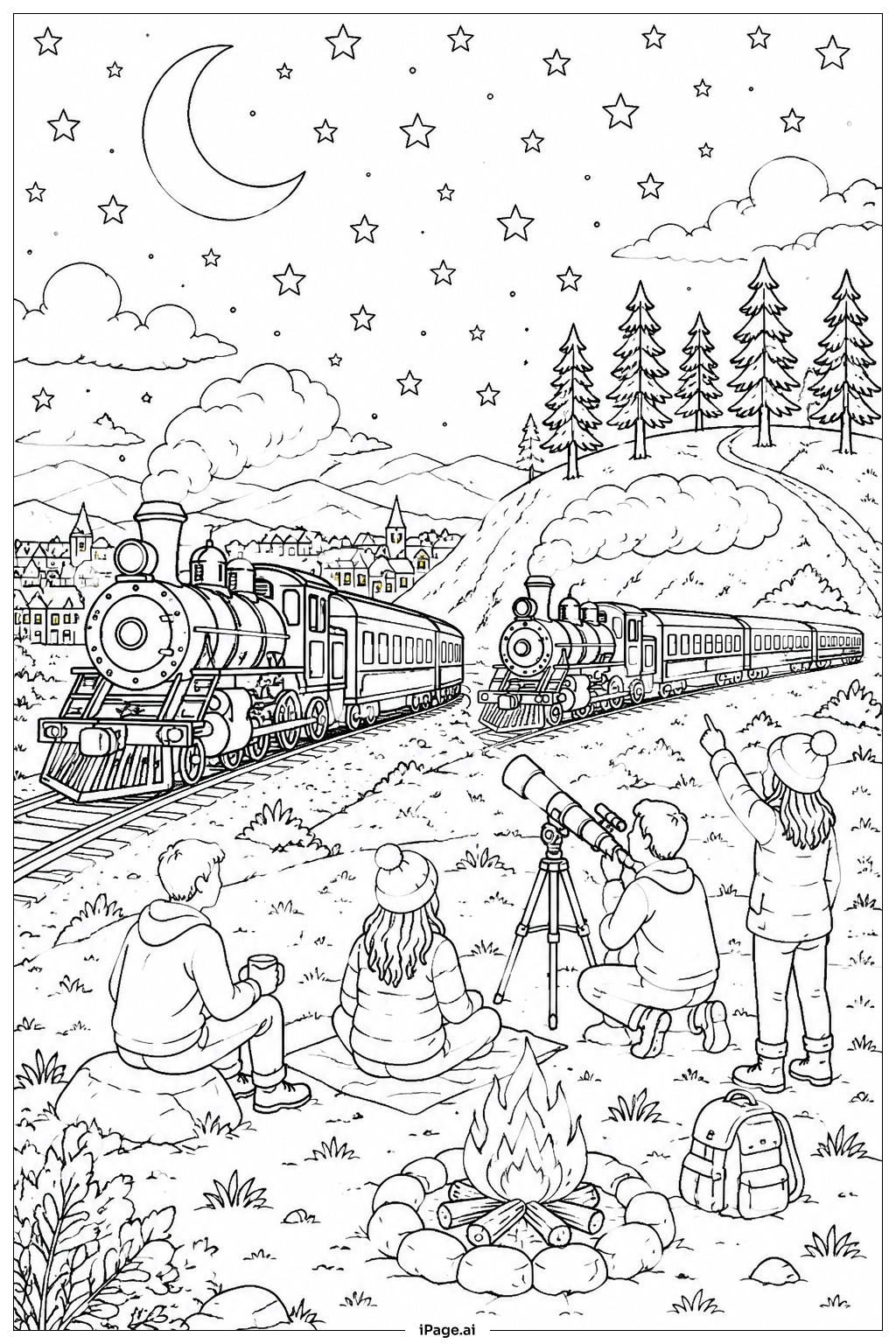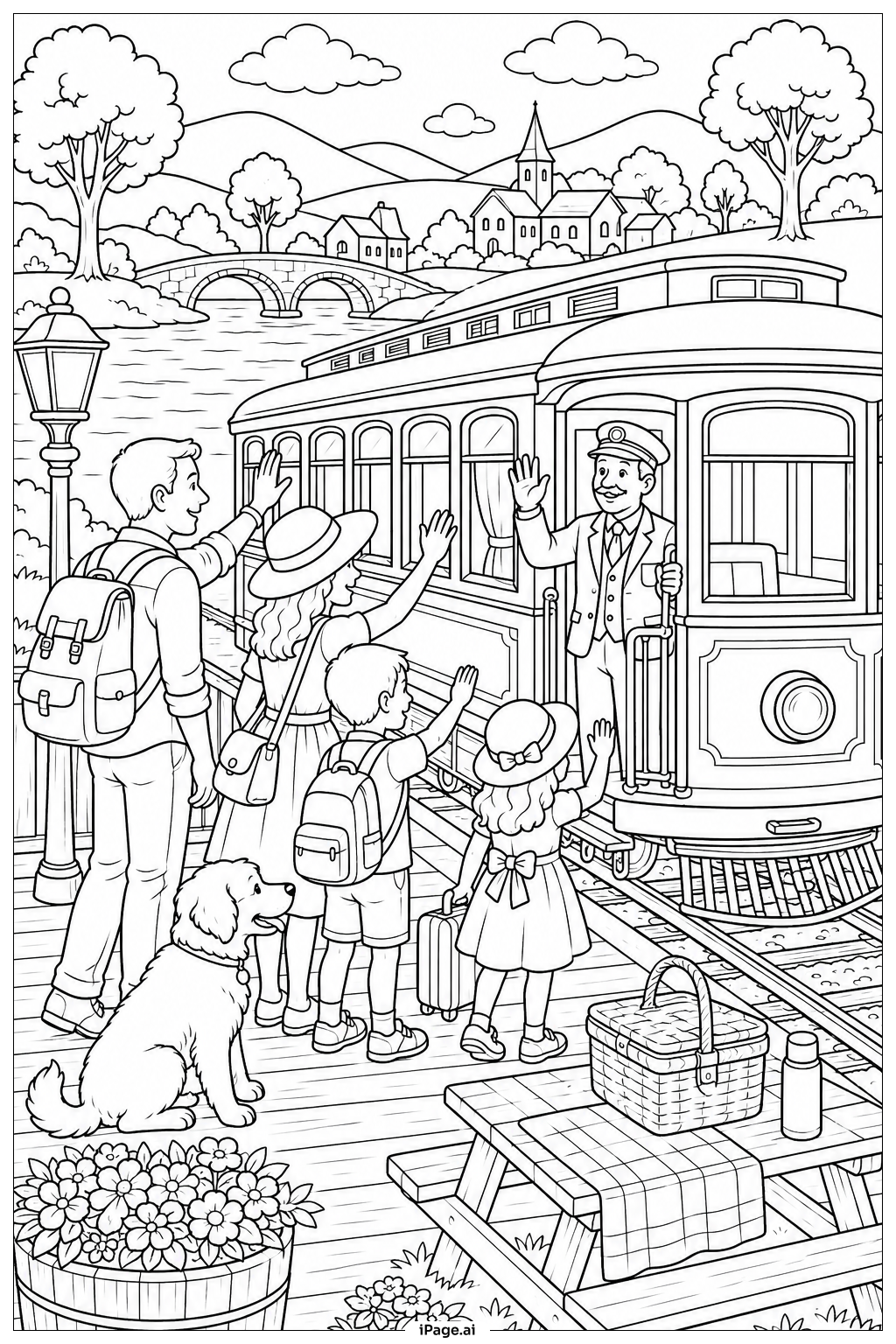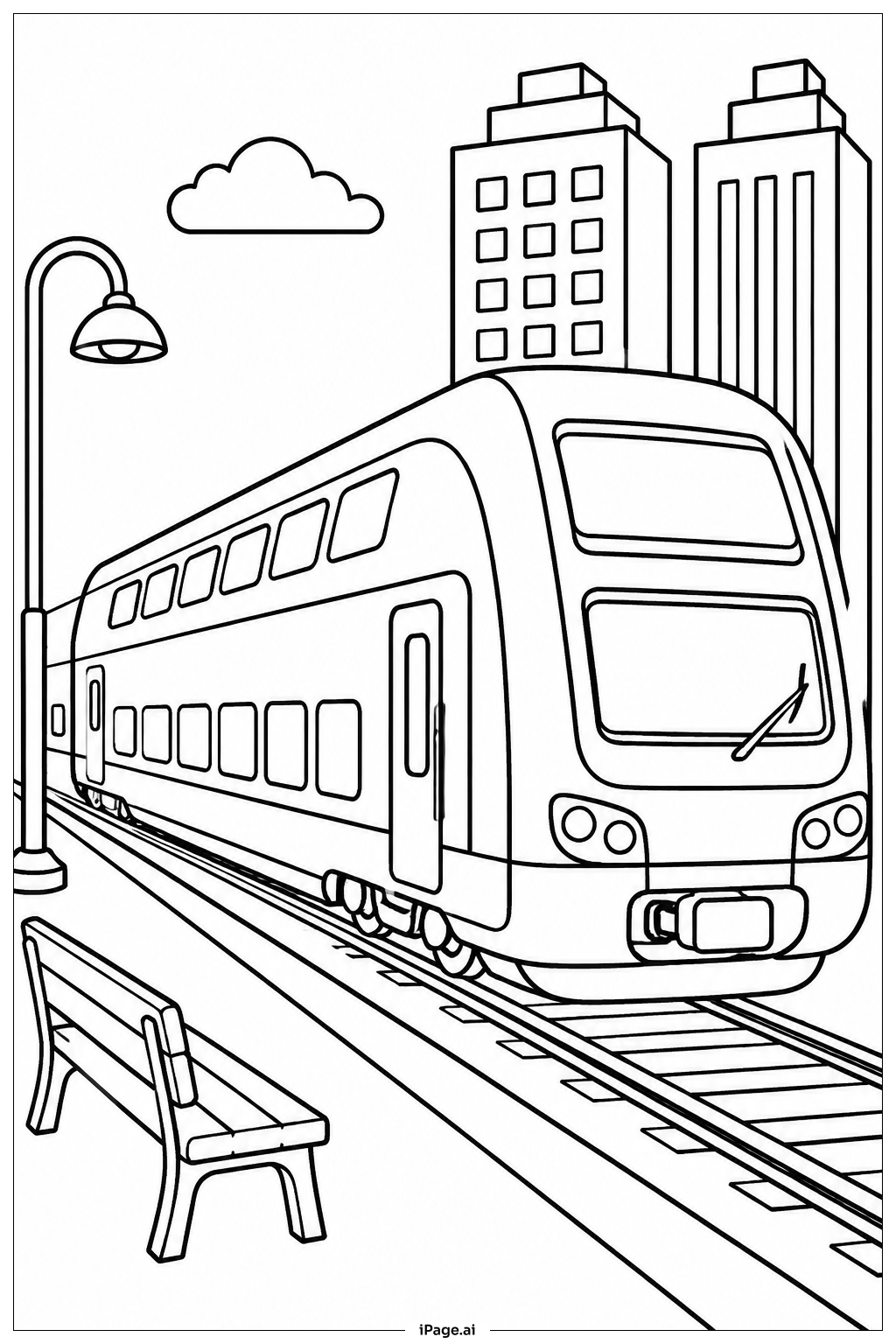
Coloring tips: How to color Double Deck Train City coloring page well?
Start with the train itself. Use bold, solid colors for the train body — classic red, blue, or silver all work great. Color the upper deck slightly lighter than the lower deck to show depth. Use yellow or white for the windows to make them glow. For the wheels and metal parts, try dark gray or black. Move on to the city buildings next. Mix different shades — tan, light brown, gray, and cream — so each building looks unique. Add pops of color to the building windows using orange or yellow to suggest warm indoor lighting. Color the sky in a soft blue or a warm sunset orange to set the mood. Use darker shades for the train tracks and ground to anchor the whole scene. Kids can keep things bright and playful, while older colorists can try shading and blending to create a more realistic city feel.
Coloring challenges: Which parts are difficult to color and need attention for Double Deck Train City coloring page?
• Double-Deck Train Structure: The train has two distinct levels, each lined with multiple windows and panel sections. Keeping the colors consistent across both decks while still differentiating them takes patience. Small windows placed close together make it easy for colors to bleed into neighboring sections, especially for younger colorists using markers or wide-tipped tools.\n\n• Intricate Window Details: Both the train and the city buildings are filled with rows of windows in various shapes and sizes. Neatly coloring each window without going over the outlines is one of the trickiest parts of this image. Using fine-tipped colored pencils or thin markers is strongly recommended for these areas.\n\n• Wheel and Mechanical Parts: The train's wheel assemblies include rounded shapes, bolts, and connecting rods. These small mechanical elements require careful color placement to distinguish metal parts from rubber sections. Using multiple shades of gray and brown helps bring these details to life without losing the individual components.\n\n• Urban Background Complexity: The city backdrop features layered buildings at different heights, each with its own window grids, ledges, and facades. Deciding on a consistent color palette for the buildings while keeping each one visually distinct from its neighbors is a real creative challenge. Without planning ahead, the background can feel muddy or repetitive.\n\n• Depth and Perspective: The scene is designed with foreground and background elements. Creating a sense of distance — making background buildings look farther away than the train — requires the use of lighter, cooler tones in the back and stronger, warmer tones in the front. This kind of spatial thinking can be challenging but very rewarding once mastered.
Benefits of coloring books: Advantages of drawing Double Deck Train City coloring page
Coloring this Double Deck Train City page offers a wide range of benefits for kids and older colorists alike. Working through the train's details and the busy cityscape helps build fine motor skills and hand-eye coordination, especially when navigating the small windows and mechanical parts. Planning out a color scheme for the whole scene encourages creative thinking and decision-making. Kids learn to think about how colors work together and how different shades can create contrast and depth. The urban setting also sparks curiosity about city life, transportation systems, and how trains work, making this a quietly educational experience. For older children and teens, tackling the perspective and layering of the city background develops spatial awareness and visual thinking skills that are useful far beyond art. The focused, repetitive motion of coloring also has a calming effect, helping reduce stress and improve concentration. Completing a detailed page like this one builds confidence and a real sense of accomplishment. Whether colored quickly for fun or worked on carefully over time, this page delivers a satisfying and enriching creative experience for anyone who picks it up.