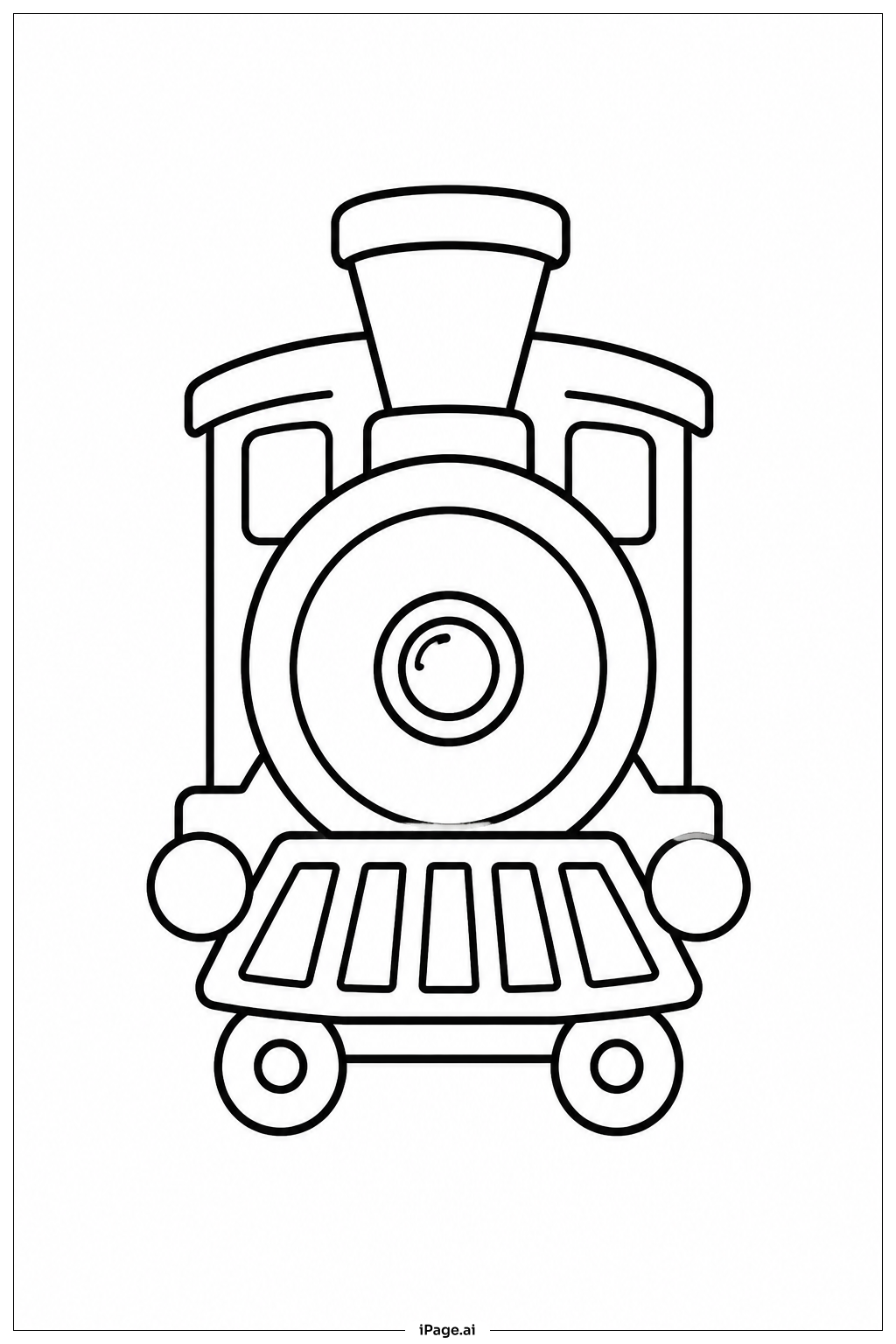
Coloring tips: How to color Classic Steam Train Front coloring page well?
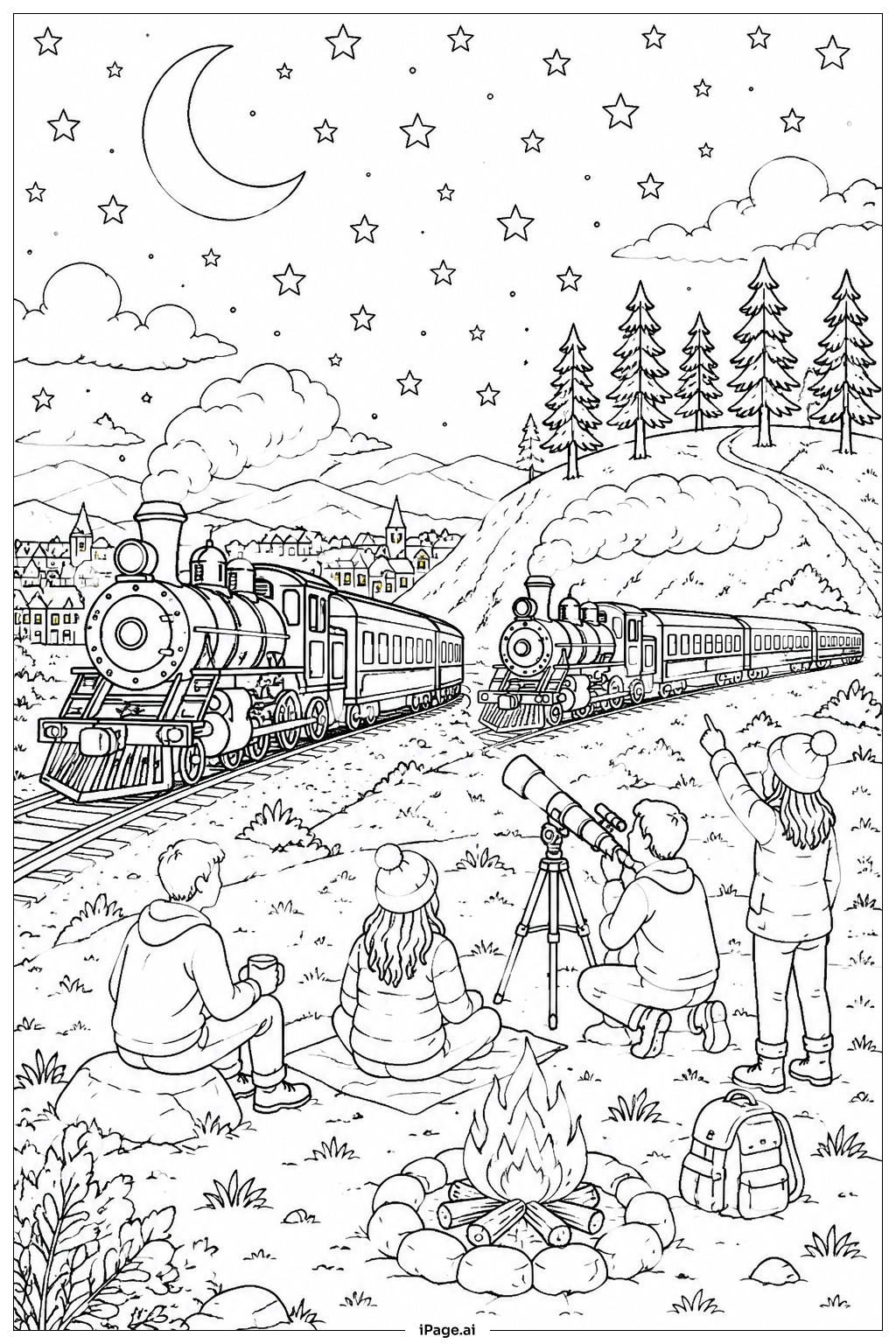
For this image, try using rich colors to bring the train to life. The main body can be colored in deep black, dark gray, or rich navy blue to imitate old-fashioned metal. Use bright red or orange for the smoke stack and headlamp to make them stand out. The wheels and pipes can be silver or gray with hints of brown or rust color to add realism. The cowcatcher at the front can be shaded in dark brown or black. Feel free to get creative with vibrant background colors like green grass or blue sky to make the train pop. Remember to color slowly and carefully to stay inside the lines, especially around the small details.
Coloring challenges: Which parts are difficult to color and need attention for Classic Steam Train Front coloring page?
• Fine Details: The image contains many small parts like rivets, pipes, and the headlamp, which require careful coloring to avoid going outside the lines.
• Curved Shapes: The round shapes of the wheels and boiler need smooth coloring to keep an even tone without streaks.
• Layered Parts: Overlapping parts, such as the wheels partially hidden by the front plates, may be tricky to color with correct shading.
• Contrast Balance: Choosing colors that highlight different elements without making the image look too busy can be challenging.
• Texture Effects: Suggesting metal or rust textures using simple coloring tools demands patience and attention to subtle color shifts.
Benefits of coloring books: Advantages of drawing Classic Steam Train Front coloring page
Coloring this Classic Steam Train Front helps develop fine motor skills through precise movements needed for small details. It encourages focus and concentration, especially when carefully coloring layered parts. This image also sparks creativity by allowing choices in color schemes to reflect different historic or imaginative trains. It supports learning about shapes, symmetry, and contrast as children decide how to shade curved and overlapping areas. Overall, this activity provides a fun way to practice patience, hand-eye coordination, and artistic expression while enjoying the timeless charm of classic trains.