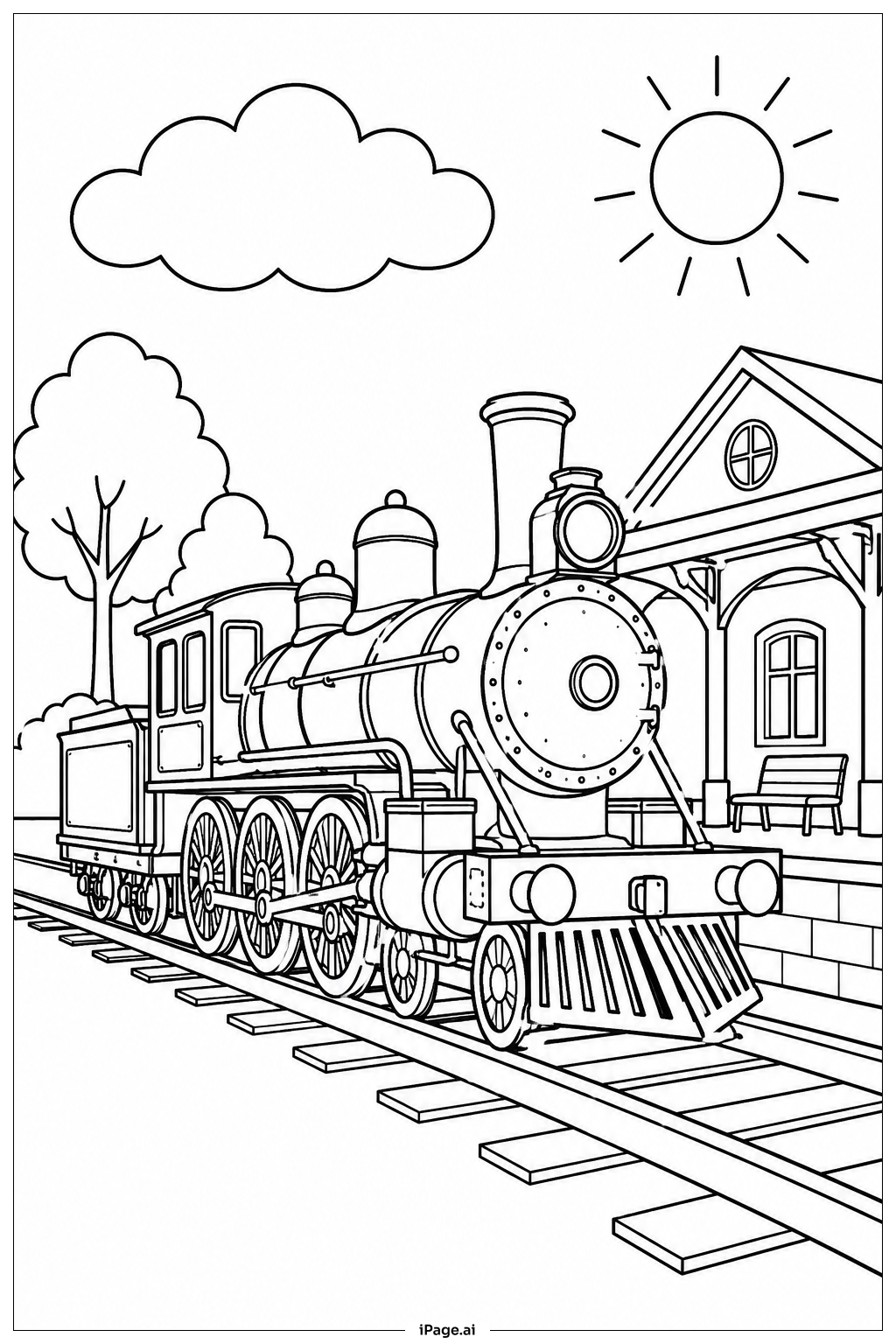
Coloring tips: How to color Classic Steam Train coloring page well?
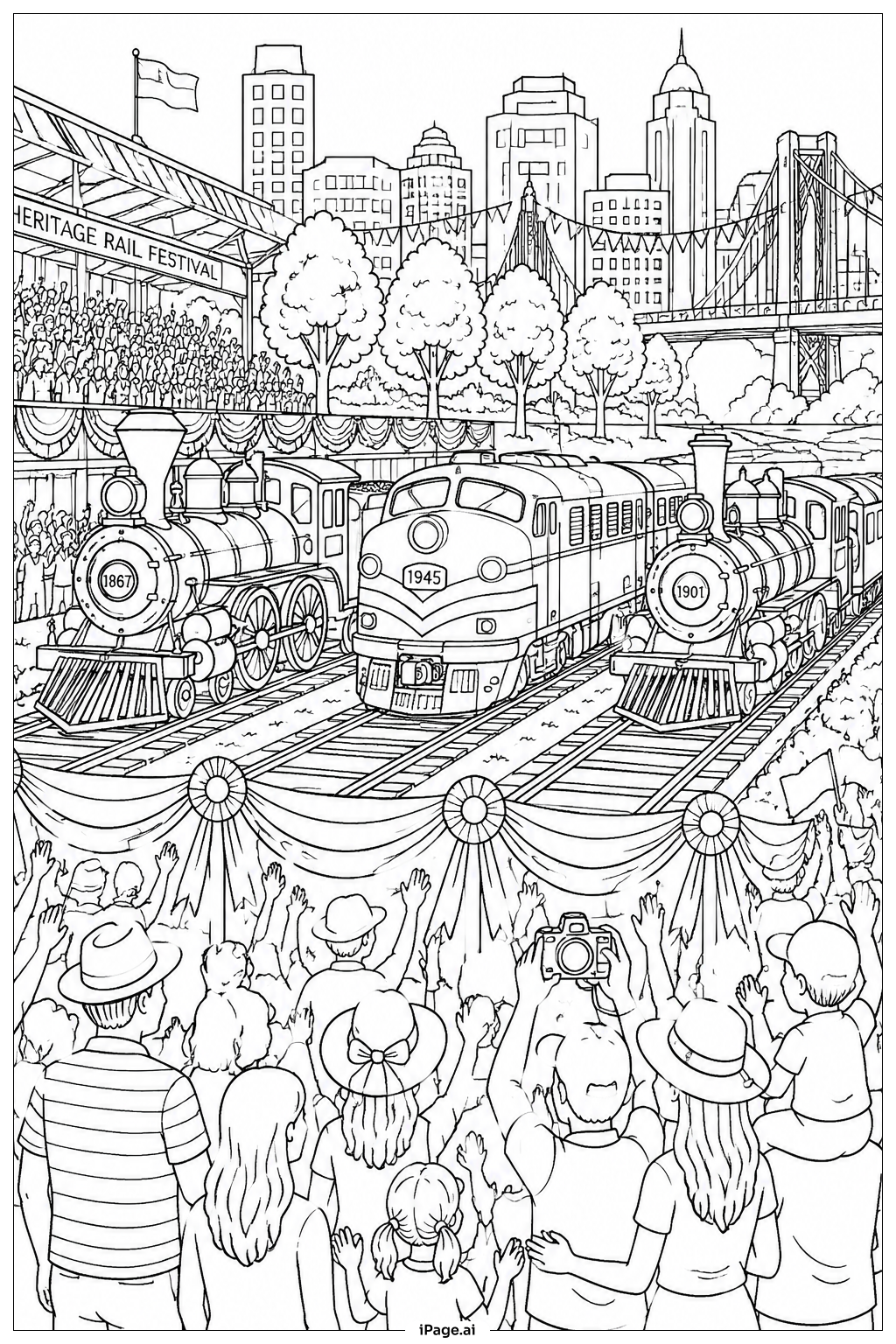
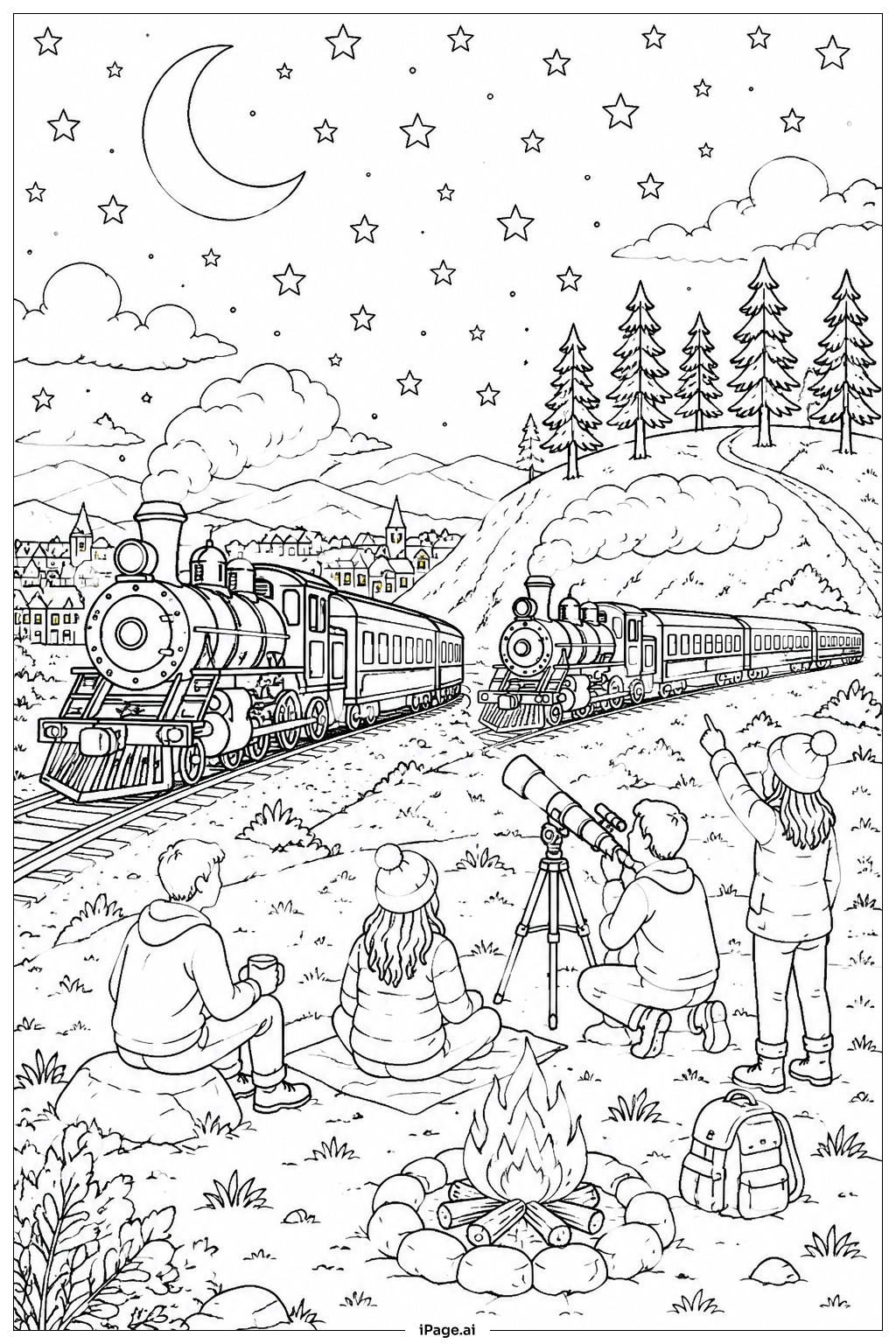
Start with the locomotive body and use a deep black or dark charcoal for the main engine. The boiler can be a shiny metallic gray or classic black. Try red or gold for the trim details, such as the wheel rims and decorative bands — these small pops of color really make the train feel lively. Use brown or tan for the wooden cab and any cargo cars. The smokestack smoke looks great in soft white, light gray, or pale blue. For the wheels, silver or dark iron gray works well. Color the tracks in gray or rust-brown, and the wooden ties in warm tan. If there is a background landscape, use sky blue for the sky and green for any grass or trees. Boys and Girls of all ages will enjoy experimenting with bold, rich colors to give this classic machine a powerful, vintage feel.
Coloring challenges: Which parts are difficult to color and need attention for Classic Steam Train coloring page?
• Intricate Wheel Spokes: The large driving wheels have many thin, evenly spaced spokes that radiate from the center hub. Coloring each spoke carefully without going outside the lines takes a steady hand and a fine-tipped coloring tool. Rushing through this area can make the wheels look messy, so patience is key.
• Small Mechanical Details: Steam trains are packed with bolts, pipes, valves, gauges, and connecting rods. These tiny parts are close together and require precise coloring to keep each element distinct. Using a sharp colored pencil or a fine-tip marker will help you stay within each small section without accidentally blending neighboring parts together.
• Consistent Metallic Surfaces: Large sections of the locomotive, like the boiler and smokestack, need smooth, even coverage to look like polished metal. Achieving a clean, flat tone or a convincing metallic gradient across a wide curved surface can be tricky, especially with crayons or thick markers that may streak.
• Steam and Smoke Rendering: The billowing steam or smoke coming from the smokestack has soft, rounded, flowing shapes. Coloring these in a way that looks natural and puffy, rather than flat and harsh, requires blending light grays and whites gently. This is a good challenge for older colorists who want to practice shading techniques.
• Background Depth: If the image includes a landscape background with tracks, sky, and terrain, keeping the background colors lighter than the foreground train is important for creating visual depth. Balancing multiple background elements while making sure the train remains the focal point requires thoughtful color planning.
Benefits of coloring books: Advantages of drawing Classic Steam Train coloring page
Coloring this Classic Steam Train page offers a wonderful mix of fun and learning for Boys, Girls, and Adults alike. Working through the many details of the locomotive helps build fine motor skills and hand-eye coordination, especially when carefully filling in small parts like spokes and bolts. This kind of focused, repetitive work also trains concentration and patience, qualities that are valuable both in and out of the classroom. For younger children, it introduces basic shapes and mechanical concepts in a playful, engaging way. Older kids and Adults may find the process deeply relaxing, as focusing on color choices and staying within lines acts as a natural form of mindfulness that reduces stress. Choosing colors for the engine, wheels, steam, and landscape also sparks creativity and encourages personal expression — there is no single right answer, so every colorist creates a unique version. History-minded colorists may even use the page as a springboard to learn about the steam age and early railroads. Whether done solo or as a group activity, this Printable coloring page is a screen-free, hands-on experience that is rewarding for all skill levels and ages.