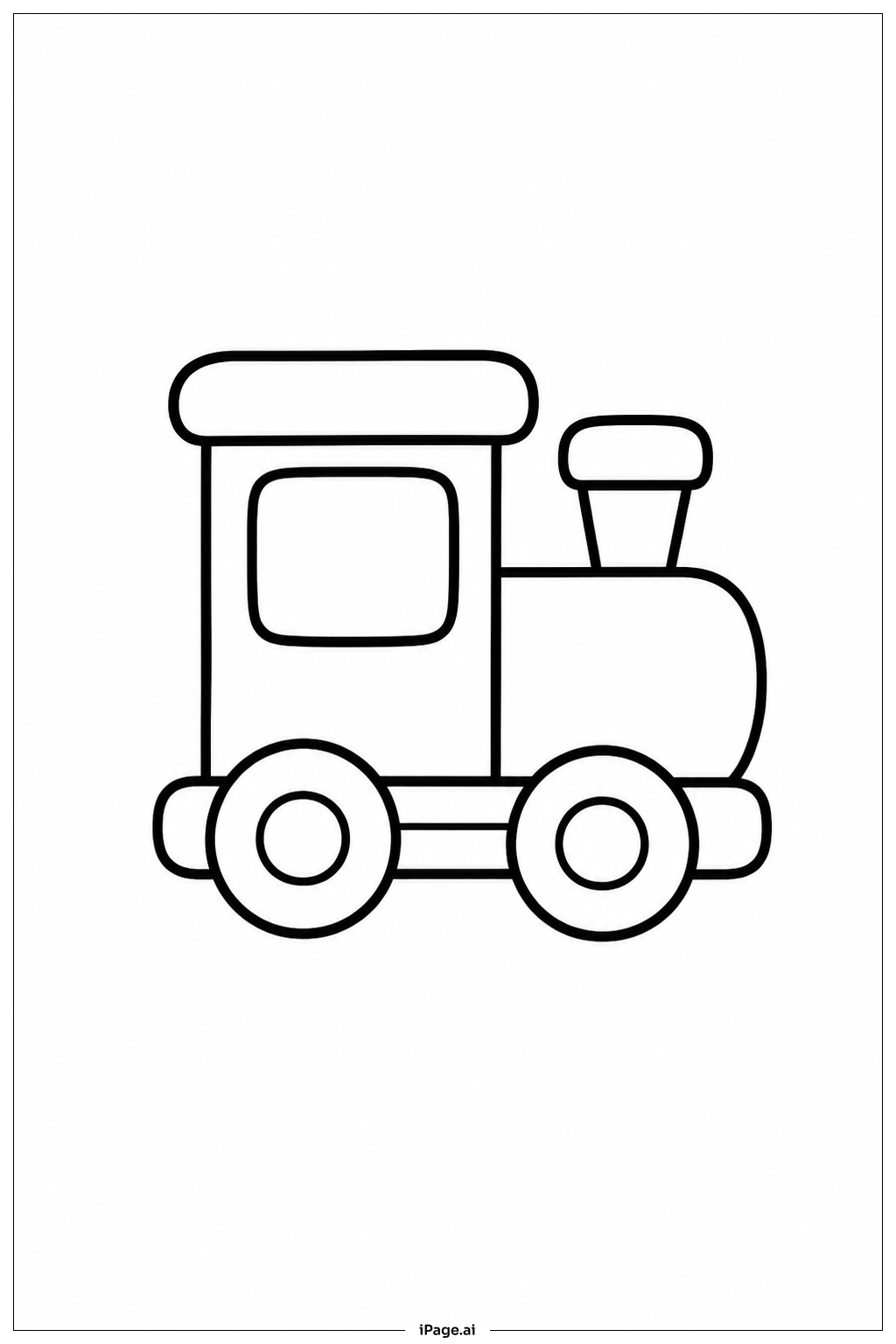
Coloring tips: How to color Baby Train Engine coloring page well?
Start with the train's body. Use a bold, cheerful color like red, blue, or green for the main engine body. These classic train colors look bright and fun. Color the large wheels dark gray or black to make them stand out. Use yellow or orange for the headlight to make it glow. The smokestack can be dark brown or black. For the steam puffs coming out of the stack, try light gray, white, or pale blue. Give the train's face warm skin tones or a sunny yellow for a friendly look. Use bright colors for the eyes, like blue or green, and a rosy pink or red for the cheeks. The railroad tracks can be brown for the wooden ties and silver or gray for the rails. Feel free to add your own colors to make this baby train engine truly your own. There are no wrong choices — just have fun and be creative!
Coloring challenges: Which parts are difficult to color and need attention for Baby Train Engine coloring page?
• Facial Features: The baby train engine has small, detailed facial features including eyes, pupils, eyebrows, and rosy cheeks. Coloring these tiny areas neatly requires a fine-tipped colored pencil or marker. Staying inside the lines around the eyes is especially tricky for younger children, so take it slow and use light strokes first.
• Wheel Details: The chunky wheels have multiple layers, including rims, spokes, and the wheel body itself. Each part benefits from a different shade to look realistic and three-dimensional. Younger colorists may find it challenging to switch colors frequently in such a small, round space.
• Steam and Smoke Puffs: The soft, cloud-like steam shapes around the smokestack have curved, irregular edges that can be difficult to color smoothly. Blending two shades of gray or blue together in these areas creates a more natural, fluffy look, but blending takes practice and patience.
• Body Panels and Bolt Details: The train engine body features small panel lines, rivets, and bolts. These decorative elements are great for adding depth and shadow, but they require careful attention. Using a slightly darker shade of your main body color inside the panel grooves can help them stand out without losing the clean look of the design.
• Railroad Tracks: The tracks at the bottom of the image have repeating shapes — wooden ties and parallel rails — that need consistent coloring throughout. Keeping the colors even and uniform across multiple identical shapes can feel repetitive, but it trains steady hand control and helps develop focus and patience.
Benefits of coloring books: Advantages of drawing Baby Train Engine coloring page
Coloring this Baby Train Engine page offers a wonderful range of benefits for children of all ages. First, it helps build fine motor skills. Carefully filling in the wheels, facial features, and small panel details strengthens hand muscles and improves pencil control — skills that directly support handwriting development. Second, it encourages creativity and self-expression. Choosing colors for the engine body, steam puffs, and tracks lets children make their own artistic decisions and feel proud of a unique finished piece. Third, it supports focus and concentration. Following the lines of a detailed image like this trains young minds to slow down, pay attention, and work with patience — habits that help in school and everyday life. Fourth, it introduces early concepts in transportation and engineering in a fun, visual way. As children color the wheels, smokestack, and boiler, they naturally become curious about how trains work. Finally, coloring is simply relaxing and enjoyable. It gives children a calm, screen-free activity that builds confidence and a love for art. Whether coloring solo or with a parent, this page makes for a rewarding and enriching experience.