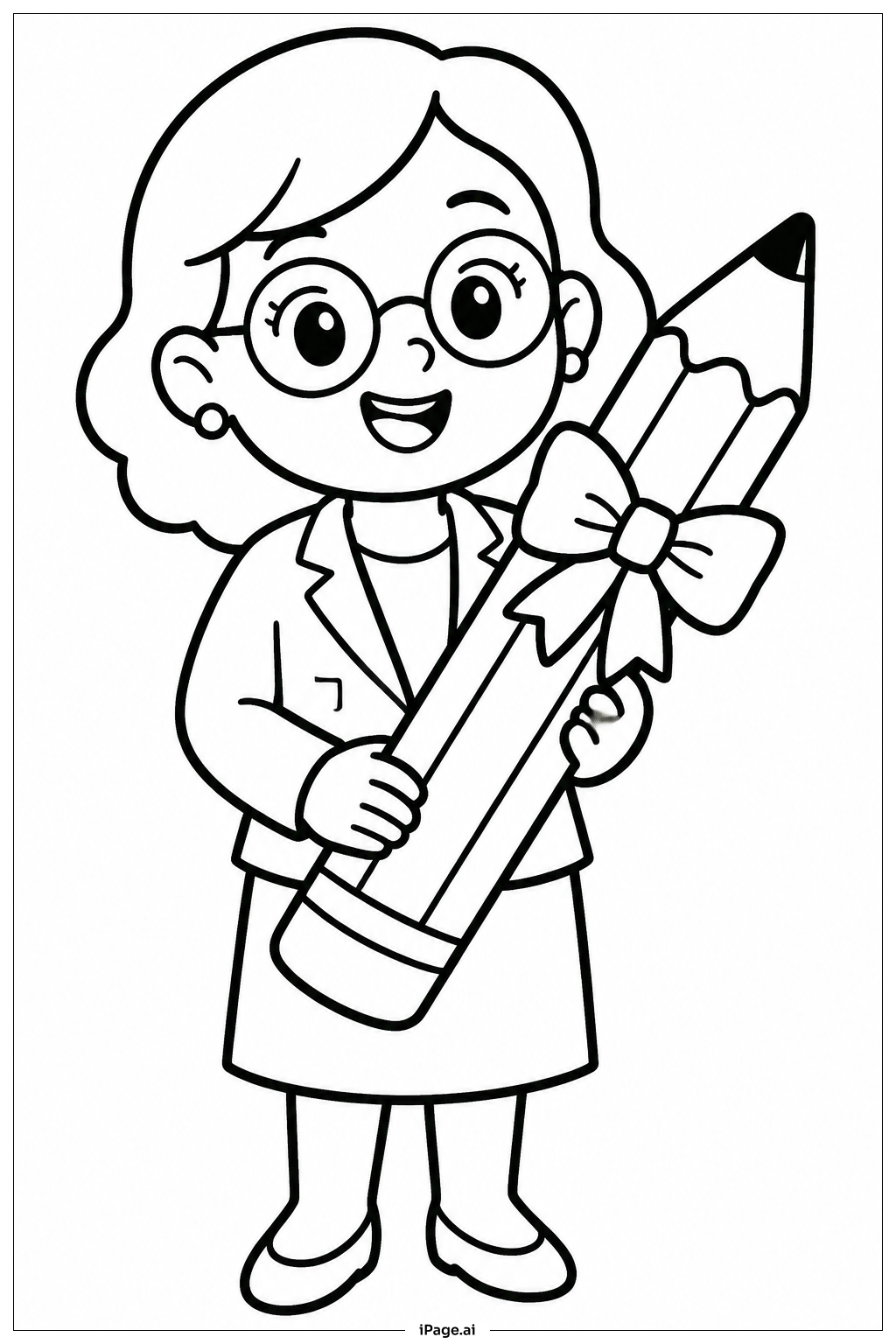
Coloring tips: How to color Teacher Appreciation Pencil Present coloring page well?
For the pencil body, use bright yellow or golden tones to capture that classic pencil look. The wooden tip area can be colored in natural wood shades like tan, beige, or light brown. Make the metal ferrule shine with silver, gray, or metallic colors. The eraser top looks wonderful in pink, coral, or even purple. For the bow, consider using colors that represent appreciation like red, burgundy, deep blue, or elegant gold. You can also choose your teacher's favorite color to make it extra special. The ribbons offer a great opportunity to add shading with darker tones along the folds and lighter highlights where the light hits. Consider using colored pencils for smooth blending on the bow's fabric texture, and markers or crayons for the bold pencil body. Adding subtle shadows beneath the ribbons will create depth and dimension.
Coloring challenges: Which parts are difficult to color and need attention for Teacher Appreciation Pencil Present coloring page?
• Bow Ribbon Details: The flowing ribbons and bow loops present the most intricate part of this coloring page. Each ribbon fold requires careful attention to create realistic fabric texture and dimension. Children need to identify where ribbons overlap and cross, then decide on consistent shading to show which ribbon piece is in front or behind. The curves and twists of the ribbons demand steady hand control and patience to stay within the lines.
• Shading and Dimension: Creating a three-dimensional appearance requires understanding light sources and shadow placement. The cylindrical shape of the pencil needs gradual color transitions from light to dark to appear round rather than flat. The bow's fabric folds need darker shading in recessed areas and lighter tones on raised surfaces. This concept of light and shadow can be challenging for younger colorists who are still developing spatial awareness.
• Color Coordination: Choosing harmonious colors that work well together requires some color theory understanding. The bow should complement but not clash with the pencil's yellow body. Deciding on a color scheme that feels appropriate for teacher appreciation while remaining visually appealing takes thoughtful planning before starting to color.
• Fine Detail Work: The pencil tip, metal ferrule, and eraser top are smaller areas requiring precision and control. Staying within these narrow boundaries while maintaining even color coverage challenges fine motor skills. The sharp pencil point especially demands careful coloring to preserve its pointed shape.
Benefits of coloring books: Advantages of drawing Teacher Appreciation Pencil Present coloring page
Coloring this Teacher Appreciation design helps children develop gratitude and recognition for their teachers' hard work. It provides a meaningful way to express thanks through creative effort. The pencil symbol reinforces the connection between education, learning, and the tools teachers provide. Working on the intricate bow ribbons enhances fine motor skills and hand-eye coordination, which are essential for writing development. The shading opportunities teach children about light, shadow, and three-dimensional representation, building spatial reasoning skills. Color selection encourages decision-making and planning abilities. Completing this detailed image builds patience, focus, and perseverance. The finished coloring page becomes a heartfelt gift that children can proudly present to their teachers, boosting self-confidence and social-emotional skills. This activity combines artistic expression with meaningful appreciation, creating a memorable experience that celebrates the important role teachers play in children's lives.