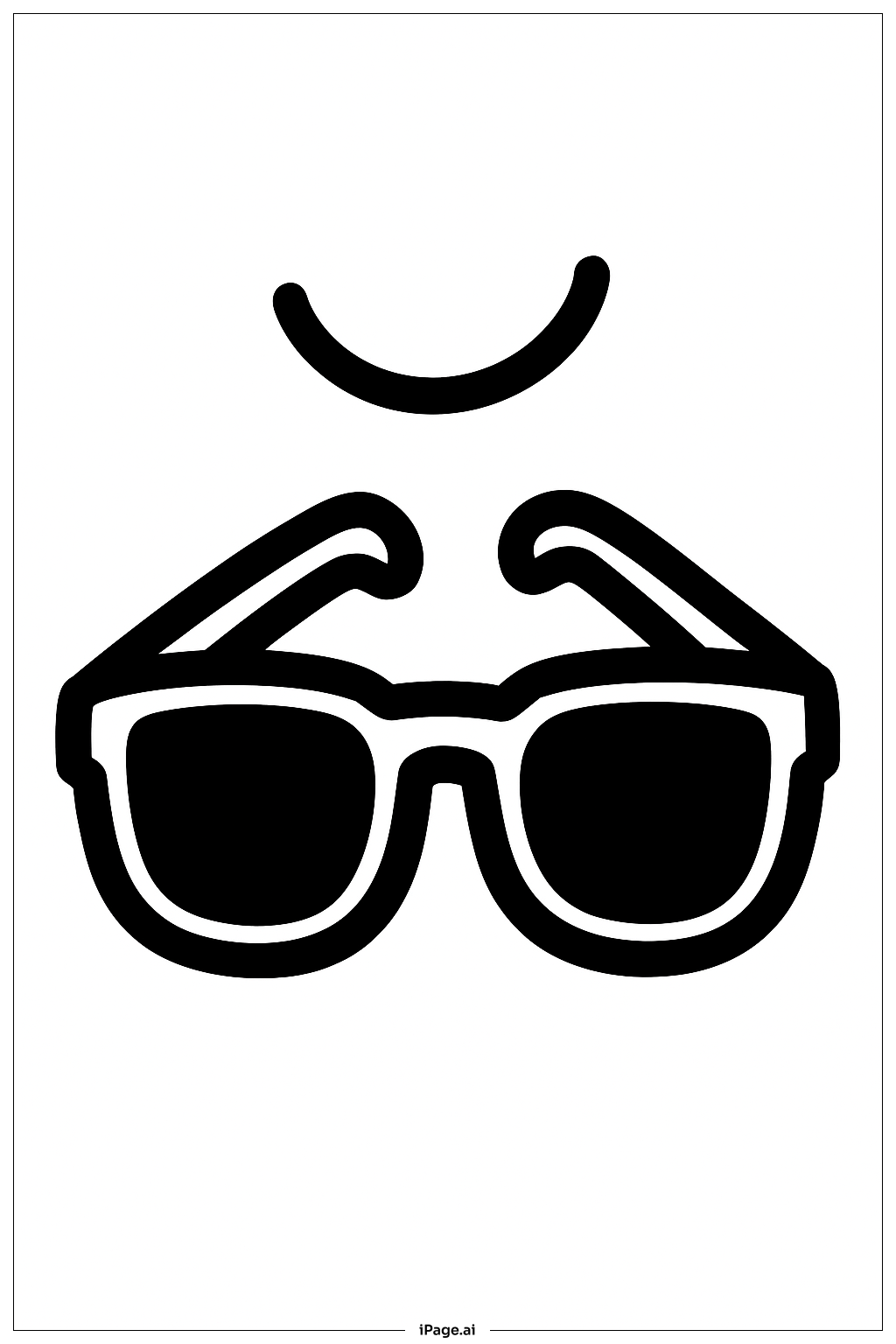
Coloring tips: How to color Summer Sunglasses coloring page well?
Start with the frames and choose a bold, fun color like bright red, electric blue, hot pink, or sunny yellow. These colors bring out the summer energy of the design. For the lenses, try gradient shading — use a lighter shade in the center and a darker tone toward the edges. Blues, purples, and teals work great to mimic tinted glass. Color the small decorative details like stars and suns in gold or orange to make them pop. Use a contrasting color for the arms of the glasses to separate them visually from the frames. If there are floral accents, pink, coral, or lavender look lovely. Keep your strokes smooth and even for the larger areas. For the tiny details, switch to a fine-tipped colored pencil or marker for better control. Do not be afraid to mix warm and cool tones together — summer is all about color and fun!
Coloring challenges: Which parts are difficult to color and need attention for Summer Sunglasses coloring page?
• Lens Shading: The lenses are the largest sections of the image, and creating a smooth, glassy look takes practice. Blending two or three tones to simulate tinted glass can be tricky, especially for younger colorists who may find gradient work challenging. Using circular strokes with light pressure helps achieve a smoother finish.
• Small Decorative Details: The tiny suns, stars, and swirl accents embedded in the frame are very small and require a steady hand. Coloring these without going outside the lines demands concentration and fine motor control. A sharp pencil tip or a thin marker is highly recommended for these areas.
• Frame Symmetry: The sunglasses have two matching frame sides that should ideally look balanced. Keeping the colors consistent on both the left and right frames can be difficult, especially when working with multiple colors or patterns. It helps to color both sides at the same time, alternating strokes to stay consistent.
• Bridge and Arm Transitions: The narrow bridge connecting the two lenses and the thin arms extending outward are small areas where different colors meet. Staying within these tight boundaries without smudging or overlapping into adjacent sections is a real challenge. Working slowly and using a fine-point tool is the best approach here.
• Floral and Edge Accents: The decorative elements along the frame edges include small curves and petal-like shapes that require careful attention. These organic shapes do not have straight edges, making it harder to fill them neatly. Patience and light layering of color will give the best result.
Benefits of coloring books: Advantages of drawing Summer Sunglasses coloring page
Coloring this Summer Sunglasses page offers a wide range of benefits for kids and young colorists. First, it builds fine motor skills. Filling in the small details like stars, swirls, and frame edges requires careful hand movements that strengthen grip and hand-eye coordination. Second, it encourages creativity. There is no single right way to color sunglasses — kids get to invent their own color combinations and make the design uniquely theirs. This kind of open-ended creative play builds confidence and imagination. Third, it teaches color theory in a natural and fun way. Choosing which colors look good together on the frames and lenses helps young colorists understand contrast, harmony, and shading without even realizing they are learning. Fourth, coloring is calming. The focused, repetitive motion of filling in shapes helps reduce stress and improve concentration, making it a great quiet-time activity. Finally, completing the page gives kids a strong sense of accomplishment. Seeing a finished, colorful piece of art that they created themselves is a wonderful confidence booster. This page is a perfect summer activity that combines fun, learning, and relaxation all in one.