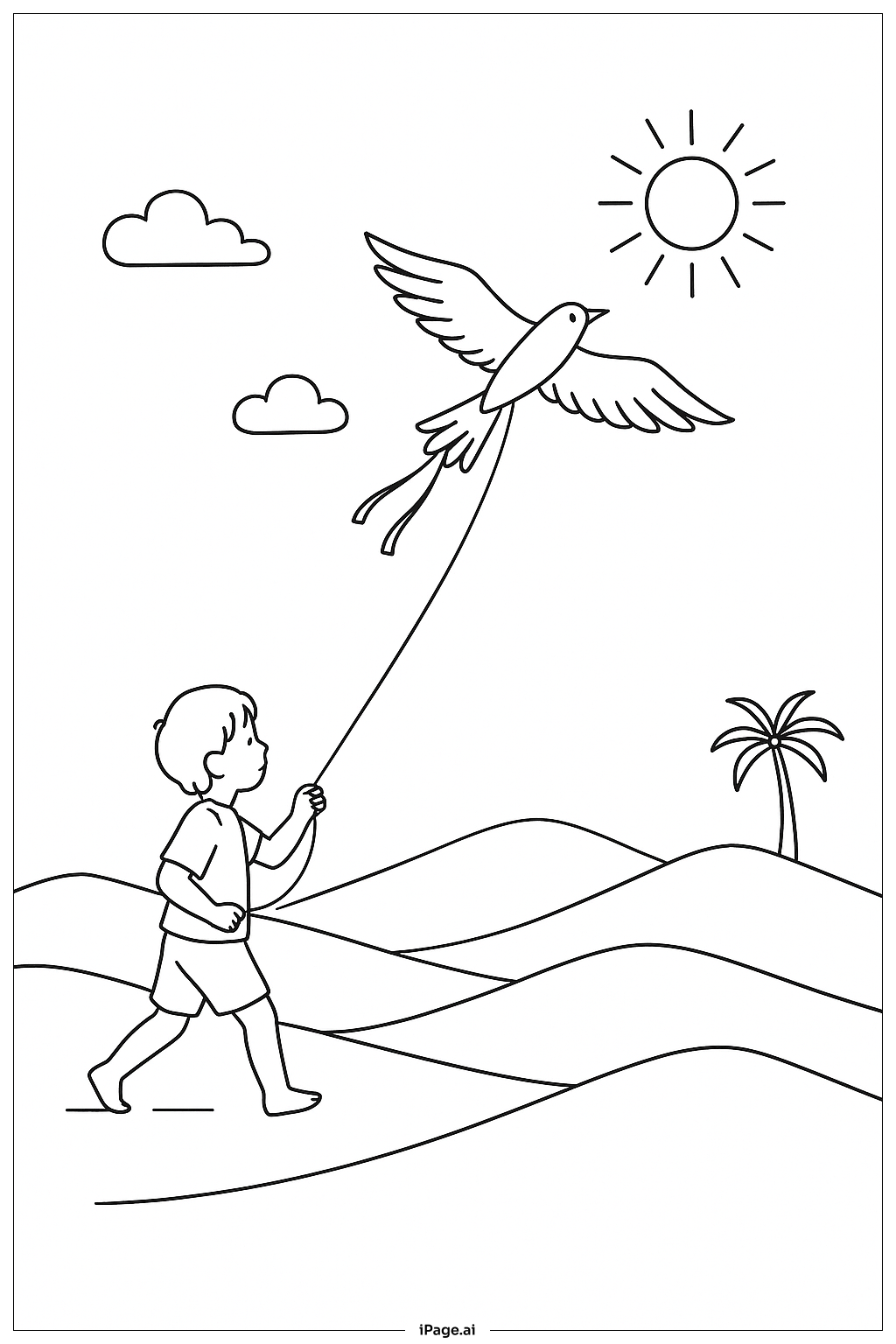
Coloring tips: How to color Summer Kite Flying coloring page well?
For this cheerful summer scene, use bright and vibrant colors to capture the warmth and energy of the season. Color the kite with bold, contrasting hues like red, yellow, and blue to make it stand out against the sky. The sky itself can be a beautiful gradient of light to medium blue, while the fluffy clouds remain white or very pale blue. Paint the sun in warm yellows and oranges. For the grass and hills, use various shades of green from lime to forest green, adding depth and texture. The wildflowers offer a wonderful opportunity to use pinks, purples, yellows, and oranges. Give the child tan or peach skin tones and colorful summer clothing like bright shorts and a cheerful t-shirt. Add orange and black to butterflies, and keep birds in natural browns or blues. The kite's tail ribbons can echo the kite colors or introduce new complementary shades.
Coloring challenges: Which parts are difficult to color and need attention for Summer Kite Flying coloring page?
• Sky Gradient and Smooth Blending: Creating a natural-looking sky requires smooth color transitions from lighter blue near the horizon to deeper blue at the top. Young colorists may find it challenging to blend colors evenly without leaving harsh lines or streaks, especially when using crayons or colored pencils. This area covers a large portion of the page and any uneven coloring will be quite visible.
• Kite String and Thin Lines: The string connecting the child to the kite is typically drawn as a very thin line that can be difficult to color accurately. Children may struggle to stay within this narrow space or might accidentally color over it entirely. Similarly, the tail ribbons on the kite, while wider than the string, still require steady hand control to keep colors within their curved, flowing boundaries.
• Grass Texture and Varied Greens: Making the grass look natural and interesting requires using multiple shades of green and possibly adding texture through different stroke techniques. Simply coloring the entire ground area with one solid green can look flat and uninteresting. Learning to layer lighter and darker greens, or adding small directional strokes to suggest individual grass blades, takes practice and patience.
• Small Details and Scattered Elements: The wildflowers, butterflies, and other small decorative elements scattered throughout the scene present fine motor challenges. Each tiny flower needs its own color choices, and butterflies have intricate wing patterns with small sections. Coloring these details without going outside the lines requires concentration and precision, which can be frustrating for younger children or those still developing fine motor skills.
Benefits of coloring books: Advantages of drawing Summer Kite Flying coloring page
Coloring this Summer Kite Flying page offers wonderful developmental benefits for children. It enhances fine motor skills and hand-eye coordination as they carefully color within the lines of various shapes and sizes, from large sky areas to tiny flowers. The scene encourages creative color selection and decision-making, allowing children to choose their own palette and express their artistic vision. Working with the gradient sky and textured grass introduces basic color theory concepts like blending and shading. The outdoor summer theme provides opportunities to discuss seasons, weather, and outdoor activities, connecting art to real-world experiences. The joyful subject matter can boost mood and create positive associations with creative activities. Completing this moderately detailed page builds concentration, patience, and perseverance. It also offers a sense of accomplishment when finished, boosting self-confidence and encouraging further artistic exploration.