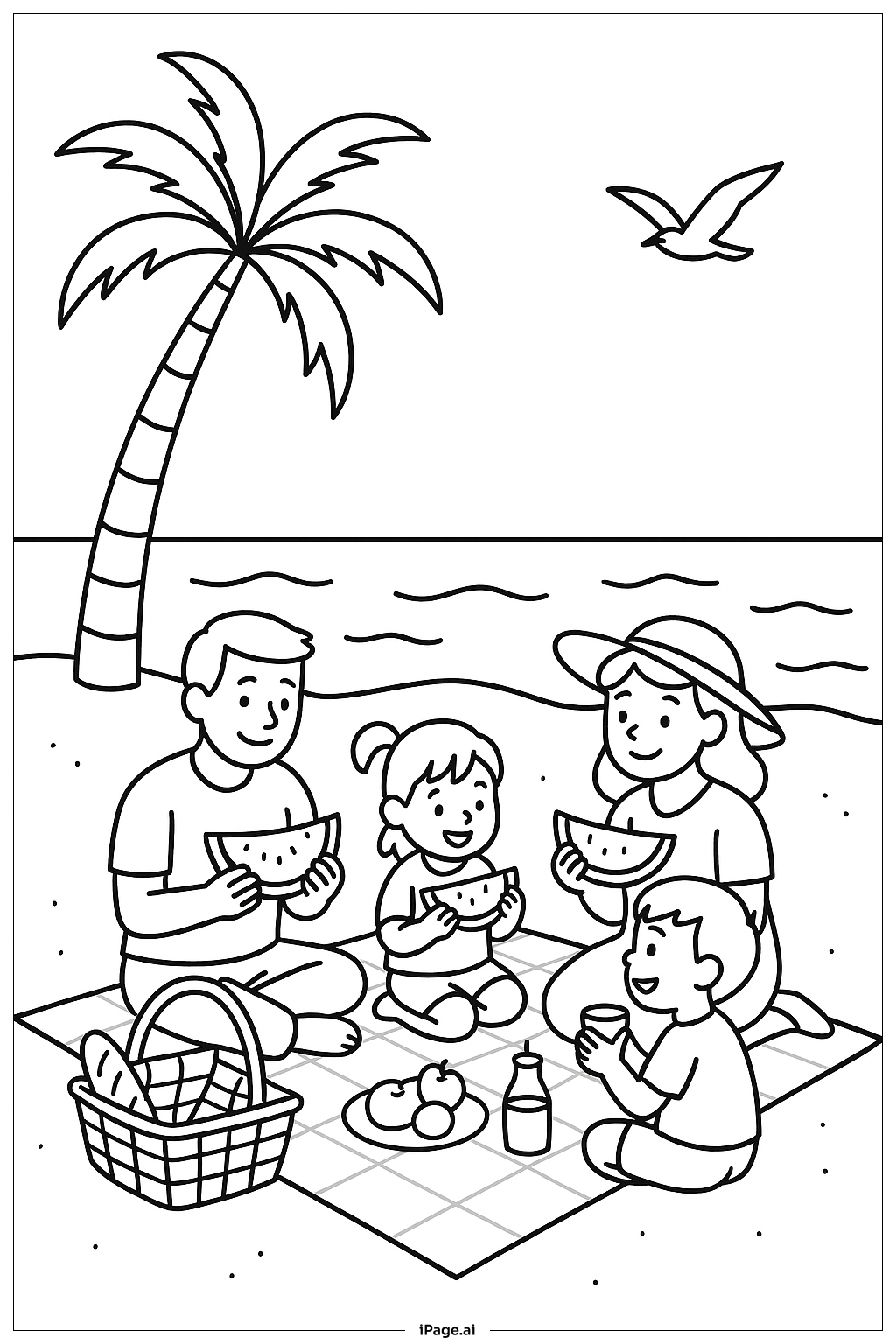
Coloring tips: How to color Summer Beach Picnic coloring page well?
Start with the sky and ocean in the background. Use light blue for the sky and a slightly deeper blue for the water. Add white for the clouds and foamy wave tips. Color the sun yellow or golden orange. For the sand, use warm shades of tan or sandy yellow. The palm tree trunks look great in brown, with bright green for the leaves. Give the picnic blanket bold, cheerful stripes using red, blue, or yellow. Color the food items naturally — red for strawberries, orange for oranges, green for watermelon rind, and bright red for the fruit inside. Use a warm brown for the picnic basket. Try pastel shades for the beach umbrella and towels to keep things light and summery. Seashells can be soft pink, peach, or cream. Sand buckets and shovels pop nicely in primary colors like red, yellow, and blue. Keep the overall palette bright and warm to capture that perfect sunny beach day feel.
Coloring challenges: Which parts are difficult to color and need attention for Summer Beach Picnic coloring page?
• Background Layers: The scene has multiple background elements — sky, clouds, ocean, and sand — all sitting close together. Keeping each layer distinct without colors bleeding into one another takes careful attention, especially along the horizon line where the sea meets the sky.
• Tiny Food Details: The picnic spread includes small items like sandwiches, fruit slices, and drinks. These tiny pieces sit close together on the blanket, making it easy to accidentally color outside the lines. Using a fine-tip colored pencil or a thin marker will help you stay neat and bring out each food item clearly.
• Picnic Blanket Pattern: The blanket features a striped or checkered pattern. Coloring each section consistently — keeping alternating colors clean and evenly spaced — can be tricky, especially where the basket and food items overlap the fabric.
• Palm Tree Texture: The palm tree trunks have ring-like textures and rough edges, while the fronds fan out in many thin, overlapping sections. Shading the trunk realistically and coloring each individual leaf without muddying the greens requires patience and a steady hand.
• Overlapping Objects: Many items in this scene overlap — characters resting near the basket, shells scattered on the sand, and beach gear grouped together. Where two objects share a border, choosing colors that contrast well helps each item stand out clearly and keeps the scene looking organized and lively.
Benefits of coloring books: Advantages of drawing Summer Beach Picnic coloring page
Coloring this Summer Beach Picnic scene offers a wonderful mix of fun and learning for kids of all ages. Here are some great reasons to pick up those colored pencils and get started.
Creativity and color thinking: Choosing colors for the sky, ocean, food, and blanket helps kids explore how colors work together. They learn to build harmonious palettes and think about warm versus cool tones.
Fine motor skills: Staying inside the lines of small food items, shell shapes, and blanket patterns strengthens hand control and pencil grip — skills that directly support writing and drawing development.
Focus and patience: A detailed scene like this encourages kids to slow down, pay attention to each section, and work through the image step by step. This builds concentration in a relaxed, pressure-free way.
Emotional calm: The breezy, happy mood of a beach picnic makes the coloring experience feel light and joyful. It is a great way for kids to unwind, reduce stress, and enjoy some quiet creative time.
Nature awareness: By coloring ocean waves, palm trees, sunshine, and sandy shores, kids connect with the natural world and build a greater appreciation for outdoor environments and seasonal beauty.