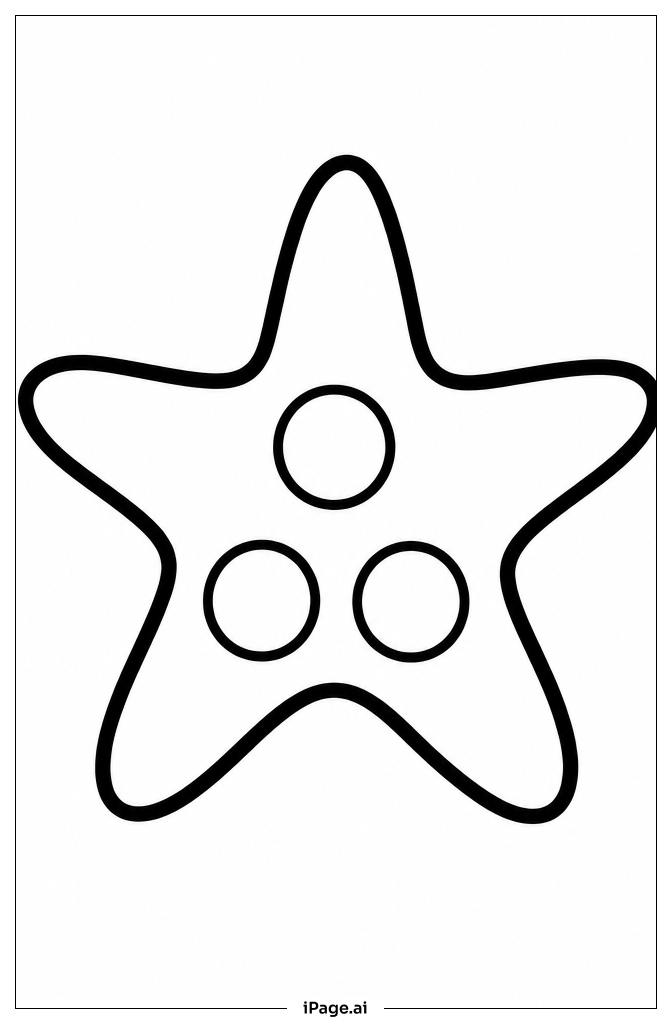
Coloring tips: How to color Starfish With Spots coloring page well?
Start by choosing a bright base color for the starfish body. Shades of orange, red, coral, or golden yellow work great and feel true to nature. Use a slightly darker tone of the same color to shade along the edges of each arm, giving it a rounded, three-dimensional look. For the spots, try contrasting colors like dark brown, deep red, or even purple to make them pop against the base. You can also make each spot a different color for a fun, rainbow effect. Kids can experiment with cool ocean-inspired colors like teal and seafoam green if they want a more fantastical feel. Leave a tiny white highlight on a few spots to make them look shiny. Use a light blue or soft purple for the background to suggest an underwater scene. Colored pencils work well for blending, while markers give bold and vivid results. Either way, have fun and let your creativity guide the colors!
Coloring challenges: Which parts are difficult to color and need attention for Starfish With Spots coloring page?
Coloring this starfish image is enjoyable, but there are a few challenges to keep in mind:
• **Coloring the spots neatly:** The starfish is covered with many spots of varying sizes. Filling in each spot cleanly without going over the outlines can be tricky, especially the smaller ones. Fine-tipped markers or sharpened colored pencils are the best tools for staying inside the lines on tiny spots.
• **Maintaining color consistency across all five arms:** Because the starfish has five arms that spread in different directions, keeping the same color tone and pressure consistent across the whole body requires focus and patience. It is easy to press harder on one arm and lighter on another, which can make the coloring look uneven.
• **Shading for depth and dimension:** The rounded shape of each arm benefits from gradual shading — darker at the edges and lighter in the center. Achieving smooth gradients is a skill that takes practice, especially for younger colorists. Blending two tones of the same color without harsh lines can be a real challenge.
• **Avoiding color bleed between the body and spots:** If the base color and the spot color are applied too close together while still wet (with markers), the colors may bleed into each other. Letting each layer dry fully before adding the next color layer helps prevent this issue.
• **Balancing the background:** Deciding how much detail to add to the background without overwhelming the starfish itself can be a creative challenge. Keeping the background soft and light ensures the starfish remains the clear focal point of the page.
Benefits of coloring books: Advantages of drawing Starfish With Spots coloring page
Coloring this spotted starfish page offers a wide range of benefits for children and young learners:
**Builds fine motor skills:** Carefully filling in the spots and tracing the curved edges of each arm helps strengthen hand muscles and improve pencil control, which supports handwriting development.
**Encourages creativity:** Choosing colors for the body, spots, and background invites kids to make their own artistic decisions. There is no single right answer, which builds confidence and creative thinking.
**Teaches focus and patience:** Completing a detailed image like this requires sustained attention. Kids learn to slow down, work carefully, and feel proud when they finish.
**Sparks curiosity about ocean life:** The starfish design can be a starting point for learning about marine animals. Kids may become curious about where starfish live, what they eat, and how they move — turning a coloring activity into a learning moment.
**Provides a calming experience:** The repetitive motion of coloring within the lines has a soothing, meditative quality. It helps children manage stress and settle their minds, making it a great quiet-time activity.
Coloring this page is both fun and enriching for children of all ages.



