Coloring tips: How to color St Patrick's Day Family Picnic coloring page well?
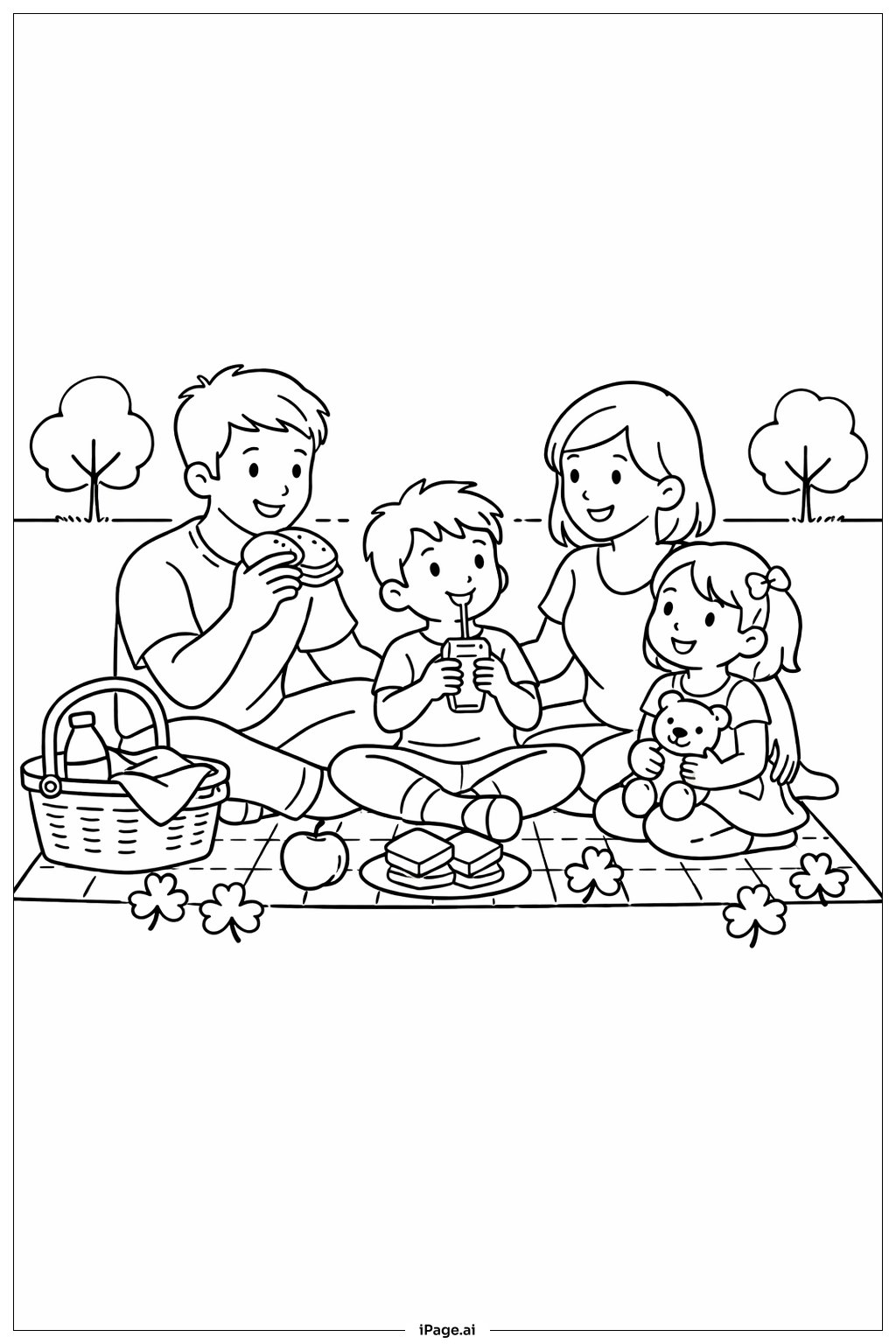
Start with the grass and background hills using different shades of green to bring the outdoor setting to life. Use bright, vivid greens for the shamrocks and clovers scattered around the scene. Color the family's clothing in classic St Patrick's Day colors — mostly greens, golds, and whites. Give the picnic blanket a fun plaid or checkered pattern using two or three colors. Use warm yellows and oranges for the picnic basket and food items. Add skin tones to the family members using soft peach or tan shades. Make the festive hats and accessories pop with bold green and gold. Use light blues for the sky in the background. Try adding small pops of orange or yellow to flowers or decorations to keep the scene lively. Take your time with the small shamrock details — they are a great place to experiment with different shades of green.
Coloring challenges: Which parts are difficult to color and need attention for St Patrick's Day Family Picnic coloring page?
• Shamrock and Clover Details: The scene is filled with many small shamrocks and four-leaf clovers. Each one has tiny, rounded leaves that sit close together. Coloring these neatly without going outside the lines takes patience and a fine-tipped colored pencil or marker. Younger children may find it easier to use a single green shade, while older kids can try shading each leaf differently.
• Layered Figures and Overlapping Elements: The family members are sitting close together, and their bodies, arms, and clothing often overlap. Keeping each person's outfit a distinct color while staying within the correct lines can be tricky. It helps to color one figure at a time and let each section dry before moving to the next.
• Picnic Food and Basket Textures: The picnic basket and food items have woven and textured details that require careful attention. Alternating colors on the basket weave pattern adds realism but demands steady hands and focus. Small food items like sandwiches or treats need multiple colors in tight spaces.
• Facial Expressions and Small Features: Each family member has a face with small features like eyes, mouths, and eyebrows. Coloring these areas neatly with the right skin tones and feature colors requires precision. Using fine-point tools and light pressure helps avoid smudging or over-filling these tiny spaces.
• Background Depth and Greenery: The trees, hills, and grass in the background need varied shades of green to create a sense of depth. Using the same single green throughout can make the scene look flat. Blending light and dark greens, or layering colors gently, helps give the outdoor setting a natural, three-dimensional feel.
Benefits of coloring books: Advantages of drawing St Patrick's Day Family Picnic coloring page
Coloring this St Patrick's Day Family Picnic page offers a wonderful mix of fun and learning for kids of all ages. Here are some of the great benefits:
It builds fine motor skills. Carefully coloring small shamrocks, facial features, and basket textures helps children develop hand strength and pencil control, which supports handwriting and everyday tasks.
It sparks creativity. Choosing colors for clothing, food, and decorations encourages kids to make their own artistic decisions and express their personal style.
It teaches holiday traditions. As children color the scene, they naturally learn about St Patrick's Day symbols like shamrocks, green clothing, and festive celebrations, making cultural learning fun and memorable.
It encourages focus and patience. Working through a detailed scene with many elements helps children practice concentration and persistence — skills that are valuable in school and everyday life.
It supports family bonding. This page can be a shared activity where parents and children color together, sparking conversations about family, holidays, and togetherness.
It provides a calming activity. Coloring is known to reduce stress and anxiety in both children and adults. The peaceful picnic scene makes it especially soothing and enjoyable.