Coloring tips: How to color Harp And Notes St. Patrick's Day coloring page well?
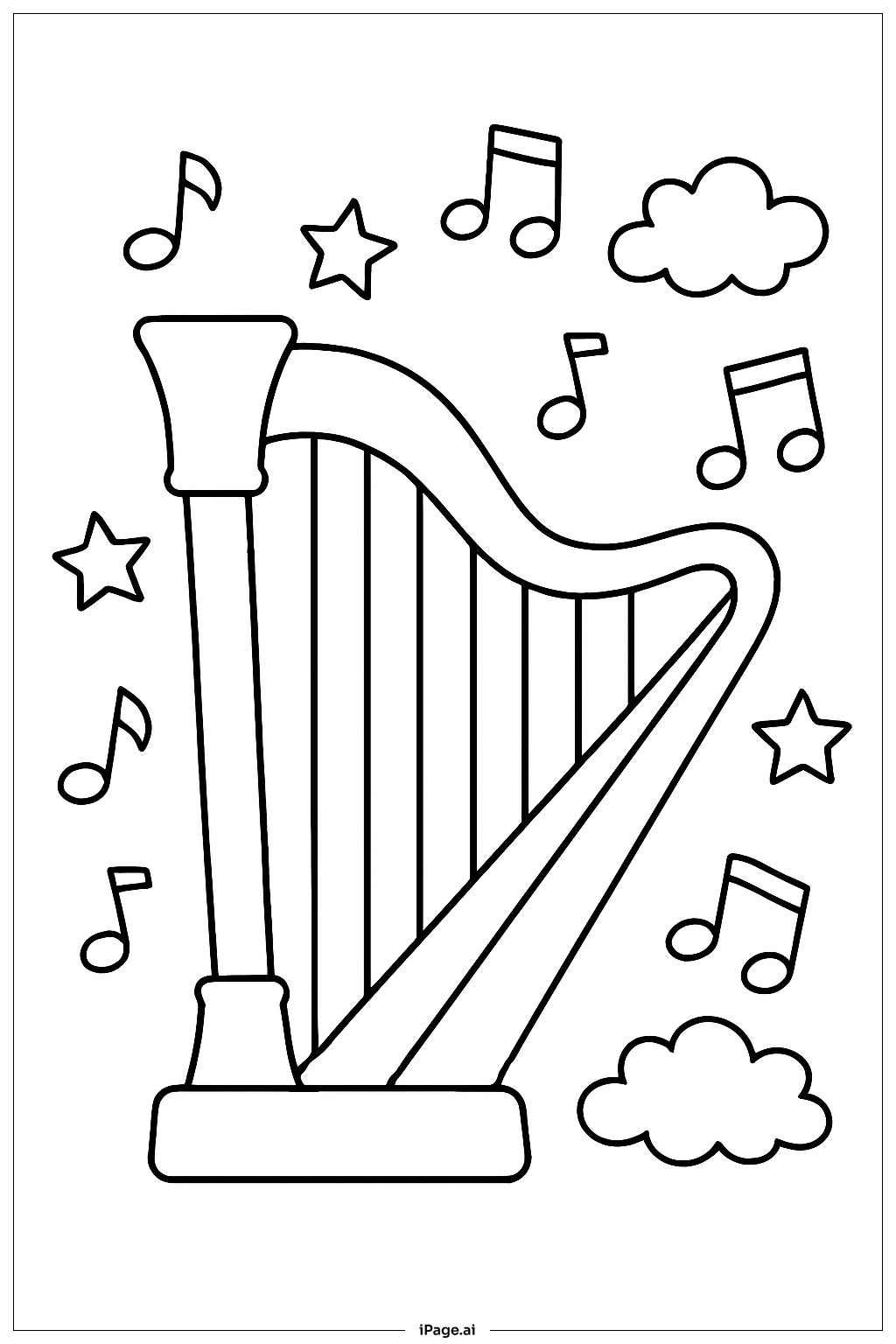
Start with the harp as your focal point, using rich golden yellows or warm browns for the wooden frame to create an authentic look. The strings can be colored in silver, gray, or light gold to make them stand out against the body. For the musical notes floating around, try using multiple colors like green, gold, orange, and purple to create a festive rainbow effect. Color the shamrocks in various shades of green, from lime to forest green, adding depth by using darker greens for shadows. Consider using metallic or glitter pens for special accents on the Celtic patterns. The background can remain light or be filled with pale blue or soft yellow to represent the Irish sky. Add small details like highlighting the note stems in black or dark blue for definition.
Coloring challenges: Which parts are difficult to color and need attention for Harp And Notes St. Patrick's Day coloring page?
• Harp String Details: The multiple parallel strings of the harp require steady hand control and precision to color without crossing into adjacent areas. Young children may find it challenging to keep each string distinct, especially if choosing different colors for alternating strings. Using fine-tipped markers or colored pencils helps maintain clean lines between the narrow string spaces.
• Celtic Pattern Complexity: The intricate Celtic knots and decorative patterns on the harp frame contain interwoven lines and small enclosed spaces that demand careful attention. These traditional designs often feature overlapping elements where one strand appears to go over and under another, requiring color planning to create the three-dimensional woven effect properly.
• Musical Note Placement: The scattered musical notes throughout the composition vary in size and may overlap with other design elements like shamrocks or decorative ribbons. Deciding which element should be in the foreground and choosing contrasting colors to make each component visible requires planning and color theory understanding.
• Small Shamrock Spaces: The clover leaves, especially if multiple shamrocks appear in the design, contain small heart-shaped sections within each leaf that need precise coloring. Staying within these tiny boundaries while creating shading or color variation to make the leaves look realistic challenges fine motor skills.
• Background Balance: Determining how much of the background to color without overwhelming the main harp design requires artistic judgment. Children must decide whether to leave white space, add patterns, or create gradients while ensuring the central elements remain the focus of the artwork.
Benefits of coloring books: Advantages of drawing Harp And Notes St. Patrick's Day coloring page
Coloring this St. Patrick's Day harp design helps children develop fine motor skills and hand-eye coordination through the detailed string work and intricate patterns. The musical theme introduces kids to Irish cultural traditions and the importance of the harp in Irish heritage, making it an educational experience beyond just art. The combination of large areas like the harp body and tiny details like individual notes allows children of different skill levels to find success and challenge. Working with the Celtic patterns encourages pattern recognition and sequential thinking as kids follow the interwoven designs. The festive theme promotes cultural awareness and appreciation for holiday traditions from around the world. Choosing color combinations for the musical notes and shamrocks enhances decision-making skills and color theory knowledge. The calming, focused activity of coloring can reduce stress and improve concentration, especially when working on the repetitive elements like harp strings. Completing this detailed page builds confidence and provides a sense of accomplishment that children can proudly display during St. Patrick's Day celebrations.