Coloring tips: How to color Celtic Pattern Mandala St. Patrick's Day coloring page well?
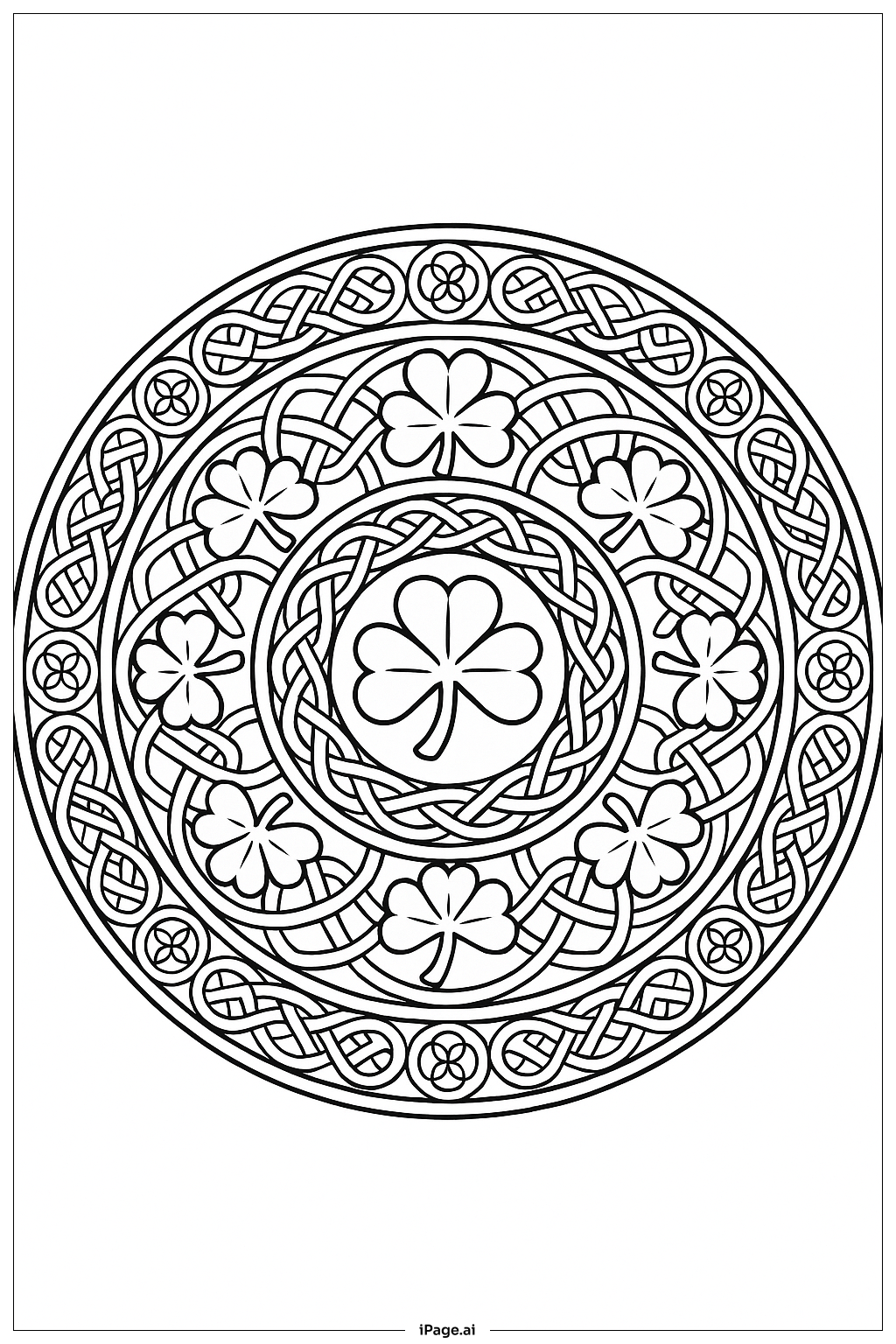
For this Celtic mandala, start with the central shamrock using various shades of green, from emerald to lime. The Celtic knots can be colored in traditional Irish colors: green, orange, and white. Consider using gold or yellow for the intricate knotwork to make the patterns pop and create a festive, treasure-like effect. You might alternate between warm and cool tones in different sections to help distinguish the complex interwoven patterns. Metallic gel pens or colored pencils work beautifully for adding shimmer to Celtic details. Try a rainbow gradient moving outward from the center, or use complementary colors like purple and green for dramatic contrast. For a more traditional look, stick with greens, golds, and creams. Don't forget to leave some areas white to create breathing space and highlight the intricate linework.
Coloring challenges: Which parts are difficult to color and need attention for Celtic Pattern Mandala St. Patrick's Day coloring page?
• Intricate Celtic Knotwork: The interwoven Celtic knots require careful attention to follow the over-under pattern of the braided designs. Each strand must be colored consistently to maintain the illusion of continuous weaving. This demands patience and a steady hand, especially in tighter spaces where the lines come close together. Choosing colors that provide enough contrast between overlapping strands helps maintain clarity and prevents the design from looking muddy or confusing.
• Symmetrical Pattern Consistency: The mandala features perfectly mirrored sections radiating from the center, which means any color choices must be repeated accurately in corresponding segments. Keeping track of your color scheme across multiple identical sections requires planning and attention to detail. Young colorists may find it challenging to remember which colors go where, so making a simple color key or reference guide before starting can be very helpful.
• Small Detailed Spaces: The design contains numerous tiny areas within the Celtic spirals, shamrock details, and geometric patterns that are difficult to color without going outside the lines. These tight spaces require fine motor control and precision, making thin colored pencils or fine-tip markers the best tools. Rushing through these sections can result in messy overlap, so taking breaks and working slowly produces the best results.
• Color Harmony Planning: With so many different pattern elements competing for attention, choosing a cohesive color palette that enhances rather than overwhelms the design presents a creative challenge. Balancing bold statement colors with softer supporting shades requires artistic judgment and experimentation.
Benefits of coloring books: Advantages of drawing Celtic Pattern Mandala St. Patrick's Day coloring page
Coloring this Celtic mandala offers wonderful benefits for both mind and skills. The repetitive, symmetrical patterns promote relaxation and mindfulness, helping to reduce stress and anxiety while encouraging a meditative state. Working through the intricate Celtic knots improves fine motor skills, hand-eye coordination, and concentration abilities. Children and teens develop patience and attention to detail as they carefully navigate the complex interwoven designs. The mandala format naturally encourages color theory exploration and creative decision-making about pattern and symmetry. Completing such a detailed project builds confidence and provides a strong sense of accomplishment. Additionally, engaging with Celtic cultural symbols and St. Patrick's Day themes offers an educational opportunity to learn about Irish heritage, history, and artistic traditions. This coloring page combines artistic expression with cultural appreciation, making it both an enjoyable and enriching activity for all ages.