Coloring tips: How to color Celtic Knot Border St. Patrick's Day coloring page well?
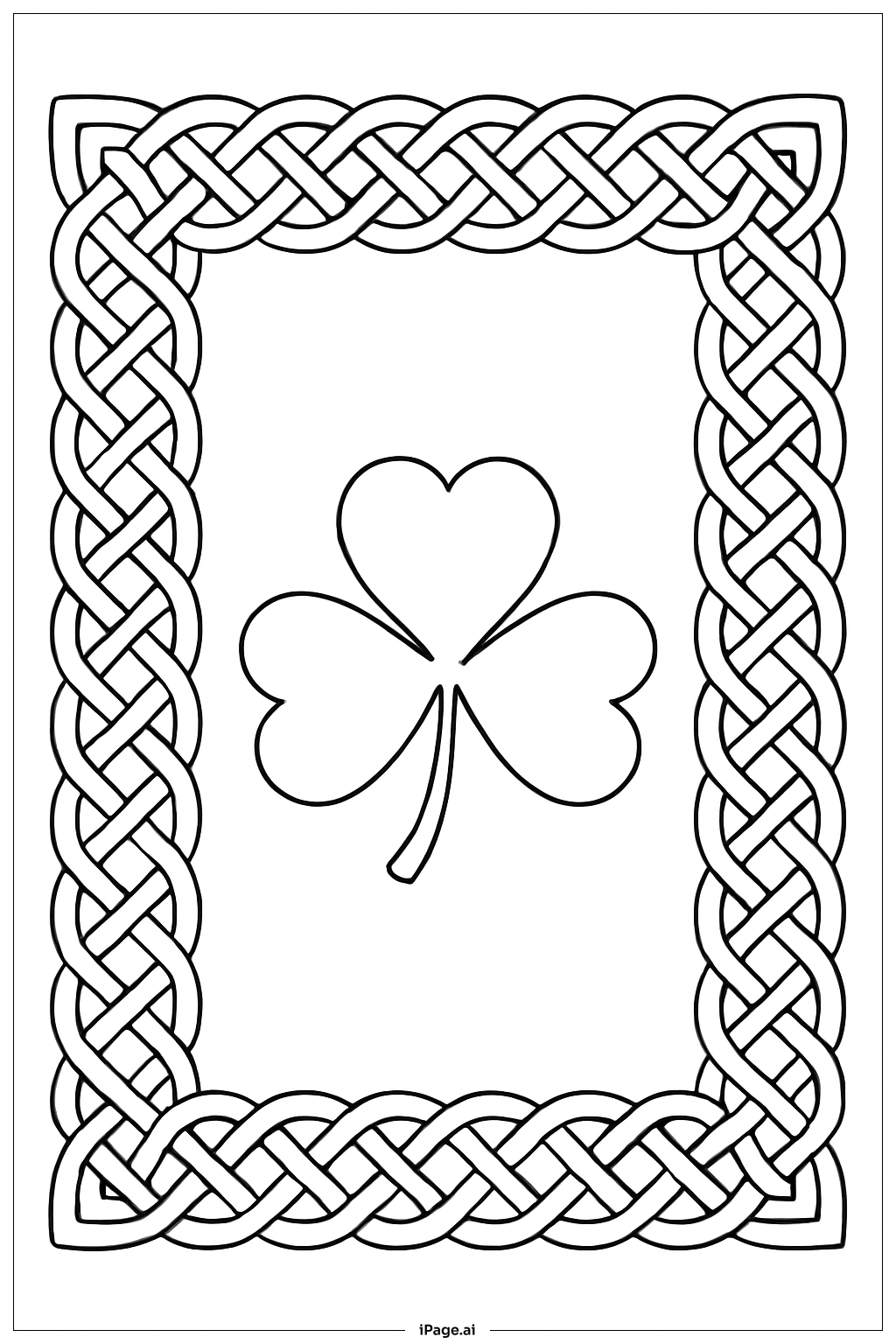
To color this page, use different shades of green for the shamrock to bring it to life. You can add light and dark greens to the leaves and stem for depth. For the Celtic knot border, consider using alternating colors like gold, green, and orange, which are traditional Irish colors. Try blending colors where the knots overlap to create a 3D effect. Use colored pencils or fine-tip markers to color inside the lines carefully. You can also use a white gel pen to add highlights or shine to the shamrock or knots for extra detail.
Coloring challenges: Which parts are difficult to color and need attention for Celtic Knot Border St. Patrick's Day coloring page?
1. The Celtic knot border has many loops and overlaps that require careful coloring to avoid mixing colors. 2. Maintaining clean lines inside the narrow spaces between the knot patterns can be challenging for younger children. 3. Creating a 3D effect by shading requires some skill in blending colors smoothly. 4. The shamrock’s edges are simple but need precision to color without going outside the lines. 5. Balancing the colors in the intricate knot so the design doesn’t look too busy or flat can be tricky.
Benefits of coloring books: Advantages of drawing Celtic Knot Border St. Patrick's Day coloring page
Coloring this page helps develop fine motor skills and attention to detail because of the intricate knot design. It encourages patience and concentration, especially when carefully coloring the small loops and overlaps. Using green and other traditional colors connects children to Irish culture and St. Patrick’s Day traditions. The repetitive knot pattern can be calming and meditative, providing a relaxing activity. Additionally, coloring the shamrock promotes creativity and recognition of symbols associated with luck and celebration.