Coloring tips: How to color Spring Rainbow Over Field coloring page well?
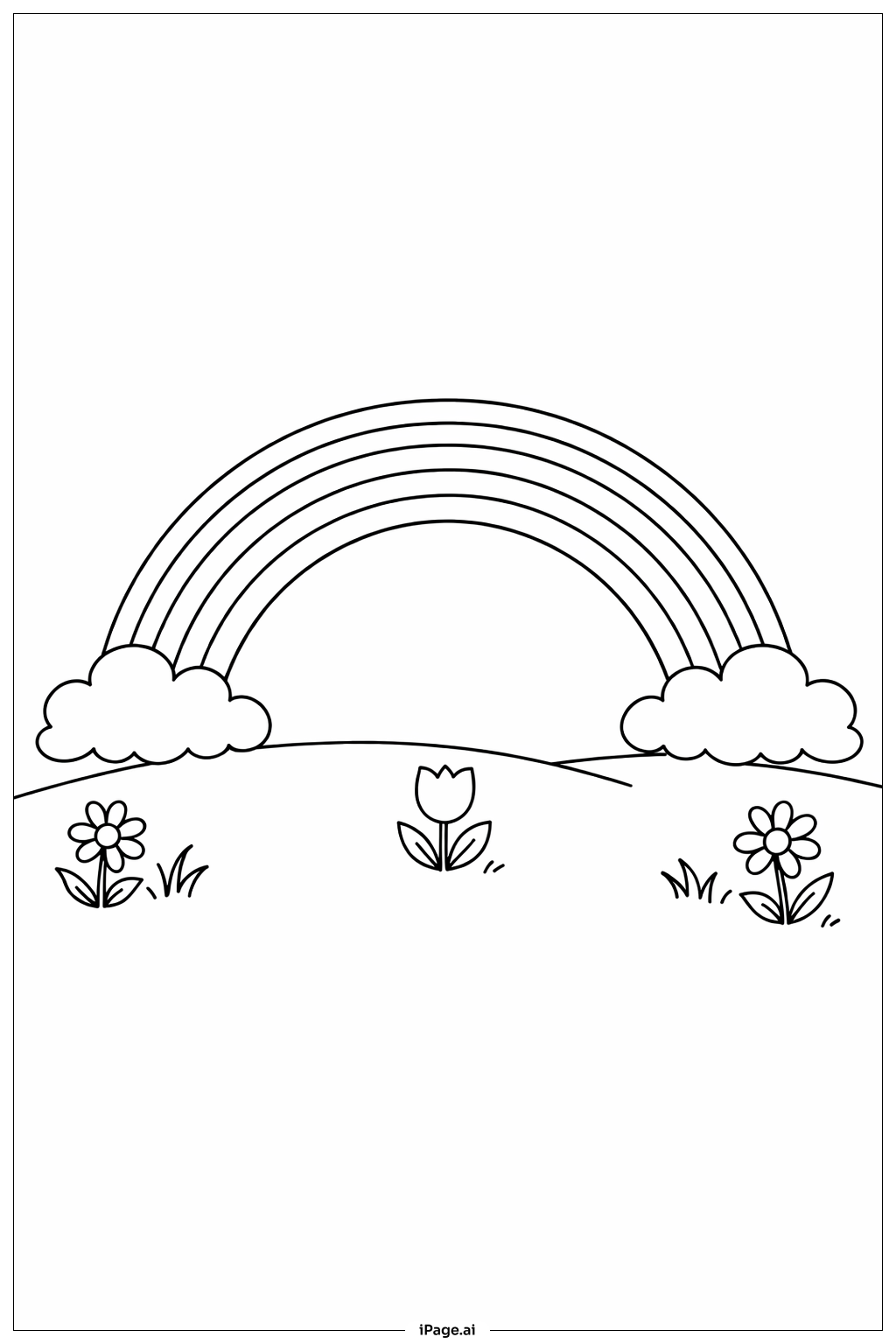
Start with the rainbow using classic colors: red, orange, yellow, green, blue, indigo, and violet in order from top to bottom. For the sky, try soft blues or lavenders, leaving the clouds white or coloring them with light gray shadows. The field can be various shades of green, mixing lighter spring greens with deeper tones for dimension. Color the flowers in bright, cheerful hues—yellow and white daisies, red and pink tulips, purple crocuses. Consider using colored pencils for gentle blending in the sky and field, while markers can make the rainbow pop with bold, saturated colors. Add yellow or gold to certain areas where sunlight might touch the grass. Don't forget to color any background elements like distant trees in softer, muted greens to create depth.
Coloring challenges: Which parts are difficult to color and need attention for Spring Rainbow Over Field coloring page?
• Rainbow Band Precision: Keeping each of the seven rainbow colors within their designated bands requires steady hand control and careful attention to boundaries. Young children may find it challenging to stay within the curved lines, especially where the rainbow arches. Using the correct color sequence also requires memory and planning.
• Field Texture and Depth: Creating a realistic-looking field with depth and dimension can be tricky. Children need to understand that using multiple shades of green and varying pressure creates texture. The foreground flowers should be brighter and more detailed, while background elements need softer, lighter colors to appear distant.
• Cloud Shading: Adding dimension to clouds through subtle shading is an advanced technique. Knowing where to add light gray shadows while leaving white highlights requires understanding of light sources and three-dimensional forms. Over-coloring can make clouds look heavy rather than fluffy.
• Flower Details: The small flowers scattered throughout the field contain tiny petals and centers that require precision coloring. Younger children may struggle with fine motor control needed for these delicate details, and choosing complementary colors for different flower types requires color theory knowledge.
• Sky Gradation: Creating a smooth color transition in the sky, perhaps from deeper blue at the top to lighter blue near the horizon, requires blending skills that take practice to master effectively.
Benefits of coloring books: Advantages of drawing Spring Rainbow Over Field coloring page
Coloring this spring rainbow scene offers wonderful developmental benefits for children. It enhances fine motor skills and hand-eye coordination through precise coloring within curved and detailed areas. The rainbow provides an excellent opportunity to learn color recognition and sequencing, helping children memorize the traditional color order. This scene encourages creativity as children decide on flower colors and shading techniques for the field and sky. The peaceful spring theme promotes relaxation and mindfulness, reducing stress while fostering positive associations with nature and seasonal changes. Working with various elements—sky, clouds, rainbow, field, and flowers—teaches spatial awareness and composition understanding. Completing this detailed page builds patience, focus, and a sense of accomplishment, boosting self-esteem and confidence in artistic abilities.