Coloring tips: How to color Spring Farmer Planting Seedlings coloring page well?
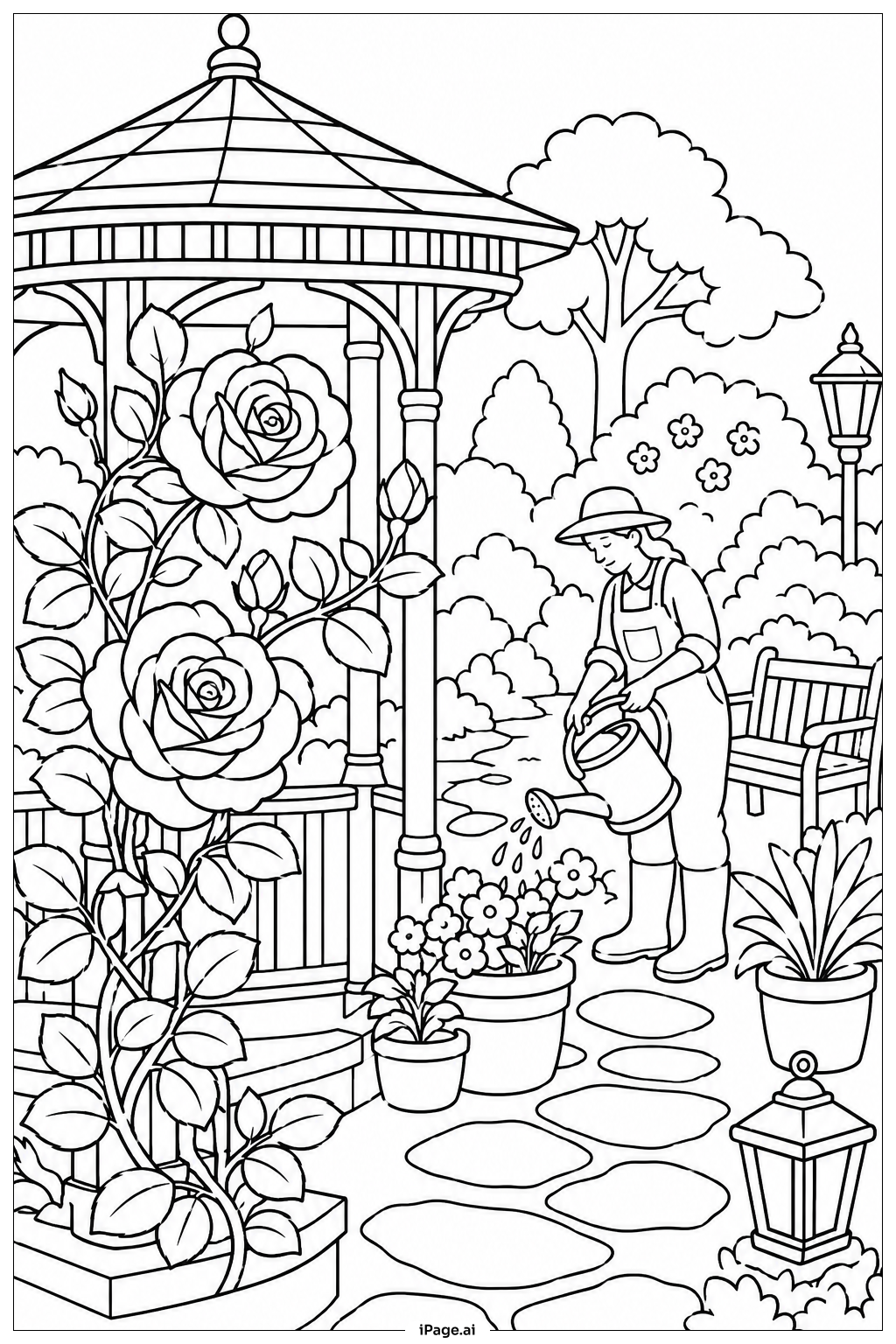
Start with the sky using light blue, adding touches of pale yellow near the horizon to suggest warm spring sunlight. Color the hills in soft shades of green and yellow-green to show fresh spring growth. Use brown and tan tones for the tilled soil, adding darker streaks to show depth in the furrows. The farmer's overalls look great in classic denim blue, with a tan or beige shirt underneath. Give the wide-brimmed hat a warm straw yellow. Use bright greens for the seedling leaves, keeping them light to show how young and tender they are. The seedling basket can be colored in natural wicker brown. Add warm gray or brown to the wooden fence posts. Use bright orange or red for any birds to make them pop against the background. Keep the overall palette fresh and bright to capture the lively energy of spring planting season.
Coloring challenges: Which parts are difficult to color and need attention for Spring Farmer Planting Seedlings coloring page?
• Seedling Details: The tiny seedlings are among the most challenging parts of this image. Each small plant has delicate leaves and thin stems that require a steady hand and a fine-tipped coloring tool. Using the wrong size marker or crayon can easily fill in too much space and lose the detail. Try using sharp colored pencils for these areas to stay within the fine lines and show each leaf individually.
• Soil Texture: The tilled earth has many furrows, clumps, and uneven lines that create a rich texture. Blending multiple shades of brown, tan, and dark gray is needed to make the soil look realistic and three-dimensional. Flat coloring without shading can make the ground look dull, so layering lighter and darker tones is important.
• Farmer's Clothing Folds: The farmer's overalls and shirt have folds, shadows, and creases that indicate movement and fabric texture. Coloring these areas requires careful attention to where light hits and where shadows fall. Adding a slightly darker shade along the creases will help the clothing look natural rather than flat.
• Background Depth: Separating the foreground garden from the mid-ground fence and the background hills takes planning. Using progressively lighter and cooler tones as you move toward the background helps create a sense of distance and space, a technique called aerial perspective that can be tricky for younger colorists.
• Small Accessories: Items like the seedling basket, fence posts, and any distant birds are small but important for completing the scene. These require precision to color neatly without accidentally bleeding into neighboring areas.
Benefits of coloring books: Advantages of drawing Spring Farmer Planting Seedlings coloring page
Coloring this Spring Farmer Planting Seedlings page offers a wonderful mix of fun and learning for kids and adults alike. As you fill in each section, you naturally learn about spring farming, plant growth, and the work farmers do to grow food. This builds early science and nature awareness in a relaxed, playful way.
For younger children, working around the seedlings and soil textures helps develop fine motor skills and hand-eye coordination. Choosing colors for the sky, earth, and plants also sparks creative decision-making and builds confidence.
For older kids and adults, blending tones for the soil, clothing, and background offers a satisfying artistic challenge. It encourages focus, patience, and attention to detail, all valuable skills that carry over into everyday tasks.
The overall theme of new growth and springtime renewal also carries an uplifting, calming mood. Spending time with this page can reduce stress, promote mindfulness, and leave you feeling refreshed. It is a simple and joyful way to connect with the beauty of the natural world, one color at a time.