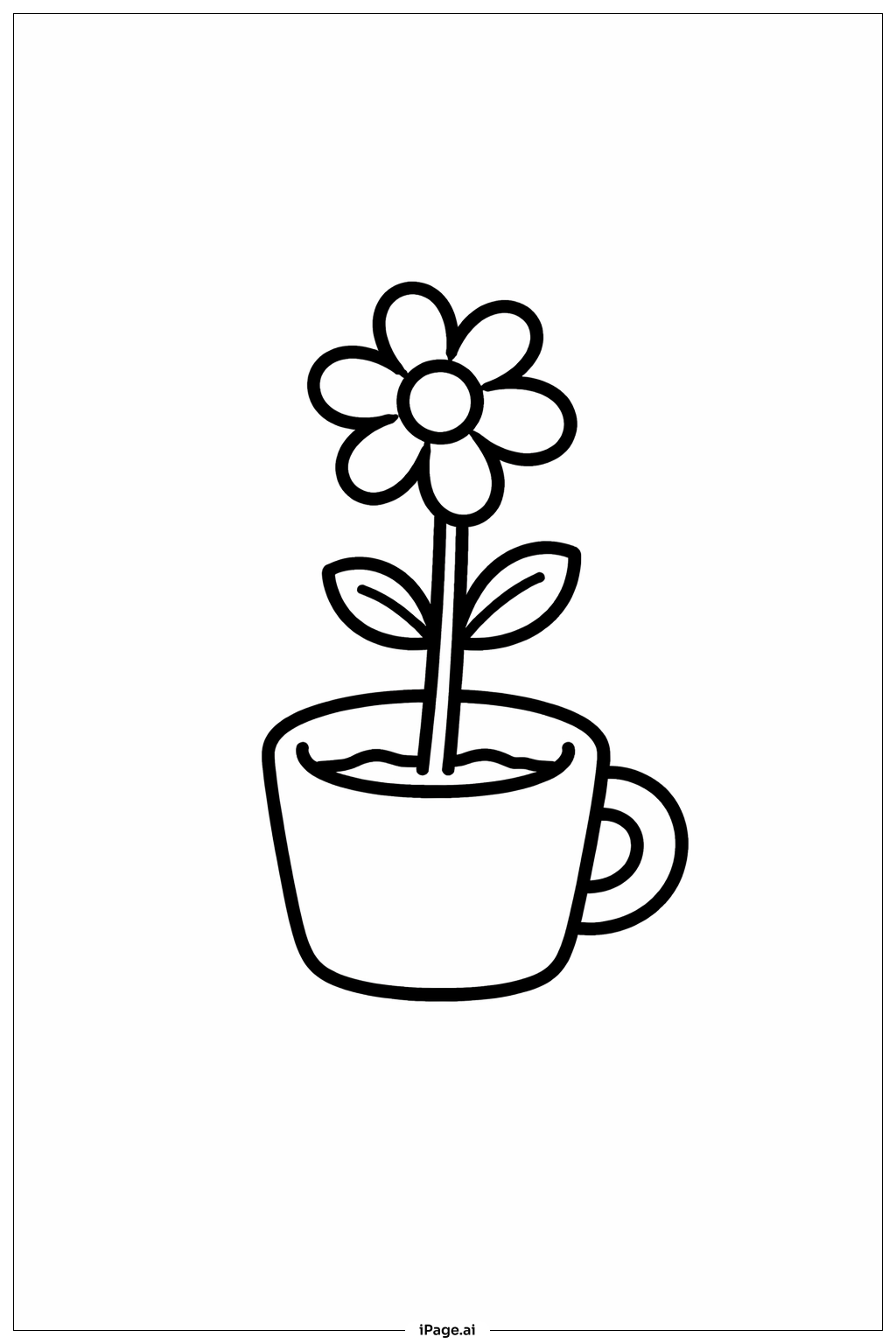
Coloring tips: How to color Spring Cup With Flower coloring page well?
Start with the flower at the center. Use bright, cheerful colors like soft pink, lavender, or sunny yellow for the petals. Add a warm orange or golden yellow to the flower's center to make it pop. For the cup, try pastel shades like mint green, sky blue, or peach to keep the Spring feeling alive. Use a slightly darker version of the same color to shade the patterns on the cup and give it a rounded, three-dimensional look. Color the leaves in different shades of green — light green for younger leaves and deeper green for fuller ones. Small buds can be colored in pink or white. Keep the background light — a soft yellow or pale blue works well to let the main image stand out. For a fun effect, try blending two colors on the petals to create a gradient from light to dark.
Coloring challenges: Which parts are difficult to color and need attention for Spring Cup With Flower coloring page?
• Flower Petal Details: The flower has multiple layered petals with curved edges and fine inner lines. Staying within each petal's boundary while blending colors smoothly can be tricky, especially for younger colorists. Take your time with each petal and use a sharp colored pencil or fine-tip marker for the edges before filling in the center.
• Cup Patterns and Curves: The decorative patterns on the cup follow the curved surface of the mug. Coloring along a curved surface without making the design look flat requires careful attention. Try using lighter pressure near the edges and slightly heavier pressure toward the center of the cup to suggest a rounded shape.
• Small Leaves and Buds: The tiny leaves and buds around the cup have small, narrow shapes that are easy to color outside of. Use a fine-tip tool for these areas and go slowly. Choosing contrasting colors for the leaves versus the cup background will help each element stand out clearly.
• Balancing Light and Shadow: Because the image has both flat decorative elements and three-dimensional objects like the cup and flower, knowing where to add shading can be confusing. A simple rule is to pick one light source direction and keep highlights on that side while adding slightly darker tones on the opposite side.
• Color Harmony Across the Page: With so many different elements — flower, cup, leaves, buds, and background — it can be hard to make everything look unified. Try sticking to a limited Spring palette of two or three main colors with their lighter and darker shades to keep the overall image feeling balanced and cohesive.
Benefits of coloring books: Advantages of drawing Spring Cup With Flower coloring page
Coloring this Spring Cup With Flower page offers a wide range of benefits for children and young colorists. Working through the detailed petals and decorative cup patterns helps build fine motor skills and hand-eye coordination, which are important for everyday activities like writing and drawing. Choosing colors for the flower, leaves, and cup encourages creative thinking and personal expression — there is no single right answer, so every child can make the image their own. The process of focusing on a coloring page also promotes mindfulness and calm, helping kids slow down and concentrate in a relaxed, low-pressure way. Completing the image gives a real sense of accomplishment, which builds confidence and encourages a positive attitude toward creative work. The Spring theme — with its flowers, fresh leaves, and cheerful energy — also naturally sparks conversations about seasons, nature, and the world around us, making this a gentle and enjoyable way to connect art with learning. It is a simple, screen-free activity that supports both creativity and well-being.