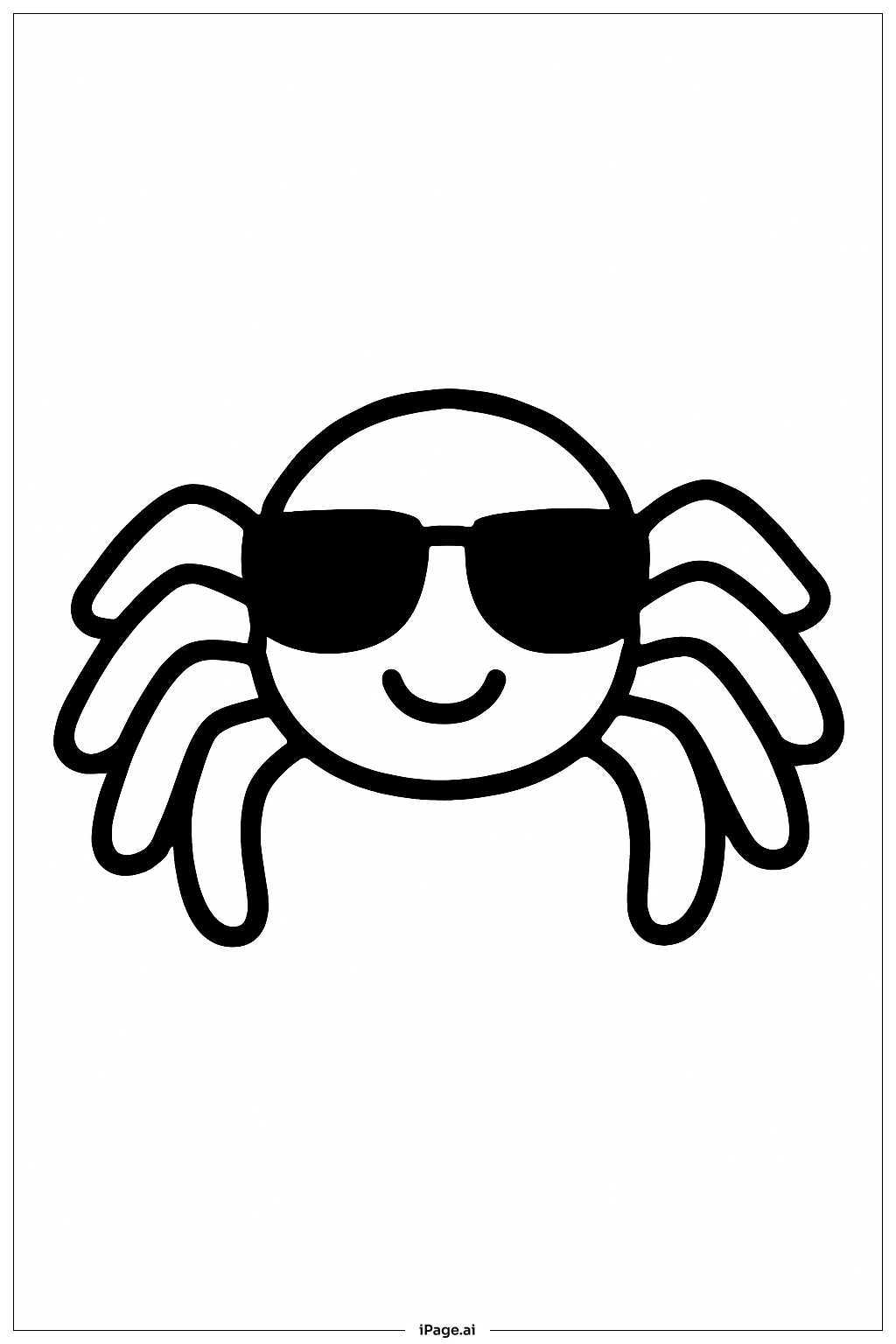
Coloring tips: How to color Spider with Sunglasses coloring page well?
Start with the spider's body by choosing a base color like brown, black, gray, or even creative colors like purple or green. The sunglasses can be colored with dark shades for the lenses, such as black, dark blue, or gray to create that classic shaded look. The frames can be bright colors like red, yellow, or metallic silver to make them stand out. For the legs, you can use the same color as the body or add subtle shading by using darker tones on one side to create dimension. Consider adding highlights to the body and legs using lighter shades or leaving small areas white to suggest shine. You might also add a fun pattern to the spider's body, like stripes or spots, to give it extra personality. The background can be kept simple or you can add a sunny scene to match the sunglasses theme.
Coloring challenges: Which parts are difficult to color and need attention for Spider with Sunglasses coloring page?
• Leg Coordination: The spider has eight legs that extend in different directions, and keeping track of which leg connects to which part of the body can be challenging. Each leg has multiple segments and joints that need consistent coloring. Maintaining the same color scheme across all eight legs while adding appropriate shading requires careful attention and planning. Young colorists may find it difficult to color within the thin leg boundaries without going outside the lines.
• Sunglasses Details: The sunglasses feature small areas including the frames and lenses that need different colors to create contrast and realism. The lenses should appear darker than the frames to look authentic, which requires careful color selection. Getting smooth, even coverage on the small lens areas without leaving white spots or streaks can be tricky, especially for younger children using crayons or colored pencils.
• Body Shading and Dimension: Creating a three-dimensional look on the spider's rounded body requires understanding where light would naturally hit and where shadows would form. Blending multiple shades of the same color family to show the curved surface of the body takes practice and patience. Deciding where to place highlights and shadows to make the spider look round rather than flat is an artistic challenge that helps develop spatial awareness.
• Symmetry Maintenance: Since spiders are naturally symmetrical creatures, colorists may want to mirror their color choices and patterns on both sides of the body. Keeping the legs on the left side matching those on the right in terms of color intensity and shading pattern requires careful planning and execution.
Benefits of coloring books: Advantages of drawing Spider with Sunglasses coloring page
Coloring this spider with sunglasses offers numerous developmental benefits for children. It helps improve fine motor skills and hand-eye coordination as they carefully color within the defined lines of the legs and small details like the sunglasses. The symmetrical nature of the spider encourages children to think about patterns and matching, promoting logical thinking and planning skills. This image also helps reduce fear of spiders by presenting them in a friendly, humorous way, which can support emotional development and help children see things from different perspectives. The creative freedom in choosing colors allows for self-expression and imagination, as children can make realistic or fantastical color choices. Working on the various sections of different sizes helps build patience and focus, as completing the entire image requires sustained attention. The playful nature of a spider wearing sunglasses can spark conversations about animals, fashion, and creativity, supporting language development and social interaction when colored in group settings.