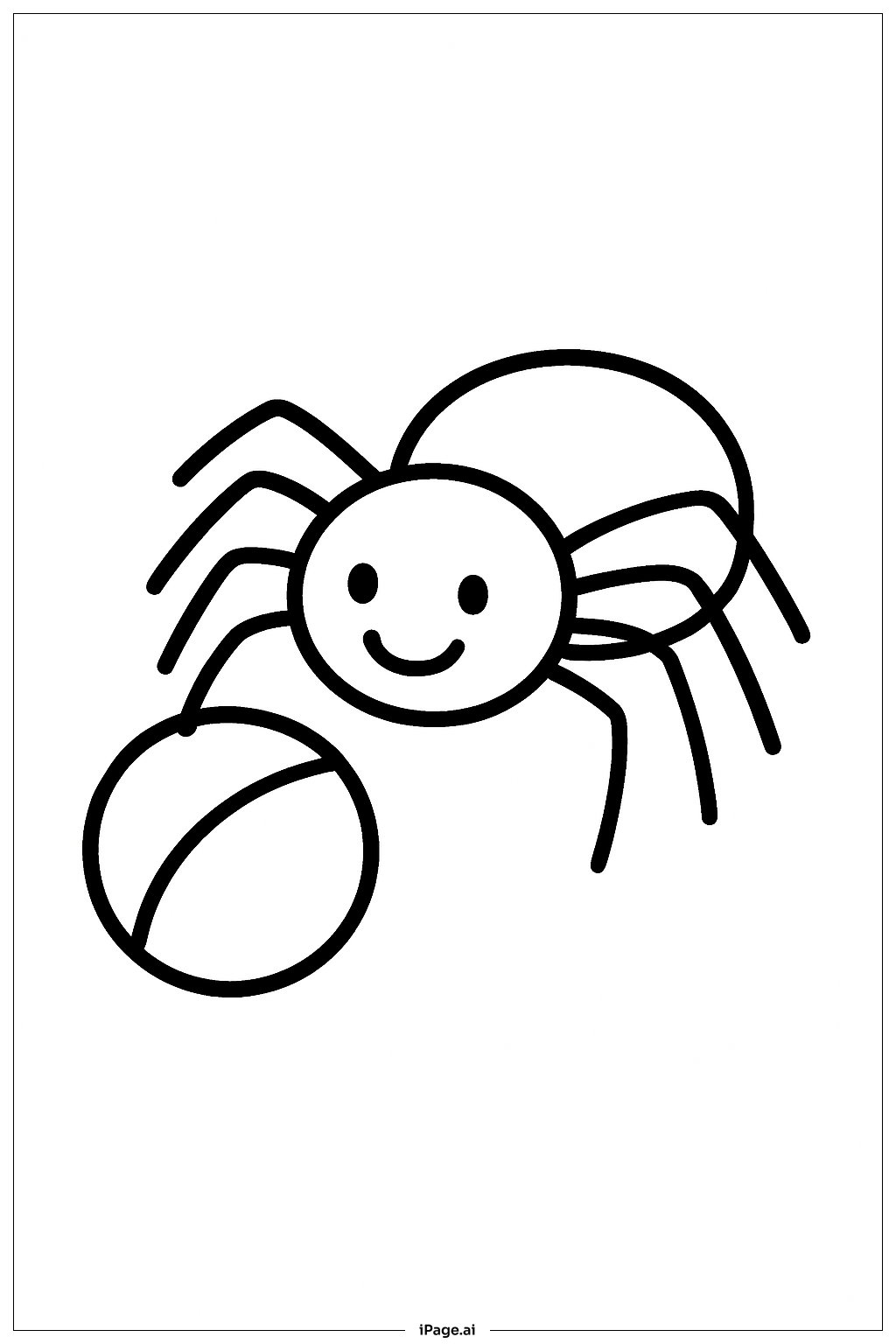
Coloring tips: How to color Spider Playing Ball coloring page well?
For coloring this picture, use bright and fun colors to make the spider and the ball stand out. You can color the spider in shades like orange, red, or even purple to give it a playful look. The ball can be colored in two or three colors such as yellow, blue, and green to make it lively. Try using darker colors for the spider’s legs to create contrast. You can also add patterns or spots on the spider’s body or the ball to make it more interesting. Remember to color inside the lines carefully to keep the picture neat.
Coloring challenges: Which parts are difficult to color and need attention for Spider Playing Ball coloring page?
1. Coloring the spider’s legs can be tricky because there are many thin lines close to each other. It needs careful attention to avoid coloring outside the lines.
2. The round shapes of the spider’s body and the ball may cause difficulty in shading evenly due to their curved forms.
3. Choosing colors that look good together might be hard, especially for younger children who are still learning about color matching.
4. Filling in small spaces between the legs and the ball requires precision to keep the picture clean.
5. Deciding how to add patterns or designs on the spider or ball might be challenging but can also be a fun part of coloring.
Benefits of coloring books: Advantages of drawing Spider Playing Ball coloring page
Coloring this picture helps improve hand-eye coordination and fine motor skills, especially when coloring the small legs and round shapes. It encourages creativity as children choose different colors and patterns for the spider and ball. This activity also promotes focus and patience because it requires attention to detail. Moreover, coloring a friendly and happy spider can help reduce fear of spiders in children, making them more comfortable with nature. Overall, it is a fun and educational way to develop artistic skills while enjoying a playful scene.