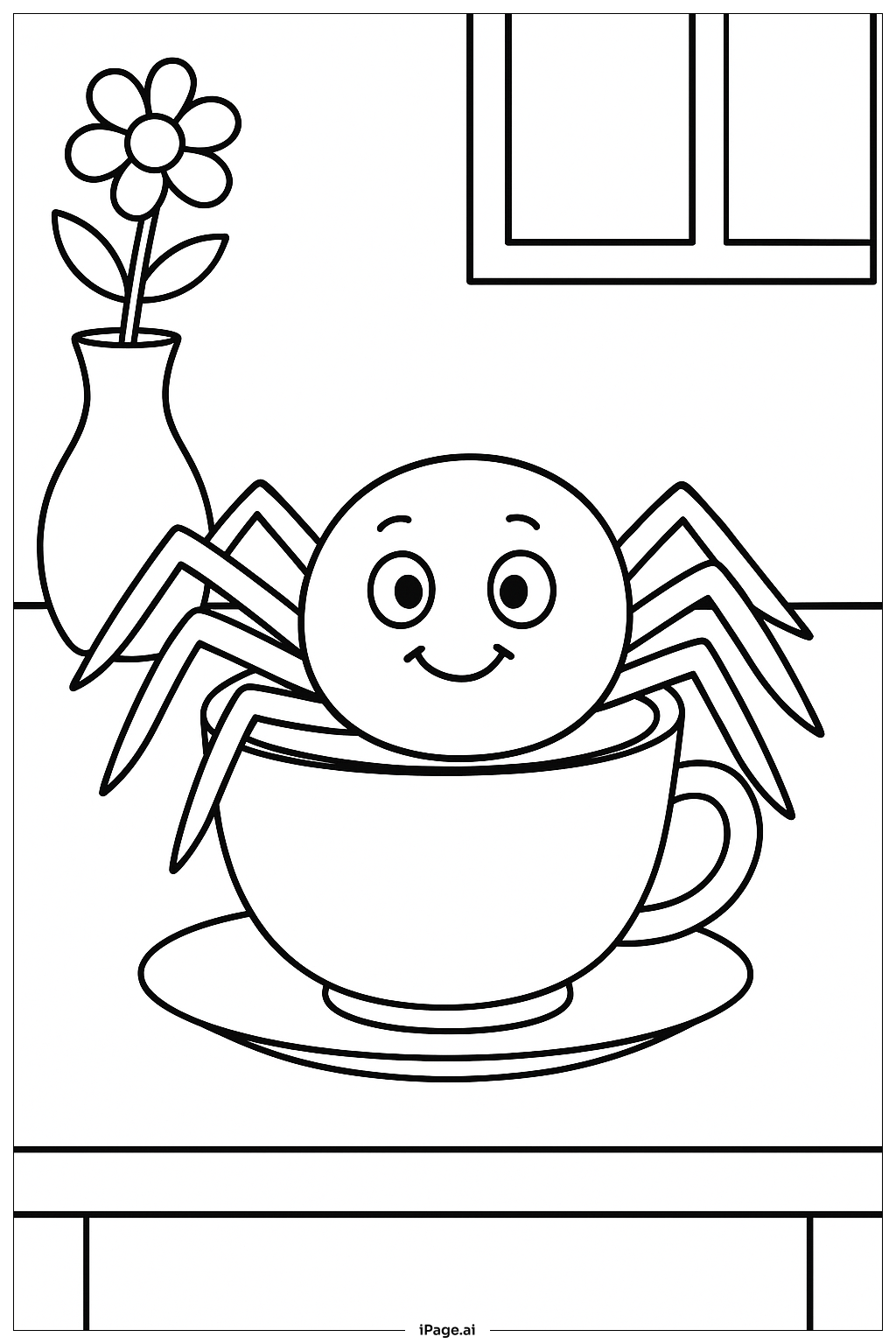
Coloring tips: How to color Spider in Teacup coloring page well?
Start with the spider using warm browns or blacks for a realistic look, or try purples and oranges for a fun, imaginative approach. Add lighter shades to the body to create a soft, fuzzy appearance. For the teacup, pastel colors like soft pink, mint green, or lavender work wonderfully to create a gentle, tea-time atmosphere. Use coordinating colors for the saucer to create a matching set. The decorative patterns on the cup offer a great opportunity to use contrasting colors—try gold, deep blue, or rose for the floral designs. Color the leaves around the base in various shades of green, adding yellow or brown touches for autumn variety. Consider using colored pencils for the spider's fur texture and markers for the smooth ceramic surfaces. Adding highlights to the cup's rim with white or light colors will give it a shiny, polished look.
Coloring challenges: Which parts are difficult to color and need attention for Spider in Teacup coloring page?
• Spider Texture Details: The spider's fuzzy body requires careful shading techniques to create a realistic furry appearance. Young colorists may find it challenging to layer colors effectively to achieve depth and texture. The eight legs need consistent coloring while maintaining their individual shapes, which requires patience and steady hand control. Creating the distinction between the hairy body and smoother leg segments adds complexity to the task.
• Intricate Teacup Patterns: The decorative floral motifs and ornate details on the teacup demand precision coloring within small spaces. Children must stay within the lines of delicate patterns while choosing complementary colors that make the designs stand out without overwhelming the overall composition. Balancing pattern colors with the base cup color requires thoughtful planning and color theory understanding.
• Dimensional Shading: Creating the illusion of the spider sitting inside the curved teacup requires understanding of depth and perspective. Colorists need to apply darker shades to the interior of the cup and lighter tones to areas where light would naturally hit. The rounded surfaces of both the spider's body and the cup require gradual color transitions that can be challenging for beginners.
• Color Coordination: Harmonizing colors across multiple elements—the spider, teacup, saucer, and surrounding leaves—while maintaining visual interest presents a creative challenge. Choosing a cohesive color palette that makes each element distinct yet unified requires artistic decision-making skills that develop with practice.
Benefits of coloring books: Advantages of drawing Spider in Teacup coloring page
Coloring this whimsical Spider in Teacup image helps children develop fine motor skills through the detailed work required for the spider's legs and the teacup's decorative patterns. The contrasting textures—fuzzy spider versus smooth ceramic—teach young artists about different coloring techniques and how to represent various surfaces. This imaginative scene encourages creativity by challenging traditional expectations, showing that spiders can be cute and belong in unexpected places. The activity builds patience and focus as children work through the intricate details. It also provides opportunities to practice color theory by choosing harmonious palettes for the coordinated tea set and natural elements. The friendly spider design helps reduce fear of these creatures while promoting appreciation for all living things. Completing this detailed image builds confidence and provides a sense of accomplishment, especially when displaying the finished artwork.