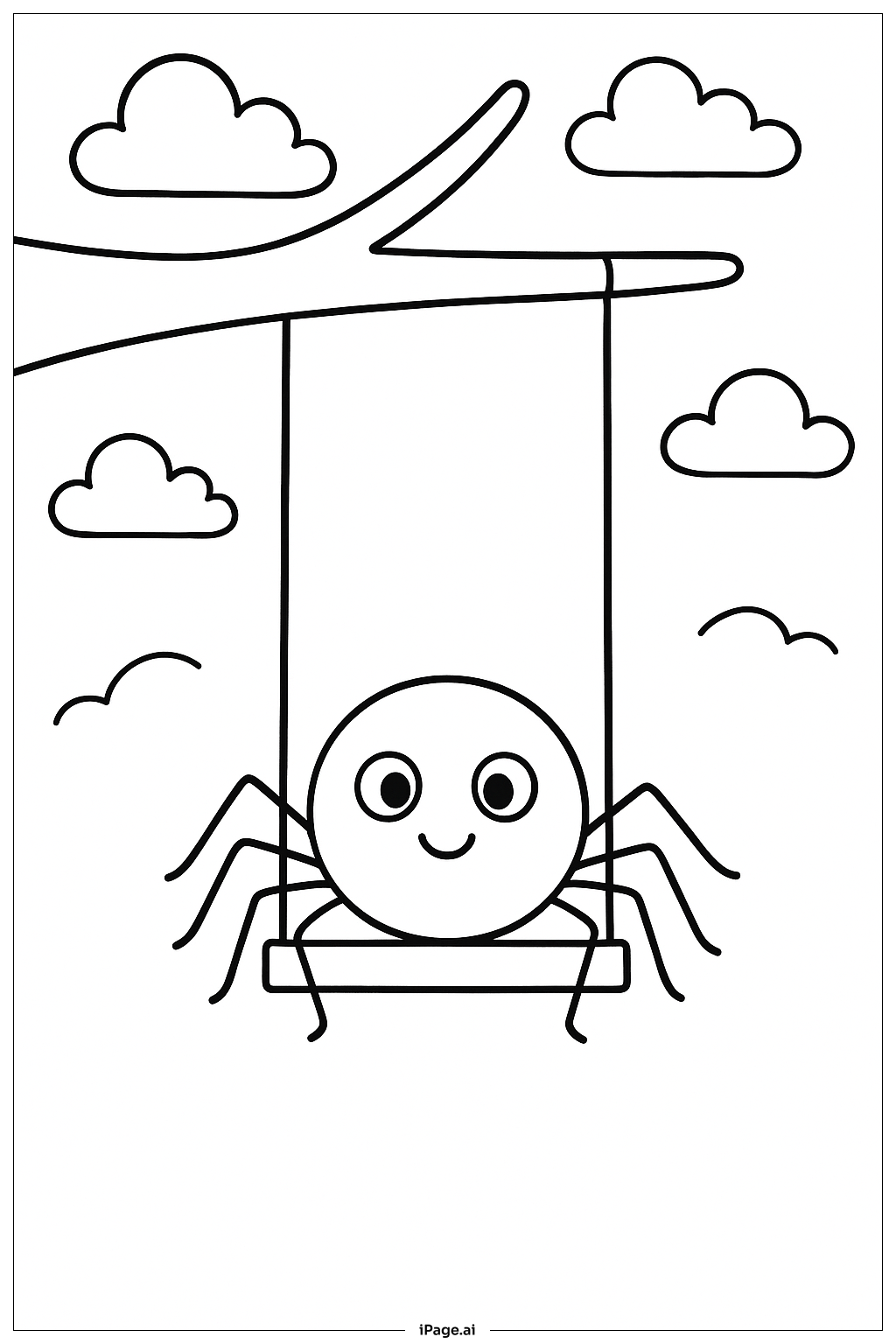
Coloring tips: How to color Spider in Swing coloring page well?
For the spider's body, try using warm colors like brown, orange, or even purple to make it friendly and inviting. You can add darker shades on one side to create shadows and make the spider look three-dimensional. The swing's wooden seat looks great in natural wood tones like light brown, tan, or honey yellow. Add darker brown lines along the wood grain for realistic texture. The ropes can be colored in beige, gray, or brown with slightly darker edges to show the twisted rope texture. For the spider's eyes, bright white with black pupils creates an alert, happy expression, or try blue or green for a magical touch. Consider adding a light background wash of sky blue or soft green to suggest an outdoor setting. Don't forget to color the spider's legs with alternating bands of light and dark colors for a striped pattern that adds visual interest.
Coloring challenges: Which parts are difficult to color and need attention for Spider in Swing coloring page?
• Spider Leg Coordination: The eight spider legs require careful attention to keep coloring consistent across all appendages. Each leg has multiple segments and joints that need to be colored within small, narrow spaces. Children may find it challenging to maintain the same color scheme and shading pattern across all eight legs while keeping the lines neat and avoiding coloring outside the boundaries of these thin, curved shapes.
• Rope Texture Details: The swing ropes present a unique challenge with their twisted, braided appearance. Creating a realistic rope texture requires understanding how to add depth through shading and highlights. Young artists need to consider how light hits the cylindrical rope surface and may struggle with making the ropes look three-dimensional rather than flat. The rope's texture also requires patience to add fine details that suggest individual strands.
• Facial Expression Details: The spider's friendly face includes small features like eyes, pupils, and a smile that require precision coloring. Getting the eyes symmetrical and properly colored to convey the right emotion needs steady hand control. Children must be careful not to make the face too dark or too light, maintaining a balance that keeps the spider looking approachable and happy.
• Swing Seat Wood Grain: Adding realistic wood texture to the swing seat involves creating parallel lines and varying shades of brown to suggest natural wood patterns. This requires understanding how wood grain flows and the ability to control pressure and color intensity to create depth and authenticity in the wooden planks.
Benefits of coloring books: Advantages of drawing Spider in Swing coloring page
Coloring this Spider in Swing image helps children overcome fears by presenting spiders in a friendly, non-threatening way. This positive association can reduce anxiety about insects and encourage curiosity about nature. The image develops fine motor skills as children carefully color within the spider's eight legs and the detailed rope texture, improving hand-eye coordination and pencil control. The symmetrical nature of the spider's body teaches children about balance and pattern recognition as they try to color matching legs similarly. This coloring page encourages creativity in color choice, allowing kids to move beyond realistic spider colors and explore imaginative palettes like purple, blue, or rainbow spiders. The swing element adds a relatable human activity that helps children connect with the character emotionally. Completing this page builds patience and focus as children work through multiple detailed elements, and finishing such a detailed image provides a strong sense of accomplishment that boosts confidence and self-esteem.