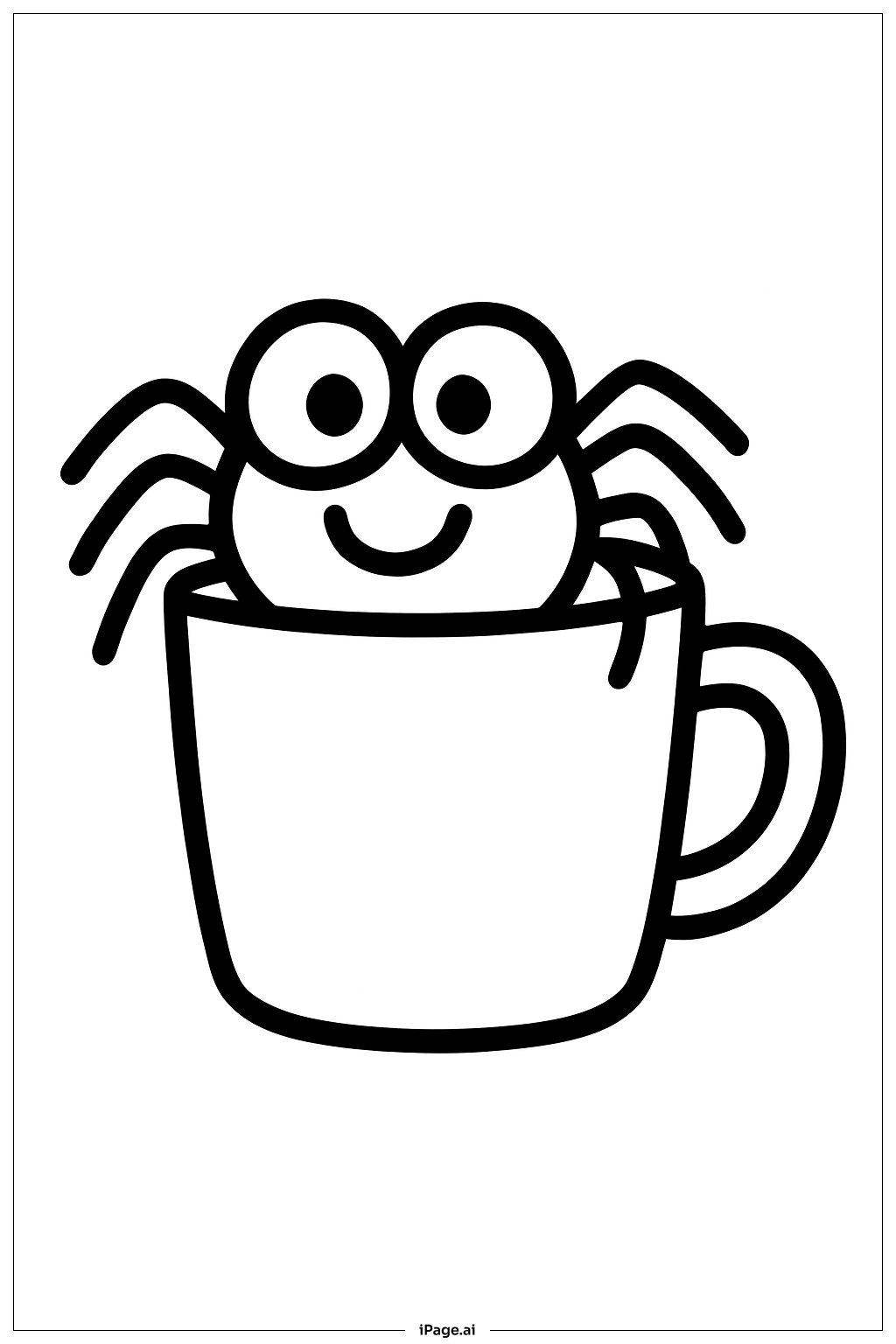
Coloring tips: How to color Spider in Cup coloring page well?
For the spider, consider using warm brown or gray tones for the body, or get creative with purple, orange, or even bright blue for a fantasy look. Add darker shading on the underside of the body and legs to create dimension. The cup offers wonderful opportunities for color choice: try classic white or cream with colorful decorative patterns like flowers, polka dots, or stripes along the rim. The saucer can match the cup or complement it with contrasting colors. Use colored pencils to add subtle shadows inside the cup where the spider sits, and consider leaving some areas lighter to show where light hits the ceramic surface. For a cohesive look, choose a background color that makes both the spider and cup stand out, such as soft yellow, pale green, or sky blue.
Coloring challenges: Which parts are difficult to color and need attention for Spider in Cup coloring page?
• Spider Leg Details: The spider's eight legs present a significant challenge as they overlap, curve, and extend in different directions. Each leg has multiple segments with joints that require careful attention to maintain consistent coloring without accidentally crossing into adjacent areas. The thin lines separating the legs demand precision and a steady hand, especially where legs overlap the cup rim or cross over each other.
• Cup and Saucer Shading: Creating realistic depth and dimension on the curved surfaces of the cup and saucer requires understanding of light and shadow. The interior of the cup needs darker tones to show depth, while the exterior needs highlights and shadows to appear three-dimensional. The handle's curved form and the saucer's circular perspective add complexity, requiring gradual color transitions to look natural.
• Fine Line Work and Texture: The image contains numerous fine details including the spider's body segments, facial features, and decorative elements that may be present on the cup. Staying within these small areas without bleeding over the lines challenges younger colorists and requires patience. The texture details on the spider's body need careful color variation to appear realistic rather than flat.
• Color Coordination and Contrast: Balancing colors between the spider and the cup so both elements stand out requires thoughtful planning. If both are colored with similar tones, the spider may disappear into the cup, losing visual impact. Children need to consider complementary colors and ensure sufficient contrast while maintaining an aesthetically pleasing overall composition.
Benefits of coloring books: Advantages of drawing Spider in Cup coloring page
Coloring this spider in cup image offers wonderful developmental benefits for children. It helps improve fine motor skills and hand-eye coordination as they carefully color within the detailed lines of the spider's legs and the cup's curves. The image promotes focus and concentration, as completing the intricate details requires sustained attention. It also provides an opportunity to overcome fears, as the friendly depiction of the spider helps children see these creatures in a less threatening, more approachable way. The scene encourages creative thinking as children decide on color combinations and patterns for both the spider and the cup. Additionally, it teaches spatial awareness as colorists navigate the overlapping elements and understand foreground and background relationships. The calming nature of coloring reduces stress and anxiety while building confidence as children complete a detailed, satisfying picture.