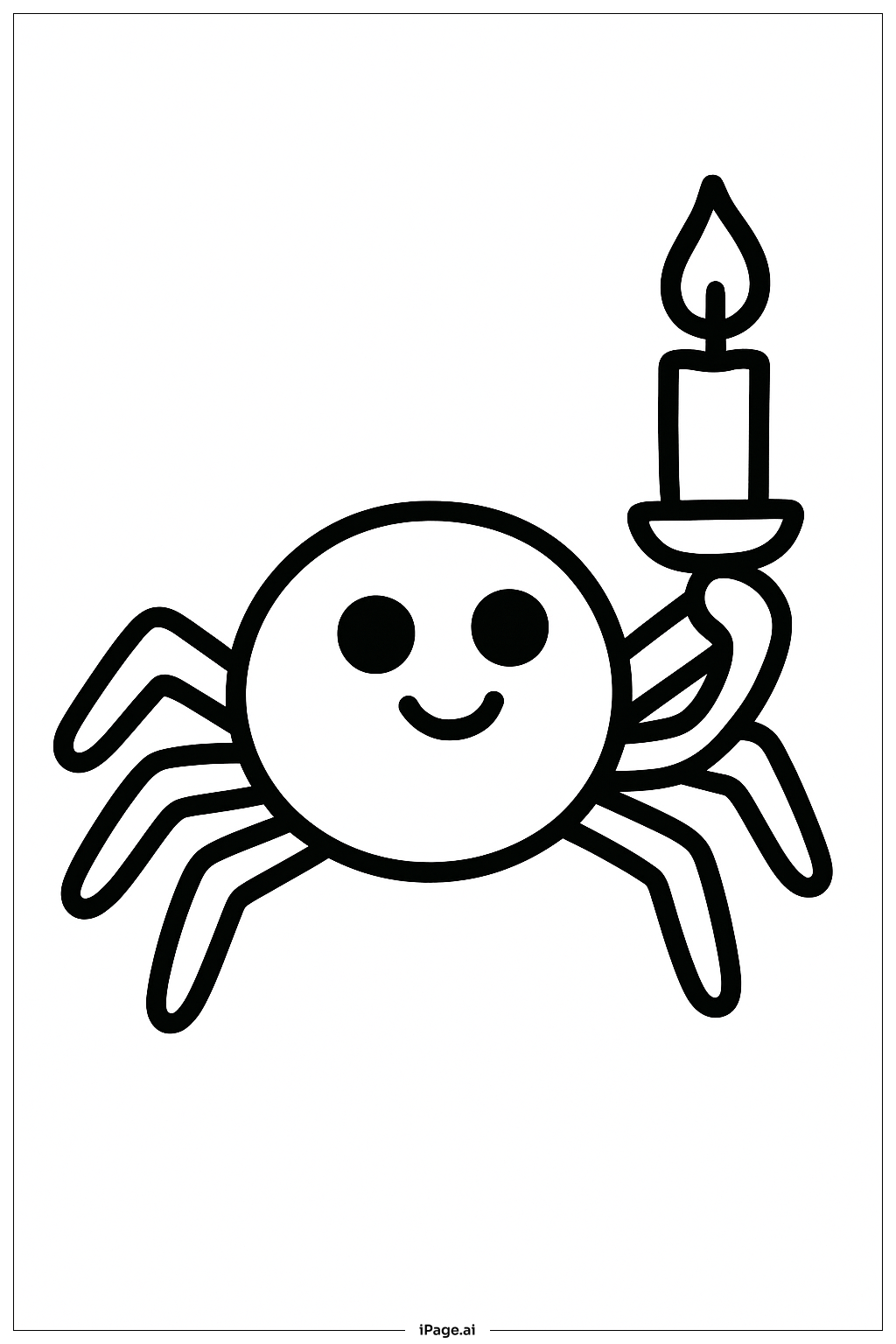
Coloring tips: How to color Spider Holding Candle coloring page well?
Start with the spider's body using warm brown, orange, or even purple tones to make it friendly and fun. You can add darker shading on one side to create depth. For the legs, use slightly darker shades of your body color, or try black with highlights. The candle can be cream, white, yellow, or any festive color like red or blue. Color the flame with bright yellow at the center, blending into orange and red at the edges for a realistic glow effect. Add a soft yellow or orange halo around the flame to show light spreading. The melted wax can match your candle color but slightly lighter. Consider adding a subtle shadow beneath the spider to ground it on the page. For extra creativity, add small sparkles or stars in the background to create a magical nighttime atmosphere.
Coloring challenges: Which parts are difficult to color and need attention for Spider Holding Candle coloring page?
• Flame Gradient Blending: Creating a realistic candle flame requires smooth color transitions from yellow at the center to orange and red at the outer edges. Young colorists may find it challenging to blend these warm colors seamlessly without harsh lines. Using colored pencils with light pressure and layering techniques, or carefully blending crayons, will help achieve that soft, glowing effect that makes the flame look alive and luminous.
• Spider Leg Positioning and Consistency: The spider has eight legs arranged in different positions, and maintaining consistent coloring across all legs while keeping them visually distinct from each other and the body can be tricky. Children need to be careful not to accidentally color outside the lines where legs overlap or come close to the body. Using a systematic approach, like coloring all legs in the same direction or numbering them mentally, helps maintain consistency.
• Texture and Fur Details: The spider's body shows subtle texture lines suggesting fuzziness or hair. Deciding whether to color these details differently or keep them as highlights requires planning. Younger artists might find it easier to use a single color, while older children can experiment with using two shades, leaving the lines lighter to create a three-dimensional furry appearance that adds personality and realism.
• Wax Drip Shading: The melted wax dripping down the candle requires understanding of light and shadow to look realistic. The drips should appear slightly translucent and catch light differently than the main candle body. This subtle shading challenge helps colorists learn about how light interacts with different surfaces, but it requires careful observation and a lighter touch with coloring tools.
Benefits of coloring books: Advantages of drawing Spider Holding Candle coloring page
Coloring this Spider Holding Candle page helps children overcome fear of spiders by presenting one in a friendly, gentle context. It builds fine motor skills through the detailed leg work and small flame area, improving pencil control and hand-eye coordination. The image encourages creative thinking as children decide on unusual color combinations—there's no rule saying spiders must be brown or black. Working with the flame teaches color theory basics, especially warm color blending and how colors create mood and atmosphere. The combination of a typically scary creature doing something gentle and helpful promotes emotional intelligence and the understanding that appearances can be deceiving. This page also offers a calming, focused activity that helps children practice patience and concentration while creating something uniquely their own.



