Coloring tips: How to color Spider Family Portrait coloring page well?
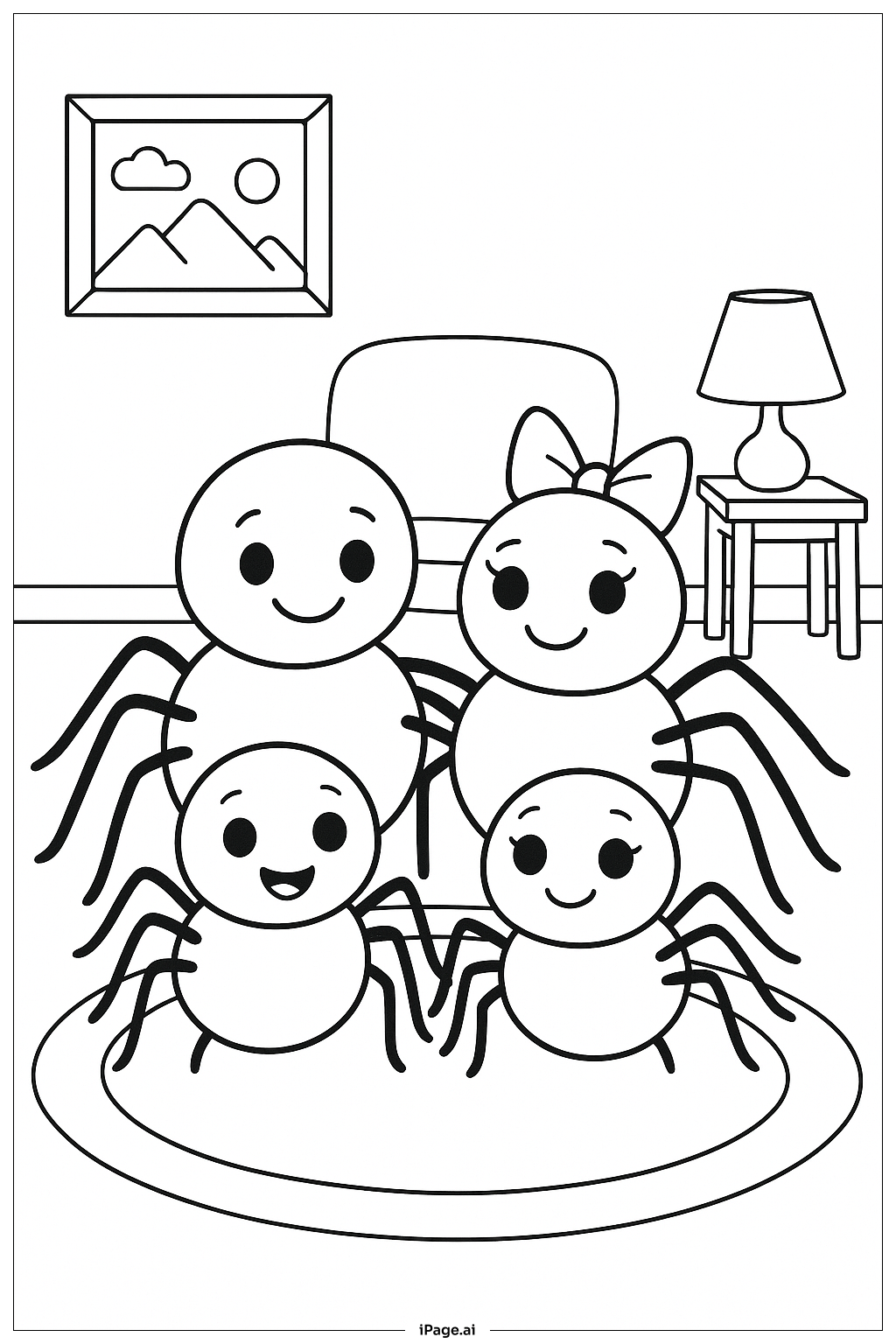
Start with the lightest colors and work toward darker ones. Use warm browns, soft oranges, or gentle grays for the spider bodies to give them a natural, earthy look. You can also go bold and make each spider a different color so the family members stand out from one another. Use light yellow or soft white for the webs to keep them looking delicate and fine. Add a pop of color to the abdominal patterns — spots, stripes, or swirls look great in red, purple, or teal. Give each spider unique eye colors to show off their individual personalities. For the background, pale blue or light green creates a calm, airy feel. Kids can experiment freely — there are no wrong color choices here. The goal is to have fun and let your imagination run wild with every spider in the family.
Coloring challenges: Which parts are difficult to color and need attention for Spider Family Portrait coloring page?
• Web Details: The spiderweb background is made up of many thin, overlapping lines that form small triangular sections. Staying within such narrow spaces requires a fine-tipped tool, like a colored pencil or a thin marker. Rushing through this area can easily result in colors bleeding across multiple web strands, so take your time and work section by section.
• Multiple Characters: Having an entire spider family means there are many individual figures to color. Keeping each spider visually distinct while maintaining a harmonious overall palette takes planning. Try sketching out your color choices lightly before committing, so the finished portrait feels balanced rather than chaotic.
• Leg Spacing: Each spider has eight thin legs that radiate outward and may overlap with other spiders or web strands. Coloring inside or around these narrow leg shapes without smearing into neighboring areas is tricky. Short, careful strokes work better than long sweeping ones in these tight spots.
• Abdominal Patterns: The decorative markings on each spider's abdomen — dots, bands, or geometric shapes — are small and closely spaced. Filling these tiny pattern elements with precision while keeping the colors vibrant and clean can be challenging, especially for younger colorists. Using sharp colored pencils gives the most control here.
• Size Variation: The parent spiders are much larger than the spiderlings, which means you need to shift your coloring technique as you move between figures. Larger bodies allow for smooth blending and shading, while the tiny baby spiders require a much more restrained, precise approach to avoid over-filling their small forms.
Benefits of coloring books: Advantages of drawing Spider Family Portrait coloring page
Coloring this Spider Family Portrait page offers a wonderful mix of fun and learning for kids of all ages. Working through the intricate web patterns builds fine motor skills and helps improve hand-eye coordination as children guide their tools along thin, precise lines. Choosing colors for each family member encourages creative thinking and self-expression — there is no single right answer, so every child's finished page looks uniquely their own. The family theme also sparks meaningful conversations about relationships, belonging, and the different roles within a family unit. For younger children, naming each spider and assigning it a personality while coloring adds a storytelling element that boosts language and imaginative skills. Older kids can explore shading and color blending to make the bodies look three-dimensional, turning the activity into an early art lesson. The focused, repetitive nature of coloring also has a calming effect, helping children manage stress and improve concentration. Completing the full portrait gives a satisfying sense of accomplishment that builds confidence. Overall, this page makes spider characters approachable and even lovable, helping kids overcome any nervousness about spiders while engaging in a joyful, screen-free creative activity.