Coloring tips: How to color Spider Detective Scene coloring page well?
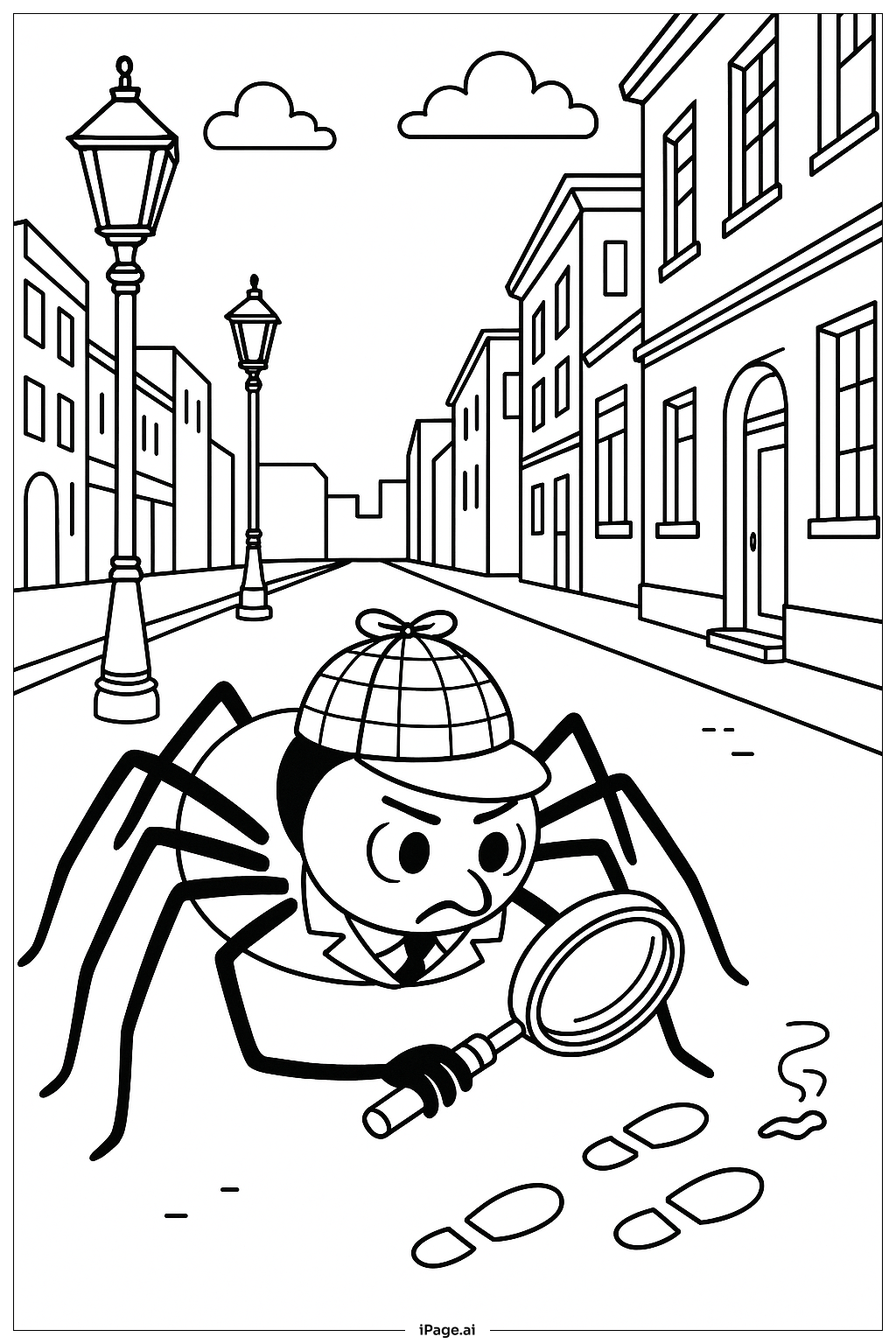
Use different shades of brown and green for the spider’s body and legs to give it a realistic look. Color the detective hat in a classic checkered pattern with light brown and beige. For the clothes, use dark colors like black or dark blue to show the serious detective mood. The Magnifying glass handle can be brown or gray, and the lens area should be left light to show glass. The footprints on the ground can be a darker color than the street, maybe dark gray or black. For the buildings, use a mix of light colors such as cream, yellow, and light gray to make them stand out but keep a calm street appearance. The street lamps can be colored with metallic gray and some yellow for the light. Use blue or light blue for the clouds and sky.
Coloring challenges: Which parts are difficult to color and need attention for Spider Detective Scene coloring page?
1. The spider’s legs are thin and long, which makes it tricky to color inside the lines without going outside. 2. The checkered hat pattern requires careful coloring to keep the lines sharp and the design clear. 3. The footprints need attention to detail since they are small and close together. 4. The buildings have many windows and straight lines that need precision coloring. 5. The magnifying glass has small details that might be difficult to color without smudging or overlapping colors.
Benefits of coloring books: Advantages of drawing Spider Detective Scene coloring page
Coloring this picture helps improve attention to detail because of the small parts like the footprints and hat pattern. It also encourages creativity in choosing colors for the spider and city scene. Kids learn to control their coloring tools gently when working on the thin legs and small details. This image builds patience and focus. Coloring a fun and interesting story scene can make the activity more enjoyable and motivate kids to finish the picture.