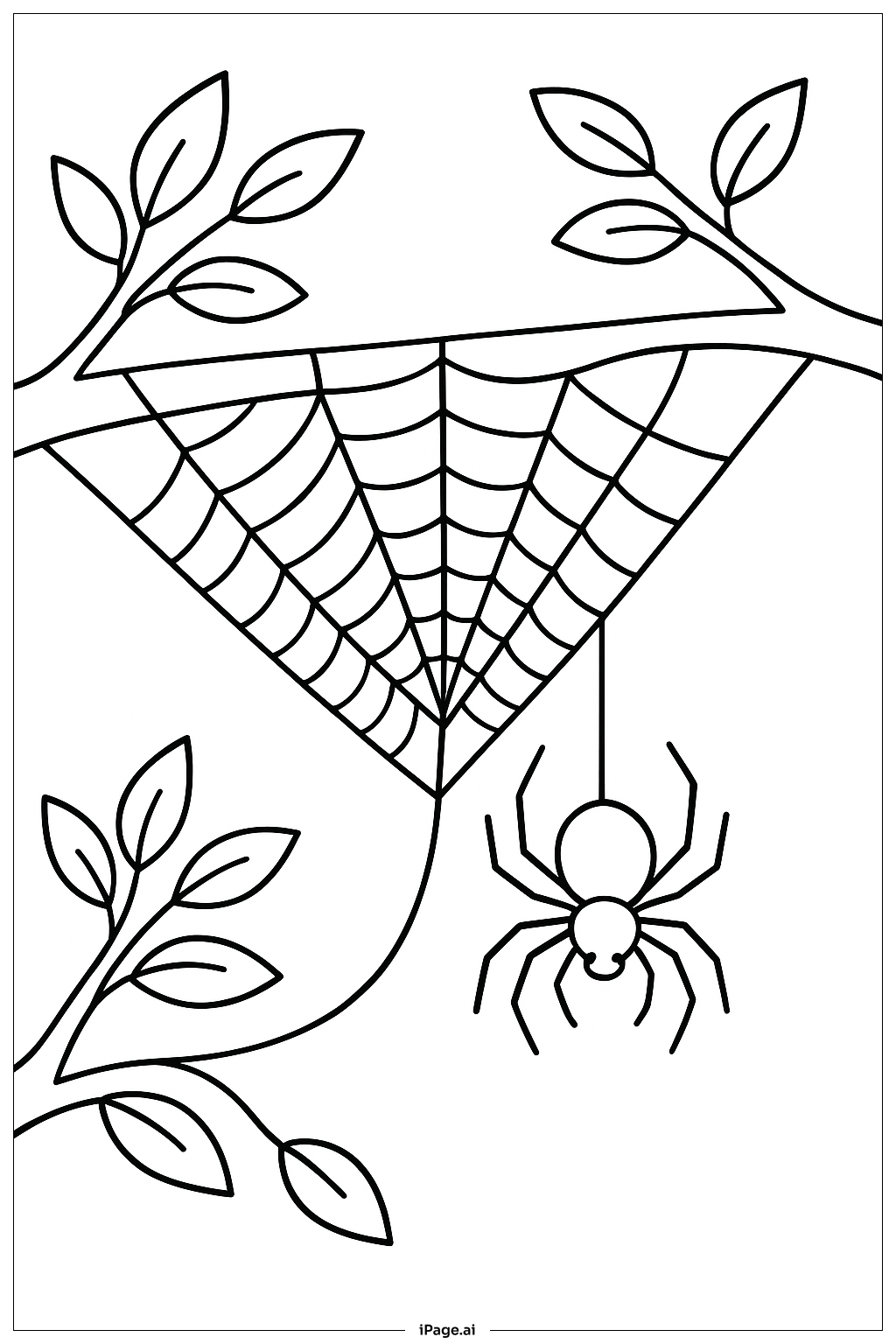
Coloring tips: How to color Spider Building Web coloring page well?
For the spider's body, consider using dark browns, blacks, or deep grays to create a realistic look. You might add lighter brown or tan highlights on the legs to show dimension. The web can be colored in silvery white, light gray, or pale blue to mimic how spider silk catches the light. For a magical touch, try adding subtle rainbow sheens on the web threads using colored pencils. Consider leaving some web sections white to create a translucent effect. The background can be colored in soft greens or blues to represent an outdoor garden setting, or use warm sunset colors like orange and pink for a dramatic backdrop. Adding dewdrops on the web with light blue or silver can enhance the natural beauty of the scene.
Coloring challenges: Which parts are difficult to color and need attention for Spider Building Web coloring page?
• Intricate Web Pattern: The geometric web structure contains numerous intersecting lines and small spaces that require precision and patience. Staying within the narrow sections where radial and spiral threads meet demands steady hand control and careful attention to avoid coloring outside the lines.
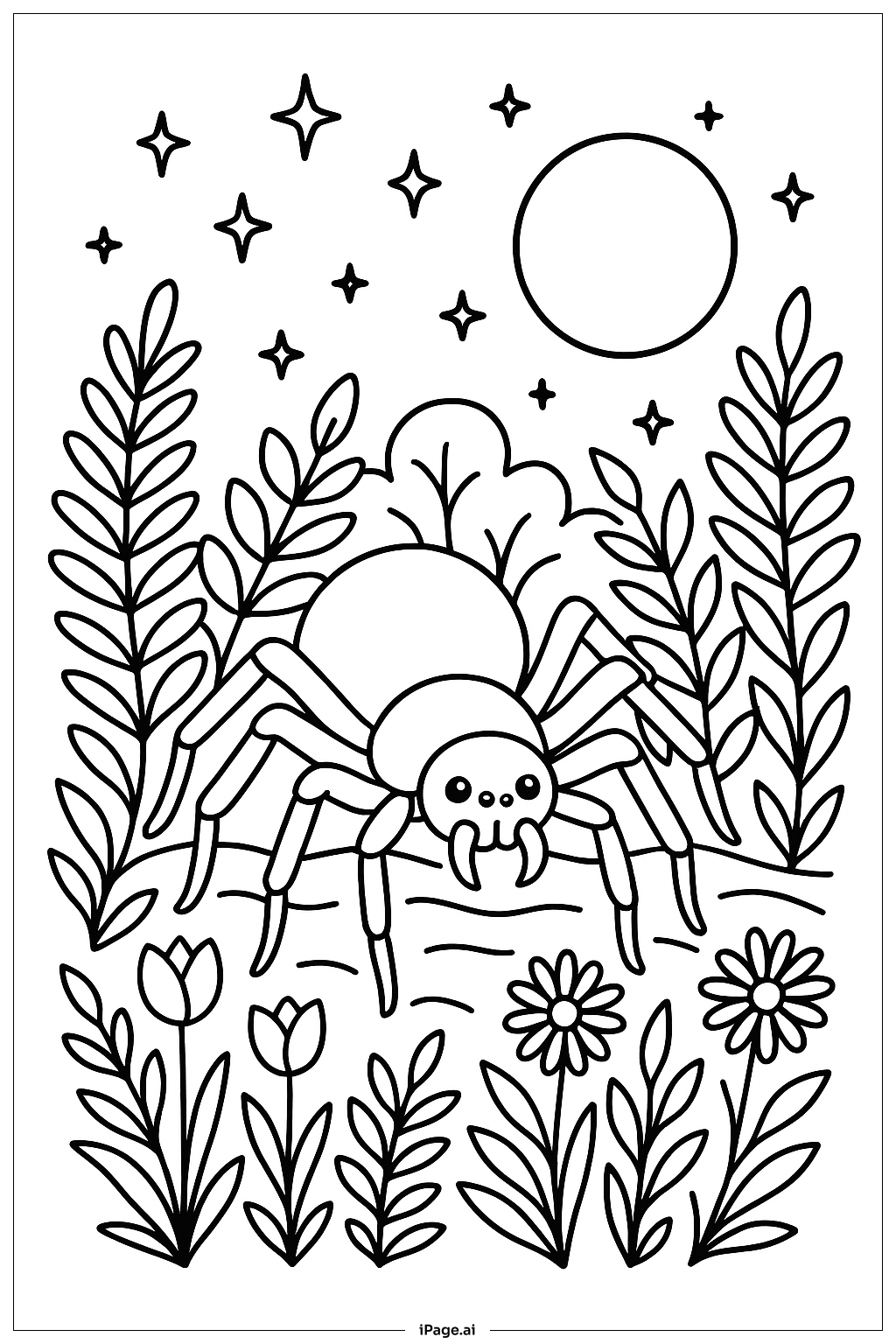
• Fine Spider Leg Details: The spider's eight legs feature multiple joints and segments that are thin and delicate. Coloring these narrow appendages while maintaining consistent color and avoiding smudging adjacent areas presents a challenge, especially where legs overlap with web strands.
• Creating Depth and Dimension: Making the web appear three-dimensional requires understanding light and shadow. Children must learn to use lighter shades where light hits the silk and darker tones in shadowed areas, which involves blending techniques and color value recognition.
• Small Anatomical Details: The spider's body segments, including texture marks and tiny features, contain small areas that are difficult to color neatly. Using fine-tipped coloring tools and maintaining concentration throughout these detailed sections tests both motor skills and focus.
• Web Transparency Effect: Achieving a realistic translucent quality for the spider web requires careful color choices and application pressure. Balancing enough color to make threads visible while keeping them looking delicate and see-through challenges spatial awareness and artistic judgment.
Benefits of coloring books: Advantages of drawing Spider Building Web coloring page
Coloring this spider building web image offers excellent educational value about nature and geometry. Children learn about spider anatomy, including body segments and leg structure, while discovering how spiders create their remarkable webs. The geometric patterns reinforce mathematical concepts like radial symmetry, circles, and angles in an engaging way. Fine motor skills receive substantial development through the precise coloring required for thin web strands and delicate spider legs. Hand-eye coordination improves as children navigate the complex intersecting lines. The activity promotes patience and concentration, as completing the intricate details requires sustained focus. It also encourages observational skills and attention to detail. The natural science theme sparks curiosity about arachnids and their behavior, potentially reducing fear through understanding. Additionally, the meditative quality of coloring the repetitive web pattern provides stress relief and promotes mindfulness in young artists.