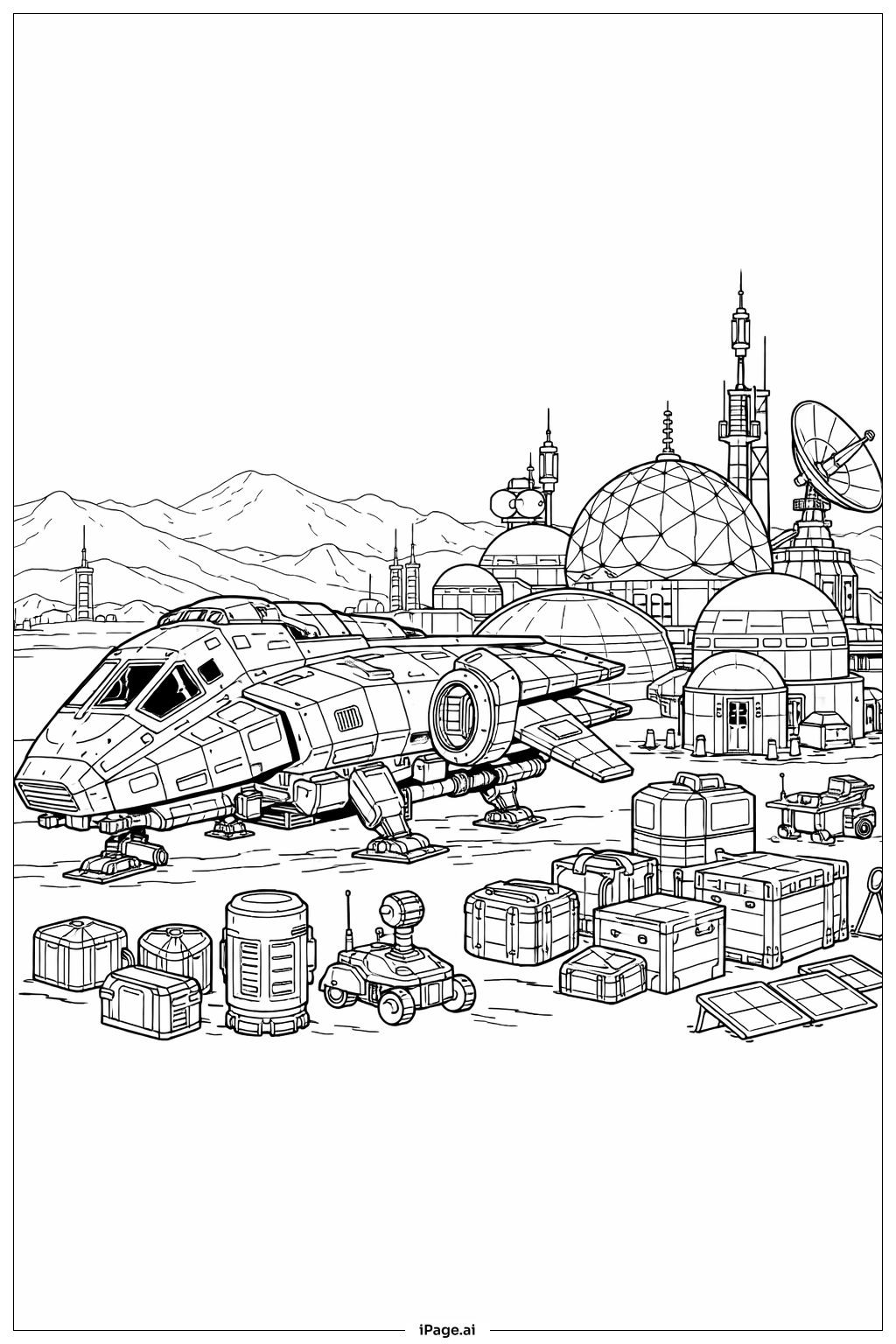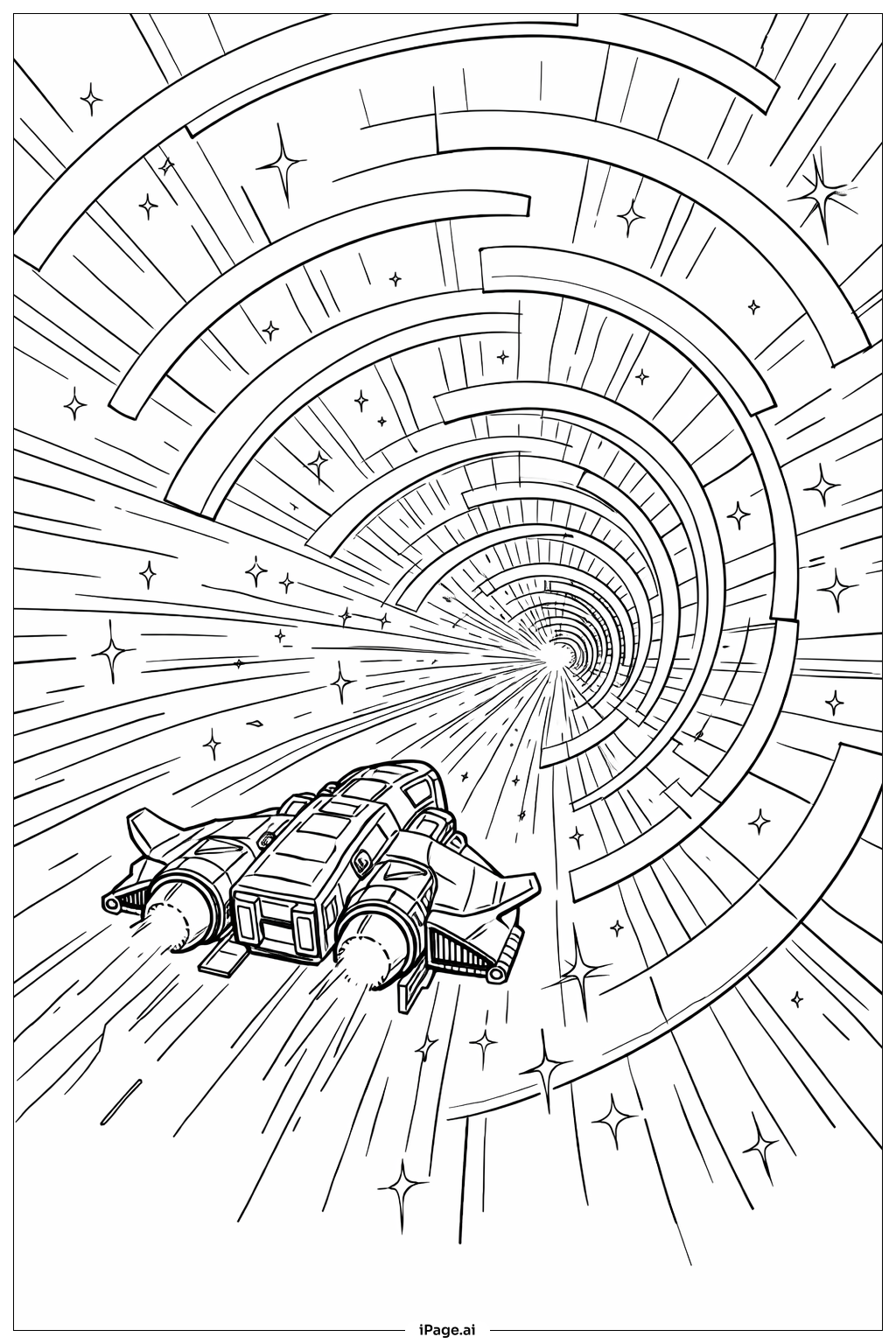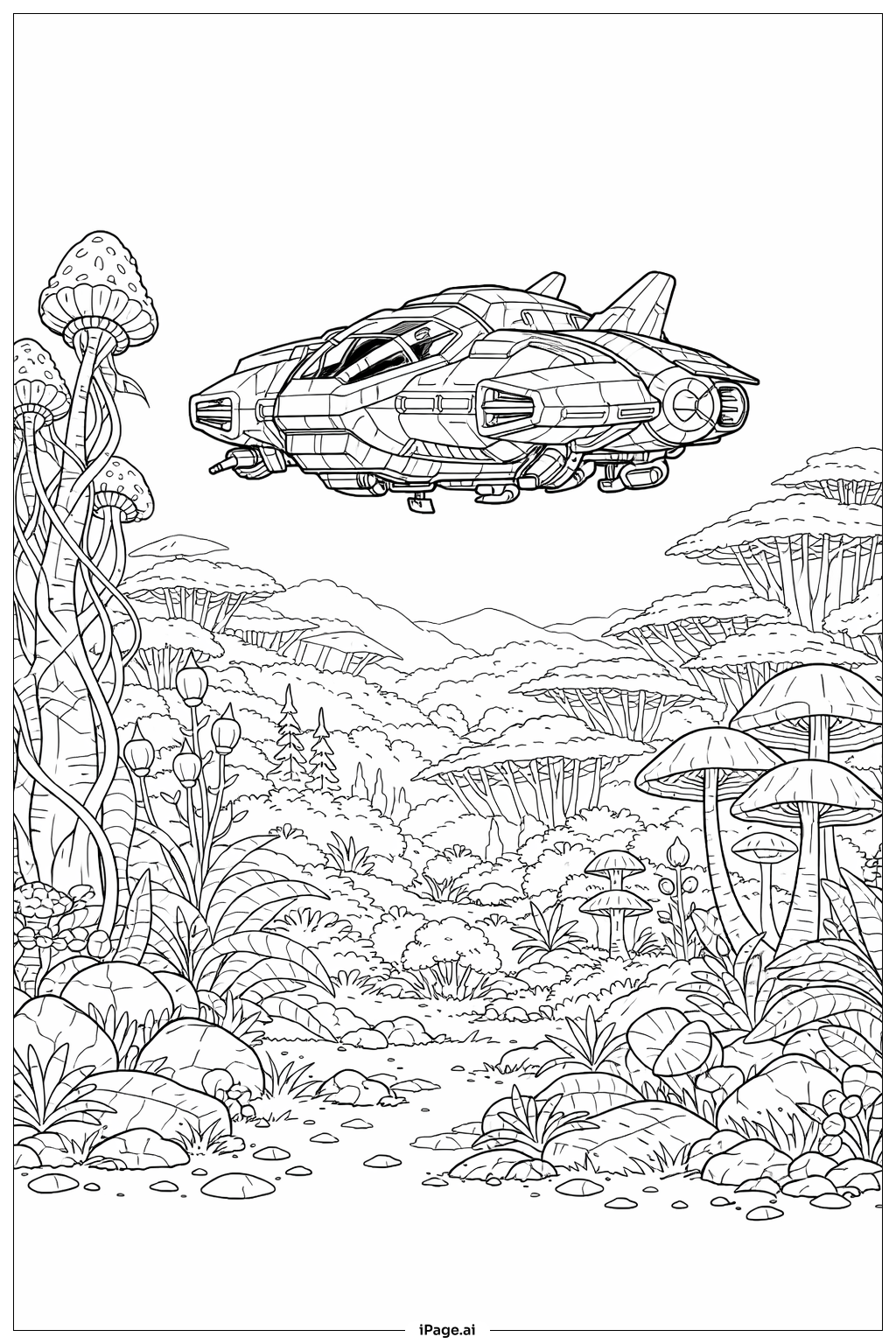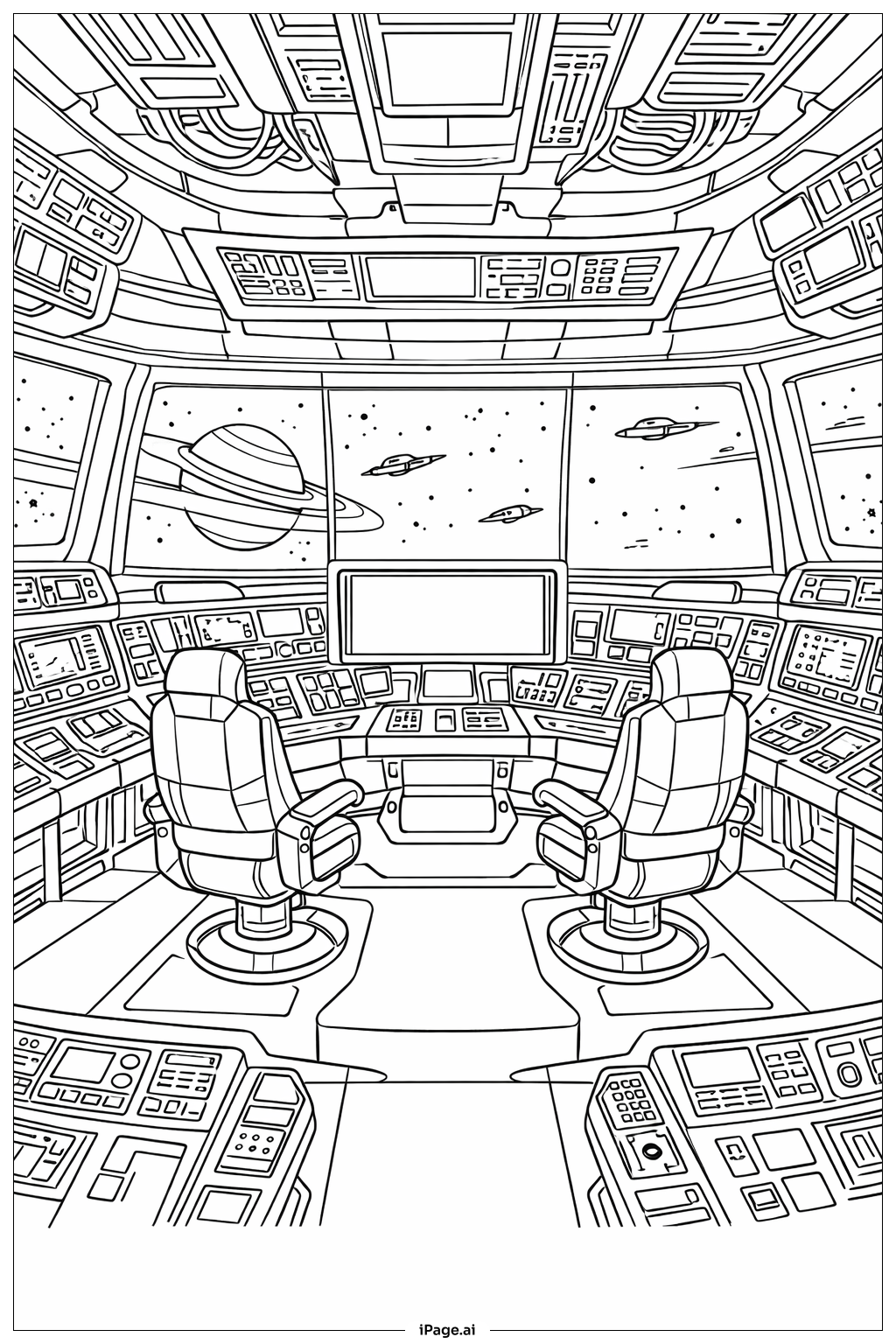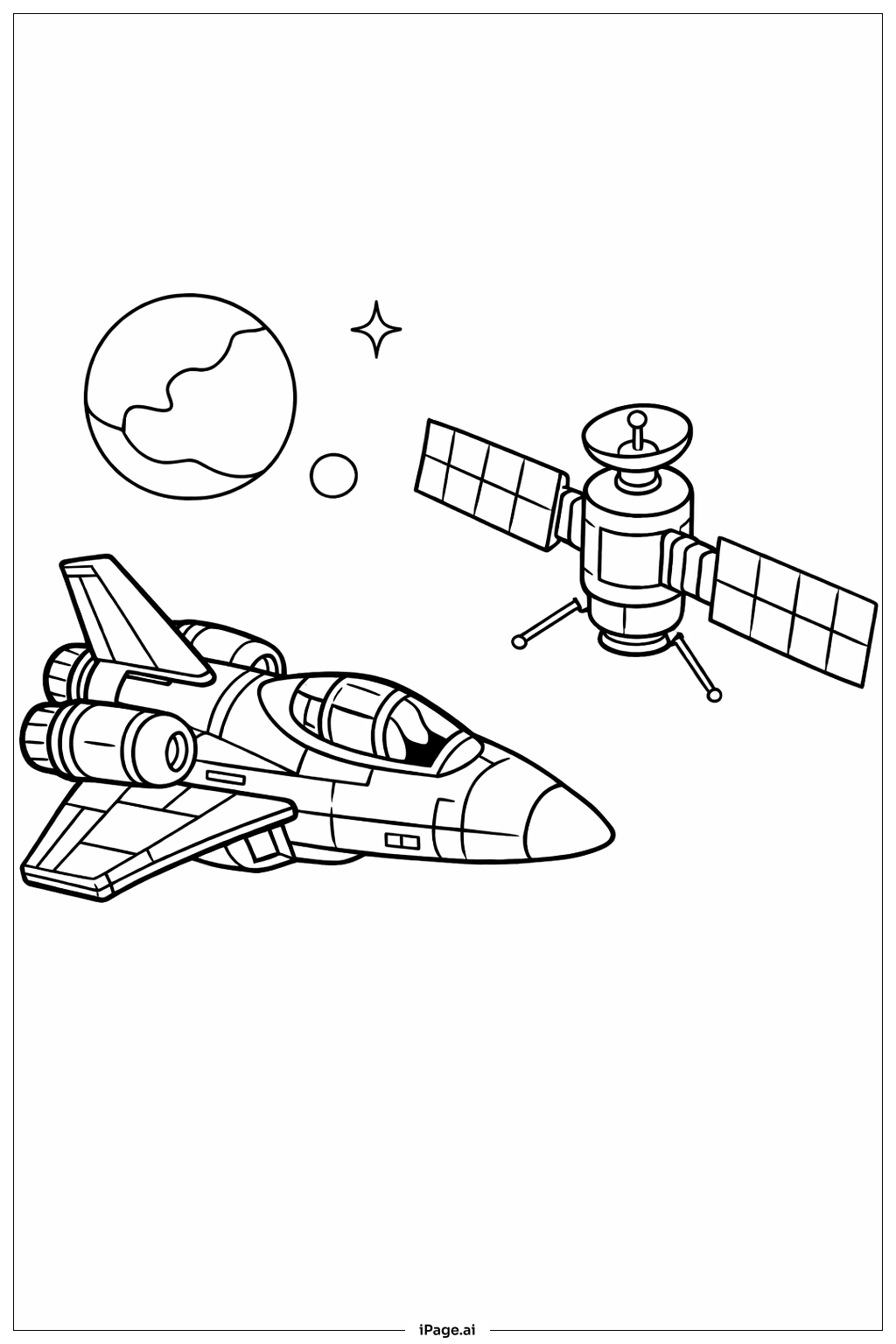
Coloring tips: How to color Spaceship Observing Satellite coloring page well?
For the spaceship, consider using metallic colors like silver, gray, or blue for the main body to give it a futuristic feel. The windows can be colored with light blue or purple to suggest glowing cockpit lights. Add orange or red accents to the thrusters to show propulsion energy. For the satellite, use darker grays or blacks for the main structure, and bright yellow or blue for the solar panels to make them stand out. Color the background space in deep navy blue or black, and use yellow, white, or light blue for the stars. You can add gradients to create depth, making objects closer appear brighter. Consider using colored pencils for smooth metallic effects or markers for bold, vibrant space colors.
Coloring challenges: Which parts are difficult to color and need attention for Spaceship Observing Satellite coloring page?
• Small Details and Mechanical Parts: The spaceship and satellite contain many small mechanical components, panels, and technical details that require careful coloring within tight spaces. Children may find it challenging to color small antenna arrays, tiny thruster ports, and intricate panel lines without going outside the boundaries. Using fine-tipped markers or sharp colored pencils helps maintain precision in these areas.
• Creating Metallic and Reflective Surfaces: Spaceships and satellites are typically made of metal, which reflects light in unique ways. Achieving a realistic metallic look requires layering different shades of gray, silver, and blue, and leaving strategic white spaces for highlights. This shading technique can be difficult for younger children who are still developing their understanding of light and shadow.
• Solar Panel Symmetry: The satellite's solar panels need consistent coloring to look balanced and realistic. Keeping the color intensity even across multiple panel sections while maintaining straight lines within each cell requires patience and steady hand control. Any inconsistency becomes very noticeable due to the geometric, repetitive nature of solar panels.
• Space Background Depth: Creating a convincing sense of deep space requires understanding how to use dark colors effectively while making stars and distant objects visible. Children need to color the background dark enough to represent space but must preserve or add lighter colors for stars without mudding the overall effect. Balancing darkness with points of light presents a unique coloring challenge.
Benefits of coloring books: Advantages of drawing Spaceship Observing Satellite coloring page
Coloring this space scene helps children develop fine motor skills through detailed work on small mechanical parts and precise line control. It encourages an interest in science, technology, and space exploration by bringing spacecraft and satellites to life through creative color choices. Children learn about color theory as they experiment with metallic tones, contrasts between light and dark for the space background, and complementary colors for technological elements. The symmetrical elements like solar panels help develop spatial awareness and attention to detail. This coloring page also sparks imagination about outer space, astronauts, and how humans explore beyond Earth. It provides a calming, focused activity that improves concentration and patience while offering educational value about real space technology and orbital mechanics.