Coloring tips: How to color Spaceship Exploring Ancient Ruins coloring page well?
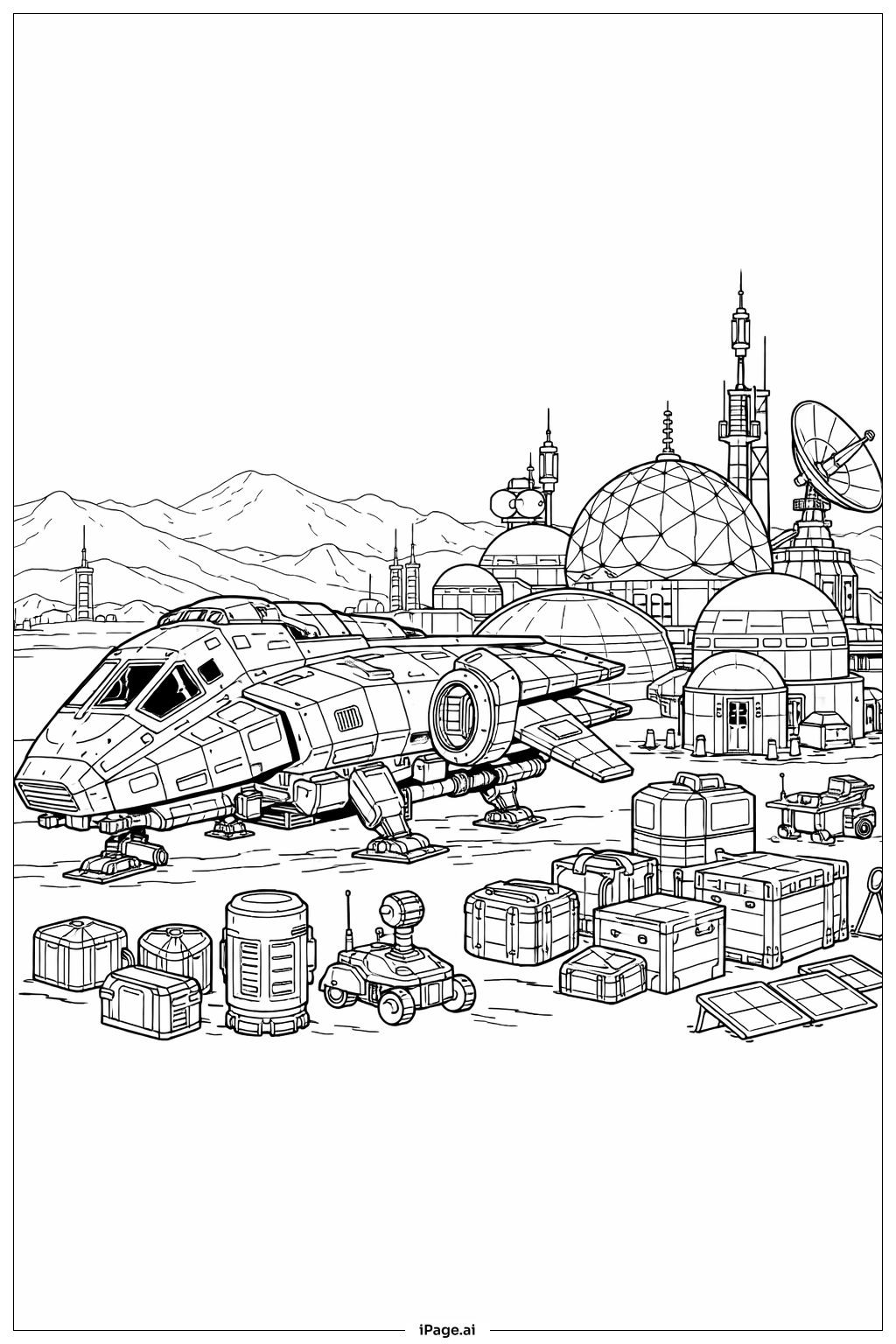
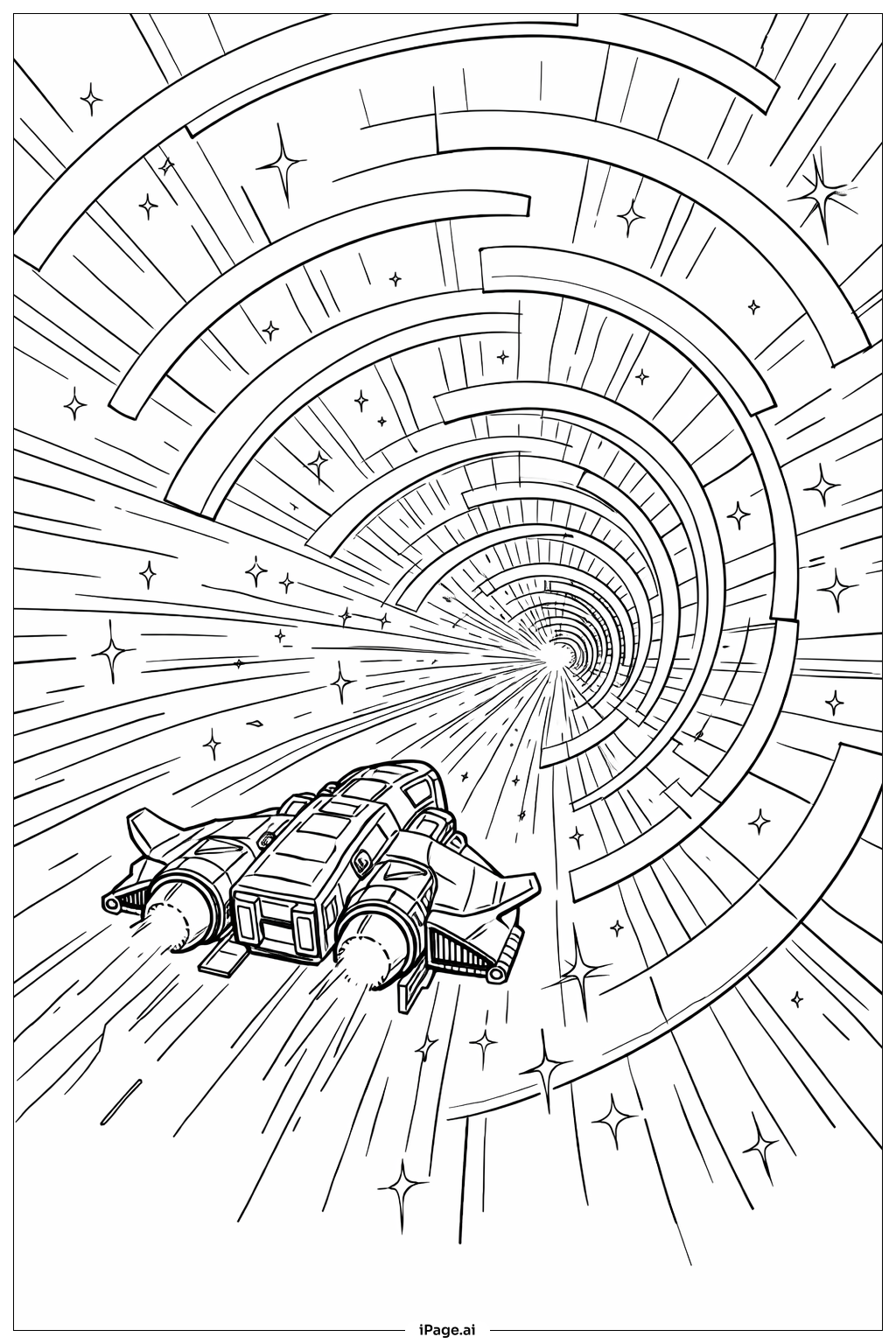
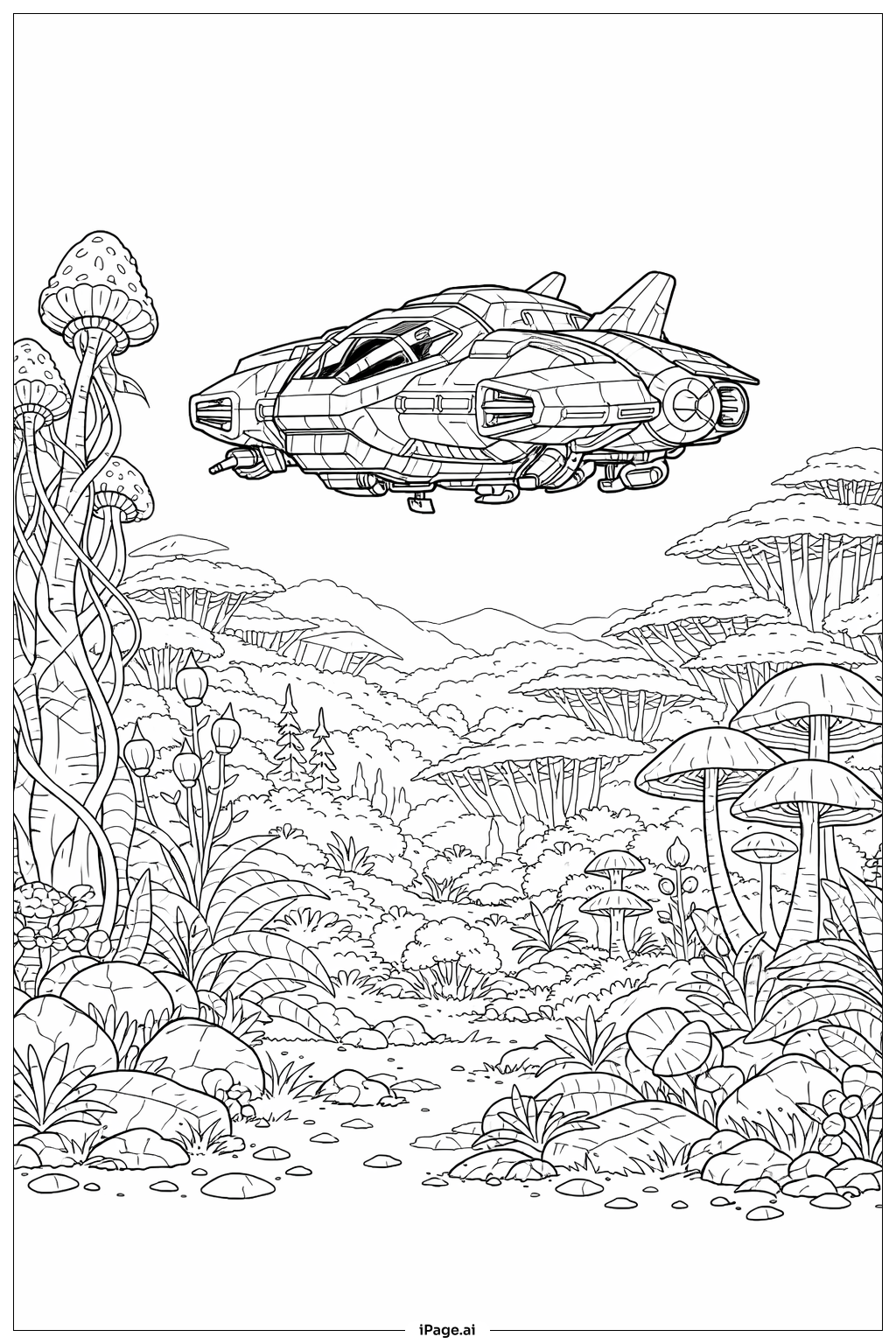
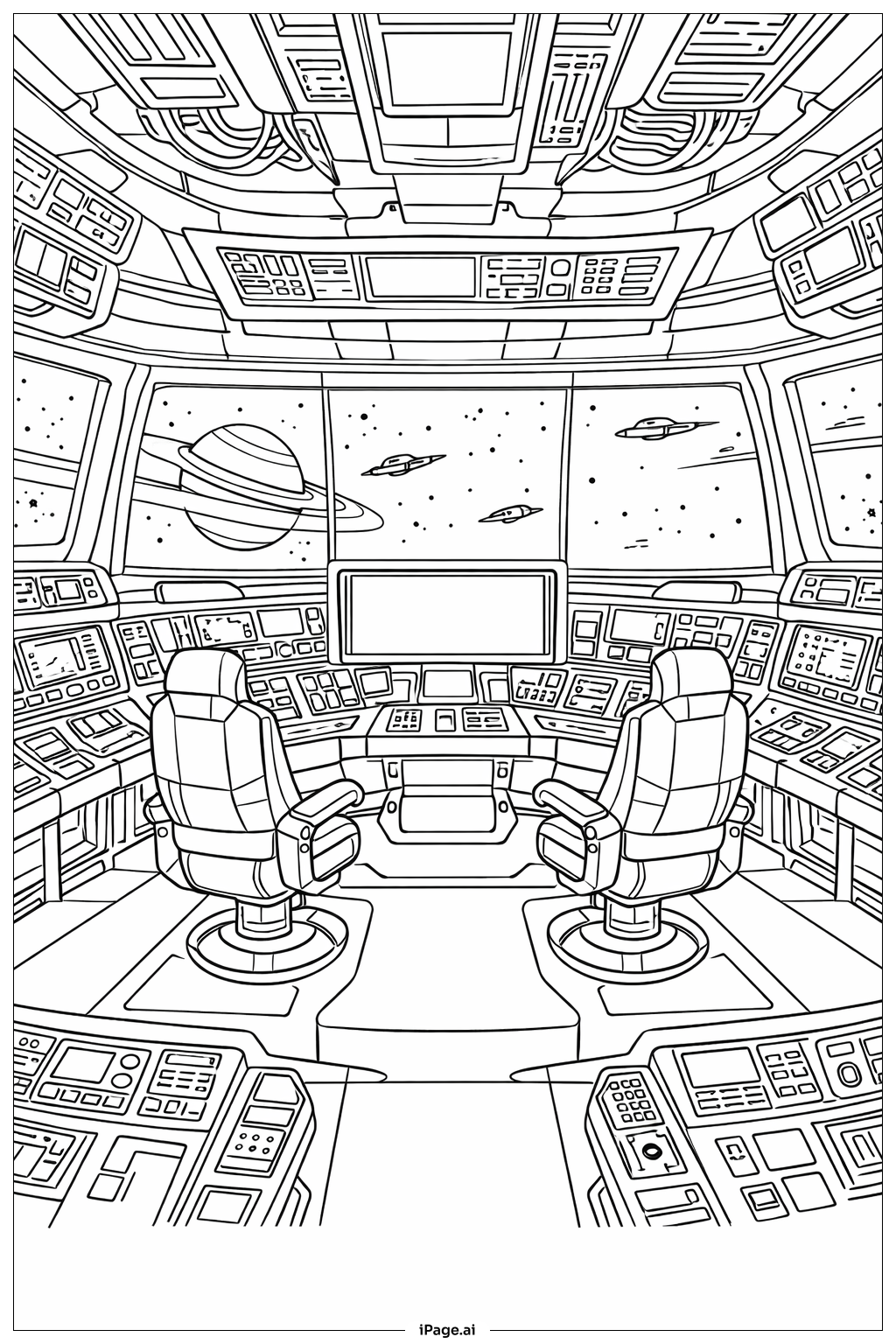
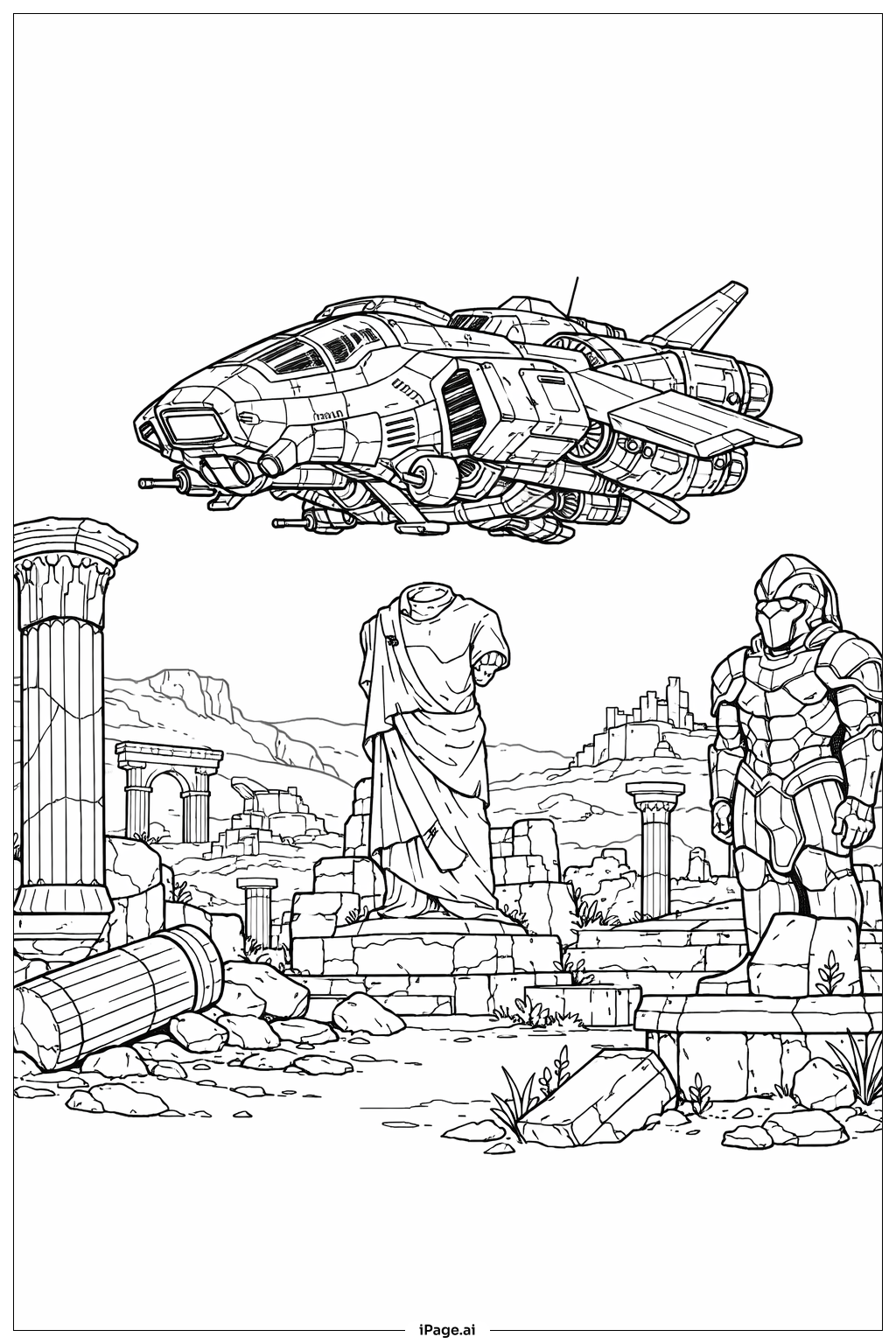
For the spaceship, try metallic colors like silver, gray, or blue to create a futuristic look. Add darker shades along the edges to show depth and dimension. The windows can glow with bright yellow, cyan, or green to suggest active systems. For the ancient ruins, use earthy tones like brown, tan, beige, and gray to show aged stone. Add darker browns and blacks in the cracks and shadows to emphasize the weathered texture. The background sky could be colored with purples, deep blues, or even alien sunset colors like orange and pink. Small rocks and debris work well in various gray and brown shades. Consider leaving some highlights white or very light to show where light hits the spaceship's surface, making it appear shiny and metallic.
Coloring challenges: Which parts are difficult to color and need attention for Spaceship Exploring Ancient Ruins coloring page?
• Spaceship Detail Work: The spacecraft contains numerous small panels, circular windows, and mechanical details that require steady hand control and careful color choices. Keeping colors within these tiny spaces while maintaining consistency across similar elements challenges fine motor skills and patience. Younger children may find the intricate surface details demanding.
• Texture Differentiation: This image requires coloring two very different materials - smooth metallic spacecraft surfaces versus rough, weathered stone ruins. Creating the illusion of shiny metal versus crumbled rock demands different coloring techniques, pressure variations, and color blending skills that intermediate colorists are still developing.
• Depth and Shadow Creation: To make the spaceship appear to hover above the ruins, colorists must understand how to apply shadows beneath the craft and on the ruins below. This requires knowledge of light sources and how shadows fall, which involves using darker shades strategically to create three-dimensional effects.
• Background and Foreground Balance: The composition includes foreground debris, mid-ground ruins, and the floating spaceship, all requiring different color intensities to show distance. Balancing these elements so the spaceship stands out while the ruins remain detailed challenges spatial awareness and color theory understanding.
• Architectural Details: The ancient ruins feature arches, columns, and stone blocks with cracks and weathering patterns. Coloring these to look authentically aged while maintaining the structural details visible requires attention to subtle color variations and shading techniques that show dimension in stone surfaces.
Benefits of coloring books: Advantages of drawing Spaceship Exploring Ancient Ruins coloring page
Coloring this spaceship and ruins scene builds multiple developmental skills. The detailed spacecraft components strengthen fine motor control and hand-eye coordination as children carefully color within complex shapes. Planning color schemes for futuristic technology versus ancient architecture encourages creative thinking and problem-solving. The scene sparks imagination about space exploration, archaeology, and storytelling, inviting children to wonder about the spaceship's mission and the civilization that built these ruins. Working with contrasting elements - new versus old, technology versus nature - teaches visual organization and composition understanding. The extended focus required for completing intricate details promotes concentration, patience, and the satisfaction of finishing complex projects. This coloring page also introduces concepts from science, history, and engineering in an engaging, accessible format that combines learning with creative expression.